Conrad Black: Liberal intransigence threatens to pull Canada apart

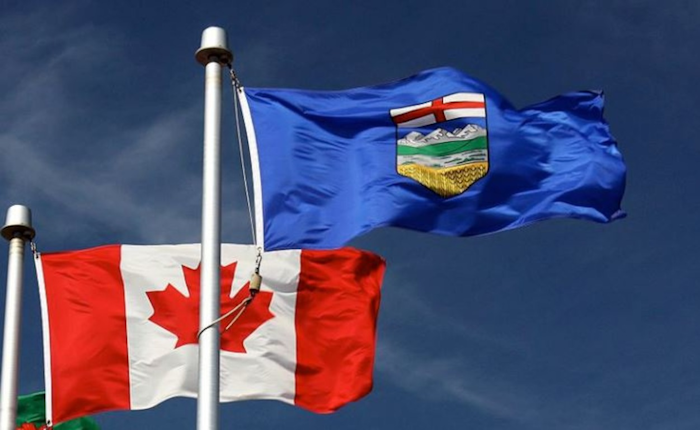
After spending most of last weekend in Calgary and having the privilege of speaking with scores of well-informed Albertans including a number of prominent political figures, I came away with an uneasy feeling that it is not generally recognized in Canada how politically vulnerable this country is and how vivid and well-founded are the public policy grievances of Alberta. Alberta was a conventional farming and ranching economy until the discovery of oil there in 1947. Today, mining, quarrying and oil and gas extraction account for a quarter of Alberta’s GDP, and 70 per cent of exports, with ancillary benefits to the construction, manufacturing, transportation and other industries.

Share

CHARLEBOIS: Carney’s nation-building vision forgot food

When Prime Minister Mark Carney unveiled his government’s first five “nation-building” projects this week, the focus was on scale and ambition. The LNG expansion in Kitimat, a small modular reactor at Darlington, the Contrecoeur container terminal in Montreal, and critical mineral developments in British Columbia and Saskatchewan demonstrate that Ottawa is ready to fast-track major projects that strengthen the country’s competitiveness. Energy, infrastructure, and mining are the building blocks of growth, and Carney is signalling he intends to put them at the centre of his economic strategy.

Share

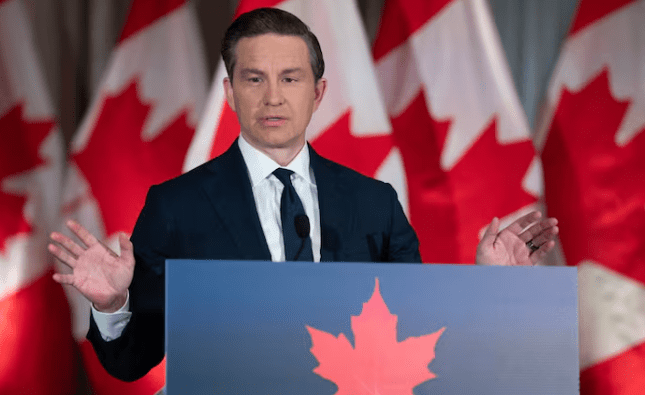
Poilievre demands ‘tearful apology’ from former liberal ministers over immigration

Conservative Leader Pierre Poilievre says Canadians deserve a “tearful apology” from former Liberal immigration ministers for wrecking the immigration system and driving up pressure on housing, jobs and social services.

“Sean Fraser and Marc Miller, they should give a tearful apology,” Poilievre told reporters. “That’s the only thing they have left to do on the immigration file.”

Share

Carney says there’s been a ‘rupture.’ What’s he going to do about it this fall?

Even while Mark Carney has been accused of lowering his elbows in regards to American tariffs, he continues to frame the larger challenge facing this country in stark terms.

“What’s going on is not a transition,” Carney said last week in Mississauga, Ont., while announcing an array of measures for industries impacted by the American administration’s actions. “It’s a rupture. And its effect will be profound.”

He saw the arrival of a “new age of economic nationalism and mercantilism” and described the current moment as an “age of adversity.” He invoked major nation-building infrastructure projects of the past and the national mobilization that took place in Canada during and after the Second World War.

Share

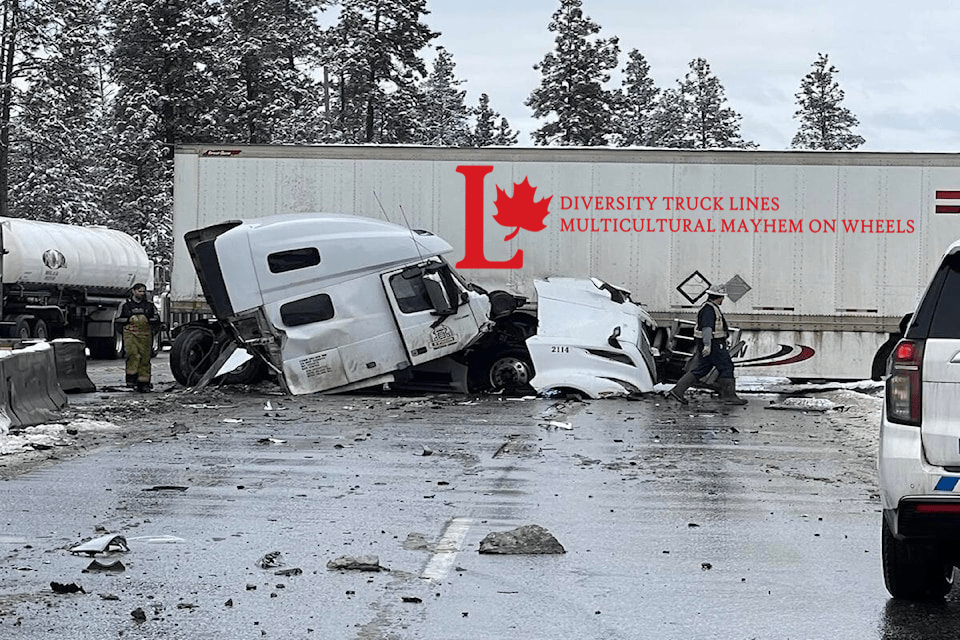
Liberals spend $500,000 to boost diversity in trucking industry

The federal government is spending $500,000 on a project aimed at making Canada’s trucking industry more diverse and inclusive.

The funding, announced Friday during National Trucking Week by Jobs and Families Minister Patty Hajdu, will go to Trucking HR Canada through Ottawa’s Workplace Opportunities: Removing Barriers to Equity (WORBE) program.


Same old Liberal faces peddling the same old bad ideas.

h/t Auntie Polly (Incognito)

Share

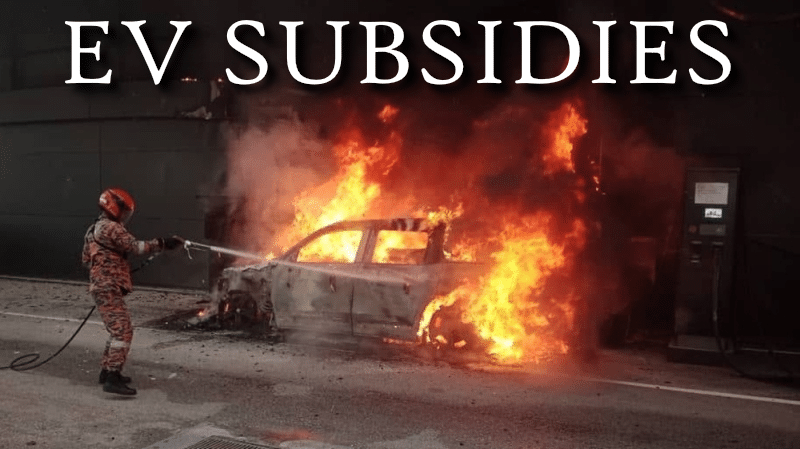
Ivison: Canada’s multi-billion dollar bet on EV battery plants is ‘disastrous’ policy, Balsillie says

The man credited with remaking the smartphone industry with Blackberry in the early 2000s says Ottawa’s decision to give tens of billions of dollars in subsidies to foreign companies like Volkswagen to build battery cell manufacturing plants in Canada was a “catastrophically disastrous move.”

Jim Balsillie, the former chair of Research in Motion and more recently the co-founder of the Council of Canadian Innovators, told National Post’s John Ivison that he thinks Canada’s approach to trade and competitiveness is outdated and ignores the fact that in the knowledge economy, prosperity flows from ownership of intellectual property.

Share

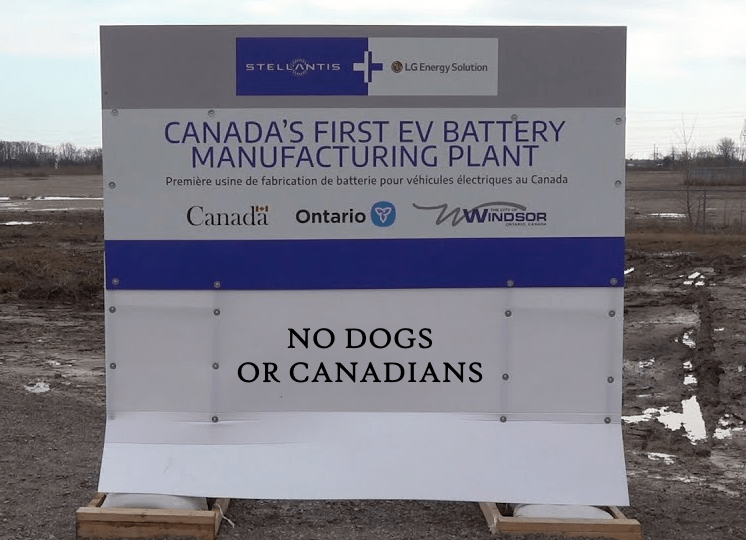
Foreign workers drove forklifts, did trade tasks at Windsor EV battery plant, say union, construction leaders

Canadian construction and union leaders say they’re frustrated over the continued use of foreign workers for non-specialized tasks at the massive NextStar electric vehicle battery plant project in Windsor, Ont., that’s receiving billions of dollars in taxpayer support.

They also say they’ve been disappointed in the response they’ve received from all levels of government when they’ve raised concerns.

“I personally have sat with many ministers federally, provincially, right to the top. And it’s not a secret,” says Jason Roe, the business manager for Local 700 of the Ironworkers union. “People know that it’s been going on.”

Share

Climate Barbie Claims Her Sky Fell!

Former environment minister details abuse she endured in politics in new memoir

OTTAWA – Former environment minister Catherine McKenna says federal security agencies initially refused to offer her protection — and wouldn’t even show her the risk assessment they’d completed — as she faced a rising tide of threats and harassment online and in person.

McKenna was the Liberal MP for Ottawa Centre from 2015 to 2021 and served in cabinet the entire time, first as environment minister and later as the minister of infrastructure.

She has previously discussed the years of abuse she endured in politics — particularly as the minister responsible for the Trudeau government’s climate policy — but describes her experiences in far more detail in her new autobiography, Run Like a Girl, which is being released next week.

Share

James Moore: Carney’s ambitious ‘major projects’ is what Canada needs, but come with big risks

In Edmonton, Dawn Farrell, head of the new Major Projects Office (MPO) for the Government of Canada took to the podium to introduced Prime Minister Carney and summarized her mandate and the mission of the government thusly: “To get to one project, one review, one decision in a two-year timeline, (that) will set Canada apart globally and attract enormous inflows of capital.”

Yes, absolutely.

Share

If Ottawa can’t measure immigration, it can’t manage it

Governments that concentrate decision-making at the centre have trouble tackling more than a few issues at a time, and Prime Minister Mark Carney’s government is unlikely to be an exception.

There’s been an understandable focus on preserving trade relations with the U.S., building ties with the rest of the world, and advancing new projects to strengthen the economy. These have consumed the government’s time, interest and intellectual bandwidth.

But the government can’t ignore other big issues that are top of mind for Canadians. Crime is one; the Conservatives are talking about it because voters are, and with reason. Another is immigration.

Share

Canadians fed up being abused with Mass Immigration from incompatible cultures by the Liberal Party and their Corporate Welfare Pals

Popular support for more immigration has cratered. Politicians are taking note

Canada’s large immigrant population has long been regarded as a virtue — but new data suggests popular opinion on adding more newcomers has gone through a seismic shift after years of explosive growth.

For much of the last 25 years, immigration was something of a third rail in Canadian politics, with few elected officials publicly questioning its value. On that issue, too, there’s been a major about-face.

At the Liberal caucus retreat in Edmonton this week, Prime Minister Mark Carney put the immigration system on notice, saying recent levels have not been “sustainable” and a more “focused” approach is required. “It’s clear that we must improve our overall immigration policies,” he said.


Things are pretty bad when even the CBC is made to comment.

Share

Federal government is ‘urgently’ trying to dissolve B.C.-based terror group Samidoun, Joly says

OTTAWA — The Canadian government is “urgently” looking for a way to dissolve the not-for-profit status of Samidoun, a Vancouver-based anti-Israel organization that has been designed as a terror group, Industry Minister Mélanie Joly announced on social media on Thursday.

“It is completely unacceptable that any organization listed as a terrorist entity by the Government of Canada continues to exist as a federally registered not-for-profit organization,” wrote Joly. “I have therefore directed government officials to urgently look at any and all options to formally dissolve Samidoun as well as any and all listed terrorist entities in Canada.”

BS. The Liberals are simply avoiding having to offend their Muslim vote bloc.

Share

Carney government introducing bill to protect people entering ̷r̷e̷l̷i̷g̷i̷o̷u̷s̷,̷ ̷c̷u̷l̷t̷u̷r̷a̷l̷ ̷b̷u̷i̷l̷d̷i̷n̷g̷s̷ Mosques

Prime Minister Mark Carney’s government is expected to introduce legislation as early as Tuesday to crack down on people willfully intimidating and obstructing individuals entering places of worship, cultural community centres and schools, CBC News has learned.

A source with knowledge of the government’s plans says Ottawa will propose three new offences under Canada’s Criminal Code, including creating a new hate crime offence.

Carney promised during his election campaign to respond to what he’s called a “horrifying rise in hate” including antisemitism and Islamophobia. He signalled to his caucus this week changes were coming.


Over 100 churches burned or vandalized and barely a finger lifted by the LPC. This is just vote whoring to the Mohammedans.

Share

GUNTER: Count on Carney to continue Trudeau’s anti-pipeline stance

According to Radio-Canada (the CBC’s French-language service) Prime Minister Mark Carney will not include an oil pipeline in his list of national priority projects to be released Thursday. Radio-Canada says three sources with knowledge of the list have confirmed the Liberals’ decision.

Well, so much for Canada becoming an energy superpower, as Carney has promised repeatedly. That’s not going to happen without at least one, and likely two, pipelines to go east and west to new export terminals.

Share

Scrapping 100% tariff on Chinese EVs would be death knell for Canada’s auto industry, experts warn

As the federal government reviews Canada’s 100 per cent tariff on Chinese electric vehicles, industry insiders warn that ditching it entirely would be “an existential threat” to the Canadian automotive industry.

The tariff, which came into place almost a year ago, faces an automatic review, with results due by Oct. 1. Getting rid of it would prompt harsh retaliation from the U.S., and be the death knell for automotive production here, said the head of the association representing Detroit’s Big Three automakers in Canada.

Share