Canadian immigration officers investigating hundreds identified by extortion task force

Next election cycle

Canadian immigration officials are investigating hundreds of foreign citizens identified by B.C.’s anti-extortion unit, according to new figures released to Global News.

The Canada Border Services Agency said it had launched probes into 296 people who were “brought to our attention by B.C Extortion Task Force partner agencies as persons of interest.”

The latest statistics, which are as of Feb. 4, represent a sharp increase from just a month ago, when the task force said that just over 100 CBSA investigations were underway.

Share

BERNARDO: RCMP ‘clarification’ — will the Liberal government use the military against its own citizens again?

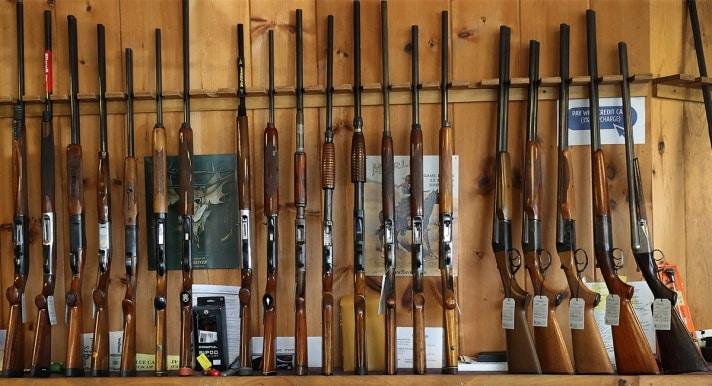
The RCMP Communications team emailed CSSA last week to “clarify” the RCMP’s role in the Liberal government’s Firearms Confiscation Compensation Scheme.

That clarification confirmed everything we said about them in our commentary, “Ottawa Flips the Switch on Gun Confiscations, Hands Control to the RCMP.”

(Incognito)

Share

Canadians are ready for Chinese-made autos, but experts note there are security risks

Weeks after Ottawa announced that it would allow a limited number of Chinese-made vehicles into the Canadian market, some have warned that the move puts data privacy at risk. But that might not be a significant turn-off for consumers who are in the market for a new car.

While roaming the Canadian International AutoShow on Friday, Dianne Dougall and Pat Shephard — who were scouting for a new EV to replace their Tesla — said that a Chinese-made EVs would “absolutely” interest them.

Privacy wouldn’t pose any more of a concern than any other connected vehicle, they said.


Given Carney’s policies will likely devastate domestic ICE vehicle manufacturing do you think it’s possible some Canadians may vandalize ChiCom EV’s? 

Gee I hope not for the sake of our Quisling 5th Columnists.

Share

Carney practises the illusion of EV mandate repeal

Replacing a ban on gas cars with strict new emissions standards sounds more sensible but will kill the auto industry just as effectively

Prime Minister Mark Carney, recognizing the need to act decisively to support our auto sector, has scrapped Canada’s electric vehicle (EV) mandate. Or has he? Unfortunately, close inspection shows that he merely rephrased the policy but the effect remains the same. Following the pattern of indecision and obfuscation set by his “Memorandum of Understanding” with Alberta, in which Carney sounded like he was greenlighting a new pipeline without actually doing so, the new auto policy repeals the mandate in name only.


I am really hoping that Trump does a Maduro on our WEF snake.

Meanwhile down south … The New York Times is sad!

With Latest Rollback, the U.S. Essentially Has No Clean-Car Rules

The E.P.A.’s killing of the “endangerment finding” caps a year of deregulation that is likely to make cars thirstier for gas and less competitive globally, experts say.

Share

Canada Gives U.S. Arms Makers the Cold Shoulder on Military Spending

Canada Recycles to save on military expenditures – The Sherman Air Superiority Ground Attack Tank Thingy

The Canadian government, faced with increasing hostility from the Trump administration, plans to divert billions of dollars in military spending it long gave to U.S. defense companies and direct it instead to domestic manufacturers.

Prime Minister Mark Carney’s wholesale expansion of Canadian military spending was prompted by pressure from President Trump, but with relations between the longstanding allies deteriorating, American companies will no longer reap the benefit.

Share

LILLEY: Liberals dead-set on attacking Jamil Jivani over effort to help with Trump

Liberals in this country are going out of their way to undermine a man who only wanted to help the country in trade talks with Trump.

First, they said Conservative MP Jamil Jivani wasn’t qualified to go to Washington. Then he was, according to Liberals, a Nazi sympathizer for going to Washington. And then he was too ugly to help.

Share

Canada bets on ‘Build at Home’ defence strategy to reclaim sovereignty — and revive readiness

Canada’s new defence industrial strategy sets out a series of important, extraordinarily high benchmarks for the country to achieve over the next decade, including buying and maintaining most of the military’s equipment domestically.

The long-awaited plan, which was developed more as a response to NATO’s call for industrial clarity among allies than to annexation threats by the Trump administration, sets a goal of awarding 70 per cent of federal defence contracts to Canadian firms within a decade.

Share

Gun control is popular in Canada. So why is a major buyback program attracting criticism?

The deadly mass shooting at a school in British Columbia came as Canadian authorities face significant obstacles in rolling out a nationwide firearms buyback that is mired in practical and logistical complications.

Canada already has far stronger gun laws than the United States, and mass shootings are extremely rare. The government brought forward major reforms and bans on assault-style weapons after the country suffered its worst-ever shooting attack in 2020, when a man impersonating a police officer killed 22 people in northern Nova Scotia.

Share

Behind Canada’s Sealed COVID-19 Reports

Pandemic governance and the cost to Canadian freedom.

On Feb. 2, 2026, Blacklock’s Reporter confirmed that Canada’s Liberal government has now “sealed internal reports on vaccine and drug injuries for 15 years” and revealed that the hastily buried documents shockingly “run to several million pages.”

Unfortunately, the Liberal government’s recent effort to further conceal the unspeakable damage wrought by the COVID vaccines in Canada is merely the latest sordid example of the fascist left-wing politics and open human rights violations that have plagued Canadian society since the onset of the COVID pandemic.

Share

Amid ‘Buy Canadian’ fervour, Canada’s top pension funds still heavily invested in U.S.

For all the fear over the U.S. trade war and President Donald Trump’s threats to Canadian sovereignty, this country’s biggest pension funds remain heavily invested in the U.S.

The Canada Pension Plan (CPP), the largest pension fund in the country, announced this week that it has grown to a record $780.7 billion in assets, with 47 per cent invested in the U.S., compared to only 13 per cent in Canada.

That level of U.S. ownership hasn’t budged in the year since Trump retook office, according to third-quarter results released on Friday.


But it gets better … kidding

h/t handy n handsome

Share

Dennis Molinaro: Diversifying trade with China is a losing play

I wrote the following in my book Under Assault: Interference and Espionage in China’s Secret War Against Canada:

“An economic slump in the U.S. was going to affect Canada’s financial health, and so trade diversification again became a driving consideration. But instead of diversifying trade with like-minded democracies, Canada went begging at the doorstep of the Communist state that had been engaged in foreign interference and espionage against Canada and the U.S. for the past 30 years.”

Share

GOLDSTEIN: The massive carbon footprint of Trudeau’s post-political life

If you want to understand why Justin Trudeau’s climate change policies were more about virtue signalling than actual virtue, look at his life post politics.

Between purchasing a $4.26-million mansion in Montreal’s pricey Outremont borough – an affluent residential area known for its stately Victorian homes – and gallivanting around the world with Katy Perry, Trudeau has become a living postcard of a life of excess consumption that climate change fanatics routinely condemn.

Share

The thing everyone is talking about but no one is thinking about in Ottawa politics

The fun thing about Ottawa is that it’s a town where people will swear with a straight face that they’re not thinking about a thing they are definitely thinking about, which is also the thing everyone is talking about.

This week, that thing is snap-election speculation.


It all depends on whether Xi decides the time is right.

Share

Randall Denley: Carney’s EV plan benefits Carney, not Canadian carmakers

At first glance, Prime Minister Mark Carney’s new auto industry strategy looks like billions of dollars in support for Ontario’s beleaguered vehicle manufacturers. Unfortunately, Carney’s EV-focused approach will do little or nothing to solve the industry’s problems.

It’s difficult to imagine a plan more untethered from the economic realities of the real-world auto industry. To summarize, the Carney plan relies on electric vehicles (EVs) that Ontario plants don’t produce, a sudden and dramatic new appetite for buying EVs and an imagined export market that doesn’t exist. To top it off, the federal government will provide $2.3 billion in EV rebates that will encourage Canadians to buy cars made elsewhere, although the new Chinese imports are excluded.

Share

CSIS officials say China is more of a concern in Canada’s Arctic than Russia

Lynd’s warning comes just a month after Prime Minister Mark Carney signed a new ‘strategic partnership’ with China

OTTAWA — While Russia remains a military threat in the Arctic, Canada’s security officials told a House of Commons committee this week that they remain primarily focused on China’s threats to economic security in the North.

“Russia has a tremendous interest and focus in the Arctic,” Paul Lynd, assistant director at the Canadian Security Intelligence Service (CSIS), told the foreign affairs committee on Thursday. “However, they are of less concern than, say, the activities of China and other hostile state actors at this time.”

Share