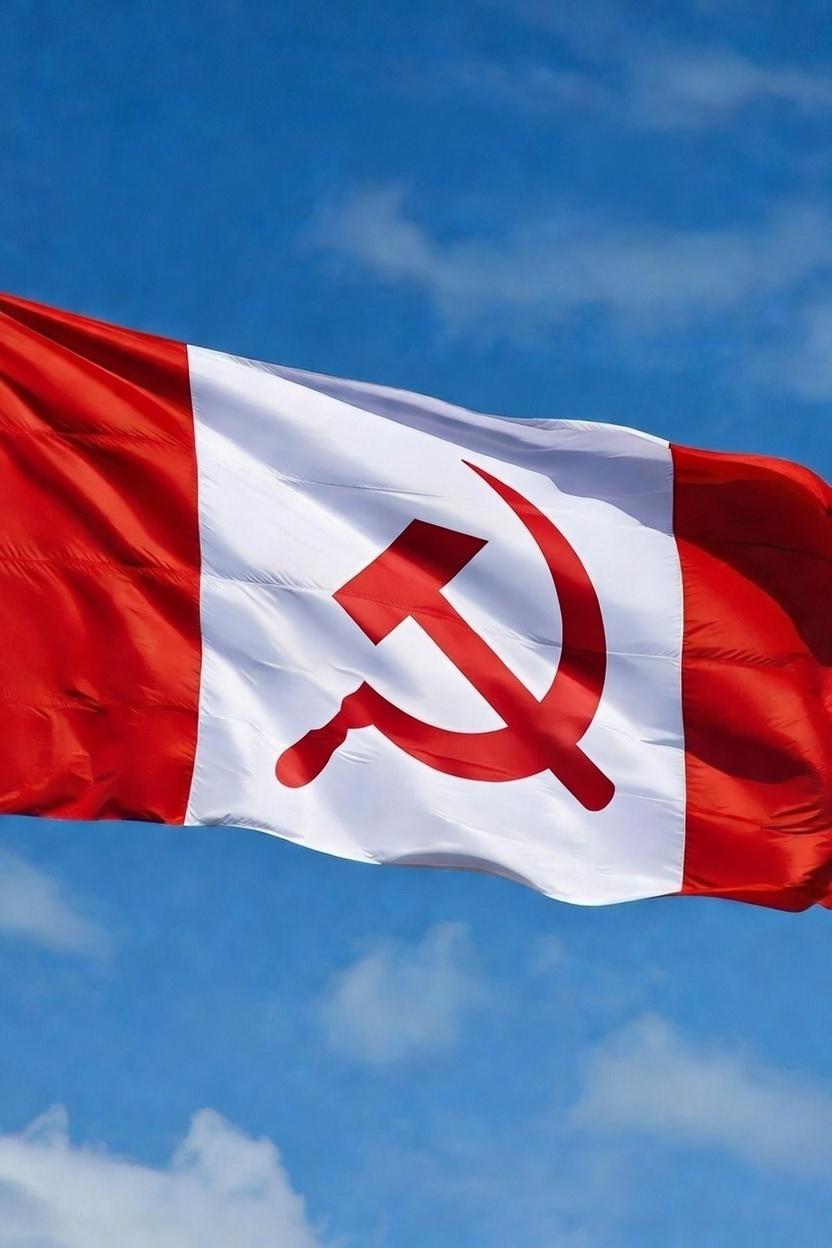

The US Has a National Security Strategy. Where’s Canada’s?

On Dec. 5, 2025, the president of the United States announced a new national security strategy. Each successive U.S. administration issues such a document at the beginning of its term, forcing a reassessment of national security at least every four years. It is a foundational exercise for government and for the public.

The release has gone largely unnoticed by Canadian media and officials, save for a few comments from the minister of National Defence. The minister said he was “taking note” of the new U.S. strategy but that Canada would follow its own national security strategy. Many Canadians are left wondering what that strategy actually looks like.

Share

Carson Jerema: There is no ‘business case’ for pipelines because Liberals want it that way

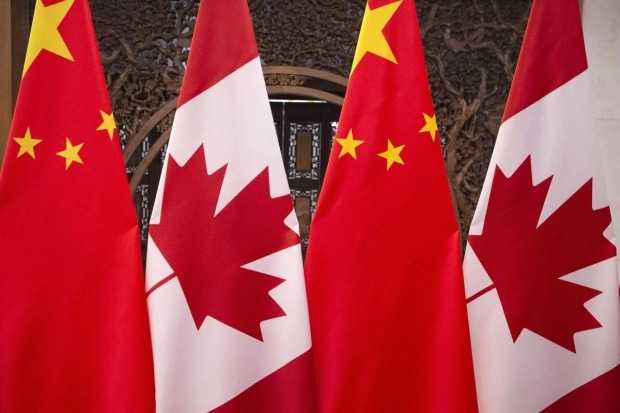
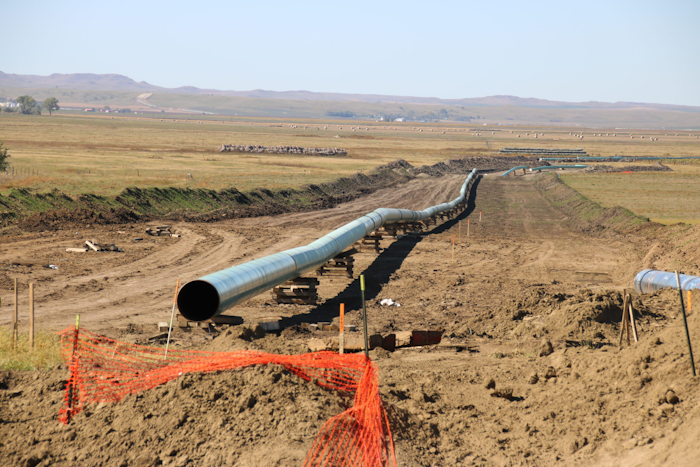
There is something perverse about a government that once claimed there is “no business case” to sell natural gas to Europe so our allies don’t have to rely on Russia, but whose prime minister is happily going to China to talk energy exports. That energy, by the way, could very well end up powering a Chinese invasion of Taiwan. The Liberal party’s disreputable habit of siding with authoritarian enemies of the West aside, the government’s position on whether there is a “business case” for an energy project has nothing to do with the market, and everything to do with politics.

Share

2.1M temporary residents will have expired or expiring permits this year. But will they leave Canada?

How immigration policy is made in Canada.

Abhishek Parmar has spent more than six years making Windsor-Essex his new home. But now he is one of the 2.1 million temporary residents who may have to leave Canada this year.

“I have never even thought of leaving this place,” he said. “And now, things are coming to an end. It is not a good feeling.”

The 25-year-old arrived in Windsor-Essex in 2019 from India to pursue mechanical engineering technology at St. Clair College. After having spent more than $80,000 on tuition and living expenses, Parmar said he landed a job at an automotive company in LaSalle. He filed for permanent residence (PR) in 2024 with an Ontario immigration pathway.


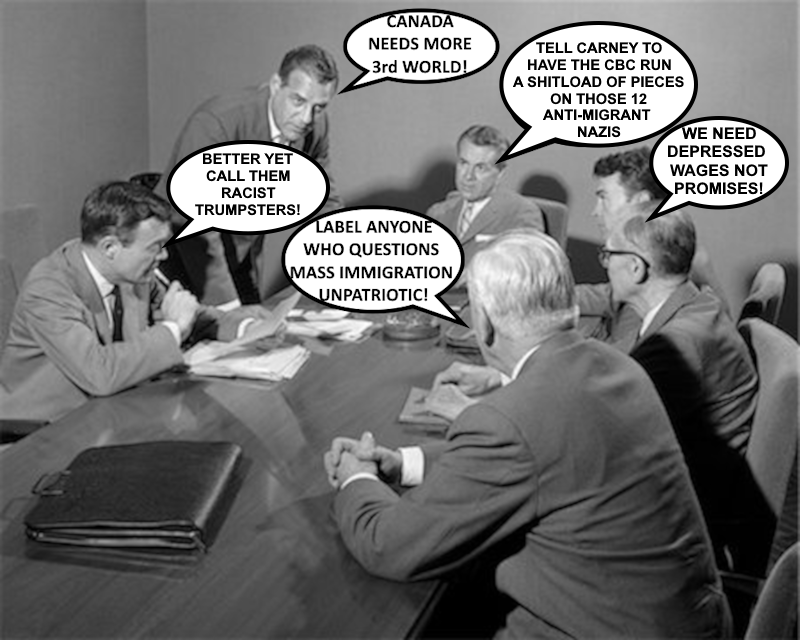
Of course not, Carney and his corporate pals love the profits to be had from cheap foreign labour.

The Liberals are following the same play book as the Democrats did in the US.  Weaponized open borders.

If the US were to invade Canada I would not heed a call to arms.

I will not “defend” a ruling class that has impoverished Canadian citizens through mass immigration and the “Green” destruction of our economy. 

A blight upon the land. h/t Mauser

Share

How productive is the public service? We’ll never know

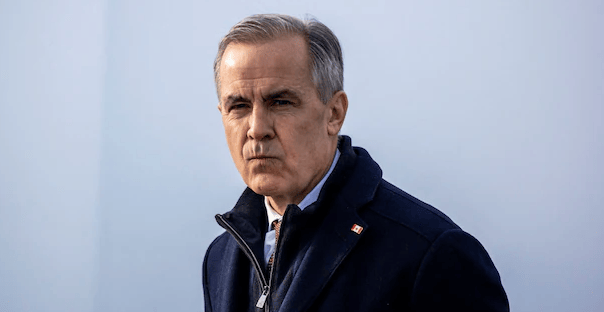
The federal government’s limp response to measuring public service productivity — that they’re simply not going to do it — is deflating for those who imagined that Prime Minister Mark Carney would act like a noted economist.

Instead, Mark Carney, the politician, has chosen to ignore his own government’s expert task force’s recommendation to collect data that would measure productivity across the public sector. By that one act, Carney undermined his own credibility as a rational business leader and made a farce of the debate over whether working in the officeis more productive than working at home. Without measuring productivity, how would anyone know?

Share

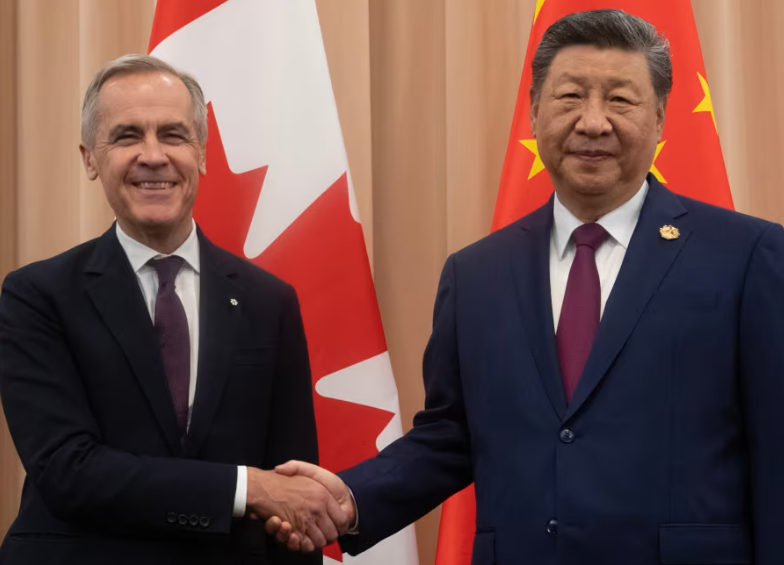
Human Rights Coalition and Former Diplomatic Hostage Sound Alarm as PM Carney Heads to Beijing — Questions Swirl Around Chrétien’s China Business Ties

BEIJING / OTTAWA — On the eve of Prime Minister Mark Carney’s first official visit to China, a coalition of nine human-rights organizations is elevating an open letter urging Ottawa to put human rights at the center of Canada’s dealings with Beijing, rather than deepen commercial ties that critics say reflect the influence of a powerful Quebec-based business lobby long associated with former Liberal leader Jean Chrétien.

Share

Carney government in talks with China about EV tariffs

OTTAWA — Canadian negotiators are in “active discussions” with China about lowering or dropping tariffs on Chinese-made electric vehicles in exchange for easing punitive Chinese counter-tariffs on Canadian canola and seafood, but government officials declined to say how it might affect Canada’s trade tensions with a U.S. administration that is hawkish on blocking China’s EVs from North America.

On the eve of Prime Minister Mark Carney’s trip to Beijing, the talks are considered so politically sensitive as the U.S. and Canada navigate the upcoming negotiation to renew the North American free trade pact that Canadian officials would say very little about the tariff dispute that is jamming Ottawa between China and the U.S. and opened a double trade war for this country.


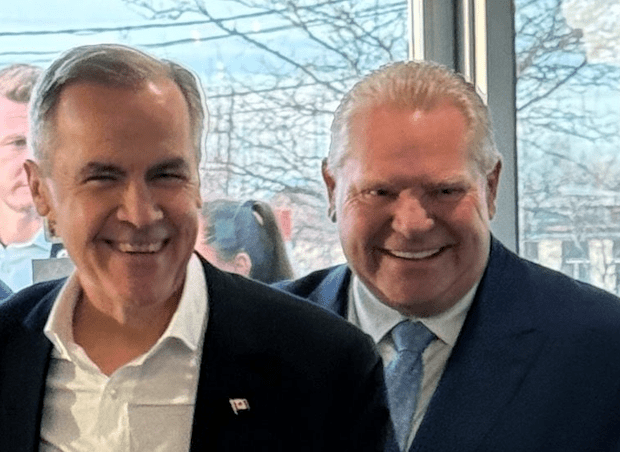
It appears Ford was not asked for comment.

Share

Amy Hamm: Canadian trust in institutions is at a low point — and that’s a good thing

Canadians are losing trust in major institutions, including Parliament and the school system. Good — because our institutions need an overhaul. Perhaps this country isn’t a lost cause, after all.

Statistics Canada released the “confidence in institutions” results from the Canadian Social Survey for the fourth quarter of 2024 earlier this month. Survey respondents were asked to rate their confidence in police, the justice system and courts, the school system, Parliament and Canadian media. Each institution was rated on a scale of one to five.

Share

Supreme Court revisits Trudeau-era WE Charity scandal in case that could reshape the law

The remnants of an early-pandemic political scandal land at the Supreme Court of Canada this week in a case that could have widespread ramifications, as the top court considers the limits of citizens’ ability to challenge some government decisions.

In June, 2020, then-prime minister Justin Trudeau said WE Charity, the international development group founded by the Kielburger brothers, would run a youth summer jobs program worth about $900-million. Conflict-of-interest accusations flared, and the plan was scrapped soon thereafter.

Share

Underground church says leaders detained as China steps up crackdown

Carney loves China. Carney wants to ‘recalibrate’ Canada-China relations with visit

Leaders of a prominent underground church have been detained in south-west China, according to a church statement, the latest blow in what appears to be a sweeping crackdown on unregistered Christian groups in the country.

On Tuesday, Li Yingqiang, the leader of the Early Rain Covenant Church, was taken by police from his home in Deyang, a small city in Sichuan province, according to the statement. Li’s wife, Zhang Xinyue, has also been detained, along with two other church members: Dai Zhichao, a pastor; and Ye Fenghua, a lay member. At least a further four members were taken and later released, while some others remain out of contact.

The crackdown followed the arrest of 18 senior members of Zion Church, another prominent underground church, in a nationwide sweep in October. In December, there were also reports of approximately 100 members of another unofficial church in Zhejiang province being detained , according to Human Rights Watch.

Share

Conrad Black: What Carney should have said about Venezuela

The enfeebling ambiguity of Canada as a government and a state among the nations of the world is underlined almost every week. The prime minister’s statement on the removal of former Venezuelan president Nicolás Maduro was commendably critical of the former president and skirted international law questions in a way that permits Carney to claim to recognize them without aggravating our relations with the Trump administration with whom delicate trade negotiations are underway. All the while, agitation continues in Parliament for the criminalization of those who would justify the native residential school system or minimize the negative consequences of it.

Share

Small majority of Canadians want more trade with China: Ipsos poll

As Prime Minister Mark Carney prepares to travel to China and seeks to restore trade and diplomatic ties, a small majority of Canadians say they support more trade with Beijing, a new poll suggests.

The Ipsos poll conducted exclusively for Global News, released Saturday, found that 54 per cent expressed support for closer trade ties and economic agreements with China.

The Elbow People are driven mad with TDS.

Share

GOLDSTEIN: Liberals’ tough talk on Iran today follows years of inaction

While Canada’s condemnation of the Iranian regime’s brutal attempts to quell the latest popular uprising against its corrupt and insane leadership is welcome, it flies in the face of the actual Liberal record in dealing with Iran.

On Friday, Canada joined with Australia and the European Union calling for Iran to “immediately end the use of excessive and lethal force by its security forces, including the Islamic Revolutionary Guard Corps (IRGC) … against protestors. Too many lives – over 40 to date – have already been lost.”

Share

The Former ‘Minister of Everything’ Quits Office Amid One Last Political Storm

In 2013 Chrystia Freeland quit journalism and ran for Parliament as a Liberal in what was then seen as a significant endorsement of Prime Minister Justin Trudeau’s takeover of the party’s leadership. Once he was in power, Ms. Freeland became what Mr. Trudeau called his “minister of everything.” Then just over a year ago, she began the end of Mr. Trudeau’s career in politics with a resignation letter as finance minister that contained a stinging rebuke of his policies.

On Friday, Ms. Freeland’s political career came to its slow end as she officially stepped down from the House of Commons to take on an unpaid, part-time role as an adviser to Ukraine on economic development.

Share

BURTON: Why people are leaving Canada — a country testing the limits of decline

Canadians are leaving — not in small numbers, not quietly, and not for trivial reasons. They are leaving because Canada is becoming economically uncompetitive, socially fractured, politically coercive, and increasingly intolerant of dissent. This is not a matter of pessimism or ideology; it is a rational response to a country that is steadily eroding the conditions that once made it attractive to live, work, raise a family, and invest.

For decades, Canada enjoyed a reputation as a stable, rules-based democracy with opportunity, fairness, and freedom at its core. That reputation is now under serious threat. People are voting with their feet, and the message they are sending is unmistakable: Canada is losing its way.

h/t Patti Jo

Share