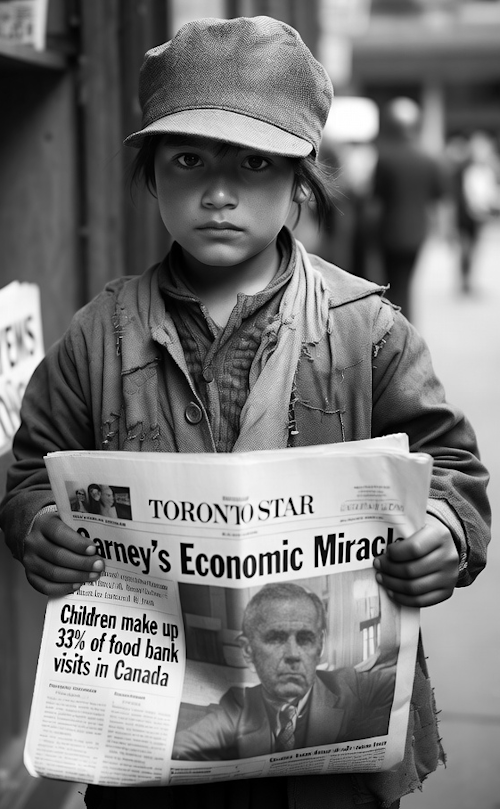
Children make up 33% of food bank visits in Canada.

Despite community efforts to feed the city’s youngest residents, the percentage of children using the Saskatoon Food Bank hasn’t declined in the last 18 years that Laurie O’Connor has worked there.

About 40 per cent of the food bank’s requests for hampers are made on behalf of children, according to O’Connor, the food bank’s executive director.

“That number really hasn’t fluctuated much in those two decades. So whether or not we can respond to the need hasn’t made that big of an impact on child poverty,” she told CTV News.

Share

Toronto considers micro-shelter communities to tackle homelessness

Micro-shelter communities are being floated as one way to provide emergency housing for people experiencing homelessness in Toronto.

However, some challenges have emerged, as 44 city-owned properties identified for potential sites have all been deemed unsuitable.

Nonetheless, the City of Toronto is moving forward with a two-year pilot, with the caveat that interested non-profits must come up with private land options.

Share

HEINRICHS: ‘Drill baby drill’ vs. net zero — is Canada becoming America’s poor cousin?

According to the US government, climate change from man-made greenhouse gases is fake news. Lee Zeldin, director of the Environmental Protection Agency, brands it as nothing but “climate change religion,” while President Trump calls it a hoax and “perhaps the biggest scam in history.” The climate-change debate is dead and over — at least under one roof.

On this track, the US government is now shredding a tall stack of greenhouse-gas regulations. It’s being called the “single largest regulatory action in US history.”

(Incognito)

Share

Why Canada’s GDP per capita crisis is real

The Globe and Mail sparked a debate when it reported that Canada’s GDP per capita has fallen behind Alabama’s. The comparison rattled Canadians and triggered a wave of criticism about the validity of using GDP per capita as a measure of national prosperity.

Critics argue that GDP is a flawed metric, pointing to legitimate measurement challenges. But these measurement issues affect every country. The question is not whether GDP per capita is perfect but whether Canada’s trend relative to our peers signals deeper problems.

The evidence suggests it does.

Share

Canada slips further in World Happiness rankings continuing a decade-long downward trend … oddly coinciding with Liberal Party misrule

Heavy social media use has contributed to a stark decline in well-being among young people, with the effects particularly worrying in teenage girls in English-speaking countries — including Canada — and Western Europe, according to the World Happiness Report 2026 published Thursday.

The annual report, published by the Wellbeing Research Centre at the University of Oxford, also found that Finland is the happiest country in the world for the ninth year in a row, with other Nordic countries such as Iceland, Denmark, Sweden and Norway ranking among the top 10 countries.

h/t Patti Jo

Share

What we’ve lost (10): A normal life

Ben Woodfinden: Canada has failed its younger generations, which no longer have the opportunity to live the life that their parents did

In the 2024 World Happiness Report, Canadians over 60 ranked eighth in the world. Canadians under 30 ranked 58th. Happiness is, of course, subjective and hard to measure, but the gap between a country that still works for one generation and has completely failed another points to a broken social contract.

Share

LILLEY: Truthfully Canada doesn’t have what’s needed to join Iran war

The discussion going on about whether Canada could or should get involved in the war launched against Iran by the United States and Israel is becoming laughable.

We’ve had Prime Minister Mark Carney say that Canada wasn’t consulted nor asked to participate in the strikes last week.

Share

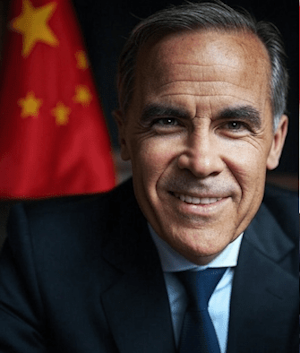
MACLEOD: The Beijing Blackout — Inside Carney’s secret police pact with China

When Prime Minister Mark Carney stood in Beijing last month to announce a new “Strategic Partnership,” he spoke of stability and pragmatism. But for those of us watching the fine print, one document stands out as a glaring threat to Canadian sovereignty: the Memorandum of Understanding (MOU) on cooperation between the RCMP and China’s Ministry of Public Security (MPS).
Share

‘Buy Canadian’ policy likely to cost taxpayers $12 billion yearly: study

A study released by the Montreal Economic Institute estimates the federal government’s “Buy Canadian” policy could increase the cost of large infrastructure projects by more than $12 billion per year.

The study states that, among Organization for Economic Co-operation and Development (OECD) countries, total expenditures on public procurement accounted for 12.9 per cent of gross domestic product in 2021.

Share

There are lessons for Poilievre and Carney in U.K. byelection

Pierre Poilievre, leader of His Majesty’s loyal opposition, is visiting the King’s home turf this week, where he gave a keynote speech at Margaret Thatcher’s think tank of choice. The visit comes at a good time for Poilievre to open his ears as well as his mouth.

For the United Kingdom is deep into a period of political turmoil, one that is seeing the fragmentation of the country’s vote, with the mainstream and historically dominant Conservative and Labour parties ceding ground to insurgents from either extreme.

Share

What we’ve lost: Stigma

It turns out that population-wide disdain for those who live to get high was a very good thing

Progressives were so preoccupied with eradicating stigmas that contain anti-social behaviour in Canadian society, they didn’t stop to think if they should. Well, they accomplished their goal: that natural containment field of shame that once stood between people and bad decisions is gone. Is your life better because of it? Probably not.

Share

HILL: From proud nation to managed decline — the Canada I no longer recognize

Over a month ago, I decided to try writing a book. Other than hundreds of guest newspaper columns and myriad speeches on enumerable topics over the past forty years, I am not a writer. I have had no formal education to prepare me to undertake such a daunting task. Indeed, I only achieved a grade twelve diploma way back in 1970, largely due to the constant and unrelenting encouragement, and at times direct intervention, of my mother. Given this, you’d be forgiven for asking, why?

What could motivate someone like me to accept such a challenge?

Share

JOHNSON: Breakdown of the world, and the new ‘caliphate political party contradiction’

Due to mass migration, we can expect a disordered democracy and a permanent security crisis on the horizon.

On February 28, a major military conflict erupted in the Middle East. The primary actors in this war are the United States (US) and Israel on one side, and the Islamic Republic of Iran (along with its regional proxies) on the other. This black swan event will have catastrophic cascading effects that Western powers do not seem to understand, especially because mass migration and the rise of caliphates in the West raise serious questions around the national interests, political process, and security. Even if a change of regime were possible, it would be hard to imagine it would result in a very pleasant liberal democratic progressive utopia when every other regime change has delivered an ISIS, Alqaeda, or Muslim Brotherhood-controlled hellscape.

(Incognito)

Share