
Food should be free. Prove her wrong.
You can’t, can you? pic.twitter.com/6caVdttGEE— Dr. Jebra Faushay (@JebraFaushay) March 7, 2026
wtf
Food should be free. Prove her wrong.
You can’t, can you? pic.twitter.com/6caVdttGEE— Dr. Jebra Faushay (@JebraFaushay) March 7, 2026
POV: you come home from being gone for a few days and you walk into this.
Would it bother you? pic.twitter.com/nqDXZvAtNC
— Dr. Jebra Faushay (@JebraFaushay) March 7, 2026
 What could possibly go wrong?
Scientists say medicine stands close to a breakthrough that once sounded like science fiction. Bali Pulendran, professor of pathology, microbiology, and immunology at Stanford University School of Medicine, leads a research effort to develop a “universal vaccine” that protects against multiple respiratory threats simultaneously.

One of Jeffrey Epstein’s prison guards googled the sex predator minutes before he was found dead — and also made a mysterious $5,000 cash deposit 10 days before the predator’s jail-cell suicide, new Department of Justice documents reveal.
Tova Noel was one of the two Metropolitan Correctional Center workers accused of falsifying records to say they checked on Epstein throughout the night before his Aug. 10, 2019, suicide.
They’re not even trying any more.
 Police in Canada have concluded that a missing Iranian activist was most likely the victim of murder, prompting fears that his disappearance has the hallmarks of a transnational repression campaign targeting critics of Tehran.
Masood Masjoody, a mathematician critical of both Iran’s theocratic regime and the exiled family of the former shah, went missing in early February in the city of Burnaby, British Columbia.
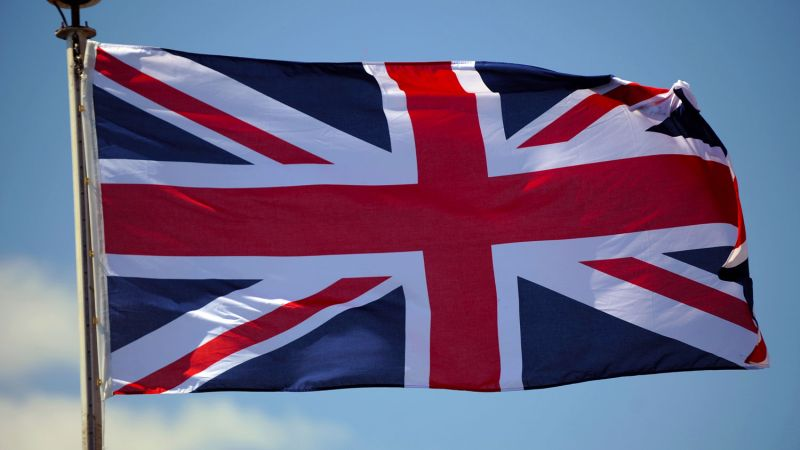
Flying English, Scottish and Union Jack flags has been branded as ‘tools of hate’ in a leaked draft of the Government’s new social cohesion strategy.
A leaked draft of the proposals suggests national symbols were sometimes used last summer to ‘exclude or intimidate’.
It warned that the ‘extreme right has tried to turn symbols of pride into tools of hate’.
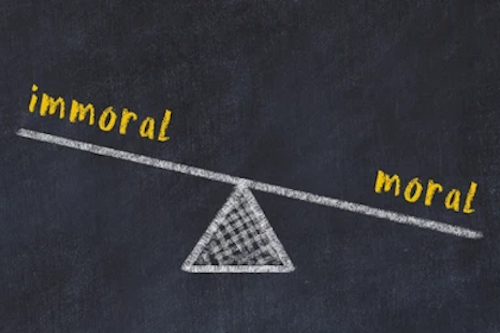
A survey of 25 countries by the Washington, D.C.-based Pew Research Center has found that Americans are most likely to rate others living in their country as morally or ethically bad. In fact, it was the only country where more people defined others as bad than good.
At the other end of the scale was Canada.
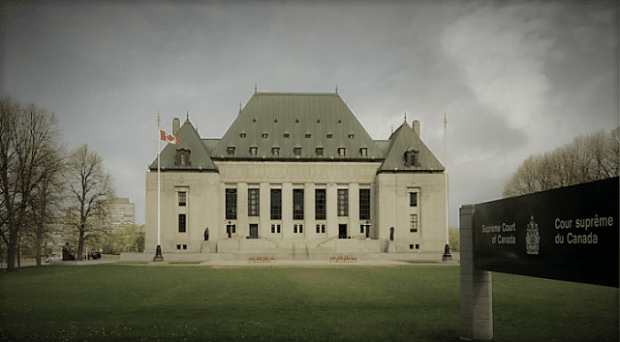
The Supreme Court of Canada has ruled that Quebec discriminated against female refugee claimants by introducing regulations that denied them access to subsidized daycare spaces.
This marks the third ruling against the Quebec government on the matter.
Geezuz. 🦨🌬️@fancypants_s https://t.co/BPAm0eDCiT
— Auntie Polly (@auntie_polly) March 6, 2026
H/T Auntie Polly
Bloody hell, that must have been quite a Facebook post pic.twitter.com/r6O24Qidde
— Peter Hague (@peterrhague) March 6, 2026
Daniel Lurie, the Democrat Mayor of San Francisco, is under fire after a video shows him casually ABANDONING his security guard, who gets slammed onto the pavement during a fight and begins bleeding. pic.twitter.com/n6jZR7GR3o
— Libs of TikTok (@libsoftiktok) March 6, 2026

The economic reasoning is powerful, but it breaks down against reality.
I hate to disagree with my colleague, the great Roland Fryer—and doubly so when it comes to economics. Fryer’s work is consistently both stimulating and insightful, and his contributions to public policy substantially outstrip my own. I nevertheless feel obliged to comment on his recent Wall Street Journal op-ed, in which he uses sound economic reasoning to reach a conclusion I reject: that we should legalize and tax addictive drugs.
