Ramia was preparing for a family picnic, on a warm summer day in her village in Latakia province in western Syria, when a white car drove up, she said.
Three armed men got out, saying they were government security forces, and dragged her into the vehicle, the teenager, whose name has been changed for her safety and to protect her identity, told the BBC World Service.
The men beat her, she said, hitting her harder when she started crying and screaming.
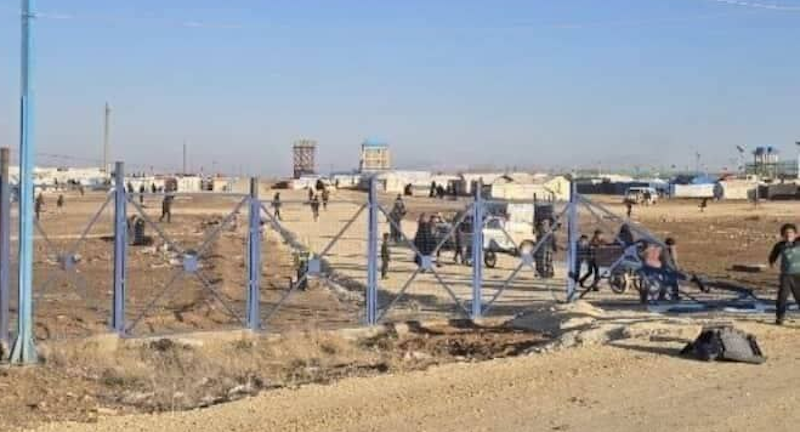
Humanitarians warned for years that the camps in north-east Syria holding tens of thousands of family members of suspected Islamic State (IS) fighters would have to be dealt with. Calling them a “ticking time bomb”, relief groups said the women and children could not just be left to rot in squalid desert camps indefinitely, because eventually they would come home.
Despite the warnings, most states ignored the problem, refusing to repatriate their citizens. At least 8,000 women and children from more than 40 countries have been stranded in the camps of north-east Syria since 2019.
This week, they started to come home. Belgian authorities reported a woman charged in absentia for IS membership had made her way from Turkey to Belgium. An Albanian woman, kidnapped as a child by her father and taken to Syria, managed to smuggle herself to Turkey, where she requested travel documents.
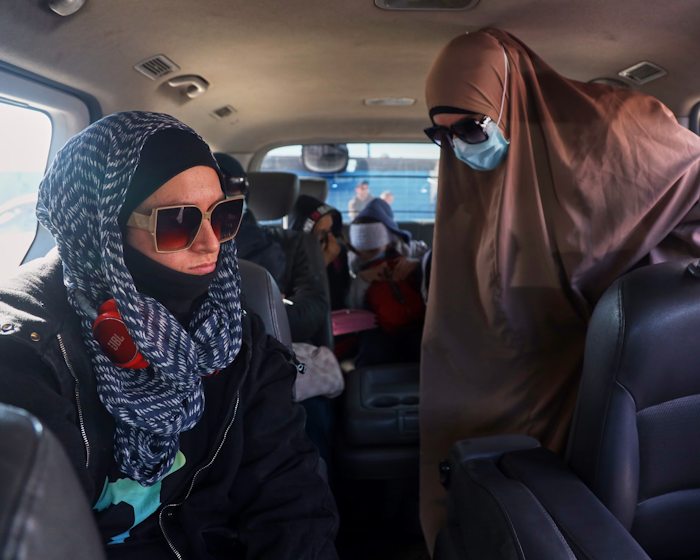
Australian women and children held for years without charge were forced to return to a detention camp in northeast Syria on Monday after being released by Kurdish authorities for their expected repatriation to Australia.
The 34 women and children in the group are the wives, widows and children of dead or jailed Islamic State fighters and were being held at al-Roj camp, which is controlled by the Kurdish-led Syrian Democratic Forces (SDF).
They were initially handed over to relatives who had helped arrange for their repatriation and were on their way to Damascus to leave the country when they were asked to stop on the way and turn back to the camp.
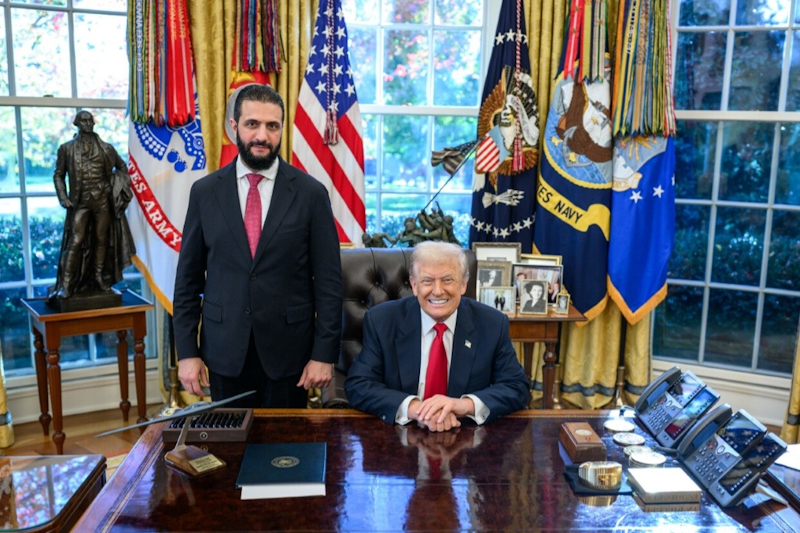
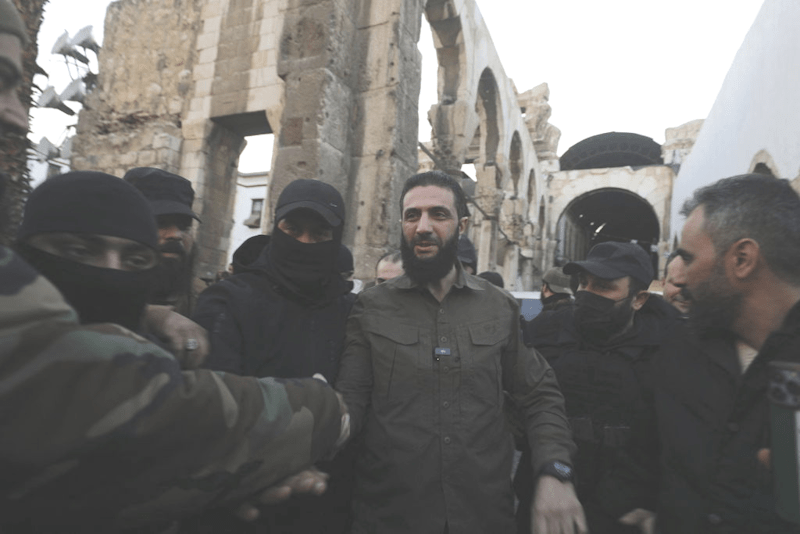
US President Donald Trump’s campaign to prevent Islamic State (IS) terrorists from staging a comeback is in serious danger of being undermined because of his support for Syria’s Islamist “interim” president, Ahmed al-Sharaa.
It was not that long ago that al-Sharaa had a $10 million bounty on his head after Washington designated him a terrorist for his close links to al-Qaeda in both Iraq and Syria.
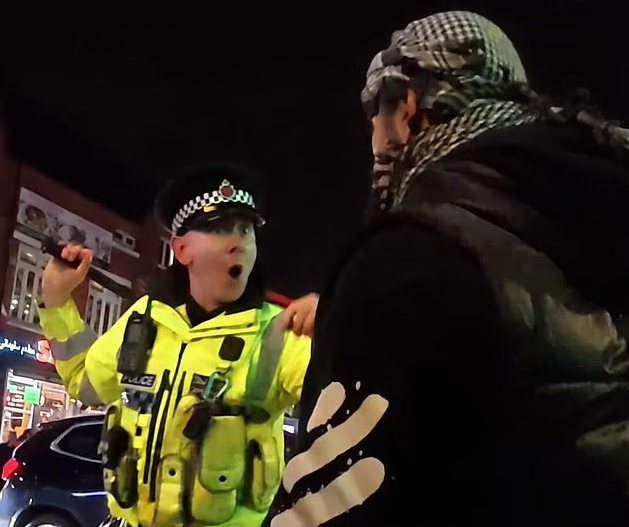
A man was stabbed and cars and businesses were smashed up as fights broke out between groups of people of Syrian and Kurdish heritage in Manchester this week.
At least four people were arrested after hundreds descended on the city’s iconic Curry Mile for a second night of protests, led by the local Kurdish community, on Wednesday.
Disorder first broke out on Tuesday following a protest in the Rusholme area of the city, with police putting in place a Section 34 dispersal order.
MANCHESTER MEETS KURDISTAN!
Kurd-supporting demonstrators took to the streets last night. England looks like a third world country and has gone back 400 years pic.twitter.com/r4TzwRNaOI
Syria’s Islamist government, led by Ahmed al-Sharaa—also known as Abu Mohammad al-Julani—is currently waging attacks against the Kurdish-led Syrian Democratic Forces (SDF). Since January 6, an estimated 150,000 people, including Kurds, Christians, and Yazidis, have been internally displaced by forces loyal to Julani.
Julani is the head of the terrorist group Hay’at Tahrir al-Sham (HTS). The SDF is a U.S. ally who fought against the Islamic State (ISIS) for over a decade.
In Antwerp yesterday …
Six people were just stabbed in Antwerp during a Kurdish protest against the new Syrian regime. When Europe imported the Middle-East, it also imported its conflicts. Time to remove them all. pic.twitter.com/5gm3DDji9i
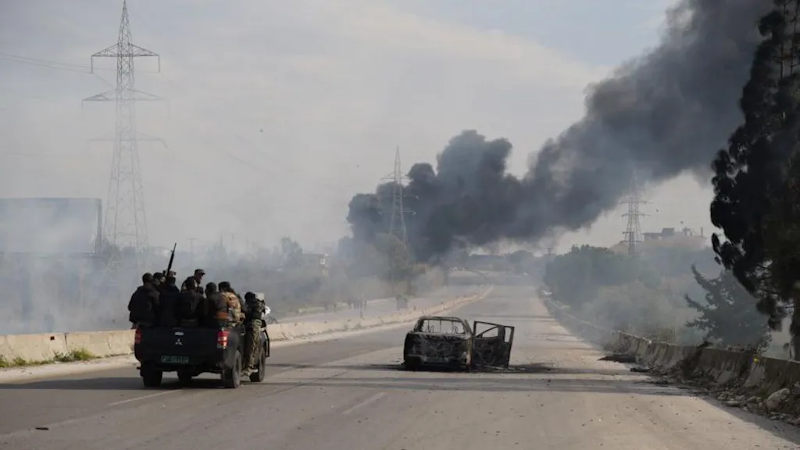
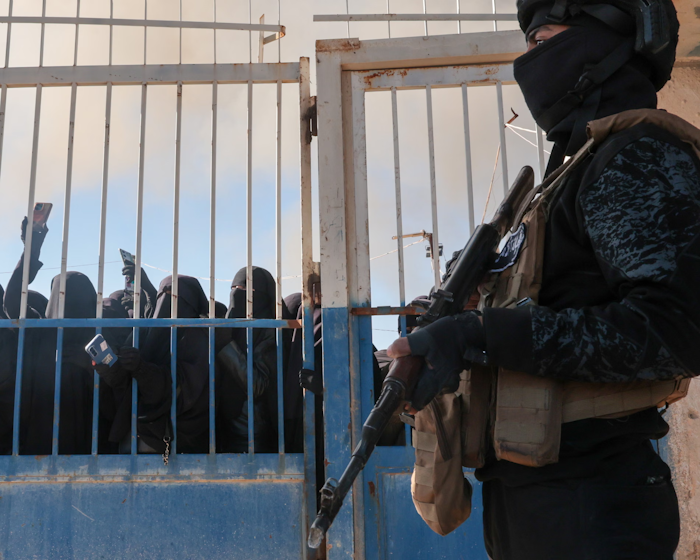
Relatives of Islamic State members set fire to buildings and escaped from a sprawling prison camp in Syria on Tuesday as Kurdish troops abandoned the site under attack by the army.
The head of al-Hol camp said that its residents, most of whom are female and many of whom are married to jailed or killed extremists, were rioting after fighting between Kurdish and Syrian army troops.
BREAKING:
The Kurdish-led SDF forces have withdrawn from the al-Hol camp where 22 000 ISIS kids & 20 000 ISIS wives are imprisoned
Many of the kids were born there to parents with EU citizenships. Presumably, many of them will now try to return to Europe pic.twitter.com/Gp4ukzftI5
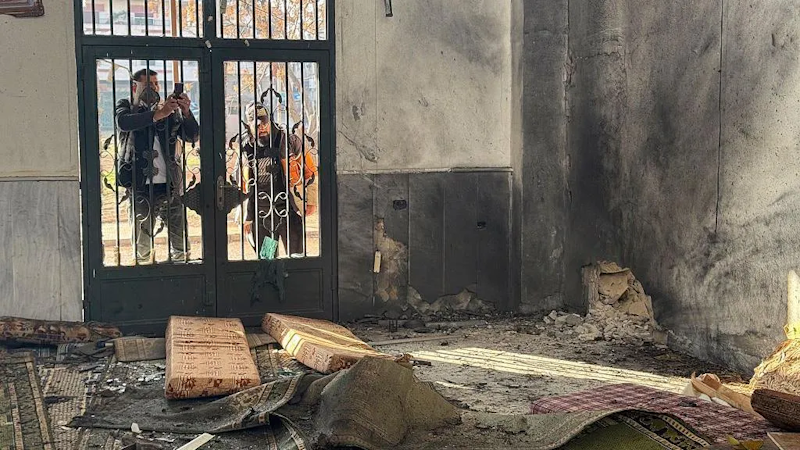
An explosion has killed at least eight people and injured 18 others during Friday prayers inside a mosque in the Syrian city of Homs, the health ministry has said.
Pictures from Syria’s state-run news agency, Sana, show the inside of the Imam Ali ibn Abi Talib Mosque with black, scorched walls, smashed windows and blood on the carpet.
Officials believe that an explosive was detonated inside the building, Sana reports, citing a security source. While authorities are still searching for the perpetrators, jihadist group Saraya Ansar al-Sunnah said it was behind the explosion
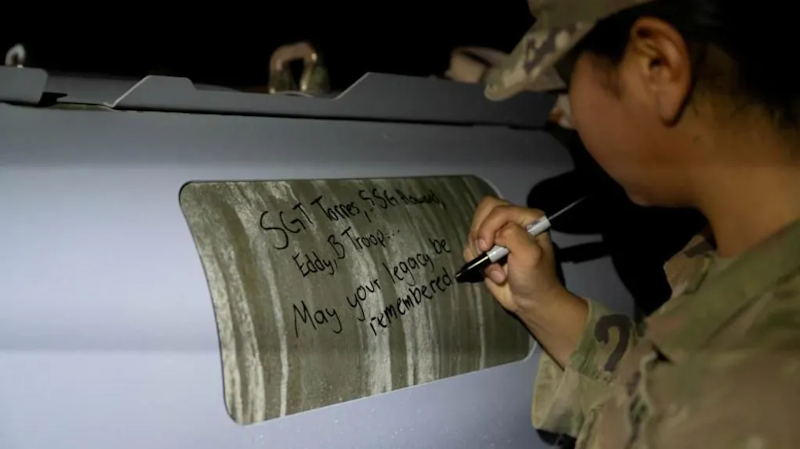
The attack on US troops by a Syrian security forces member who was a supporter of the extremist “Islamic State” group in mid-December has consequences well beyond the four deaths that resulted.
One question continues to arise after the recent killing of two US soldiers and a civilian translator in central Syria by a follower of the extremist “Islamic State” group.
The killer had infiltrated the Syrian security forces. How many others in the Syrian security forces might hold similarly extreme opinions?
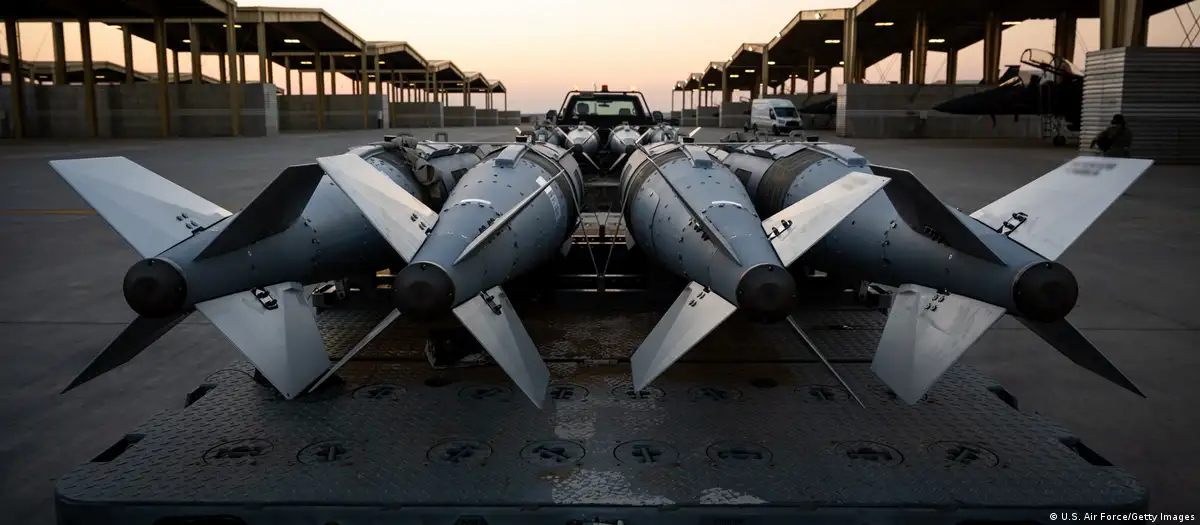
The US says its military has carried out a “massive strike” against the Islamic State group (IS) in Syria, in response to a deadly attack on American forces in the country.
The US Central Command (Centcom) said fighter jets, attack helicopters and artillery “struck more than 70 targets at multiple locations across central Syria”. Aircraft from Jordan were also involved.
It said the operation “employed more than 100 precision munitions” targeting known IS infrastructure and weapons sites.
SecWar Pete Hegseth confirms MASSIVE U.S. STRIKES in Syria on Islamic terrorists under OPERATION HAWKEYE STRIKE, after US troops were ambushed by Islamists
"This is not the beginning of a war — it is a declaration of VENGEANCE."
Two US soldiers and a US civilian interpreter have been killed in Syria in an ambush by an Islamic State gunman, the US Central Command has said.
Officials said three other service members were injured in the attack, during which the gunman was “engaged and killed”.
In a post on X, the US Central Command said the attack was “the result of an ambush by a lone ISIS gunman”, while a Pentagon official said initial assessments showed the attack was likely to be carried out by the Islamic State group.
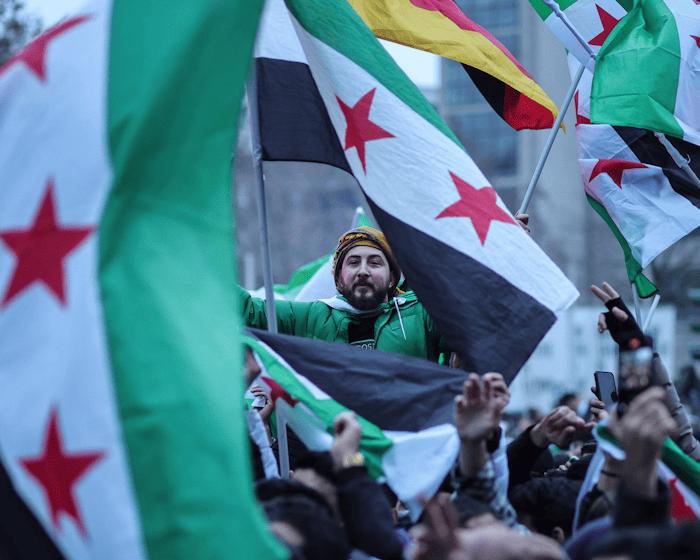
Tears of joy streamed down Abdulhkeem Alshater’s face as he joined thousands of other Syrian nationals in central Vienna last year. The moment they were marking felt like a miracle: after more than five decades of brutality and repression, the Assad regime had fallen.
A day later, however, the ripple effects of what had happened 2,000 miles away in Syria were laid bare. A dozen European states announced plans to suspend asylum applications from Syrians, in a show of how western states are increasingly treating refugees as transients. As the fall of Bashar al-Assad collided with politicians’ quest to be seen as taking a hard line on migration, the lives of Syrians around the globe were plunged into uncertainty.
In Austria, where Alshater had spent the past decade painstakingly rebuilding his life – learning German, upgrading his professional certifications and raising his family – the government said it had ordered a review of cases where asylum had been granted to Syrians and that a programme of “orderly repatriation and deportation” was being prepared.
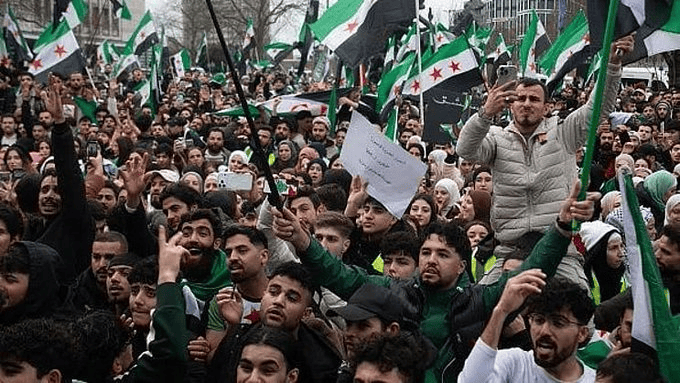
German migration policy came under renewed fire after the right-wing opposition AfD sharply criticised large gatherings of Syrians celebrating the first anniversary of the fall of the Assad regime—not in Damascus, but on the streets of German cities.
As many critics have pointed out: the scenes are evidence that Germany’s approach to asylum and integration has fundamentally failed.
The federal government has removed Syria from its list of states that sponsor terrorism, almost a year after the fall of former president Bashar al-Assad’s regime.
Syria had been put on the list in 2012 while Assad was still in power. The country was in the midst of a conflict that began in March 2011, killing nearly half a million people and displacing half the country’s pre-war population of 23 million.
Syria’s new government — headed by former Islamist insurgent leader and now interim President Ahmed al-Sharaa — has been putting effort into reintegrating the country into the international fold.
They’re all terrorists.
📹 One of hundreds of videos showing the new Syrian Army executing civilians in Pajama, dragged from their homes for the simple crime of being Alawite pic.twitter.com/9EXpRsFMFy
— Angelo Giuliano 🇨🇭🇮🇹🔻🔻🔻 (@angeloinchina) March 7, 2025