As Military Powers Jostle for the Arctic, How Far Behind Is Canada?

The Arctic’s growing importance has reached the point that acquiring Greenland has become a key demand for the second Trump administration amid concerns about Russian and Chinese ambitions in the region, drawing protestations from other allies who urge continued Danish sovereignty over the autonomous territory.

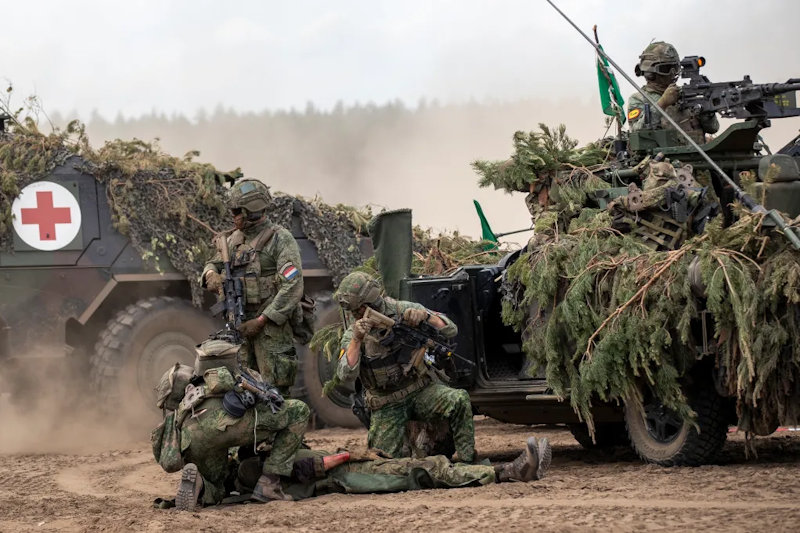
When it comes to Canada’s defence of the Arctic, its capabilities for the roughly 4-million-square-kilometre expanse of Arctic territory falls far short when compared to both adversarial countries and its ally the United States. However, some analysts warn that Canada may be falling behind even middle-power Arctic nations, if the sheer size of its Arctic territory is taken into account.

Share

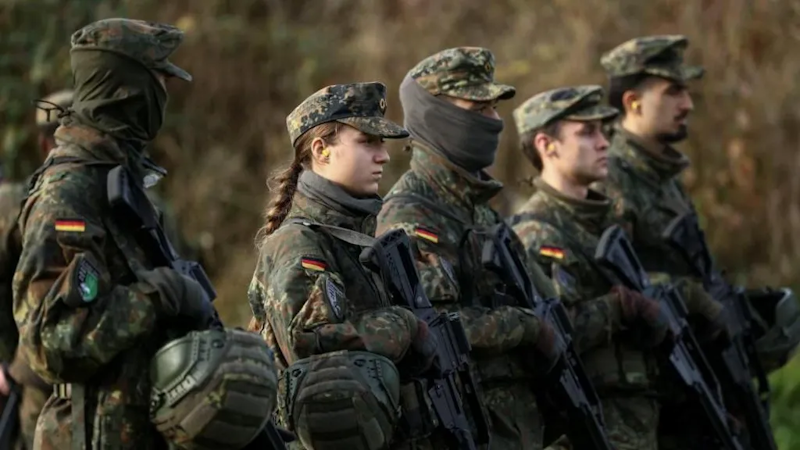
Germany prepares for Russia to attack Nato in two years

Russia launches a full-scale war of aggression against Nato and the German armed forces are in the thick of the action from the first hours.

A 4,800-strong mechanised infantry strikes from a forward base in Lithuania before another 15,000 rapid-response troops are rushed to the front in a matter of days.

Over the weeks that follow tens of thousands of allied soldiers arrive at German North Sea ports to be shuttled east along road and rail routes plagued by Russian sabotage, cyberattacks and possibly long-range missile strikes.

Share

Russia and China co-operating more often and more closely in the Arctic, says NORAD commander

There’s been a subtle but significant shift in what NORAD has been seeing over the last year when it comes to mostly Russian — but also Chinese — activity in the Arctic, says the top commander of the North American Aerospace Defence Command (NORAD).

U.S. Gen. Gregory Guillot tells CBC News that air and sea incursions into the zones just outside North America have not only become more frequent, but also more co-ordinated.

“I’d say the most consequential difference in 2025 has been the volume, the simultaneous volume,” Guillot said in an exclusive interview.

Share

US seizes Russian-flagged oil tanker in Atlantic after two-week pursuit

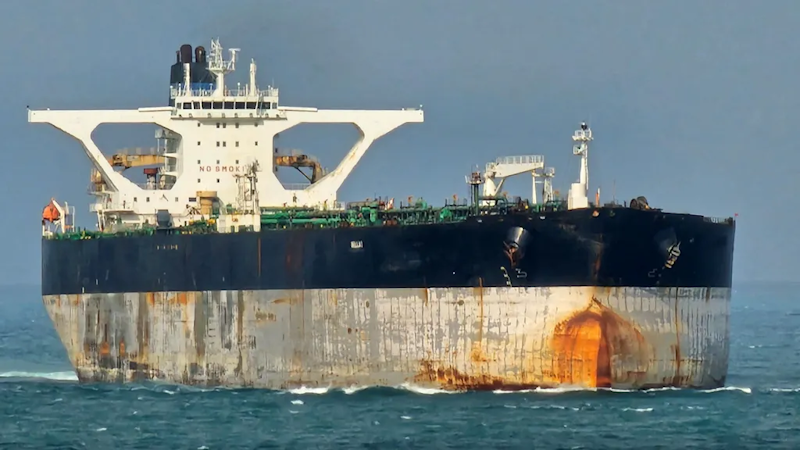
The US has seized a Russian-flagged oil tanker in the Atlantic Ocean in a high-stakes operation that could risk confrontation with the Kremlin after Moscow reportedly dispatched a submarine to safeguard the vessel.

The Marinera, formerly known as the Bella 1, “was seized in the North Atlantic pursuant to a warrant issued by a US federal court after being tracked by USCGC Munro”, US European Command said in a post on X. US media reported that the country’s coastguard had successfully boarded the oil tanker, facing no resistance.

The Russian state broadcaster RT earlier published two grainy photographs showing a helicopter approaching the tanker, saying an operation was under way.

Share

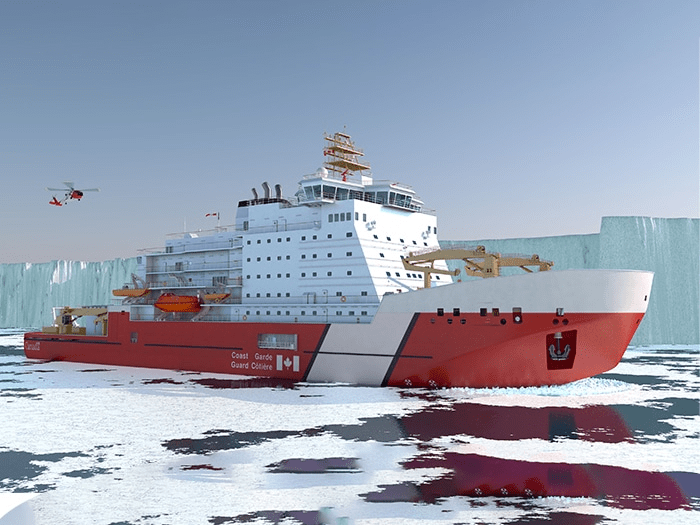
A new ‘cold’ war? Canada aka Venezuela North looks to bolster Arctic security, sovereignty

An increasingly aggressive Russia coupled with China’s growing influence have renewed Canada’s focus on Arctic defence and sovereignty — and how to assert control over its remote northern geography.

The focus is on both increased surveillance — knowing what and who is poking around up there — and having military assets in place to deter any aggressor before they consider operating in Canada’s North.


Venezuela North aka Canada can’t or won’t ensure arctic sovereignty leaving it wide open for incursion by our CCP shadow rulers and their Russian pals.

When the US intercedes to stop this massive threat they will be declared Imperialist Aggressors worse than Hitler etc.

Share

Will Trump attack Venezuela? Russia evacuates diplomats’ families

Moscow is said to have begun evacuating the families of Russian diplomats from Venezuela as Washington increases military pressure on President Maduro.

An unnamed European intelligence official said Russia was viewing the situation in Caracas in “very grim terms”, the Associated Press reported.

The Russian foreign ministry denied the report, calling it “a lie” and “a western provocation”. Although it said the embassy was not being evacuated, it did not address the issue of whether the spouses and children of diplomats were being flown out.

Share

Military head: Britons must be ready to fight as Russian threat grows

Russia could launch a significant direct attack on the UK and more British citizens need to be ready to fight, the head of the armed forces has said.

Air Chief Marshal Sir Richard Knighton said that although the chance of such an attack was remote, that “does not mean the chances are zero”. Russia’s arsenal of weapons was “something to fear” and the threat posed by President Putin was growing.

In a lecture at the Royal United Services Institute (Rusi) on Monday, he said the UK faced the same threat as Germany, which was reintroducing a form of national service.

Share

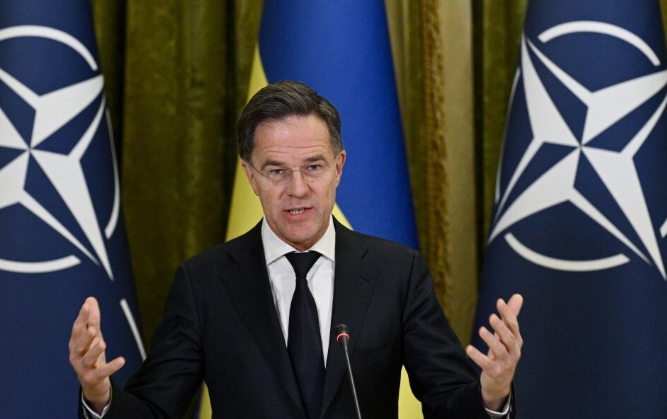
NATO chief warns war with Russia ‘is at our door’ and tells Europe to be ready for action ‘now’ to avoid battle on scale ‘our grandparents and great-grandparents endured’

NATO chief Mark Rutte has warned that war with Russia ‘is at our door’ as he urged European allies to prepare for action now or risk facing a conflict on the scale ‘our grandparents and great-grandparents endured’.

Speaking in Berlin on Thursday, Rutte said too many NATO members remained ‘quietly complacent’ about the threat posed by Moscow and insisted Europe must urgently ramp up defence spending and weapons production to deter Vladimir Putin.

‘We are Russia’s next target,’ he said. I fear that too many are quietly complacent. Too many don’t feel the urgency.

Share

Which European countries have mandatory or voluntary military service

Some of Europe’s biggest Nato members are moving to strengthen their professional armies through voluntary national service schemes.

Large conscripted armies were a feature of Nato states during the Cold War but they dwindled in size after the collapse of the Soviet Union.

However, Russia’s full-scale invasion of Ukraine in 2022 and the ongoing war there have kindled fears of a possible future Russian attack on Nato.

Share

Russian agents’ trail led from Hillary Clinton’s emails to fatal Salisbury attack

Russian spies who hacked Hillary Clinton’s presidential campaign have been linked to the Salisbury poisonings for the first time.

Boris Antonov, Nikolai Kozachek and Pavel Yershov were previously indicted by the United States for releasing tens of thousands of emails from Mrs Clinton’s 2016 campaign.

They were among 11 Russian military intelligence officers sanctioned by Britain on Thursday in the wake of a public inquiry into the death of Dawn Sturgess, who was exposed to the nerve agent Novichok in 2018.

Share

When the ‘Big Mute’ Speaks Out

“The Russians are coming!” Throughout the Cold War, that phrase expressed the anxiety felt by Western democracies about the possibility of a surprise nuclear attack by the Soviet Union. Half jest, the tongue-in-cheek quip evoked Russian chief Nikita Khrushchev’s notorious braggadocio in 1956 addressed to Western powers: “We will bury you!”

Later in an address at the United Nations, the Communist leader hinted that the promised burial could come by the year 2000.

By 1992, however, another phrase was making the rounds in Western capitals: “The Russians are going!”

Share

Russia’s Shadow War: A Warning for the West

Deliberate drone incursions into sovereign NATO airspace. Suspicious damage to undersea cables. Calculated attacks that test the West’s cybersecurity. All these actions by Russia have just been a prelude to the latest effort to intimidate the West from aiding the embattled Ukrainian nation.

Of late there has also been a deliberate effort to sabotage the Polish railway system. No surprise: the gateway had become a crucial gateway for sending military aid to Ukraine. That attack signals Russia’s willingness to escalate warfare beyond Ukraine’s borders and into NATO territory. This “anonymous” incident, however, reveals an extremely calculated strategy to intimidate European nations while Russia maintains plausible deniability.

Share

Poland rail bombing signals Russian escalation against Nato

Thanks to the norms of inter-state combat which have governed much of history, we’ve long been conditioned to think of war and peace in binary terms. But what’s happening on Nato’s east shows us that it is in fact a spectrum, with Poland caught right in the grey zone at its midpoint.

This weekend, for the first time since the Second World War, a deliberate explosion damaged a railway line connecting Warsaw to Lublin in what Polish Prime Minister Donald Tusk called an “unprecedented act of sabotage”. Although Polish authorities have not yet named a specific culprit, they’re already stating the obvious — that “all traces lead to Russia.” That’s hardly surprising, given that the damaged rail line serves as a key pathway for shipping aid to Ukraine, and Russia has sent recruits to gather intelligence on Polish rail hubs near military bases and to disrupt train services using radio networks in the recent past.


Assuming it was Russia.

Poland: Ukrainians Working for Moscow Responsible for Railway Explosion

Share

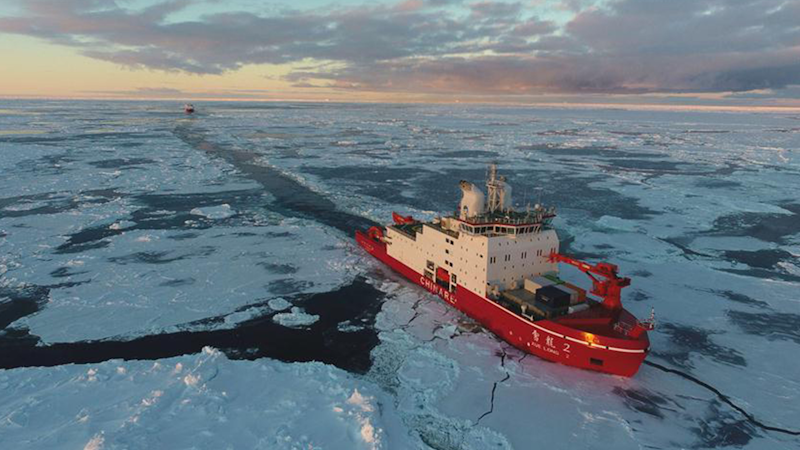
Russia massing nuclear fleet in Arctic circle ‘for war with Nato’

Russia is amassing nuclear weapons and attack submarines in the Arctic Circle as it prepares for war with Nato, Norway’s defence minister has warned.

In an interview with The Telegraph, Tore Sandvik said Oslo had detected increased weapons development on Russia’s Kola peninsula, where its prized Northern Fleet and parts of its nuclear stockpile are based.

He also said that Vladimir Putin was trying to gain full naval control over the Arctic region so that he could block Nato allies’ access to two key shipping routes that would help resupply Western forces in wartime.

Share

Trump says Putin talks ‘don’t go anywhere’ as he imposes new sanctions

The US has announced new sanctions targeting Russia’s two largest oil companies – Rosneft and Lukoil – in an effort to pressure Moscow to negotiate a peace deal in Ukraine.

“Every time I speak to Vladimir, I have good conversations and then they don’t go anywhere. They just don’t go anywhere,” President Donald Trump said, after a meeting with Nato Secretary-General Mark Rutte to discuss peace negotiations.

The sanctions announcement came one day after Trump said a meeting planned with Russian President Vladimir Putin in Budapest would be shelved indefinitely.

Share