A reckoning for global warming alarmists is past due

The Trump administration is reportedly preparing to repeal the Obama-era “scientific” finding that classified carbon dioxide as a threat to public health and welfare, and empowered the federal government to unilaterally, and virtually without limit, regulate the economy.

But when will there be a national reckoning for those who misled us? None of the dire predictions about carbon emissions throwing us into global catastrophe offered by scientists, politicians, or international organizations over the past 50 years have come true. In the end, the endless string of chilling forecasts failed to terrorize people out of modernity.

Share

Trump Admin Set to Repeal Key Obama-Era Climate-Change Finding

And suddenly, millions of voices cried out in unison: I voted for this.

Seventeen years ago, the EPA under Barack Obama issued an endangerment finding citing greenhouse gases as pollutants that posed significant harms on Americans. In the years since, that finding has served as the foundation for massive regulation on energy production, auto manufacturing, and a host of other industries. One of the first acts Donald Trump took on his second Inauguration Day was to order the EPA to review that finding and determine whether and how to reverse it.  By July, EPA Administrator Lee Zeldin began the process of repealing it, calling the effort “driving a dagger into the heart of the climate-change religion.”


Meanwhile in Climate Cult Canada

Inflated climate change data to be adopted by 250 Canadian financial institutions

A climate change study that was retracted for inflating data is still being used as evidence for climate change risk assessments (CCRAs) at Canadian financial institutions — and 250 more institutions are planning to use it. 

(Incognito)

Share

Matthew Lau: Carney government should scrap all damaging EV policies

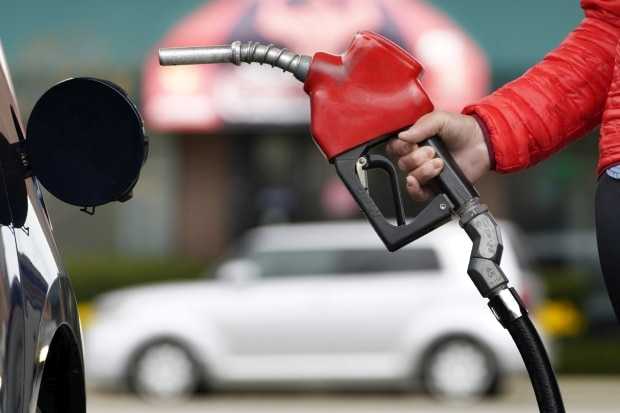
As the iron door of reality slams onto the toe of even the most fervent advocates of climate change action, the Carney government has walked back its electric vehicle (EV) mandate, which would have banned the sale of new conventionally powered vehicles in Canada by 2035.

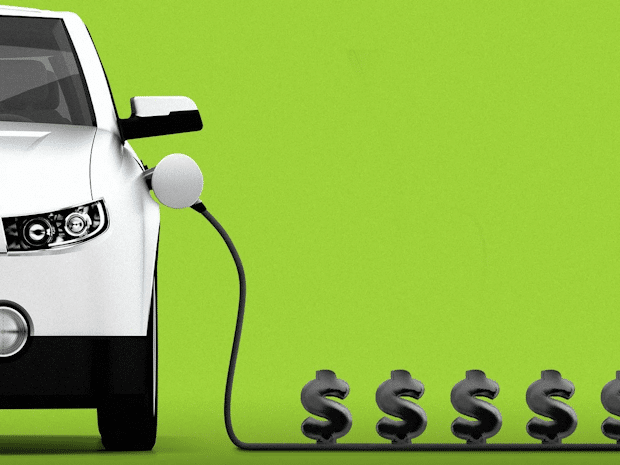
However, the government will not abandon its push to switch Canadians to EVs. It’s bringing back rebates of $5,000 for EVs under $50,000 (for vehicles made in Canada or in countries where we have free-trade agreements) and plans to offer billions in subsidies to automakers. The continued push for EVs highlights the significant discrepancy between how individual Canadians want to spend their money and how the federal government thinks they ought to spend it.

Share

Think tank says federal EV quota changes unrealistic and costly

The federal government’s plan to replace electric vehicle sales quotas with a reduced emissions standard is unrealistic and could saddle Canadians with massive costs, according to the Montreal Economic Institute (MEI).

Prime Minister Mark Carney announced that instead of gradually banning conventional vehicles by 2035, 75% of new vehicles sold in that year would need to meet an electric-equivalent emissions standard.

(Incognito)

Share

GOLDSTEIN: Just admit it, Canada, the EV market has crashed

EV’s repurposed as canola field burners

For heaven’s sake, can we just admit the painfully obvious point that Canada’s federal and provincial governments committed a massive strategic blunder when they went whole hog into subsidizing the production and sale of EV vehicles and batteries?

Share

Will Canada’s new auto strategy put as many EVs on the road as Carney says?

Despite widespread approval from provinces and auto manufacturers, Prime Minister Mark Carney’s auto plan might not accelerate the transition to electric vehicles as fast as he says.

On Thursday, Carney ended Canada’s electric vehicle mandate, resumed purchase incentives and said higher standards for fuel efficiency were coming. Ontario and Alberta’s premiers said they were both “pleased” and car manufacturers said the move provided “welcome policy stability.”

Share

STIRLING: Carbon tax shell game — how climate activists masquerading as ‘experts’ are bankrupting Canada

On February 3, Opposition Leader Pierre Poilievre said in the House of Commons that “Canadians deserve to have a full stomach, a full fridge, and a full bank account, all at once.” He went on to offer his theory that Canada has the highest food inflation in the G7 due to the industrial carbon tax and fuel taxes. He asked Prime Minister Mark Carney for his theory. The Prime Minister responded that the Canadian Climate Institute “estimated the impact of the industrial carbon tax on food prices as approximately zero.”

Share

LG Energy Solution to buy Stellantis’s stake in Ontario EV battery joint venture for just $100

South Korea’s LG Energy Solution on Friday said it plans to buy the 49-per-cent stake held by Stellantis in their battery joint venture in Ontario for the nominal amount of US$100.

Stellantis also said on Friday it would book charges of around €22.2-billion ($35.81-billion) in the second half of last year as the Franco-Italian automaker scales down electric-vehicle development plans and launches a “strategic shift.”


But wait there’s more!

Stellantis shares plunge as carmaker takes $22.2-billion writedown on EVs

Chevy Ends Building Tremec Corvette Transmissions in Canada, Production Shifts Back to America

Poor Joly! h/t Mauser

Share

Ottawa Scraps EV Mandate, Aims to Reach 90 Percent EV Adoption Through Emissions Regulations

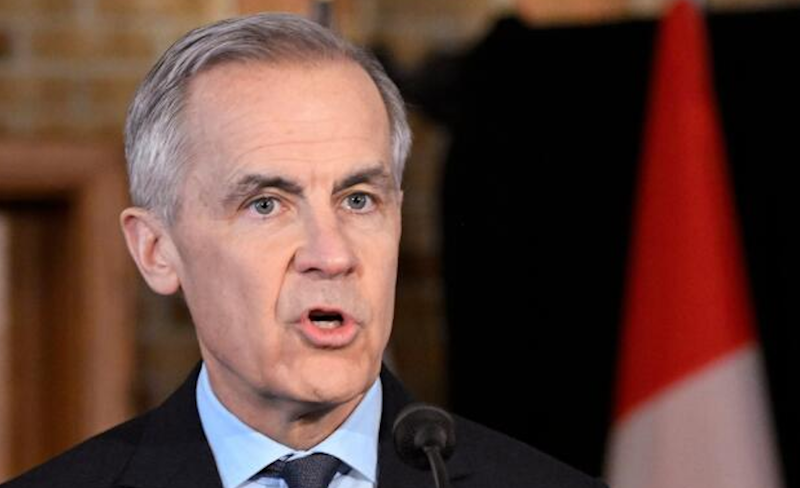
Prime Minister Mark Carney says he will abolish the electric vehicle mandate while replacing it with emissions regulations that he says will achieve a similar objective of reaching widespread EV adoption by consumers.

Carney announced on Feb. 5 that Ottawa will repeal the electric vehicle mandate that would have required automakers to produce and sell only electric vehicles by 2035. Instead, Carney said the government will put in place tougher greenhouse gas (GHG) emissions standards for model years 2027 to 2032. The revised aim is to reach an EV adoption rate of 75 percent by 2035 and 90 percent by 2040.

Share

Carson Jerema: The EV mandate isn’t being scrapped, it’s being renamed

The electric vehicle mandate that would have forced 100 per cent of all new cars sold in Canada to be zero-emission vehicles by 2035 was a typical Trudeau-era policy. It had more to do with preening self-righteousness than anything else. It sacrificed economic growth for green fantasies and was extremely paternalistic. As with most climate-change policies, the objective seemed to be more about control than actually accomplishing anything.

Share

Government expected to announce it’s scrapping EV mandate in favour of new fuel efficiency system: source

The federal government is expected to announce its national automotive strategy on Thursday that includes scrapping Canada’s electric vehicle mandate and replacing it with a new system of fuel efficiency standards and credits, CBC News has learned.

Two sources say Ottawa is also expected to bring back popular electric vehicle incentives for consumers purchasing electric vehicles.

Money will also be announced to build more charging stations for EVs across Canada to help consumers, a source said.

Share

Ottawa considers reviving EV incentives just in time for ChiCom Spycars arrival!

The federal government is considering bringing back consumer incentives for electric vehicles and plug-in hybrids as it finalizes its national automotive strategy, CBC News has learned.

Sources with knowledge of the plans, whom CBC News has agreed not to name because they weren’t authorized to speak publicly, say that a decision on the incentives — and whether they would be similar to a suspended rebate program — has not yet been made.

Canada’s incentive program for zero-emissions vehicles, known as iZEV, was suspended more than a year ago after it ran out of money due to high demand.

Share

Polar bears on Norwegian islands fatter and healthier despite ice loss, scientists say

Scientists expected the opposite, but polar bears in the Norwegian Arctic archipelago of Svalbard have become fatter and healthier since the early 1990s, all while sea ice has steadily declined due to climate change.

Polar bears rely on sea ice as a platform from which to hunt the seals that they rely on for blubber-rich meals. The bears’ fat reserves provide energy and insulation and allow mothers to produce rich milk for cubs.

Share

Is Canada Really Warming?

Is Canada really warming at double the global average rate, as the Canadian government says it isA new report says no, because the data Environment and Climate Change Canada (ECCC) uses are apparently corrupted by fundamental mistakes, mistakes so severe that when corrected, all the supposed warming of the past six or seven decades vanishes.

Given that Canada represents a large fraction of global land surface area, one naturally wonders if the world is warming at anything like we are told it is.

Share

Ottawa’s two billion trees plan cost $488M and missed target by 89%

Ottawa spent nearly half a billion dollars on its now-cancelled Two Billion Trees Program, only to fall dramatically short of its own planting goal, according to federal records tabled in Parliament.

Blacklock’s Reporter says documents from the Department of Natural Resources show the program cost $487,891,090 before it was wound down on November 4, missing its target by 89%.

(Incognito)

Share