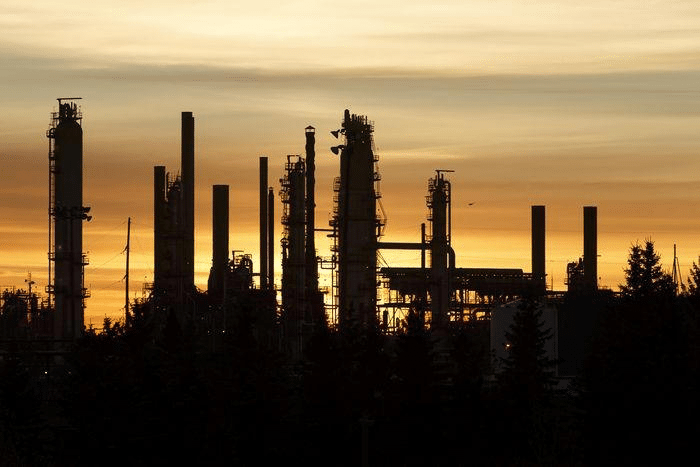
Varcoe: ‘All hat and no cattle’: Canada has big reserves, but can’t get much more oil to strained global markets today

Canada doesn’t have a strategic petroleum reserve — like the United States — and still imports foreign oil into parts of Eastern Canada

U.S. President Donald Trump has been trying to talk down oil prices during a war in the Middle East.

Federal Natural Resources Minister Tim Hodgson is trying to talk up increasing Canadian oil production to help strained global markets.

Good luck to both.

Share

STIRLING: Canada’s ‘climate cartel’ — how green billionaires and Bay Street banks are picking your pocket

Climate scammer

While all eyes were on the Middle East at the end of February, anticipating the outbreak of war, in Texas, a climate bomb dropped that blew another hole in the so-called “climate cartel.”

According to a February 26 press release from the office of Ken Paxton, Attorney General for Texas, “Attorney General Ken Paxton secured a monumental, first-of-its-kind settlement with The Vanguard Group, Inc. (“Vanguard”), resolving part of his multistate lawsuit against asset managers BlackRock, State Street, and Vanguard. As part of the settlement, Vanguard has agreed to make the strongest passivity commitments in the industry and to empower its investors with proxy voting — a first for the industry. This landmark settlement represents one of the most significant enforcement actions ever taken against coordinated ESG-driven market manipulation, ensures a competitive and low-cost coal industry, and fundamentally resets the precedent for the conduct of large institutional investors.”

(Incognito)

Share

MCTEAGUE: Iran shock exposes the cost of our net-zero zealotry

The war in Iran has sent oil markets — and thus gas and diesel prices — out of control.

The Strait of Hormuz, through which 20% of the world’s oil passes, is effectively closed to shipping. Even if ships were inclined to make a run for it, their insurance companies have already cancelled their war coverage policies, making crossing impossible in more ways than one.

(Incognito)

Share

Germany won’t return to nuclear power, chancellor says

European Commission President Ursula von der Leyen is in favor of a proposal to build new nuclear power plants in the EU. German Chancellor Friedrich Merz says it’s impossible.

At a nuclear summit near Paris earlier this week, European Commission President Ursula von der Leyen described the transition from nuclear energy undertaken by some EU countries as a “strategic mistake.” Nuclear power, she said, is a “reliable, affordable source of low-emission electricity.” She announced new EU financial assistance for nuclear power plants.

Von der Leyen’s words reverberated in Germany, which switched off its last nuclear reactor in 2023.

Share

Adam Pankratz: Hey Liberals, an oil pipeline would have been good right about now

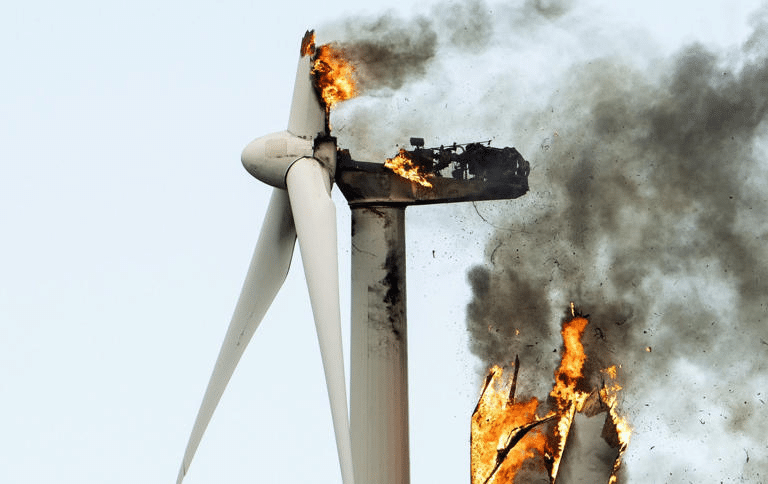
The folly of Canada’s last decade of energy policy is a never-ending saga for which the costs to Canadians and Canadian industry seem only to rise. As the price of a barrel of oil and LNG skyrocket due to American and Israel military action in Iran and its fallout, Canada should be sitting on a massive opportunity to benefit from soaring prices. However, a decade of neglect and underinvestment in pipelines and egress capacity sees us looking wistfully on as other nations, such as the Untied States benefit while we toil away for little gain.

Share

Conrad Black: The high cost of climate alarmism

The world has spent $16 trillion fighting climate change with little to show for it

The premier defector from, and debunker of, the “Green Terror,” which holds that climate change is an existential challenge to the continuation of life on earth, is probably Bjorn Lomborg, president of the Copenhagen Consensus Centre and former director of the Danish government’s Environmental Assessment Institute. He has been a prominent climate change skeptic for years, and has roiled the waters by pointing out the mistaken warnings of climate alarmists. Many of them predicted the onset of unlivable circumstances in much of the world long before now, as a result of unrestrained carbon use.

Share

Was Climate Change the Greatest Financial Scandal in History?

Environmental scholar Bjorn Lomborg recently calculated that across the globe, governments have spent at least $16 trillion feeding the climate change industrial complex.

And for what?

Arguably, not a single life has been or will be saved by this shameful and colossal misallocation of human resources. The war on safe and abundant fossil fuels has cost countless lives in poor countries and made those countries poorer by blocking affordable energy.

Share

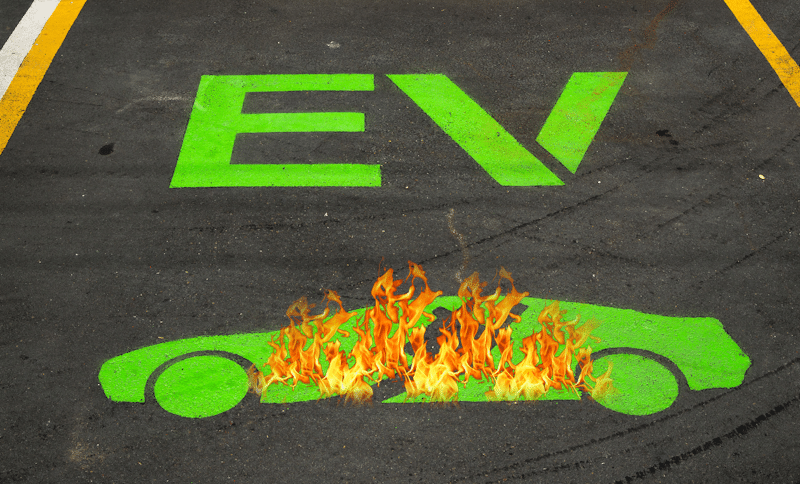
Even auto giants know it: the electric car boom is out of charge

“I think the customer has spoken. That’s the punchline,” said Jim Farley, the chief executive of Ford.

The American boss was speaking last week as his company unveiled a $5bn (£3.7bn) annual loss, barely two months after it had booked a shock $19.5bn write-down.

The cause? An aggressive bet on electric vehicles (EVs) that backfired spectacularly.

In 2025, sales of the Mustang Mach-E crossover and the F-150 Lightning pickup truck – once hailed by Farley as the “truck of the future” – went into reverse.

Share

The great revolt against greenism

Across the West, working people are pushing back against the End Times environmentalism of the ruling class.

When the history of our times comes to be written, it’s possible the date of 17 November 2018 will feature prominently. For two extraordinary events rocked Europe that Saturday. Two of our most populous cities – London and Paris – were shaken by vast gatherings of citizens making noisy demands of their ruling classes. And the demands could not have been more different. One side wanted nothing less than to drag society back into the benighted hell of pre-modern, pre-industrial existence. The other demanded the right to drive and work and live well, free from the onerous eco-rules of the elites. This cross-Channel clash of moral visions may well have been the first battle in the war of the vibe shift.

Share

Carney practises the illusion of EV mandate repeal

Replacing a ban on gas cars with strict new emissions standards sounds more sensible but will kill the auto industry just as effectively

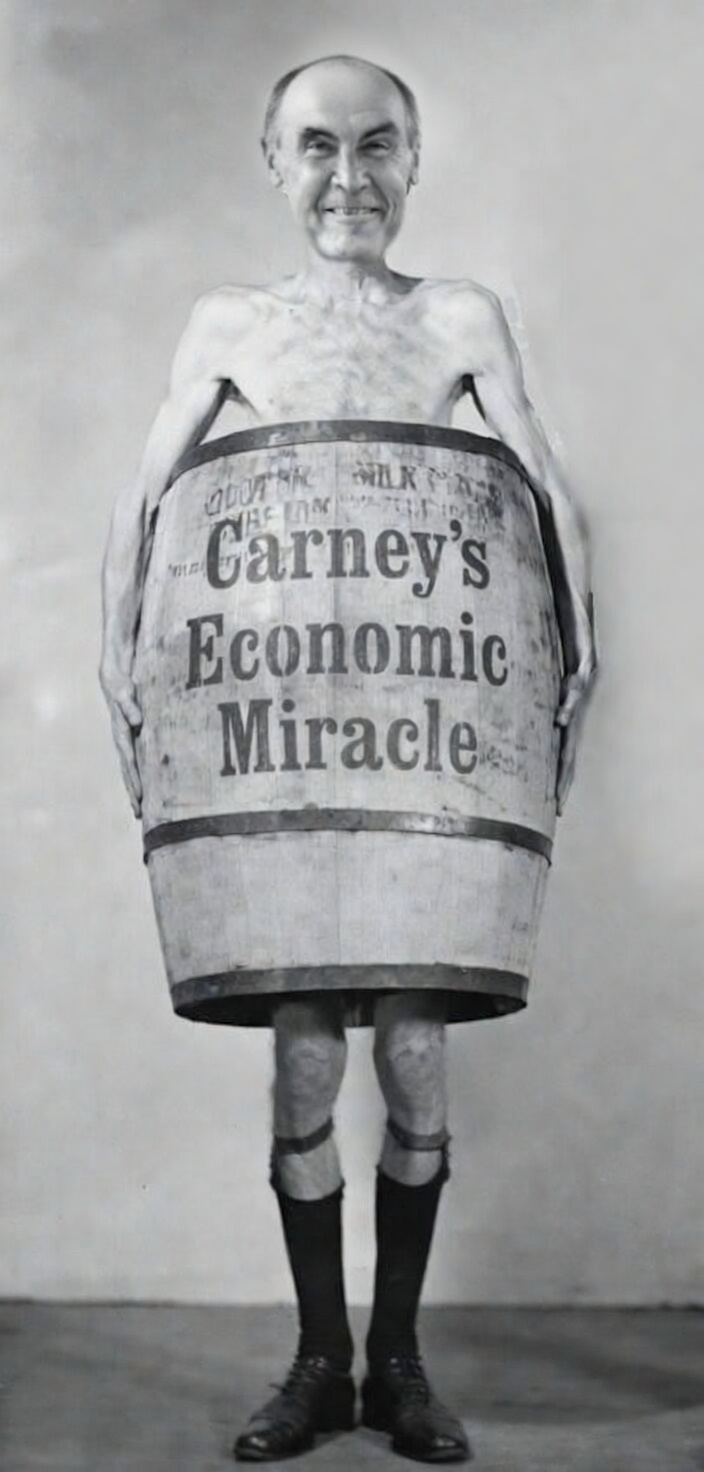
Prime Minister Mark Carney, recognizing the need to act decisively to support our auto sector, has scrapped Canada’s electric vehicle (EV) mandate. Or has he? Unfortunately, close inspection shows that he merely rephrased the policy but the effect remains the same. Following the pattern of indecision and obfuscation set by his “Memorandum of Understanding” with Alberta, in which Carney sounded like he was greenlighting a new pipeline without actually doing so, the new auto policy repeals the mandate in name only.


I am really hoping that Trump does a Maduro on our WEF snake.

Meanwhile down south … The New York Times is sad!

With Latest Rollback, the U.S. Essentially Has No Clean-Car Rules

The E.P.A.’s killing of the “endangerment finding” caps a year of deregulation that is likely to make cars thirstier for gas and less competitive globally, experts say.

Share

BURNEY: The climate apocalypse that never came — why net zero will destroy Western civilization

How the UN’s $275 trillion climate agenda threatens global prosperity while ignoring real science.

Paul MacRae’s book “Through the Looking Glass: A Citizen’s Do-It-Yourself Guide to Climate Science” is a meticulous repudiation of the pseudo-science that has driven the debate, nationally and internationally, on climate change or global warming for decades. The fact that apocalyptic prophesies by “experts” like Al Gore and Greta Thunberg have not materialized should be proof enough, but MacRae digs deeper to expose the fallacies versus the facts. His views command new currency as many countries focus on more pressing and practical priorities for public funds.

Share

Randall Denley: Carney’s EV plan benefits Carney, not Canadian carmakers

At first glance, Prime Minister Mark Carney’s new auto industry strategy looks like billions of dollars in support for Ontario’s beleaguered vehicle manufacturers. Unfortunately, Carney’s EV-focused approach will do little or nothing to solve the industry’s problems.

It’s difficult to imagine a plan more untethered from the economic realities of the real-world auto industry. To summarize, the Carney plan relies on electric vehicles (EVs) that Ontario plants don’t produce, a sudden and dramatic new appetite for buying EVs and an imagined export market that doesn’t exist. To top it off, the federal government will provide $2.3 billion in EV rebates that will encourage Canadians to buy cars made elsewhere, although the new Chinese imports are excluded.

Share

Canada not on track to hit net-zero by 2050, or meet any climate targets says sketchy climate alarmist group that receives mucho government handouts

OTTAWA – A new study published Friday by the Canadian Climate Institute says Canada is not on track to meet any of its climate targets — not the 2026 interim emissions reduction target, the 2030 Paris Agreement commitment, or even the long-term goal of reaching net-zero emissions by 2050.

The report suggests Canada has moved away from its climate goals thanks to “a slackening of policy effort over the past year, marked by the removal or weakening of climate policies across the country.”

Guess who wrote the report.

Share