Sweden axes Bill Gates-funded Harvard experiment aiming to DIM THE SUN to fight climate change amid outcry from activists

Sweden’s space agency has called off a geoengineering experiment to determine whether blotting out the sun with aerosols could reverse global warming. Funded by Bill Gates, the project stoked fierce opposition from eco groups.
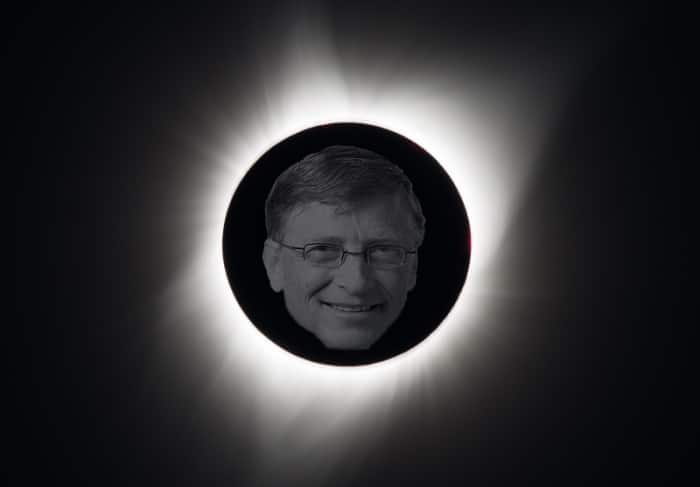
Proposed by researchers at Harvard University, the Stratospheric Controlled Perturbation Experiment, or SCoPEx, ultimately planned to release a cloud of calcium carbonate – more commonly known as chalk dust – into the atmosphere from a high-altitude balloon to study its effects on sunlight reaching Earth. The project proved too controversial, however, and on Wednesday the Swedish Space Corporation (SSC) said that a test flight set for June would not move forward.

Share

Green energy isn’t viable without subsidies: Audit

Federal auditors are calling the Renewable Energy Deployment Program a “market failure.”

An internal report at the Department of Natural Resources that looked at the program from 2002-19 says without subsidies, few green energy projects like solar panels, wind farms, and geothermal projects can survive financially, according to Blacklock’s Reporter.

Oh sure. Next they’ll be telling us that insiders have made a fortune on these scams.

Share

Federal carbon-offset proposal will likely give illusion of progress, even as it increases emissions

Offset credits won’t necessarily reflect real reductions in carbon emissions

The federal government recently issued a consultation paper on one of its proposed climate change policies. If implemented, this policy is likely to increase carbon emissions, perhaps substantially.

Sound confusing? Welcome to the world of carbon offsets.

In theory, introducing a carbon offset system to the existing carbon-reduction mandates for large emitters is a clever idea.

Share

US, China, Russia and Thucydides Trap

When Joe Biden started his presidency with the slogan “diplomacy is back!” some wondered what that meant in terms of a coherent foreign policy. Diplomacy, as every sixth-grader knows, is one of the many means needed to implement a policy. On its own, it is either an academic conceit or another name for charade. In the past week or so we have observed diplomacy, as practiced by the new administration, both as a conceit and a charade.

As a conceit, it appeared in the headline-catching slogan “America is back in the Paris Climate Accord” launched by Washington. Now, however, we know that the “return” is so full of “ifs and buts” that even the French, initially applauding loudly, are beginning to wonder whether they have been sold a bill of goods. Another example was furnished by the tedious scrimmage over the “nuclear deal” with the mullahs in Tehran.

Share

FUREY: The carbon tax ruling is judicial activism at its worst

Take a look at a couple of sentences about climate change that appeared Thursday concerning the Supreme Court of Canada’s ruling on the carbon tax.

Here’s one: “It is a threat of the highest order to the country, and indeed to the world.” And here’s another: “The undisputed existence of a threat to the future of humanity cannot be ignored.”

Tsk… “Judicial Activism” is just a right wing conspiracy theory!

Share

Rex Murphy: Carbon tax ruling a hard kick to the West, but sweet relief for Trudeau

Rex Murphy: Carbon tax ruling a hard kick to the West, but sweet relief for Trudeau

I shall begin this aria as perhaps I should begin them all, with a citation from Lorrie Goldstein, the very lighthouse beacon of all Canadian commentary. Remarking on the highly consequential Supreme Court ruling on Trudeau’s carbon tax, he wrote in response to some fellow on Twitter the following:

“The Supreme Court said the carbon tax law is legal. It said nothing about whether it will work, or whether it’s sound public policy, because that wasn’t its job.”

Share

Jason Kenney says Alberta didn’t prep carbon tax fallback plan, was hoping to win in court

Alberta Premier Jason Kenney says his government didn’t prepare a fallback plan on implementing a consumer carbon tax because they were hoping to win in the country’s top court.

Kenney said the province was buoyed by a lower court win in Alberta, and noted that three of the nine Supreme Court justices had concerns with Thursday’s majority decision that the tax is onside with the Constitution.

Share

Terence Corcoran: Carbon-tax green light flashing red

Terence Corcoran: Carbon-tax green light flashing red

It is better not to get too deeply immersed in the constitutional labyrinth embedded in the Supreme Court of Canada’s decision to legally green light the Trudeau government’s carbon tax plan. Beyond the 200-plus pages of convoluted and contradictory legal verbiage lie the real issues, which are economic, environmental and political, not legal. And those issues are festooned with flashing red warning lights: Danger ahead.

Share

Federal carbon tax ‘simply wrong’ despite being found constitutional: Saskatchewan Premier Scott Moe

OTTAWA — Saskatchewan Premier Scott Moe says his government’s unsuccessful constitutional challenge of the federal carbon tax law doesn’t change his mind about the overall issue, calling the federal law “simply wrong.”

The federal Liberals, meanwhile, say the Supreme Court of Canada’s decision means the debate on whether Canada will have carbon pricing is “over.”

Share

Supreme Court of Canada upholds “constitutionality” of federal carbon tax theft

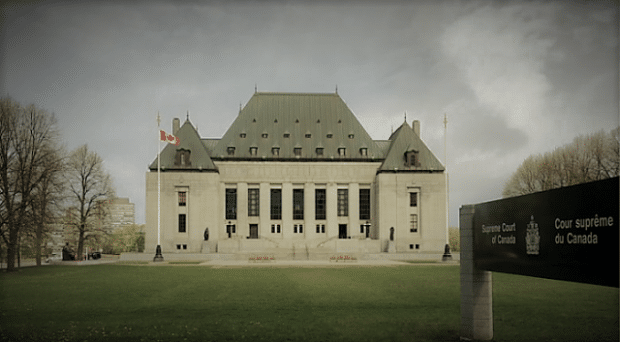
The Supreme Court of Canada on Thursday has given the federal government the constitutional green light to impose a carbon tax on the provinces.

The decision was the culmination of years of disputes between some provinces and the federal government over the Greenhouse Gas Pollution Pricing Act (GGPPA). The law, which was introduced in 2018, laid out a national framework for pricing carbon – one that applies to everyday consumers as well as industrial emitters.

Taxes used to be the cost of maintaining the social contract, now it’s just theft by the ruling class.

Share

Toyota says “The world is not yet ready to support a fully electric auto fleet.”

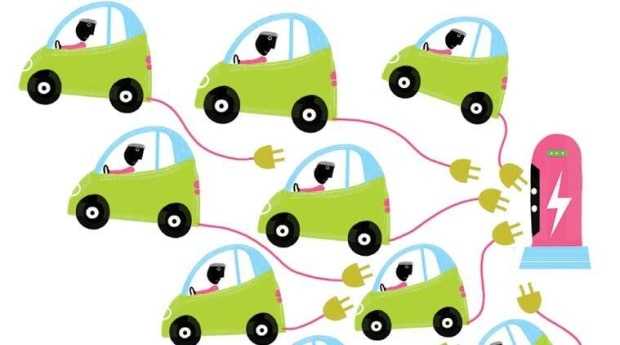
When Toyota offers an opinion on the car market, it’s probably worth listening to. This week, Toyota reiterated an opinion it has offered before. That opinion is straightforward: The world is not yet ready to support a fully electric auto fleet.

Toyota’s head of energy and environmental research Robert Wimmer testified before the Senate this week, and said: “If we are to make dramatic progress in electrification, it will require overcoming tremendous challenges, including refueling infrastructure, battery availability, consumer acceptance, and affordability.”

Share

Toyota Warns (Again) About Electrifying All Autos. Is Anyone Listening?

Toyota Warns (Again) About Electrifying All Autos. Is Anyone Listening?

…When Toyota offers an opinion on the car market, it’s probably worth listening to. This week, Toyota reiterated an opinion it has offered before. That opinion is straightforward: The world is not yet ready to support a fully electric auto fleet.

Toyota’s head of energy and environmental research Robert Wimmer testified before the Senate this week, and said: “If we are to make dramatic progress in electrification, it will require overcoming tremendous challenges, including refueling infrastructure, battery availability, consumer acceptance, and affordability.”

End Game: They don’t want you driving anything at all.

Share

Doug Ford Biz subsidy for ‘green’ energy to cost taxpayers $15.2B

A Doug Ford government program that subsidizes electricity costs for large industrial and commercial users will set taxpayers back $15.2 billion, a new report from the Financial Accountability Office of Ontario (FAO) estimates.

The subsidy was launched Jan. 1 and pitched as a solution to pricey green energy contracts that drove up the cost of electricity at the expense of the province’s competitiveness.

The only thing Green energy produces is taxes

Share