German Farmers Warn Government: “No Scope” for Any More Cuts

SDP Chancellor Olaf Scholz found himself the subject of a lively farmers’ picket on Thursday afternoon as the embattled German premier cold-shouldered local agricultural organisations pressuring him to speak directly to protestors.

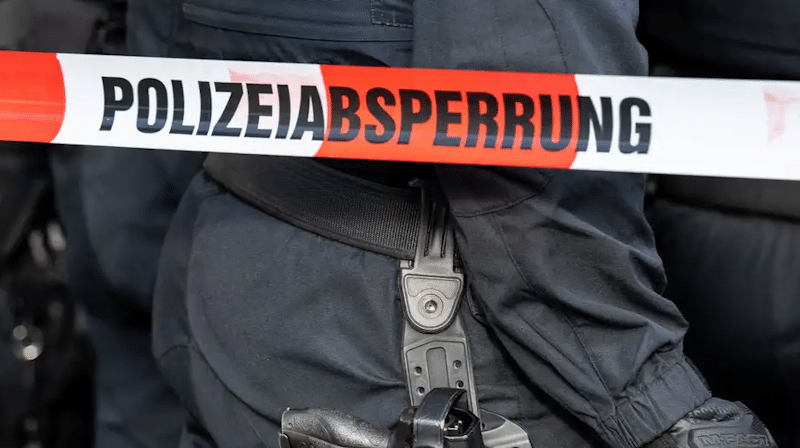
Security was heightened ahead of Scholz’s scheduled visit to Cottbus—in a region known to be a hotbed of agrarian discontent. A police cordon prevented direct confrontation between Scholz and the farmers as hundreds lined the streets to protest the hapless chancellor, who was there to launch a new railway components factory. Convoys of tractors attempted to encircle the northeastern German town.

Share

What a secret far-right meeting reveals about the AfD

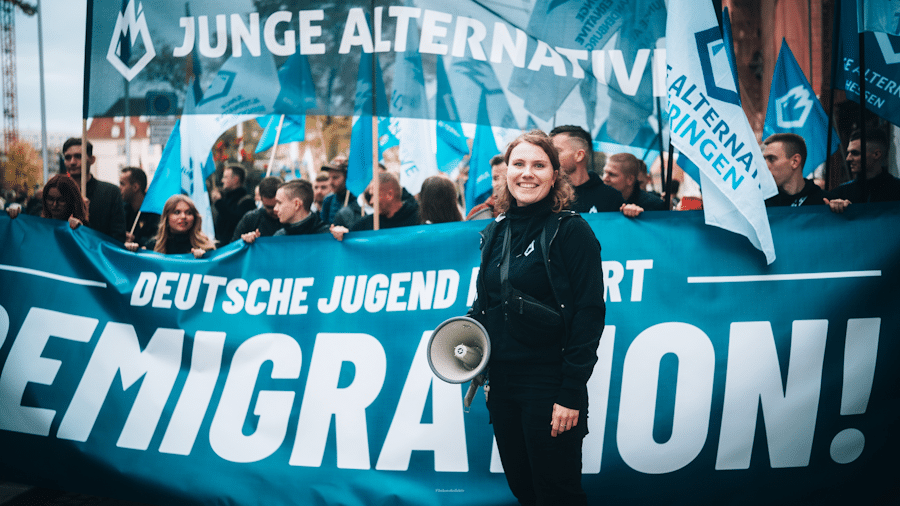
It sounds like a scene from a dystopian TV drama: in a country hotel west of Berlin, far-right politicians met neo-Nazi activists and sympathetic businesspeople to discuss a ‘masterplan’ for Germany that involves the forced deportations of millions from the country. But this is no fiction. According to reports in the German media, such a meeting took place last November. These revelations will do little to calm the tumultuous political waters in Germany.

Around two dozen people met at the picturesque lakeside hotel in Potsdam, according to the news outlet Correctiv, which published a detailed report of its undercover investigation. Given the explosive content discussed in speeches between meals, secrecy was paramount for the organisers. Members were invited by a letter seen by Correctiv and the Guardian. The stated purpose of the meeting: the presentation of a ‘masterplan’, presented by ‘none other’ than Martin Sellner.

Share

The vast majority of Germans back farmer protests despite ‘far right’ label from media and the left

An overwhelming majority of Germans back the farmers’ protests despite media claims that the “far right” was co-opting the demonstrations, a tactic that was also used by the media to discredit Covid-19 demonstrations in Germany.

A new poll from INSA shows that 69 percent of Germans support the current farmers’ protests, while only 22 percent reject them. Despite one in five poll respondents saying they were directly affected by the protests, which featured tractors blockading roads and highways, the majority still gave their nod of approval.

Share

German MP: Taxpayers Should Fund German Mosques to Prevent Radicalisation

A top Christian Democrat politician wants to amend the constitution if necessary, so that German taxes can be used to pay for mosques. Jens Spahn—a former minister and deputy leader of the opposition center-right CDU/CSU’s parliamentary group—sees public funding for mosques as a bulwark against overseas influence.

Beatrix von Storch of the AfD previously warned it would be a mistake to finance mosque associations using German taxpayers’ money. While she agreed that the financing of mosques by Turkey or Qatar must be banned immediately, she argued that Muslims in Germany should finance their own mosques with their own contributions.

Share

Germany’s “far-right” exploits farmers’ protests

Images of farmers driving their huge tractors in long convoys along highways, blocking traffic at crossroads to protest against government policies are being shared millions of times on social media in Germany these days. Communications consultant Johannes Hillje describes this as part of a “strategic battle fought by right-wing extremist media-makers.”

Far-right activists have rallied behind the farmers’ protest on platforms such as Facebook, TikTok and X. And their comments are seen to be deliberately fanning the flames.

The German establishment is very afraid of AfD’s gains. 

Share

German farmers’ protest sparks chaos

German farmers began a week of nationwide protests Monday, causing traffic jams across the country as they blocked streets and highways with thousands of tractors and trucks.

Monday’s actions were the latest in a series of protests venting anger over the coalition government’s decision to cut some diesel subsidies to farmers and transport truckers.

The cuts were due to budget shortfalls after Germany’s Constitutional Court declared Chancellor Olaf Scholz’s government could not reallocate tens of billions in coronavirus relief funds for other purposes.

Share

The Rise of AfD and the Failure of the German Political Mainstream

The German-nationalist political party has prospered from the recent inability of other parties to be trusted on issues of national sovereignty.

‘Liberalism is the death of nations” — a famous line from an infamous book. Arthur Moeller van den Bruck, the author, did not have American progressivism in mind. His critique was aimed at liberal democracy as a political regime. Moeller coined the term “Third Reich” in his 1923 book, where these words originate. He was not a National Socialist but part of the “conservative revolution,” a diverse group of writers in the Weimar Republic. Alongside the more radical Völkische Bewegung, an influential ethno-nationalist movement, the “conservative revolutionaries” shaped the social atmosphere that paved the way for National Socialism.

Share

Gute Nacht, Europe. Guten Morgen, Eurabia

1000 migrants enter Germany every day, And a Bundestag member admitted their culture does not disappear when they cross the border.

Jens Spahn is one of the leaders of the German CDU, a long-time member of the Bundestag (since 2002), former state secretary (2015 to 2018) and former minister (2018 to 2021) under Angela Merkel.

“There will be a risk of a ‘terrible awakening'”, Spahn said in the most dramatic speech by a political leader of the German establishment. The “country could tip over,” Spahn says. “It is above all the cultural area influenced by Islam in which hatred of Jews, incitement against gays, non-equality between men and women are too often part of everyday culture. There are not many Muslim majority countries where people of other faiths have an easy life. Or (where) women have equal rights or gays and lesbians somehow enjoy minority protection. So they just don’t exist. And that also has to do with the culture”.

Share

Berlin police deploy in force, face calmer New Year’s Eve

Berlin police said on Monday that they detained around 390 people overnight on New Year’s Eve in the German capital and have so far tallied just over 700 potential criminal investigations.

Police spokeswoman Anja Dierschke said that 54 officers were injured, 30 of them by fireworks, after 4,500 police from the capital and other states deployed in a major operation launched because of more widespread unrest than usual last year. Only eight of them were unable to finish their shifts though, she said.

Share

Change State Constitution To Stop AfD, Says German Minister

The interior minister of the eastern German state of Thuringia, social democrat (SPD) Georg Maier, is calling for an amendment to the state’s constitution to hinder—or prevent—right-wing anti-globalist party AfD from obtaining a high-ranking position in the state parliament.

Elections are to be held in three eastern states, Brandenburg, Saxony, and Thuringia next year, and AfD (Alternative für Deutschland) is on course to win in all three, possibly garnering a third of all votes, according to opinion polls.

Share

Germany: AfD Wins Saxony Mayoral Election

The right-wing antiglobalist Alternative für Deutschland (AfD) is poised to secure its second mayoral position. Residents of Pirna—a town of 37,000 situated in Saxony—brushed off the state intelligence agency’s recent ‘extremist’ classification of the party and voted AfD candidate Tim Lochner into office.

After finishing first by a nearly ten-point margin in the town’s initial round of voting late last month, Lochner, a 53-year-old master carpenter—who isn’t a member of AfD, but ran on its ticket—again bested his opponents from the Christian Democratic Union (CDU) and Free Voters in the second round of voting on Sunday, December 17th, securing 38.5% of the vote according to the final tally.

Share

Germany: Bavaria can hang crosses in state buildings

Crosses mounted in the entrances of the state’s administrative buildings in Bavaria can stay up, Germany’s highest court for most administrative law disputes ruled on Tuesday.

In 2018, Bavarian state premier Markus Söder of the Christian Social Union (CSU) ordered that all public buildings prominently hang a cross “as an expression of Bavaria’s historical and cultural character.”

A Bavarian lobby group advocating “the meaningful separation of church and state as well as the eradication of church privileges,” whose German name might roughly translate to the Association for Free Thinking for Bavaria (bfg Bayern), challenged the decree in court.


During WW II in Bavaria attempts were made to remove crosses from public buildings by local Nazis.

Soldiers returning from the front on leave were recruited by local Catholics to re-install the crosses in very public displays.

One instance saw a pitchfork wielding mob threaten a local Nazi Bigwig unless he returned the crosses he had hidden. His wife spilled the beans fearing her Nazi hubby would meet a horrible end.

Share