OTTAWA – On Thursday in Marseille, a woman told a group of youths to stop wrecking a bus shelter. One of them, masked, turned an aerosol can into a makeshift flamethrower and sprayed fire into her face. The video has gone around the world. A 15-year-old, identified through street cameras, is in pretrial detention, and prosecutors are pursuing a charge of “act of barbarism.”
European Union
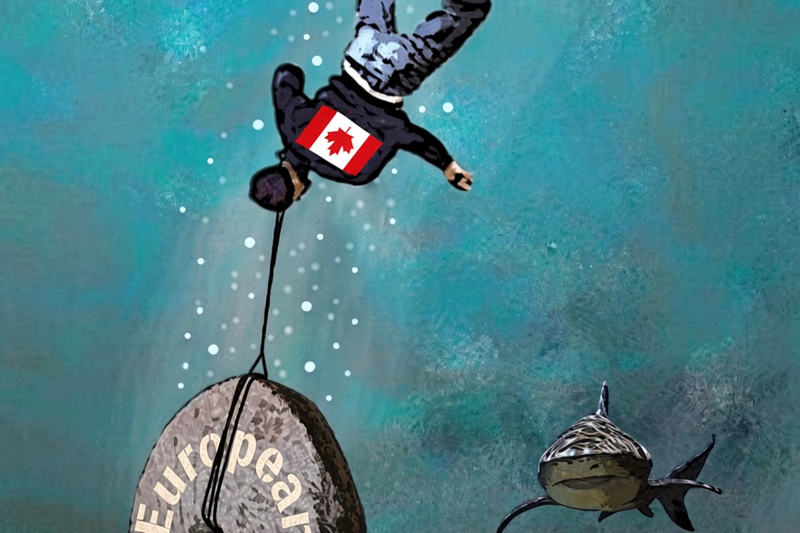
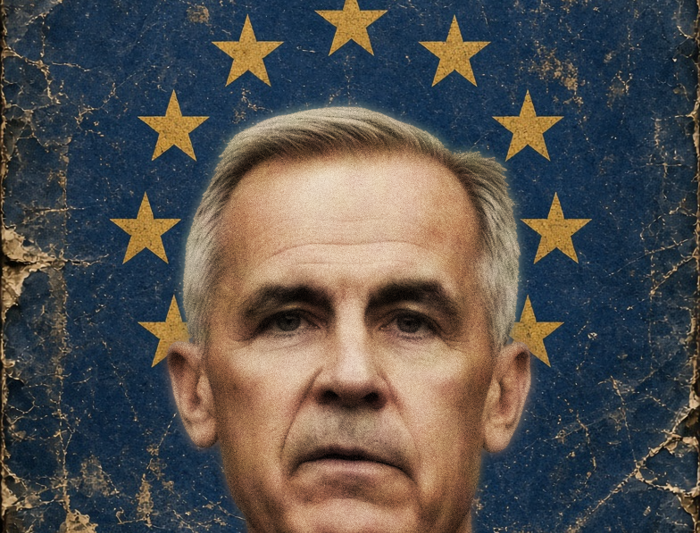
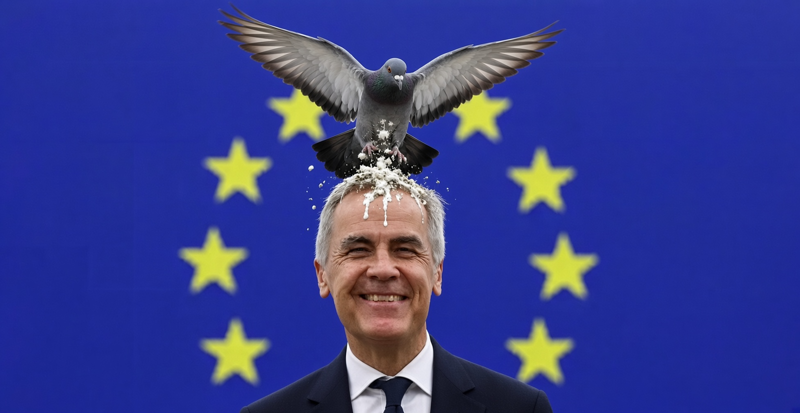
Understanding Canada’s Europe Pivot
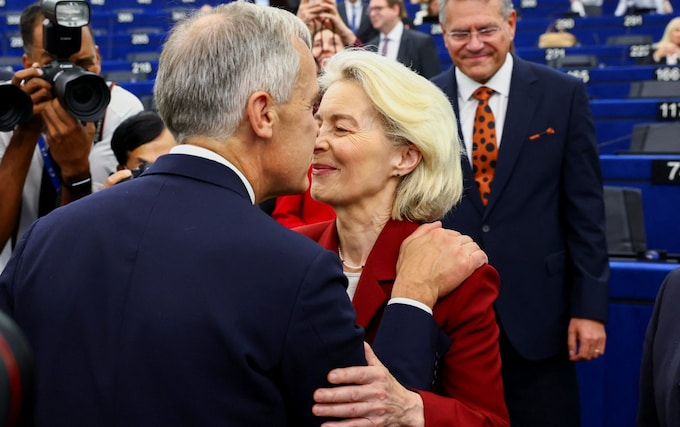
Last month, after Prime Minister Mark Carney visited the European Parliament in Strasbourg, France, and announced that Canada and the European Union would pursue a closer relationship, we asked for your questions about the topic.
In our recent one-hour interview with Mr. Carney, he spoke extensively about his vision for this new relationship. And Jeanna Smialek, our Brussels bureau chief, obtained a copy of the draft statement being prepared ahead of a summit in Montreal at the end of this month between the European Union and Canada.
So we return to the question of the European Union — one I’m excited to tackle as a former Brussels correspondent who dedicated nearly a decade to covering the bloc.
What a leaked Canada-EU summit document reveals about Mark Carney’s turn to Europe
OTTAWA — A newly revealed leaders’ statement pre-written for next month’s Canada-EU summit does not use “associate member” for the escalating love affair between the Carney government and the European Union.
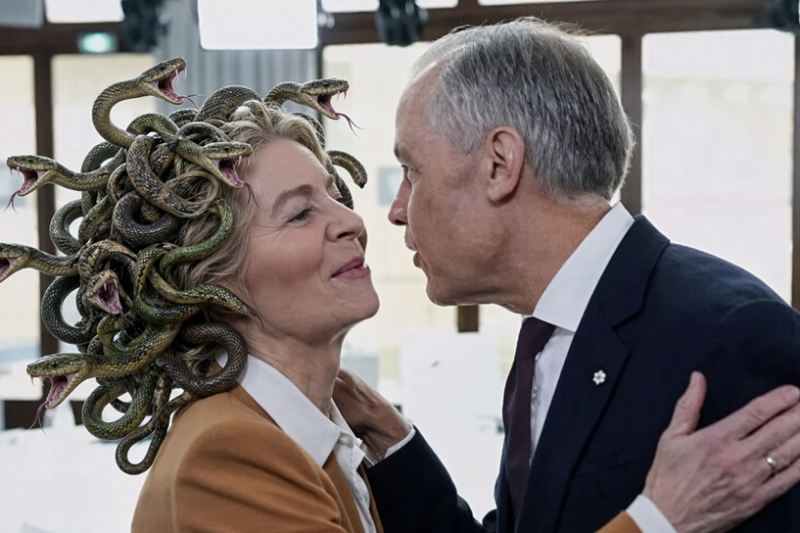
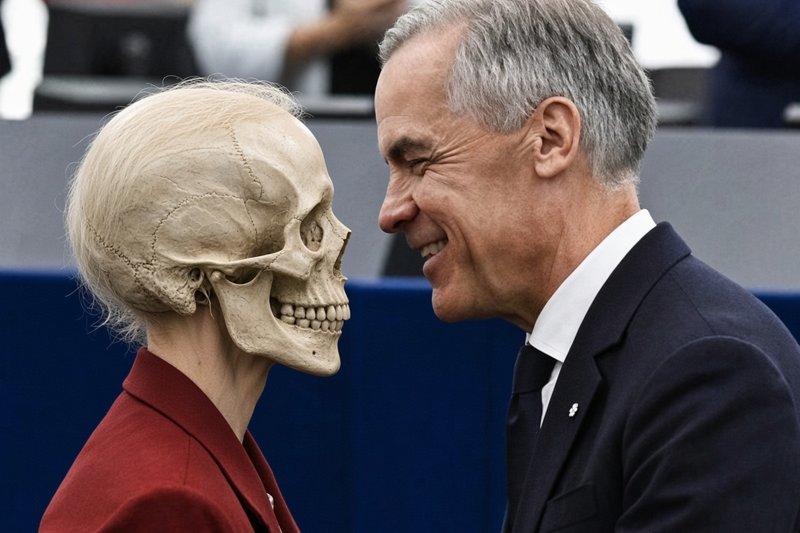
That term, floated by EU Commission President Ursula von der Leyen to Prime Minister Mark Carney‘s apparent surprise two weeks ago in Strasbourg, is nowhere to be seen in the proposed declaration, labelled “as received from Canada,” that was circulated to EU ambassadors by the European secretariat in charge of talks.
Obtained by Politico’s Brussels-based reporters and published Wednesday, the Sept. 22 document reveals that the EU chief and the Canadian prime minister plan instead to formally launch a “Canada-EU Alliance for the Future” when the summit concludes on Oct. 30.
Full document below.
“Far right” gains ground in Europe as Canada pivots from Trump to EU
Prime Minister Mark Carney appealed to common values like democracy and reliability when he called for deeper trade and defence ties at the European Parliament earlier this month.
But some experts say with the rise of far-right parties on the continent, key European allies may not always share those values — and Canada should keep that possibility in mind as it crafts its alliances.
Canada is diversifying its trade relationships around the world amid U.S. President Donald Trump’s tariffs and trade war. But many far-right politicians in Europe share Trump’s views on migration, isolationism and minority groups, say political scientists.
Typical far left CBC Fear Mongering Drivel.
My advice to Mark Carney? Beware of Europeans bearing gifts. It doesn’t always end well
Have you ever had a really good friend, maybe a few years older, with whom you did everything together? You did each other’s hair. Did each other’s nails. Fought fascist militaristic governments together. Negotiated free trade deals with each other. And then, something happens. Your bestie develops a new set of priorities, and you aren’t one of them. And they become quite bizarrely bitchy about it. For reasons unknown, they take their soft wood lumber and go home in a huff.
Only at the Star.
NEWELL: The globalist illusion — Carney’s EU alliance is a threat to Canada
I just heard via a reliable source that the European Union (EU) countries have dismissed Prime Minister Mark Carney and European Commission President Ursula von der Leyen “Associate Member” nonsense. This was simply a deal put together by the two of them with no discussion whatsoever with their constituents or member countries. It seems that Canadians were not the only players being left in the dark as sneaky Carney attempted to make this a “fait accompli.”
Conrad Black: Mark Carney’s EU blunder
I have the painful duty of advising that I consider the basic points Prime Minister Mark Carney tried to make in his address on Sept. 27 to the European Parliament in Strasbourg profoundly mistaken. Readers should be aware that the European Parliament has no power whatsoever. The member states nominate commissioners in the different administrative fields, like cabinet ministers. The government apparatus in Brussels deluges the entire membership with decrees purporting to regulate an almost unlimited variety of activities, most of which the principal Atlantic English-speaking countries have considered unsuitable for government interference.
Canada’s dangerous courtship with Brussels — an EU partnership threatens our constitutional independence
Canadians are right to care about sovereignty. But sovereignty means more than resisting pressure from Washington.
It means that Canadians, not foreigners, make the laws that govern Canada. Canadians pass, repeal, and amend our federal, provincial, and municipal laws. Sovereignty means little or nothing when outsiders gain a say in how Canadians live or what rules govern our affairs.
More than two in three Canadians back EU associate membership: poll
OTTAWA — Canadians overwhelmingly support Canada becoming an associate member of the European Union, a new poll suggests — even though the details of that arrangement haven’t been finalized.
The online poll by Leger, conducted between Sept. 19 and Sept. 21, suggests 70 per cent of Canadians support the idea, 18 per cent are unsure and 13 per cent oppose it.
But the poll suggests Canadians draw the line at changing some laws in order to align with Europe.
Europeans Should Overthrow Their ‘Ruling Class’
War fever is ramping up again across Europe. This has happened several times in the four and a half years since Russia invaded Ukraine, usually coinciding with important national elections — particularly those in Romania, Moldova, Hungary, Poland, and Germany — when certain domestic political parties have been demonized as “pro-Putin” and “security threats” to the rest of Europe. The war drums also get loud whenever increased military budgets are being debated within the governments of the Scandinavian and Baltic states, Finland, Germany, and Poland, as well as the European Commission. The ebb and flow of political battle cries against the Russian Federation track closely with Europe’s electoral and parliamentary calendars.
Canada wants closer EU ties. But we already have close EU ties – and they’re a mess
For a multitude of reasons, Canada will never become an “associate member” of the European Union. It was never in the realm of possibility.
European Commission President Ursula von der Leyen would have known this. Her offer last week at the European Parliament wasn’t off the cuff but was carefully orchestrated within EU circles and was done for symbolic purposes, a clear signal to certain unnamed powers that Canada and Europe have shared geopolitical interests and can work together as close political and commercial allies in today’s hegemonic world.
HANNAFORD: Mark Carney’s European obsession is a dangerous fantasy
What does it tell us about what Prime Minister Mark Carney really wants, that a yet-to-be-defined associate relationship with Europe is something to which we should aspire, but any suggestion of a comparable relationship with the US would be anathema if not faintly treasonous?
The short answer is that for Mr. Carney the political meaning of the two options is not the same. In the absence of full details, being an “Associate” to the European Union sounds like statesmanship. (Once details are provided, it may not.)
Should Canada apply to become the 28th member state of the European Union?
A growing number of Canadians are contemplating what once seemed unthinkable — abandoning North American free-trade agreements and joining the European Union.
McGill University’s Maria Popova is urging Canada to seek European Union membership to counter U.S. President Donald Trump’s threats to Canadian sovereignty. Popova, an Associate Professor of Political Science and Scientific Director of Montreal’s Jean Monnet Centre, spoke with former federal Finance Minister Bill Morneau. Morneau, who played a key role in Canada’s 2017 USMCA negotiations — the trade deal between the United States, Mexico, and Canada — believes that strong relations with the United States are vital to Canadian prosperity.
Why would Canada want to hitch itself to the EU?
“Canada has what the world wants,” Mark Carney likes to tell people. But what does Canada want? The European Union, apparently. The bloc’s President, Ursula von der Leyen, has announced that Canada would become its first “associate member.” This is happening, she said, because “above all… Europe and Canada believe in democracy.”
Really? The EU spent years trying to block Brexit. And in 2015, when Greece voted to reject the conditions on EU loans, Brussels replied with even more stringent conditions. “There can be no democratic choice against the European treaties,” von der Leyen’s predecessor said at the time. But the rise of right-wing parties across Europe – most recently, the AfD’s election victory in the German state of Saxony-Anhalt – is proof many have lost confidence in the EU project.

GOLDSTEIN: U.S., not EU, the priority on trade
Whatever becoming an “associate member” of the European Union means, what it does is drive home the importance of Prime Minister Mark Carney reaching a deal with the U.S. on trade.
Last year, the value of Canadian goods exported to the 27-member-country EU was $43 billion, or 5.5% of our total merchandise exports of $779 billion.