Only 1 in 10 Europeans see US as an ally — study

Only 1 in 10 Europeans see US as an ally — study

Only 11% of Europeans consider the United States to be an ally, a historic low, according to a survey by the European Council on Foreign Relations (ECFR) released on Wednesday.

Six months ago, 16% of people across 15 countries in Europe said they viewed the US as an ally, while in November 2024, when Donald Trump won the US presidential election, the figure stood at 22%.

The ECFR poll shows Europeans “embrace self-reliance and are clear-eyed about Donald Trump,” although they don’t expect the relationship to collapse entirely under the weight of the current challenges.

A majority of respondents said they did not think the US would come to Europe’s defense if it were attacked.


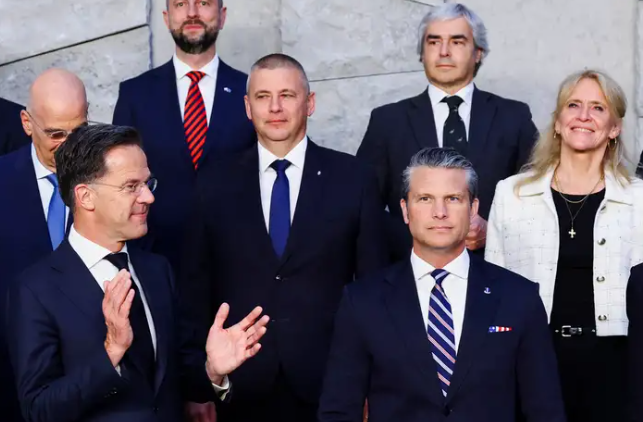
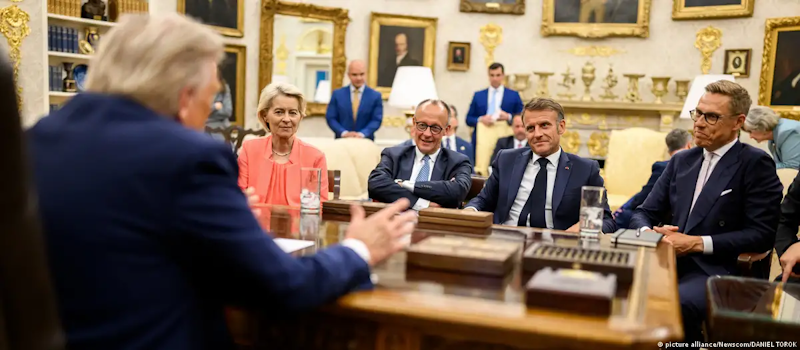
The Eurotrash pictured above have been unable and or unwilling to secure Europe’s borders against an ongoing mass illegal alien invasion.

France has virtually ceded control of the Banlieues to Islamists and criminal gangs.

They won’t protect their own people so why should the USA waste it’s time on them?

Carney is a likeminded Eurotrash wannabe who wants us to ally with these blowhard frauds.

Share

Hegseth’s D-Day warning about the ‘dangerous invasion of ideologies’ into Europe needs heeding

Hegseth’s D-Day warning about the ‘dangerous invasion of ideologies’ into Europe needs heeding

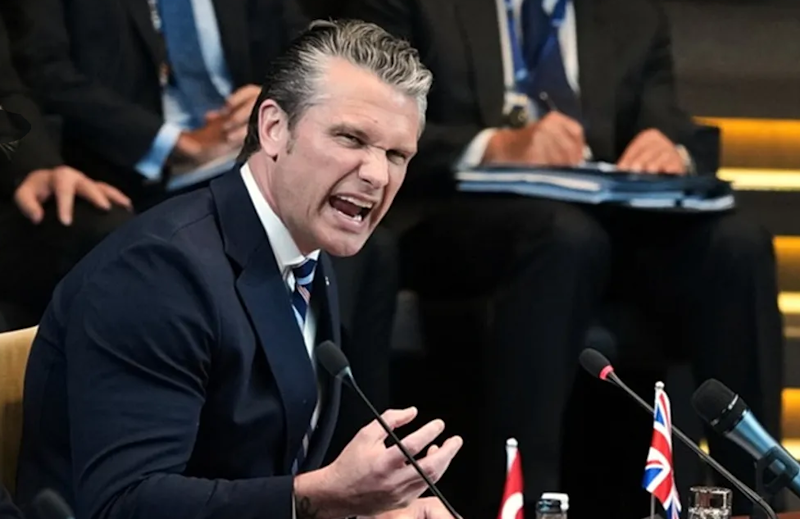
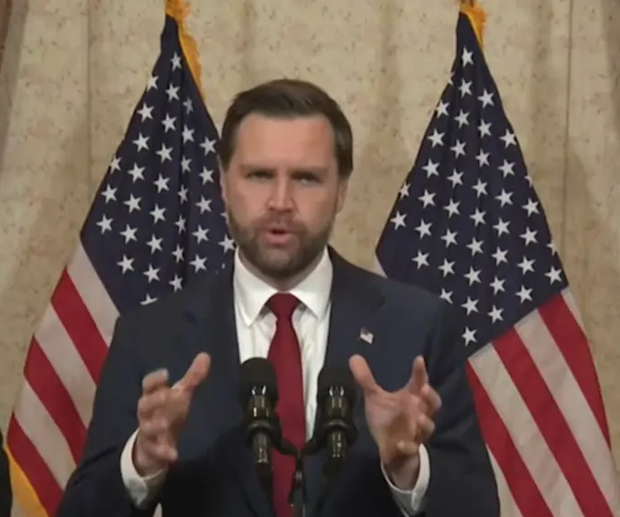
IN THE wake of US Vice President JD Vance’s comments about the ‘invasion of migrants’ in Europe, we now have the US defence secretary Pete Hegseth likening recent sea arrivals in Europe to an ‘invasion’, warning that freedoms won in 1944 remain under threat.

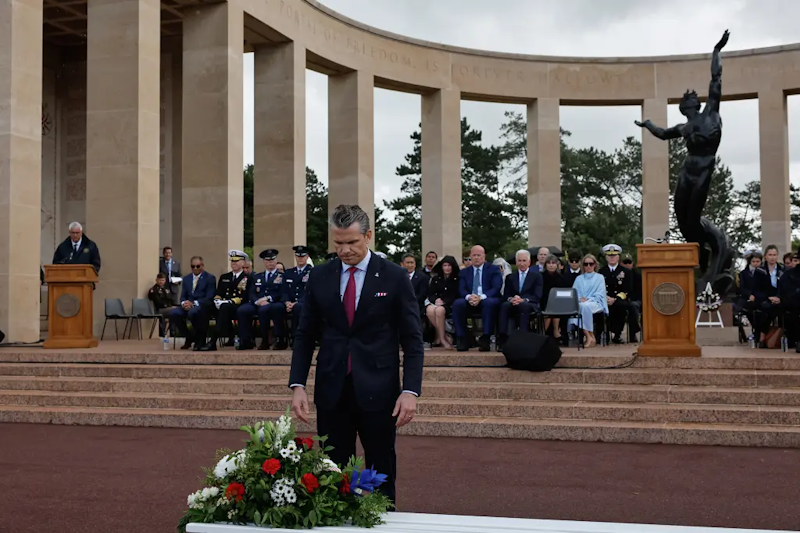
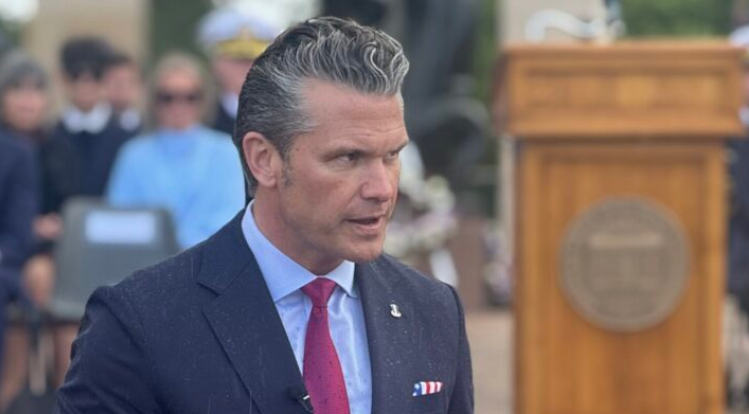
Hegseth’s remarks were delivered at the American Colleville-sur-Mer cemetery overlooking Omaha Beach in Normandy during commemorations of the 82nd anniversary of the D-Day landings.

Share

Why America is sounding the alarm about Britain and Europe

Why America is sounding the alarm about Britain and Europe

Back in November, the State Department warned that “mass migration poses an existential threat to western civilization and undermines the stability of key American allies.” In February, in his address to the Munich Security Conference, Secretary of State Marco Rubio expanded on that theme. After the Berlin Wall fell, Rubio noted, many in the West thought “the end of history” had finally arrived. Utopia was nigh. Western nations opened their borders, forsook spending on defense in order to bolster the welfare state and “outsourced” their national sovereignty. This was, Rubio warned, to ignore both human nature as well as the lessons of “over 5,000 years of recorded human history. And it has cost us dearly.” He continued:

“We opened our doors to an unprecedented wave of mass migration that threatens the cohesion of our societies, the continuity of our culture, and the future of our people. We made these mistakes together, and now, together, we owe it to our people to face those facts and to move forward, to rebuild.”

Share

At D-Day Event, Hegseth Warns Of European Beaches ‘Stormed’ By Third-World Migrants

At D-Day Event, Hegseth Warns Of European Beaches ‘Stormed’ By Third-World Migrants

NORMANDY, France — U.S. Secretary of War Pete Hegseth warned about the invasion of Europe by third-world migrants in a Saturday speech commemorating the 82nd anniversary of D-Day. Hegseth spoke at the Normandy American Cemetery, where thousands of Americans are buried. All but one died storming the beaches on D-Day or in the subsequent Battle of Normandy during World War II.

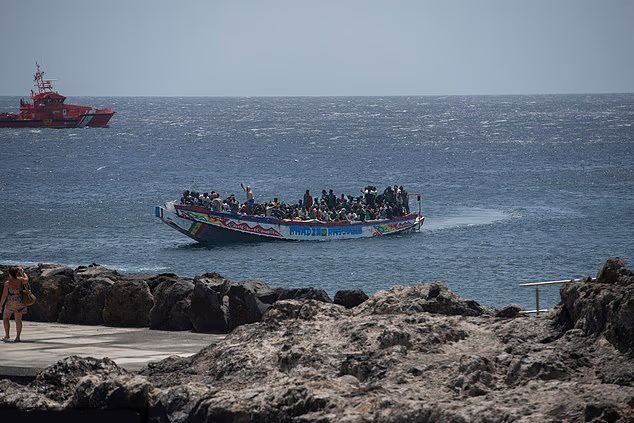
“Sadly, today, different European beaches are stormed by different dangerous ideologies. Beaches in Spain and Italy and Greece and Bulgaria,” Hegseth said. “Boats and men arrive. When will European capitals do something about that invasion? Or is it too late? I pray not, and I believe not.”

Share

Is Saving Europe Still Possible?

Is Saving Europe Still Possible?

London. Sunday, May 10. A protest against rising anti-Semitism is organized in front of the prime minister’s residence. About 20,000 people are present, mostly Jews. Secretary of State for Work and Pensions Pat McFadden, who addressed them, was jeered and booed. “I feel your pain,” he told the crowd. The reply was, “Action, no more words.”

When British Prime Minister Keir Starmer, a few days before the protest, visited Golders Green, a heavily Jewish area of London where two Jews had been stabbed on April 29, he was greeted with chants of “Keir Starmer, Jew Harmer.”


I think we will face an increasingly hostile, Islamized Europe making further investment in a tied future is just good money after bad.

Share

Hegseth says ‘European beaches are stormed’ by mass immigration in Normandy D-Day speech

Hegseth says ‘European beaches are stormed’ by mass immigration in Normandy D-Day speech

Secretary of War Pete Hegseth linked the Allied invasion of Normandy during World War II to modern immigration challenges facing Europe in a speech Saturday marking the 82nd anniversary of D-Day.

“Sadly, today, different European beaches are stormed by different, dangerous ideologies,” Hegseth said during remarks at the Normandy American Cemetery in Colleville-sur-Mer, France. “Beaches in Spain, Italy, Greece, and Bulgaria — boats and men arrive.”

Share

Europe’s Freeloading Days Are Over: America Demands Reciprocity

Europe’s Freeloading Days Are Over: America Demands Reciprocity

Since the end of World War II, the United States has spent trillions of dollars defending Europe. After defeating the Nazis, America rebuilt the European continent with the Marshall Plan and shielded it from Soviet aggression while propping up European economies through subsidies and investments.

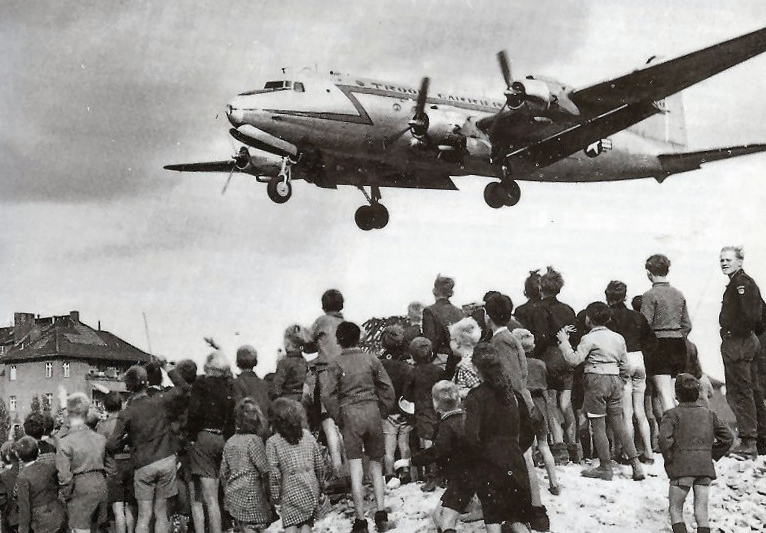
We bailed out failing governments. We airlifted food into Berlin when it was being choked off by the Soviet Union. We sent military aid. We ultimately saved Europe from communism.

Share

Rubio tries to reassure Nato allies over US troop deployments

Rubio tries to reassure Nato allies over US troop deployments

US Secretary of State Marco Rubio has tried to reassure allies over US decisions on troop deployments in Europe.

Rubio’s intervention at the end of a Nato foreign ministers’ meeting in Sweden came after President Donald Trump said the US would send an extra 5,000 troops to Poland.

That decision was a week after a planned deployment of 4,000 troops to the country was cancelled and days after an announcement that US troops would be pulled out of Germany.

Share

Europe Admits It Still Can’t Defend Itself Alone

Europe Admits It Still Can’t Defend Itself Alone

European leaders are attempting to downplay concerns after the United States announced plans to reduce its military presence on the continent, amid growing questions about Europe’s ability to defend itself without American support.

The Pentagon announced late on Tuesday that it was pausing the deployment of any additional troops to Poland. Vice President JD Vance described this as part of America’s demand for “more of Europe standing on its own two feet.”

Share

Irrelevant Europe

Irrelevant Europe

Josep Borrell is a Spanish socialist who held several high-ranking positions in the European Union. Until 2024, he was a vice-president of the European Commission and the high representative of the European Union for foreign affairs and security policy. In that capacity, he ran Europe’s External Action Service, which is the diplomatic body that executes Europe’s foreign policy decisions around the world. He remains a man with a great deal of influence over European perspectives.

Share

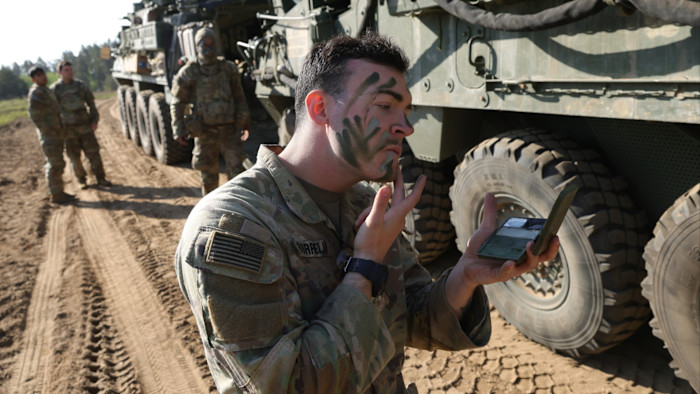
US to reduce troops in Europe to 2021 levels, Pentagon says

The Pentagon on Tuesday said that it was reducing the number of US Army Brigade Combat Teams (BCTs) in Europe from three to four.

The chief Pentagon spokesman, Sean Parnell, said in a statement that the US was reducing the number of its soldiers on the continent as a result of a “comprehensive, multilayered process” focused on US posture in Europe.

A BCT comprises 4,000 to 4,700 personnel, according to a congressional report.

Share

Why would anyone want to join the EU?

Why would anyone want to join the EU?

As prime minister, Mark Carney claims to be guided by pragmatism, albeit “principled pragmatism.” But his enthusiastic pursuit of deeper alignment with the European Union risks selling out Canadian sovereignty for romantic symbolism and a mountain of red tape.

In his now-famous speech in Davos, Carney said that “nostalgia isn’t a strategy.” Yet his approach to the EU reveals a deeply nostalgic view of Europe as a vibrant counterweight to North American realities. But the numbers say Europe’s economy, far from being vibrant, is in decline. Forecasts for this year project growth of one per cent or less. The EU is beset by stagnation, demographic decline, high energy costs and chronically poor competitiveness. Why would Canada seek even tighter alignment with a bloc that’s in decline when it already enjoys comprehensive trade access through the Canada-EU Comprehensive Economic and Trade Agreement (CETA) and other multilateral channels?

Share

Why Mark Carney and Europe are doubling down on each other

Why Mark Carney and Europe are doubling down on each other

No sooner were the words out of Prime Minister Mark Carney’s mouth than one French news magazine dubbed them “a breath of fresh air from Canada.”

“It is my strong personal view,” the Canadian leader said, “that as the international order (is) rebuilt … it will be rebuilt out of Europe.”

Carney was speaking in Armenia earlier this month at a meeting of the European Political Community. A leader who has dubbed his country “the most European of non-European nations” flubbed his lines slightly but got his point across, enchanting his all-European audience.


Carney smells profit from a decaying corrupt continent. There’s a reason his kind likes “Free Trade” and hates tariffs.

Share

American Economy Leaves Europe Behind

American Economy Leaves Europe Behind

A debate is emerging over the economic difference between Europe and America. It seems to be driven primarily by the American side, where it has ostensibly been inspired by the spotlight that President Trump has shone upon Europe in general. He has drawn American eyes to Europe both through tariff negotiations and his administration’s highlighting of the decline of freedom of speech in the European Union.

Recently, the Wall Street Journal made a notable contribution to the transatlantic comparison. In an editorial video, Mark Kelly, senior producer of the Journal’s editorial page, brought together viewpoints from a variety of contributors to try to determine what keeps America ahead and why the gap has increased in recent years. 

Share