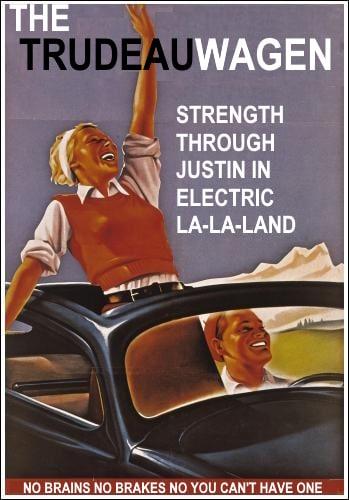
Someone tell Trudeau: For the rest of the world, energy security, not climate change, is now paramount

Energy is now about security

Following Russia’s invasion of Ukraine, energy security has replaced climate change as most countries’ number one concern, especially the countries we count as friends and allies. No matter how much Justin Trudeau may long for it, the world is not going back to the kumbaya days of the Kyoto and Paris climate accords.

Trudeau is not fit to be in charge of anything beyond costume selection. Canada is becoming an economic basket case thanks to Junior’s Greta envy.

Share

Why Michigan is trying to shut down Canada’s Enbridge Line 5 pipeline

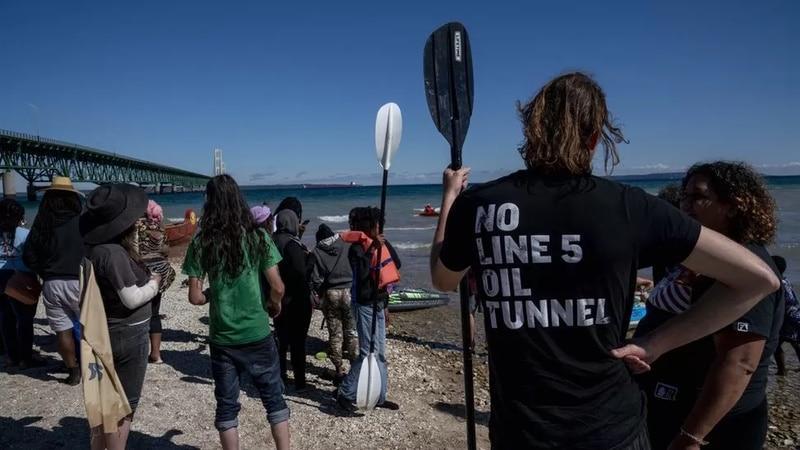
An ageing pipeline crossing part of the Great Lakes has led to a standoff between the US state of Michigan and Canada. The outcome of the battle over Line 5, which delivers energy to the US Midwest and central Canada, will be viewed by many as a bellwether of how North America will balance its energy future with its environmental commitments.

The most contentious part of the Line 5 pipeline – which runs from Superior, Wisconsin, by way of Michigan to Sarnia, Canada – sits on the bed of the Straits of Mackinac. The narrow waterway connects Lake Michigan and Lake Huron – two of the world’s largest lakes.

In 2018, an anchor from a shipping freighter passing through the Straits struck and damaged the pipe, bringing to the fore longstanding concerns from environmental campaigners and others over possible spills.

Share

Why the West should go nuclear

Our irrational fear is costing lives

Nuclear power is often described as “the double-edged sword of science”, reflecting the fact that it can be used for both useful and peaceful purposes as well as deadly and destructive ends. This has never been truer than today. On the one hand, fission technology, in the form of nuclear warfare, still holds the potential to spell the end of mankind; on the other, in the form of abundant carbon-free nuclear energy, it could hold the key to civilisation’s survival.

Share

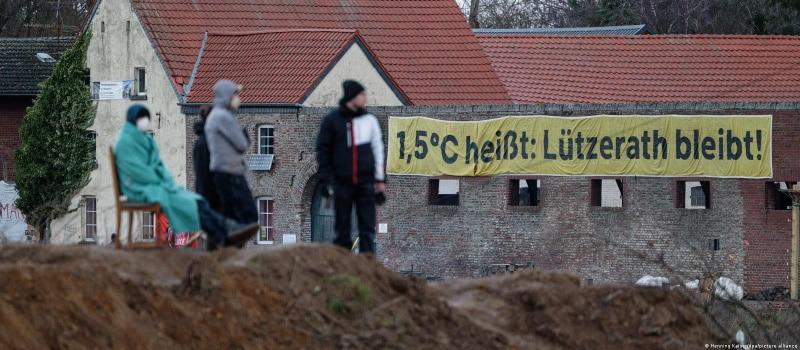
Germany: Police, coal protesters face off in Lützerath

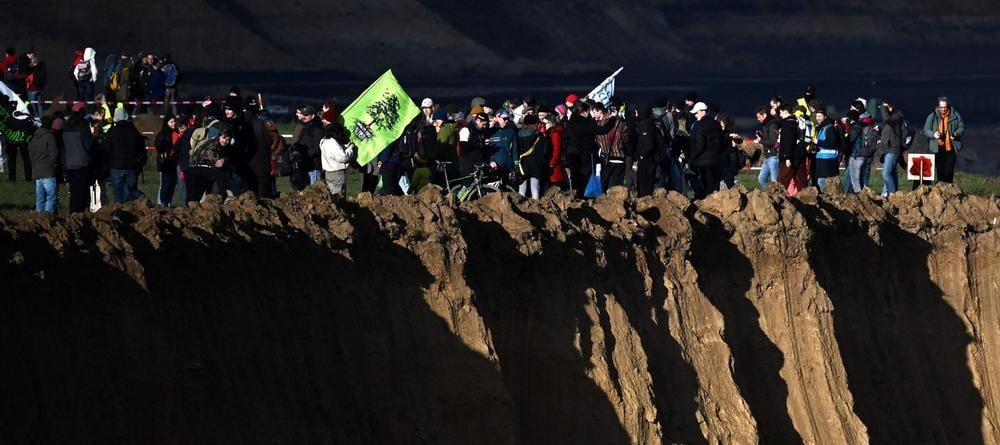
German police warned they would not allow their officers to be targeted with violence amid growing tensions with climate protesters in the condemned village of Lützerath on Monday.

The village is set to be swallowed up by the local coal mine, run by Germany’s energy giant RWE. But organizations such as the Last Generation and Fridays for Future oppose the plan. Hundreds of protesters are now squatting in the area, with scuffles with police breaking out over the weekend. Police were reportedly pelted with stones, attacked with paint, and police vehicles were damaged.

Meanwhile in Austria …

Share

Braid: Trudeau trash talks Alberta climate change action, drawing hot response from Smith

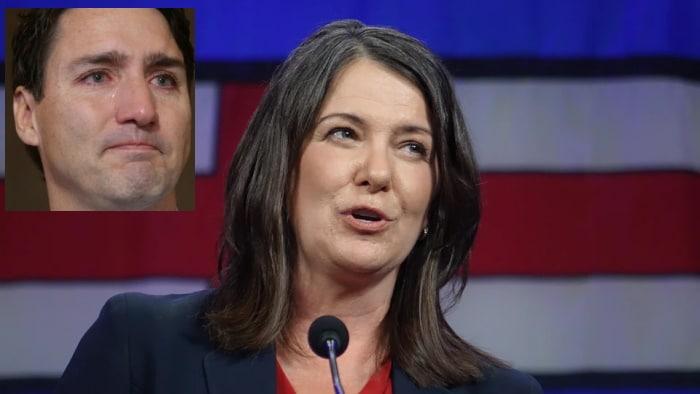
Prime Minister Justin Trudeau is either clueless about what’s going in Alberta, or cares nothing for the truth.

That’s the unpleasant choice in his inflammatory remarks about provincial action on climate change.

“One of the challenges is there is a political class in Alberta that has decided that anything to do with climate change is going to be bad for them or for Alberta,” Trudeau said in an interview with Reuters, the business news service with a worldwide audience.

Says the nation wrecking eco-nutbar

Share

Ottawa must scrap polarizing term ‘just transition’: Alberta environment minister

Alberta’s environment minister says Ottawa must stop using the term “just transition” because she believes it is shorthand for phasing out Canada’s oil and gas industry.

“The problem with the just transition, it’s a polarizing term,” Sonya Savage said. “And they’ve been using it.”

Savage told CBC’s Rosemary Barton Live on Sunday that the Alberta government and Ottawa agree on many things, including reducing emissions from the oil and gas sector. But she said while the federal Liberals have “walked away” from using the “divisive term,” it’s still being used on Natural Resources Canada’s website.

The LPC lies – they will shutdown the oil and gas industry.

Share

Germany: Hateful idiots who want the elderly and children to freeze in the dark make plans to prevent coal mine

Germany: Activists make plans to save village from miners

Activists seeking to stop the expansion of a coal mine in west Germany were making plans on Sunday on how best to save the village of Lützerath. The village is scheduled for demolition to allow lignite to be extracted from beneath it.

The village, 40 kilometers (25 miles) west of Cologne, has become a center for climate protest in Germany, with activists saying the planned clearance of the village for mining goes against the country’s pledges under the Paris Agreement.

Police from the western city of Aachen estimated that up to 1,500 activists are currently in the village.

Share

GUNTER: Trudeau’s Just Transition an investment-killing enviro-appeal to green voters

Alberta is about to be plunged into another recession, or at least the Trudeau government is going to do its damnedest to plunge us into one. Their stated goal for kicking the stilts out from under our economy once again (by my count, the third Alberta recession caused by a prime minister named Trudeau), will be to save the planet from climate crisis.

Share

RCMP has spent nearly $50M on policing pipeline, logging standoffs in B.C.

An RCMP squad charged with policing resistance to resource extraction in British Columbia spent nearly $50 million enforcing injunctions obtained by the petroleum and forestry sectors in its first five years, an internal accounting shows.

The figures, released to CBC News under access-to-information law, offer the first publicly available, if rough, estimate of the costs incurred by Community-Industry Response Group (C-IRG).

Formed in 2017, the C-IRG has no defined territorial jurisdiction, an unknown number of members, and no set budget. It goes where industry meets land occupations, blockades and civil disobedience.

Still no leads on the Coastal GasLink domestic terrorist attack. It’s as if someone doesn’t want this crime to be solved.

Share

Nuclear reactor pressure tubes are deteriorating faster than expected … so it’s full speed ahead on EV-topia

Early in the summer of 2021, Canada’s nuclear safety regulator received alarming news.

Inspections had revealed that two pressure tubes from different reactors at Canada’s largest nuclear power plant, the Bruce Nuclear Generating Station, had deteriorated far more quickly than expected. This meant the station’s operator, Bruce Power, had violated the terms of its operating licence. The revelation put the Canadian Nuclear Safety Commission in a tight spot. How were its leaders to respond?

Pressure tubes are commonly described as the heart of the CANDU reactor, Canada’s homegrown nuclear reactor design. The tubes contain uranium fuel bundles and heavy water, which serves as coolant.

We can barely keep current infrastructure working yet Junior assures us everything will be just dandy in Electric-La-La-Land.

Share

French Bakeries Under Threat of Massive Closures

The surge in energy prices linked to the war in Ukraine is beginning to have a serious impact in France, with victims whose downfall is hitting public opinion hard, both practically and symbolically. French bakers are closing down, one after the other, because they cannot pay their soaring electricity bills. An estimated 33,000 artisan bakers are now threatened with closures.

For several weeks, headlines in the regional press have reported on the closure of bakeries throughout the country—in dramatic circumstances and with deep human tragedies as a result. Many craftsmen made their last batch of bread for New Year’s Day before closing their doors for good. Some were businesses that had been established in small towns for several decades, prosperous and well-established family businesses that could no longer cope with the rising costs of production. 


How France’s prized nuclear sector stalled in Europe’s hour of need

France should be in a strong position as Europe reels from the energy crisis, drawing on the renowned nuclear industry that supplies the lion’s share of its power. But France’s nuclear sector has been going through a tricky time, as a significant proportion of its reactors have had to close for maintenance. Analysts blame a mixture of bad luck and the consequences of a political deal from a decade ago.

Share

Putin kickstarts de-industrialisation of Europe’s factories

High gas prices caused by Russia’s war on Ukraine has hit manufacturers and their output

In Germany’s western industrial heartlands is BASF’s main Ludwigshafen facility, a sprawling complex that guzzles roughly as much gas as the whole of Switzerland.

Like many manufacturing giants, the chemicals maker has found that Vladimir Putin’s war in Ukraine and the new normal of high gas prices is challenging the business model the country’s industrial hubs were built on.

“These challenging framework conditions in Europe endanger the international competitiveness of European producers,” its boss Martin Brudermueller admitted in October as it unveiled permanent cost-cutting measures.

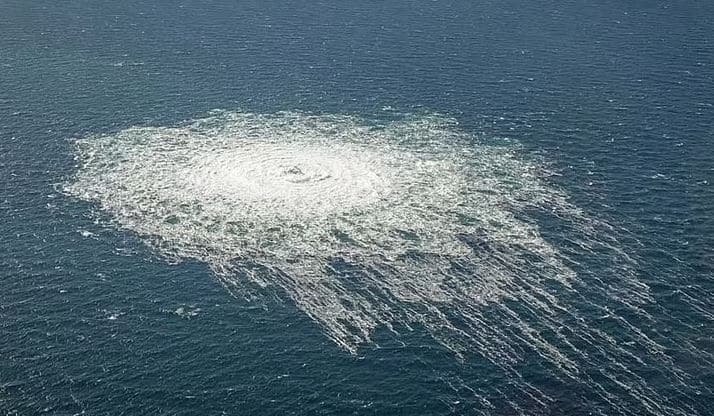
So who destroyed the NordStream pipelines? Putin or America’s Deep State?

Share

France’s nuclear headache leaves Macron on brink of rationing electricity

The damp and warmer-than-normal weather that afflicted much of France last week was a disappointment for skiers hoping to see in the new year in the Alps. But it has brought welcome relief to those in charge of keeping the country’s lights on.

The threat of power cuts has been looming over France — curious considering that it is normally a significant exporter of electricity, thanks to its 56 nuclear reactors, by far the largest number of Europe.

Share

Fusion energy and the coming fight for the Moon

The Moon has helium-3, an important substance for fusion power — and the Chinese have taken notice

It’s been hard to miss the excitement since the Energy Department announced that its Lawrence Livermore National Laboratory had produced a fusion reaction, which, for the first time, unleashed more power than it took to create.

Using an array of 192 lasers to superheat and compress hydrogen atoms to more than 180,000,000°F, scientists managed to release 3.15 megajoules of energy for every 2.05 megajoules their experiment required.

Sounds impressive. But what exactly do these developments mean, and, more importantly, what do they foretell? Many things, certainly, including a fight for the Moon.

Share

Lützerath: How Germany’s energy crisis reignited coal

1.5 degrees means Lützerath stays

Germany had been winding down its brown coal production. Then an energy crisis hit. Now, thousands of people have promised to resist January plans to demolish a village and dig up the coal beneath it.

“If this village goes, then Germany’s 1.5-degrees commitment to the Paris Agreement goes, as well.”

It’s an October afternoon in a rural corner of western Germany, the village of Lützerath in the state of North Rhine-Westphalia (NRW). The morning rain clouds have moved out, and the sun is glistening off the damp grass and leaves in the small meadow where we’re walking.

Share