Terry Newman: Was Mark Carney really the best choice to negotiate with Trump?

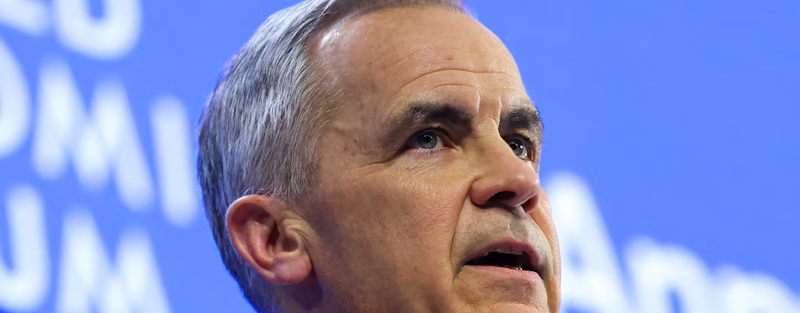
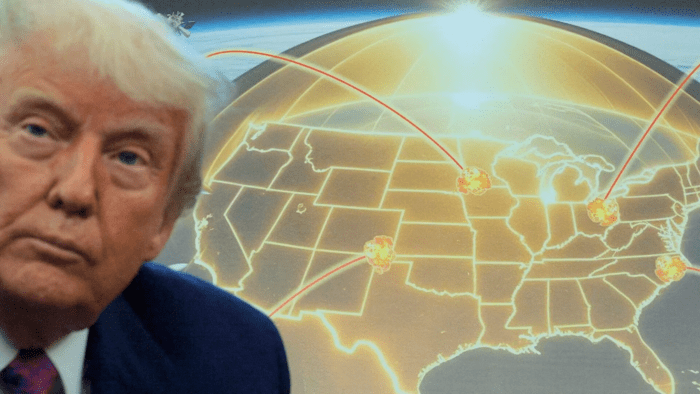
Canadians have not heard much about why negotiations with the United States seem to have gone nowhere. One has to ask: was Mark Carney really the best choice to negotiate with Donald Trump? All signs point to “absolutely not.”

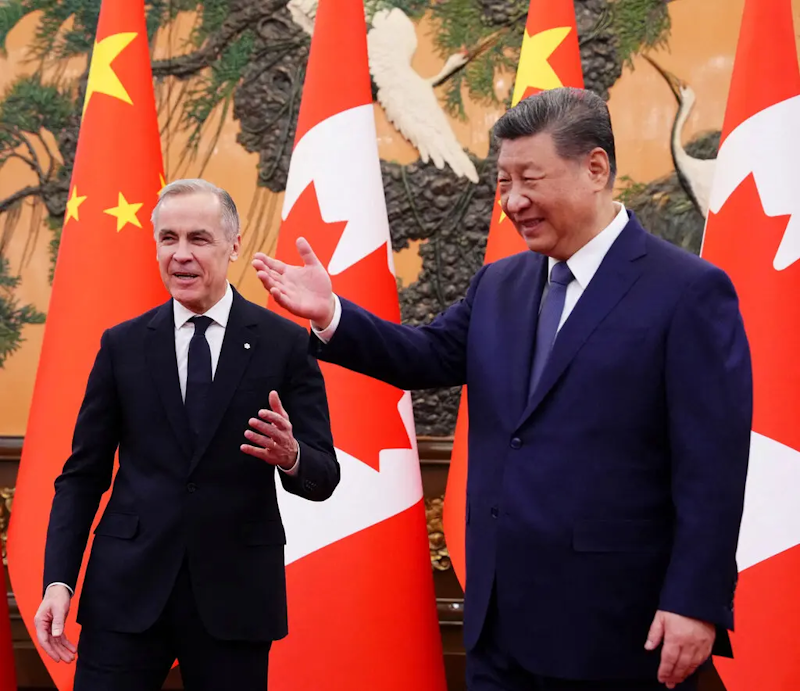
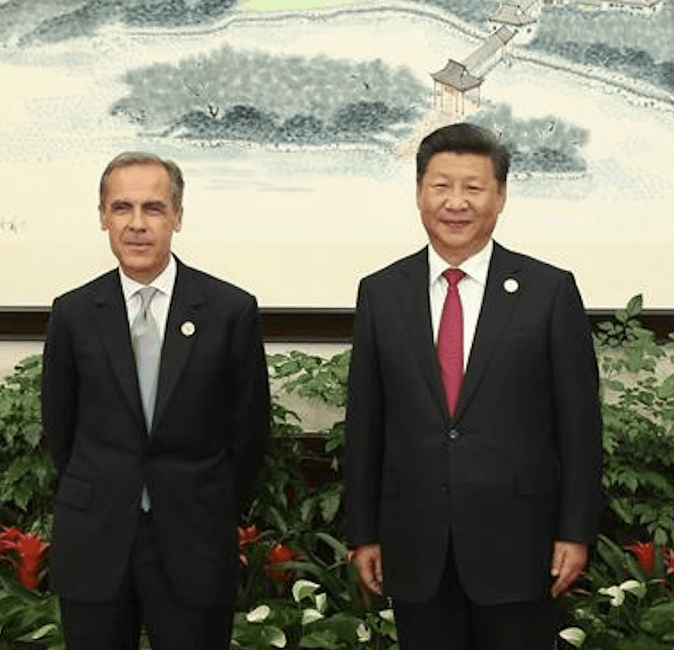
Prime Minister Mark Carney was in Beijing this week, meeting with Chinese President Xi Jinping and other high-ranking Communist party officials. After landing in China on Wednesday, Carney posted a video of himself waving before descending the steps of his plane to enjoy the red-carpet treatment.

Share

Canada’s Strategic Ambiguity With China Is Becoming an Alliance Liability

After the Liberal government defined Canada’s relationship with China as a strategic alliance, the prime minister’s visit to Beijing inevitably carried more weight. This was not simply a matter of timing or protocol. It reflected a decision about how Canada wishes to navigate a more contested international landscape. Choices of this kind extend beyond trade or messaging, and when a NATO member edges closer to an authoritarian system, allies recalibrate while competitors probe for advantage.

This is not a circumstance that can be managed through repeated talking points. It demands a harder look informed by experience, available evidence, and the practical obligations Canada has assumed within its alliance relationships.

Share

Canada May Fall Into China’s Strategic Trap as It Seeks New Energy Sources After Losing Venezuela, Analyst Warns

Ottawa may be walking into a trap by seeking a “strategic partnership” with China, which is losing energy suppliers like Venezuela under U.S. control and could pull Canada into its orbit for resources and away from its allies, longtime China analyst Sheng Xue warns.

Prime Minister Mark Carney has said his government is pursuing a “strategic partnership” with Beijing, as he and several of his cabinet ministers have been meeting with Chinese officials throughout his visit in Beijing in an effort to build closer relations between the two countries.

Share

Canada wants to be 1st in North America to build EV with Chinese knowledge: senior official

Canada wants to look at joint ventures and investments with Chinese companies within the next three years to build a Canadian electric vehicle with Chinese knowledge, according to a senior Canadian official.

The official, who spoke on the condition they not be named, said the goal is for Canada to become the first country in North America to build this type of EV.

It’s a fundamental error, the official said, to think that U.S. President Donald Trump will not allow Chinese electric vehicles into the United States.


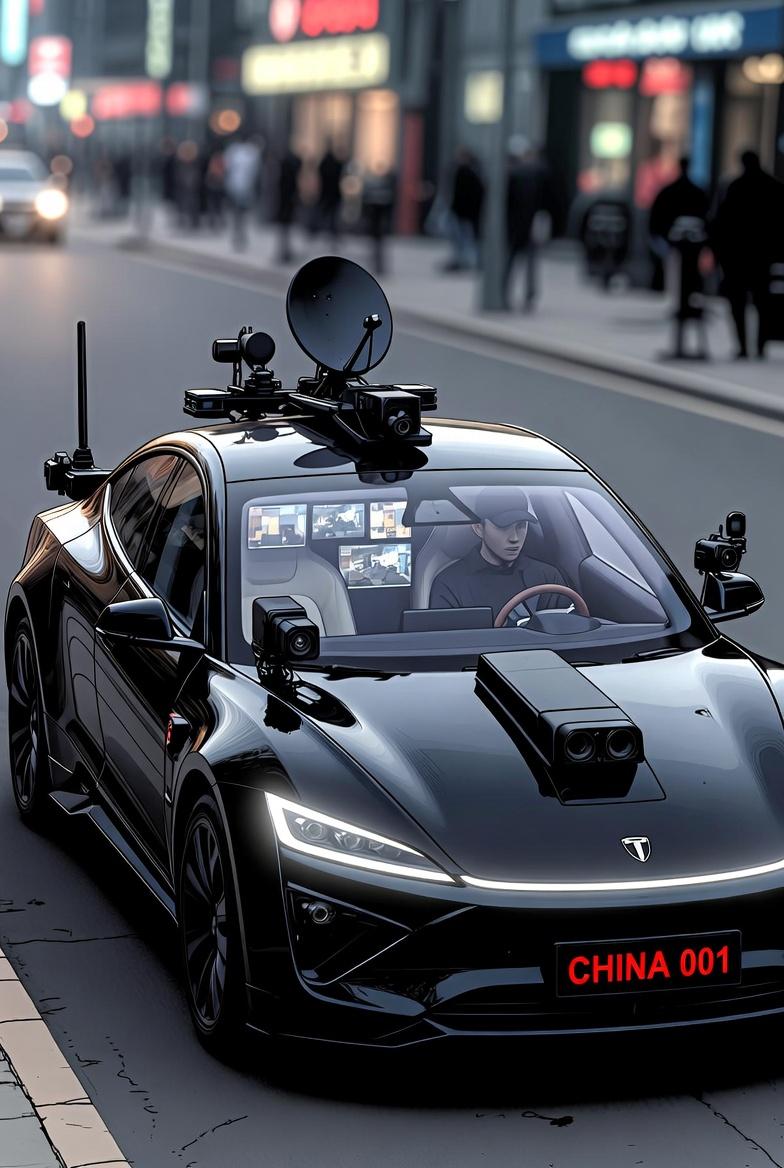
Will that include OEM surveillance tech?

Share

The Prescient Warning Behind Ottawa’s China Influence File—and Carney’s Beijing Electric Vehicle Gamble

A Canadian immigration control official who warned of influence from Prime Minister Jean Chrétien’s Beijing–Montreal business networks, predicted the types of outcomes unfolding under Carney.

This abridged 2023 Bureau investigation is being reposted in the aftermath of Prime Minister Mark Carney’s trade mission to Beijing. It offers a plausible lens on how Ottawa can arrive at policy choices that may ultimately damage the interests of most Canadians—and erode Canada’s standing as a Western middle power.

Share

Carney Cozies Up to China

Cowboy Carney

Canadian Prime Minister Mark Carney is selling out to China, and Chinese dictator Xi Jinping is loving it.

Over the past few days, Canadian Prime Minister Mark Carney has been in China in an open attempt to pivot to China and spurn Canada’s relationship with the United States. In a jubilant press release on Friday, the prime minister’s office declared that Carney is “forg[ing] [a] new strategic partnership with the People’s Republic of China.” The government went on to repeatedly tout this “new strategic partnership,” framing the relationship as entirely overhauled.

Further, Carney announced that Canada is dropping tariffs on Chinese electric vehicles from 100 percent to 6.1 percent, opening the door to importing cheap Chinese cars (heavily subsidized by the communist government) that promise to sink the Canadian car industry. That decision signals a major break from Canada’s previously united stance with the U.S. against such vehicles.

Share

Xi’s Enforcers Punished Nearly a Million in 2025—and China’s Leader Wants More

Chinese leader Xi Jinping has directed relentless purges to assert a degree of autocratic control unseen in China in decades, with Communist Party enforcers punishing nearly a million people last year. But when it comes to getting things done, he still wants more commitment to his agenda.

Weeks before Beijing is set to launch a new economic blueprint for the next five years, Xi ordered the party’s discipline inspectors to flex their supervisory powers even more forcefully and ensure his policies are executed as intended.

“Corruption is a major obstacle and a stumbling block in the advancement of the party and the nation’s causes,” Xi said this week at a conclave of the party’s Central Commission for Discipline Inspection. This year, he said, party inspectors must help enforce the top leadership’s decisions more resolutely, and ensure Beijing achieves its goals in the new five-year plan.


Pretty sure Carney will be dropping a dime on all of us.

Share

Carney’s EV deal with Beijing is high-wire diplomacy with risks on both sides

China crappy electric cars, EV

One day before Prime Minister Mark Carney arrived in Beijing, U.S. President Donald Trump offered his latest dismissal of the Canadian auto industry. The North American free-trade pact is “irrelevant,” Mr. Trump said while touring a Ford Motor Co. plant in Michigan, and the U.S. should stop buying Canadian cars.

Mr. Carney’s response came on Friday.


It will be great for Carney and the China class and that’s all it was intended to be.

Share

‘Manchurian Generation’ Ballot Flood: More than 1 Million Chinese With U.S. Citizenship Could Vote in 2030 Elections

More than one million Chinese with U.S. citizenship who grew up in communist China will soon start voting in American elections, #1 New York Times bestselling investigative journalist and Breitbart News Senior Contributor Peter Schweizer reveals in his new book, The Invisible Coup: How American Elites and Foreign Powers Use Immigration as a Weapon.

In his explosive new book, Schweizer details how Chinese elites have exploited America’s birthright citizenship policies by engaging in a practice known as birth tourism, whereby Chinese mothers intentionally travel to the United States give birth on American soil so that their newborn children will automatically be granted U.S. citizenship.

Share

There is ‘much alignment’ between Canada, China on Greenland sovereignty: Carney

Canada’s latest defence policy warns of Chinese and Russian ambitions in the Arctic and says China’s interests “increasingly diverge from our own on matters of defence and security.”

OTTAWA — Prime Minister Mark Carney said Friday he found “much alignment” between his views on Greenland’s sovereignty and those of Chinese President Xi Jinping in response to U.S. President Donald Trump’s threats against the territory.

“I had discussions with President Xi about the situation in Greenland, about our sovereignty in the Arctic, about the sovereignty of the people of Greenland and people of Denmark, and I found much alignment of views in that regard,” Carney said at a press conference in Beijing.

Share

Carney Broadcasting Corporation Salivates Over ChiCom EV’s


Chinese EVs are coming to Canada. How soon will they be here? How much will they cost?

Buckle up! The electric vehicle market in this country is about to take a sharp turn.

Prime Minister Mark Carney is reopening Canada to Chinese-made EVs, lowering a 100 per cent tariff on imports, imposed in 2024, back to six per cent.

There’s demand for more affordable and climate-conscious EVs and, for an average customer, having Chinese EVs in the market means “more choice” and “greater tech,” said Max Morris, sales manager at Shift Electric Vehicles in Burlington, Ont.


How much does slave labour contribute to the manufacture of China’s EV’s?

The manufacture of electric vehicles (EVs) in China involves complex global supply chains, and multiple investigations have documented links to forced labor, particularly involving Uyghur and other ethnic minorities in the Xinjiang Uyghur Autonomous Region (XUAR). While quantifying the exact “contribution” of forced labor is challenging due to opaque supply chains and lack of comprehensive data, reports from organizations like Human Rights Watch, Sheffield Hallam University, and others provide estimates based on production volumes, company exposures, and labor transfer programs. These indicate that forced labor risks permeate significant portions of key materials and components, especially aluminum, batteries, and related metals.

Oh Oh!

Share

A China Deal That Trades Leverage for Illusion

Canada’s newly announced trade memorandum with China has been presented by the federal government as pragmatic statecraft in a turbulent world. Lower tariffs on canola and seafood in exchange for the entry of nearly 50,000 Chinese electric vehicles, we are told, will diversify exports, lower consumer prices, and signal Canada’s independence from American protectionism.

This framing is incomplete. More troublingly, it is strategically naive. Trade policy is not merely about price and volume. It is about leverage, reciprocity, industrial resilience, and alignment with trusted partners. On those measures, this agreement falls short.

Share

CHARLEBOIS: Carney’s trip to China revealed Ottawa knows CUSMA could collapse before year’s end

The trade feud between Canada and China is finally thawing — and it was long overdue.

The rupture began in 2018 with the arrest of Meng Wanzhou, a senior executive of Huawei, in Vancouver. What followed was not merely a diplomatic dispute, but a calculated economic response: China weaponized trade, and Canadian agriculture became collateral damage. Canola, pork, lobster, and other agri-food exports faced punitive tariffs and informal barriers that reverberated across rural Canada for years.


Climate finance? With Coal King China? Globalist Gibberish.

Share

Carson Jerema: Mark Carney embraces Chinese EVs and the, uh, ‘new world order’

How about instead of becoming the 51st American state, Canada becomes the 23rd Chinese province?

Listening to Prime Minister Mark Carney and his ministers fawn over the Chinese government in Beijing this week, it almost seemed like they would be willing to follow President Xi Jinping down any path he led — and in the end, they did.

Share

China EV deal puts Canada’s entire auto sector at risk, industry leaders say

The Canada-China trade deal announced early Friday puts the future of Canada’s entire automotive industry at risk and concedes ground to “hostile” players in the market, say Canadian automotive industry leaders.

“This is a self-inflicted wound to an already injured Canadian auto industry,” said Unifor national president Lana Payne in a press release reacting to news of the deal, which allows 49,000 Chinese EVs a year into Canada, at the “most-favoured nation” tariff rate of 6.1 per cent.

Share