Can Middle Powers Like Canada Exist Between America and China?

As Donald Trump rampaged about in his first term, leadership of the free world was transferred, by general liberal acclamation, to Angela Merkel of Germany. She was cast as the embodiment of internationalist virtue: prudent, broad-minded, diplomatic, multilateralist and expertise-driven above all.

Then Trump left office, Merkel left office, and suddenly it was possible to notice that her leadership of Germany had been well-nigh disastrous.

The mismanaged eurozone crises that followed the crash of 2008 and her open door to Middle Eastern migrants both contributed mightily to the collapse of the very firewall against far-right parties she was supposedly maintaining. Much worse, she accepted, for enlightened environmentalist reasons, her country’s deindustrialization and an ever-increasing reliance on Russian oil and gas. And when Vladimir Putin invaded Ukraine, it suddenly became clear that Merkel’s legacy wasn’t a strong alternative to Trump’s America; it was a weak European core threatened by and dependent upon an authoritarian rival to its east.

Share

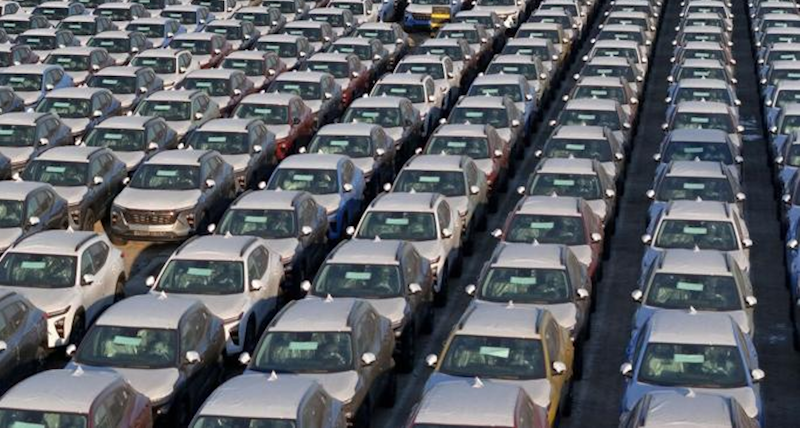
Canada’s auto sector is in serious trouble. Are Chinese EVs the solution?

When Trevor Melanson arrived in Reykjavik, Iceland, last July to pick up his rental car, he was “pleasantly surprised” to be handed the keys to an electric vehicle that most North Americans could only dream of driving — a Chinese BYD.

Melanson, from Vancouver, B.C., was curious to try out a car he had heard so much about — in this case a silver hatchback — but had never seen. When he got behind the wheel of this “efficient car that checks all the boxes,” he realized it was a vehicle that many Canadians would like.


Carney’s propaganda rag the Toronto Star published this article on the same day Trump threatened 100% tariffs over Ottawa’s merger with China’s godless communists and a week after running a piece saying China was unlikely to invest in Canadian EV manufacturing plants.

Share

From brutal blitz to guerrilla warfare: Imagining what a U.S. invasion of Canada might look like

There’s “effectively zero” chance the U.S. would invade Canada — but we must prepare for that contingency anyway, experts say.

The U.S. invasion of Canada would likely begin with a brutal blitz, before rising to a defiant insurgency.

Over the course of mere days, a co-ordinated series of surgical strikes by the U.S. military could decapitate Canada’s leadership, cripple its military, compromise key communication channels and paralyze the nation, national defence experts tell the Star.

But despite its early victories, the States would find it near impossible to hold Canada for long — especially if a hostile population decided to resist.


A defiant insurgency? And just who will take that on? The Hindus? The Mohammedans? The Sikhs?

Trump may be on your street soon!

Share

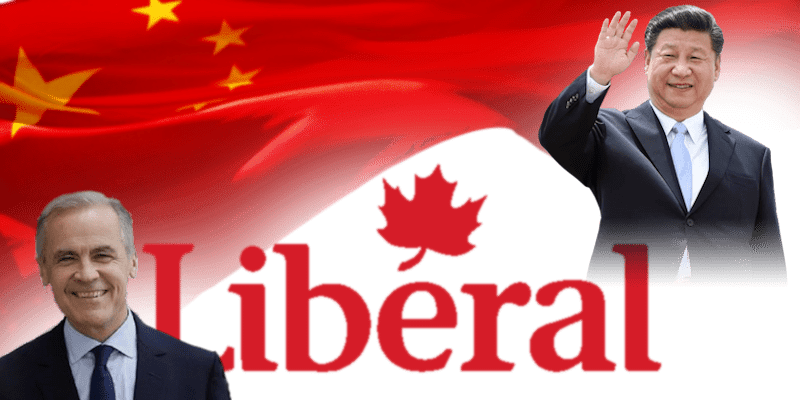
Beijing’s Lying Liberals assure Trump: ‘no pursuit’ of free trade with China, after 100% tariff threat

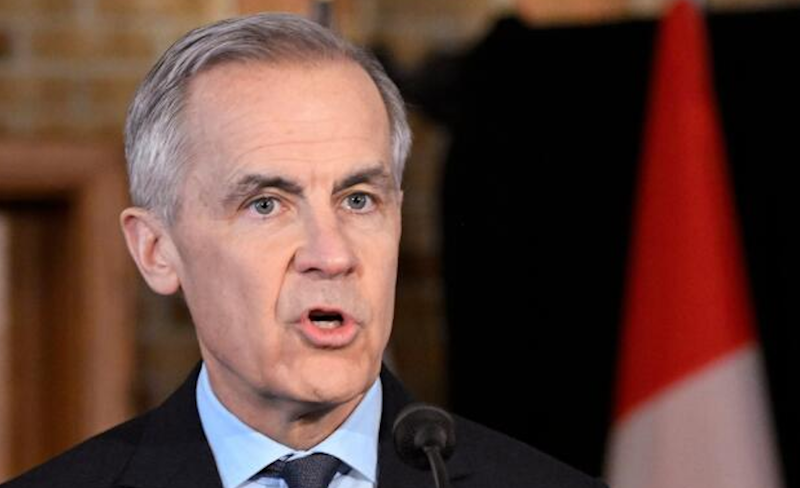
OTTAWA — Prime Minister Mark Carney’s Liberal government is pushing back against U.S. President Donald Trump’s latest threat to impose 100 per cent tariffs on all Canadian imports if Ottawa makes a trade deal with China, insisting there is no deal in the works.

After Trump delivered the ultimatum on Saturday, Minister for Canada-U.S. Trade, Dominic LeBlanc, posted a response on X.

So what happened since last week to change Carney’s mind about his New World Order?

h/t Mauser

Share

Pro-China Networks Amplified Carney’s Beijing Messaging to Attack U.S. Policy, Echoing a 2025 Election Pattern, Analyst Finds

OTTAWA — A social network analysis firm says Chinese state and pro-China accounts amplified Prime Minister Mark Carney’s statements across major Western platforms during his Jan. 14–17 trip to Beijing—praising Canada while using his remarks to criticize U.S. policy toward China—in geopolitical messaging that, Graphika’s data suggest, mirrors a pattern observed prior to the 2025 Canadian general election, when pro-China actors promoted Carney’s stance on U.S. tariffs to advance narratives aligned with China’s strategic goals.

Share

Starmer, Carney and the twilight of the globalists

‘The strong do what they can and the weak suffer what they must.’ Opinion writers have once again been dusting off Thucydides’ ancient dictum, in a desperate attempt to understand the new world another tumultuous week in international affairs has left us in… and to find a vaguely intelligent-sounding opener to a column. A crime – I guess – of which I am also now guilty.

Share

This Carney Is a Clown: The Insufferable Cowardice of Canada

Our commitment to NATO’s Article 5 is unwavering, so we’re working with our NATO allies, including the Nordic Baltic Gate, to further secure the alliance’s northern and western flanks, including through Canada’s unprecedented investments in over-the-horizon radar, in submarines, in aircraft and boots on the ground, boots on the ice.

—Prime Minister Mark Carney, Jan. 20, 2026, Davos address

“Unwavering,” eh? Hmm, let me consult my Canadian-to-English dictionary… aha! Turns out “unwavering” is Canadian for “underfunded by freeriding, Maple syrup-slurping cheapskates”: Canada hasn’t honored its 2% NATO defense spending agreement in nearly 40 years!

Share

Carney’s Plains of Abraham remarks show ‘historic error’

QUEBEC — Prime Minister Mark Carney’s statement that the Plains of Abraham symbolize the start of something good shows his complete lack of knowledge of Quebec history, politicians said Friday.

“What a gaffe, what a historic error,” Immigration Minister Jean-François Roberge said in an interview with Radio-Canada. “The Battle of the Plains of Abraham are the conquest, the culmination point where the English came and defeated the French and burned villages, etc.

“There’s nothing glorious in this.

Share

BORG: Quebec is the only province backing the federal ‘gun grab’

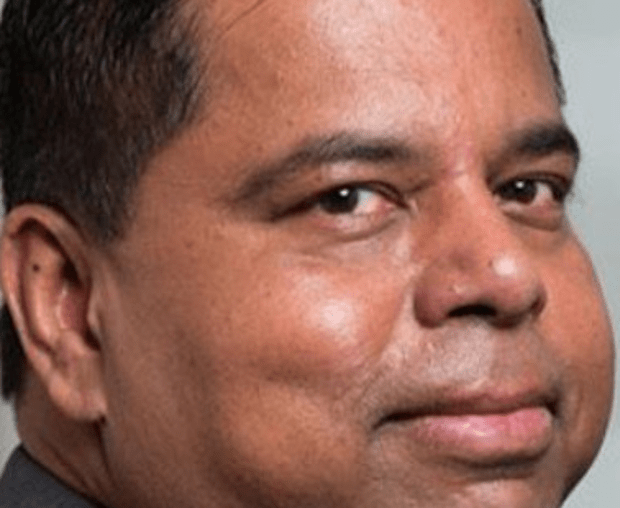
Lying Liberal DEI MP

Quebec is now the only province openly willing to work with Ottawa on its federal “gun grab,” a reality that is hardening regional divisions and deepening skepticism about the so-called “assault-style” firearms compensation program.

While most provinces and many major police services have either rejected or distanced themselves from the initiative, Quebec has signalled its readiness to cooperate with the federal government on implementation. That decision has left Quebec increasingly isolated as the rest of the country pushes back against what critics routinely describe as a “gun grab.”

Share

Michael Higgins: Carney wants ‘justice’ for the world, but what about for Canadians?

It is always a little worrying when politicians wrap themselves in the flag. Patriotism is such an easy emotion to arouse that the public, with banners flying, almost always rally to the “cause” — whatever the cause is.

So it was Thursday, when Prime Minister Mark Carney, fresh from his triumph at Davos, made a speech in Quebec that declared Canada the greatest country on earth.

Share

8,500 notices issued to federal workers this week, including Global Affairs

Approximately 8,500 federal public servants received notices this week their jobs may be risk as part of the federal government’s move to cut 28,000 jobs from the federal public service over the next four years.

At least 12 federal departments notified employees about plans for the comprehensive expenditure review, including to approximately 2,000 employees at Health Canada and 2,300 at Global Affairs Canada receiving notices.

The Canada Strong Budget 2025 outlined a plan to cut another 28,000 positions from the federal public service over the next four years and find $60 billion in savings.


How many will be hired back after a short layoff either as regular employees or consultants?

Hey Grok! How many federal government public servants were hired during Justin Trudeau’s tenure as Prime Minister of Canada?

Justin Trudeau became Prime Minister of Canada in November 2015, following the federal election in October 2015. The standard measure for the size of the federal public service (often referred to as federal public servants or the core federal public administration plus separate agencies) comes from official Treasury Board of Canada Secretariat data, which reports annual snapshots as of March 31 each year.This data shows the population of the federal public service (employees governed under the Financial Administration Act Schedules I, IV, and V):March 31, 2015 (pre-Trudeau, end of Harper era): 257,034

March 31, 2024 (peak during Trudeau’s tenure): 367,772

This represents a net increase of 110,738 employees (367,772 – 257,034) over the period from just before his tenure began through to the 2024 peak.

Share

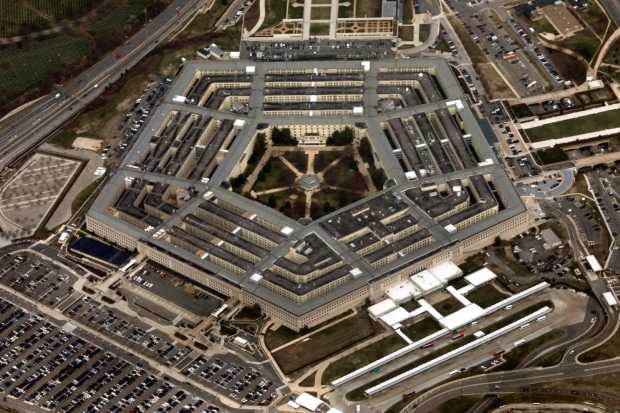
China no longer Pentagon’s top security priority

China is no longer the top security priority for the US, according to the Pentagon’s new National Defense Strategy.

The document, published once every four years, instead says that the security of the US homeland and Western Hemisphere is the department’s chief concern, adding that Washington has long neglected the “concrete interests” of Americans.

The Pentagon also says it will offer “more limited” support to US allies.

It follows the publication last year of the US National Security Strategy, which said that Europe faced “civilizational collapse” and did not cast Russia as a threat to the US. At the time, Moscow said the document was “largely consistent” with its vision.


Not great news for Europe. For that matter it looks like the free ride is over for everyone.

Given Canada is a virtual ChiCom colony maybe we can expect an invasion.

Share

44% Of Canadians Fear President Trump More Than They Fear Mark Carney’s Boss Xi Jinping Says New Nanos Poll

From Page 11 of the pdf.

INCREASE IN THE PERCENTAGE OF CANADIANS WHO REPORT BELIEVING THE US/TRUMP IS THE MOST IMPORTANT THREAT TO CANADA RELATIVE TO THE DECREASE  IN THOSE WHO REPORT CHINA IS THE MOST IMPORTANT THREAT

Asked what they believe to be the most important international threat to Canada, forty-four percent of Canadians cite the US/Trump.

This more than doubled from the 17 percent of Canadians who reported believing the US/Trump was the most important international threat to Canada in the 2020 wave.

The next threats Canadians cite as most important are China (seven percent) and trade wars (also seven percent). While the percentage of Canadians citing trade wars as the most important international threat to Canada remained consistent relative to the 2020 wave (seven percent), it should be noted that the percentage of Canadians citing China as the most important threat decreased to seven percent in 2025 from twenty-two percent in 2020.


Share

I Fled Beijing’s AIIB Alleging CCP Influence. The Bank’s Appointment of a United Front Veteran Proves My Case: Bob Pickard

I was the global communications chief at the Asian Infrastructure Investment Bank, a Beijing-headquartered multilateral development institution founded in 2016, until I resigned on principle in June 2023 over the undue influence of the Chinese Communist Party in the bank’s everyday operations. I directly experienced the toxic corporate culture that the party’s political contamination created.

While the bank denied my public allegations about the institution’s true nature, the installation of Zou Jiayi — a longtime Chinese finance official and Communist Party member — as AIIB’s new president this week should dispel any remaining illusions.


Freeland’s shitty little hands were all over this as I recall.

Share

SLOBODIAN: Watching the homeless from a five-star hotel — Ottawa’s housing advocate embarrasses Canada abroad

It’s sure a good thing her staff avoided booking rooms in “opulent” hotels when Canada’s self-described “watchdog for the homeless” jetted off on an extended junket to Egypt.

Marie-Josée Houle, a former punk rock musician who is now Cabinet’s $213,000-a-year Housing Advocate, and whoever accompanied her settled for rooms at the Marriott and Triumph hotels in Cairo.

Share