VANCOUVER — The U.S. Treasury Department has sanctioned a global network of 16 individuals and entities, including a company in Canada, accused of laundering and diverting more than $100 million to Hezbollah since 2020.

VANCOUVER — The U.S. Treasury Department has sanctioned a global network of 16 individuals and entities, including a company in Canada, accused of laundering and diverting more than $100 million to Hezbollah since 2020.
Air Canada’s chief executive officer was summoned on Tuesday to explain himself before the Committee on Official Languages regarding his English-only message of condolence to the families of the pilots, including one from Quebec, who died on Sunday evening in the plane collision at New York’s LaGuardia Airport.
The statement provoked the committee’s “strong indignation” and is “incompatible with the obligations set out in the Official Languages Act and the expectations of the Canadian public,” according to the motion tabled in the House and adopted almost immediately by a unanimous vote of MPs.
Get a life people!
h/t Mauser

“We all would fight and die for Canada,” declares Abraham Abougouche (BULLSHIT) as snow pelts against his office window. The “we” Mr Abougouche pledges are the staff and pupils of Edmonton Islamic Academy (EIA), the largest of its kind in the Americas. He is the principal. His office bears symbols of a dual identity: boxing gloves emblazoned with the Palestinian flag hang opposite a cabinet of ice-hockey memorabilia. That balance is tricky. “Assimilation,” he says, can be “dangerous if done blindly…you’re going to lose your own personal identity, your own connection with your ancestry.”
Many Muslim parents across Canada share his anxiety. They worry that the country’s state-school system—which mostly separates religion from education, allowing religious schools to operate privately—may distance their children from Islamic values or expose them to Islamophobia. Most Muslim pupils attend the state system, but data from the Islamic Schools Association of Canada show rising enrolment for private Islamic schools. There are long waiting-lists for existing schools and new ones are opening fast.

The Mounties called it the “Native extremism program.” Today, it sounds like a spy novel.
Intelligence dossiers stuffed with documents. Wiretaps. Paid informants. Covert operatives with code numbers like “A-828.” A Red Power dissident photo album. Surreptitious surveillance at homes, offices, airports and bars.
But it wasn’t fiction.

The U.S.-Israel war with Iran has stoked fears that Tehran could activate dormant agents abroad to execute terror plots.
“I believe there’s sleeper cells all over the world,” Ontario Premier Doug Ford said at a press conference on March 10. “As we know, they’re in the U.S. They’re in Canada.”
According to U.S. media reports, American officials have intercepted encrypted communication believed to have come from Iran that could act as an “operational trigger” to activate “sleeper assets.”
Everything is fine infidels!

From Justin Trudeau’s identity vacuum to pandemic overreach, how Canada lost its cultural core and why restoring fairness and the rule of law is the only way back.
In December 2015, soon after becoming Canada’s prime minister, Justin Trudeau described Canada to The New York Times Magazine as a “postnational” state, adding: “There is no core identity, no mainstream in Canada.” He then pointed to shared values such as openness, respect, compassion, willingness to work hard, to be there for each other, and to pursue equality and justice.

If membership in the Order of Canada were offered to Canadians who significantly shaped our national culture, Don Cherry would have received it long ago. But at age 92, Don Cherry is still waiting.
Love him or hate him — and there are plenty in both camps — Cherry was a fixture in the life of the nation for decades. He wasn’t just a hockey coach and commentator with extravagant suits and loudly voiced opinions; he was also a businessman and philanthropist, a supporter of hockey at all levels and an enthusiast for Canada’s military and its history.

CJNG — already implicated in Iranian-directed death threats against a Canadian politician — was the intended recipient of a $58 million arsenal that included surface-to-air missiles, DOJ alleges.
WASHINGTON — Federal prosecutors in Virginia have charged four men — a Bulgarian arms trafficker with ties to the notorious Russian weapons dealer Viktor Bout, and several African co-conspirators with connections to the governments of Uganda and Tanzania — with conspiring to supply the Cartel de Jalisco Nueva Generación with a $58 million military arsenal that included rocket launchers, surface-to-air missiles, anti-aircraft drones, and high-powered explosives the brokers boasted could bring down helicopters.

Canadian soldiers transported M777 howitzers to the High Arctic to show their ability to fight in an increasingly contested part of the world. It did not go as planned.
Canada’s military ambitions in the Arctic hinged on a frozen door that wouldn’t open.
Hundreds of troops landing on an island in the High Arctic last month were confronted with wind chill temperatures of minus 80 degrees Fahrenheit, frigid even by the area’s standards. The cold kept the locals in the Victoria Island hamlet of Cambridge Bay indoors, suffused the air with tiny ice crystals called diamond dust, and sealed a 30-foot-tall door at an airport hangar.
“It’s frozen,” said an air force detachment commander, “frozen shut.”

For the past seven decades, Canada has been the junior partner in a military agreement with the United States to protect the Canadian Arctic.
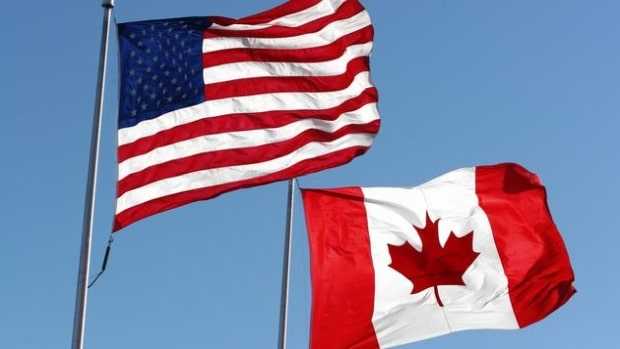
The Canadian and American flags could be seen billowing at a distance in the all-white Arctic landscape — the Maple Leaf visibly lower than the Stars and Stripes.
The asymmetry had a simple explanation. Flags across Canada, including this one in the hamlet of Cambridge Bay in the Canadian High Arctic, were flying at half-staff to mourn the recent mass killing at a school in Tumbler Ridge, British Columbia.
But its symbolism, however unintended, was a reminder of Canada’s increasingly uncomfortable situation in its Arctic region: Unable to defend it by itself, Canada remains dependent on the United States, whose president has repeatedly threatened to annex it, and who has also set his eyes on Canada’s Arctic neighbor, Greenland.

In the past few weeks, news on the Canadian economic front has tilted negative overall.
Statistics Canada came out with a February jobs report that showed employment declined by a net 84,000, which came on top of a loss of 25,000 jobs in January. The cumulative decline makes it the worst start to a year employment-wise since 2009.
GDP figures released late last month showed that Canada’s economy contracted in the final quarter of 2025, capping the weakest year for growth since the pandemic.

Dual citizens weigh Trump, taxes in decision to renounce U.S. citizenship
Ella Heyder is bracing for a breakup, even though she already moved out decades ago.
She’s contemplating cutting ties altogether with her home country, the United States of America, and President Donald Trump.
“I’m quite disturbed by what’s happening in the U.S. under Trump’s regime. It’s a fascist, imperialist regime,” Heyder said as she and others waved signs outside the American Embassy in Ottawa during what has become a twice-weekly protest against the current U.S. administration.

American military aircraft have been using Canadian airspace to refuel on their way to the Middle East, backed by a long-standing NORAD agreement that does not require the U.S. to ask permission from Canada to do so.
On March 12, between 10:30 a.m. and 12:30 p.m. ET, two KC-135T Stratotankers – large American refuelling aircraft – were observed overhead by residents of Moose Factory, Ont., along with several other aircraft, the make and model of which could not be identified from images captured by a resident of the town.
h/t Mauser

A controversial secularism law in Quebec is heading to Canada’s Supreme Court – but the outcome will impact much more than religious expression in Canada, legal experts say.
The case has the potential to test national unity and the balance between courts and elected officials.
“This case is probably going to be the most important constitutional case in a generation,” said Christine Van Geyn, executive director at the Canadian Constitution Foundation.

In Havana on Friday, Cuba’s deputy foreign minister, Carlos Fernández de Cossío Domínguez, argued that Canada should maintain the commercial relationship with Cuba that has made it the country’s largest foreign investor after Spain.
“Since 1972, it has maintained the largest flow of visitors to Cuba. It is an important relationship,” said de Cossío, who once served as Cuba’s ambassador in Ottawa.
“There are important trade relations. There is foreign investment…. Despite the fact that we do not have a coincidence in all the political and international positions, we have always known how to solve our problems, our differences, and work with them based on dialogue and based on mutual respect.”