Canadian snowbirds say U.S. politics are ruffling feathers and changing their migration patterns

The sunny weather. The beach views. The relaxed lifestyle. These are the things that drew Jo-Ann Rowe to South Florida.

When the Toronto woman retired 10 years ago, she started spending her winters in Fort Lauderdale, renting a condo for three months. Being in the United States was familiar for Rowe, whose grandmother was American, and because she’d travelled throughout the U.S. as a young athlete.

Share

Can a CEO’s ‘snitch line’ truly safeguard Canadian industry from foreign steel?

It takes nerves of steel to be a manufacturer these days. Costs and prices now hinge on the whims of a president who treats import duties as if they were a source of external revenue rather than a tax paid by Americans — and uses them as leverage to strong-arm companies into bringing production back to the United States.

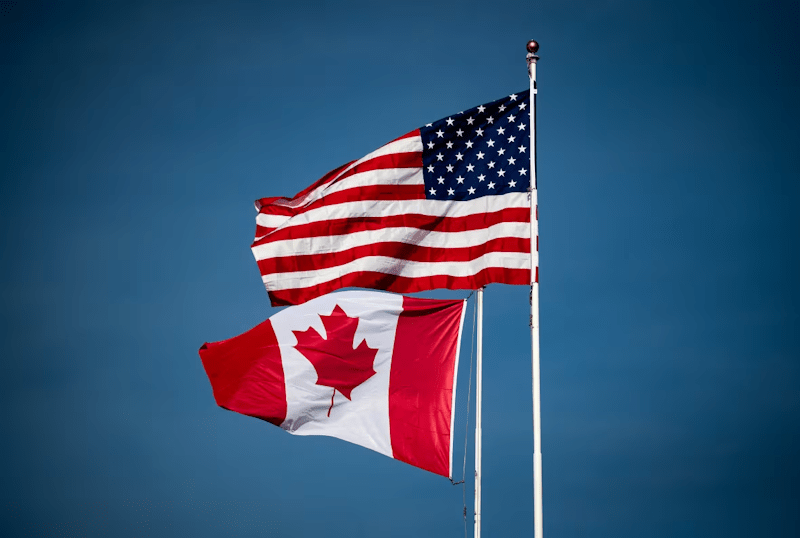
And if you’re a North American player with operations on both sides of the Canada-U.S. border, you’re also juggling split allegiances. Like someone who has dual citizenship, you’ve always known which flag to wave depending on where you’ve stood — no need to choose sides, only to protect your interests on both.

That’s no longer so easy.

Share

Coke to Canada: Suck Fructose Losers!

Despite Trump’s cane sugar activism, Canadian Coke drinkers should get used to high-fructose corn syrup

WASHINGTON, D.C. — “Coke is it” was a popular TV ad for the famed soda back in 1982, featuring teens singing Coca-Cola’s praises around a piano. It was around that same time when the company started using high-fructose corn syrup (HFCS) instead of cane sugar in their main product — and would soon launch the flop known as “New Coke” — so a better catchphrase might have been, “Which Coke is it?”


Coke always brings a smile. K loved “Mexican Coke” made with cane sugar.

Share

Mark Carney lost the battle over Brexit. Now he’s losing to Trump

The ‘high priest of Project Fear’ is struggling to shield Canada’s industrial heartlands from US tariffs

Mass lay-offs at Canada’s rail freight-carriage maker National Steel Car are expected to hit a little bit before Christmas.

After Donald Trump imposed tariffs on steel imports to the US in the spring, the manufacturing plant in Hamilton, Ontario, has had no new orders.

“The building I’m in is working on number 290 of a 300-car order. We’ll be done by the first week of December and then we will be laid off,” says Jonas Barry, 51, who has worked at the factory for the last eight years. “Probably most of the plant will be laid off.

Share

‘Dear Canada, we miss you’: What these U.S. cities and states are doing to woo Canadians back

Recent data from both sides of the border show that Canadians are travelling to the U.S. in much smaller numbers, thanks to an ongoing trade war, U.S. President Donald Trump’s talk of annexation, more intrusive border crossing requirements and a weak Canadian dollar.

But U.S. tourist destinations are fighting back with a variety of schemes to lure Canadians back across the border, either by tugging at their heartstrings or their pursestrings. Here are a few of them.

Share

There’s a reason Mark Carney isn’t talking to Donald Trump

OTTAWA—Prime Minister Mark Carney and his team are so over it.

From scampering in search of meetings with President Donald Trump and top U.S. aides all spring, summer and early fall — including the PM travelling twice to Washington and overseas to Egypt where he hailed Trump’s dealmaking — to now shrugging off the current suspension of trade talks, Carney is taking a different tack to Trump. And to the politics of a minority Parliament.

Not negotiating is the new black.

Share

Trump lowers tariffs on beef, coffee, other foods as inflation concerns mount

WASHINGTON — U.S. President Donald Trump on Friday signed an executive order to exempt a wide range of food imports, including beef, tomatoes, coffee and bananas, from sweeping tariffs imposed earlier this year on nearly every country, the White House said.

The order is part of a major push by Trump and his top officials to address Americans’ growing concerns about persistently high grocery prices.

Share

Canada Reaches for Its Economic Past to Find a Future Less Reliant on the U.S.

Prime Minister Mark Carney on Thursday announced another six major infrastructure projects as part of his ambitious plan to reduce Canada’s economic reliance on the United States after President Trump set off a trade war with its neighbor.

Mr. Trump last month abruptly suspended trade negotiations with Canada, which sends an overwhelming majority of its exports to the United States, after a Canadian province ran a commercial on American television that featured President Ronald Reagan speaking out against tariffs.

Since becoming prime minister in the spring, Mr. Carney has focused much of his efforts on expanding trade beyond the United States and starting major domestic projects to boost the country’s economy.

Share

Canadian Travel to the U.S. Declines for 10th Straight Month

Canadians are keeping up their efforts to boycott travel to the United States, with air travel from the country dropping last month by nearly 24 percent, and car travel by more than 30 percent compared with the same time last year, according to data released Wednesday by Canada’s statistics office.

The decline, which has lasted 10 consecutive months, is part of a broader shift in Canadians’ attitudes toward the United States, amid tensions over President Trump’s tariffs on Canadian goods and the rhetoric that many Canadians feel is condescending.

Share

Trump’s trade war is pushing Canada closer to China

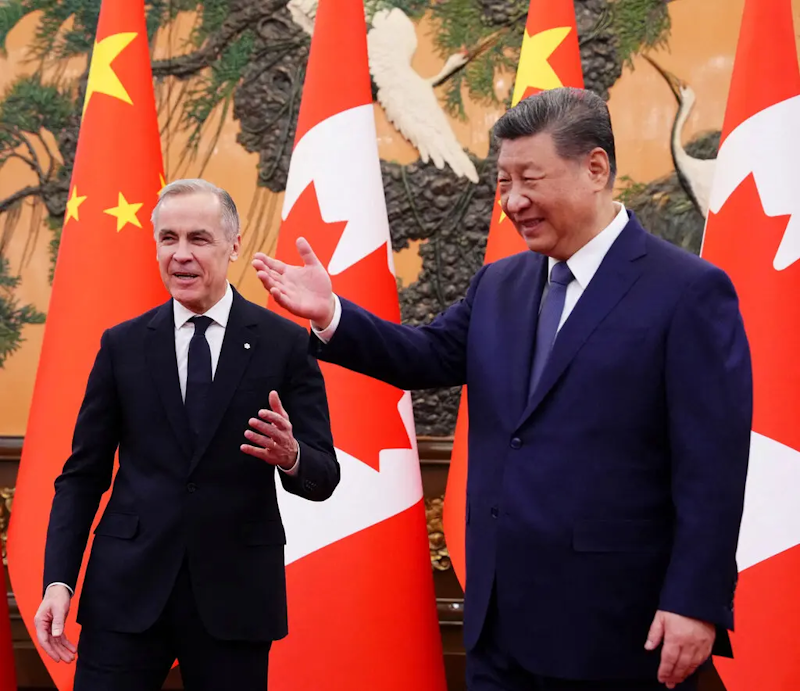
It is an image that just a year ago would have seemed unfathomable: the Canadian and Chinese leaders standing side by side, shaking hands and grinning.

Ties between the two countries cratered in 2018 when Canadian police arrested Chinese technology executive Meng Wanzhou in Vancouver on US fraud charges. Days later, Beijing locked up two Canadians, Michael Kovrig and Michael Spavor, on spying charges that Canada slammed as bogus. (Kovrig and Spavor were released nearly three years later after the US dropped the extradition request for Meng).

The diplomatic tussle soured the relationship and engendered a deep mistrust between Ottawa and Beijing. But as President Donald Trump escalates his trade war with one of the US’s closest allies, Canada has looked to a longtime foe for some common ground.

Carney wants this.

Share

CHARLEBOIS: Donald Trump’s beef with the packers — and Canada’s silence at the grill

Earlier this month, U.S. President Donald Trump announced that his administration was directing the Department of Justice to investigate major meat-packing companies for allegedly driving up beef prices through collusion and price manipulation. The move — unsurprisingly — generated headlines, applause from ranchers, and skepticism from economists. Still, it raises an uncomfortable question north of the border: why hasn’t Canada done the same?

Share

U.S. tourism faces $5.7B US loss as Canadians continue to stay home

Many Canadians continue to boycott travel to the United States, and the U.S. economy is paying the price.

A U.S. Travel Association report forecasts a 3.2 per cent decline in international tourism spending in the country for 2025, a loss of $5.7 billion US compared to the previous year.

The association largely attributes the loss to a decline in the number of Canadian visitors — a trend that has persisted since U.S. President Donald Trump returned to office in January, sparked a trade war with Canada and began referring to the country as the 51st state.


Lots of reasons to be angry with Trump & his policies but your anger should not be exclusive to the US.

Canada’s corporate and political class have beat us like a pinata for so long we’ve come to enjoy it.

Reserve a large dose of vitriol for the “ruling class”.

Share

Canadians avoiding U.S. travel amid new border rules, say fingerprinting is invasive

Canadians are cutting back sharply on trips to the United States this year, citing new border rules, safety concerns, and political tensions as reasons to stay closer to home.

New research from the Angus Reid Institute finds that only about one-in-10 Canadians have made multiple trips south in the past 12 months, down from 19% in 2023 and 21% in 2017.

Share

Revealed: The real reason Canada’s trade deal collapsed

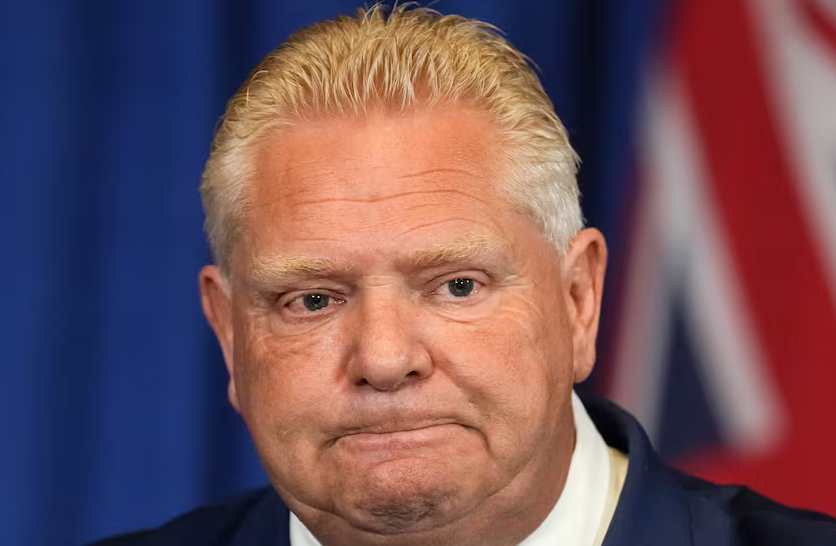
Doug Ford, the Ontario Premier, was moments from taking the stage at a trade conference in Toronto when organisers announced an unexpected guest.

Beaming in from Washington, DC, Howard Lutnick, Donald Trump’s commerce secretary, had joined to speak on the escalating trade rift between the US and Canada.

Mr Lutnick’s tone, those present say, was aggressive and his message clear; automotive manufacturing, the pride of Ontario, was coming back to America.

Share