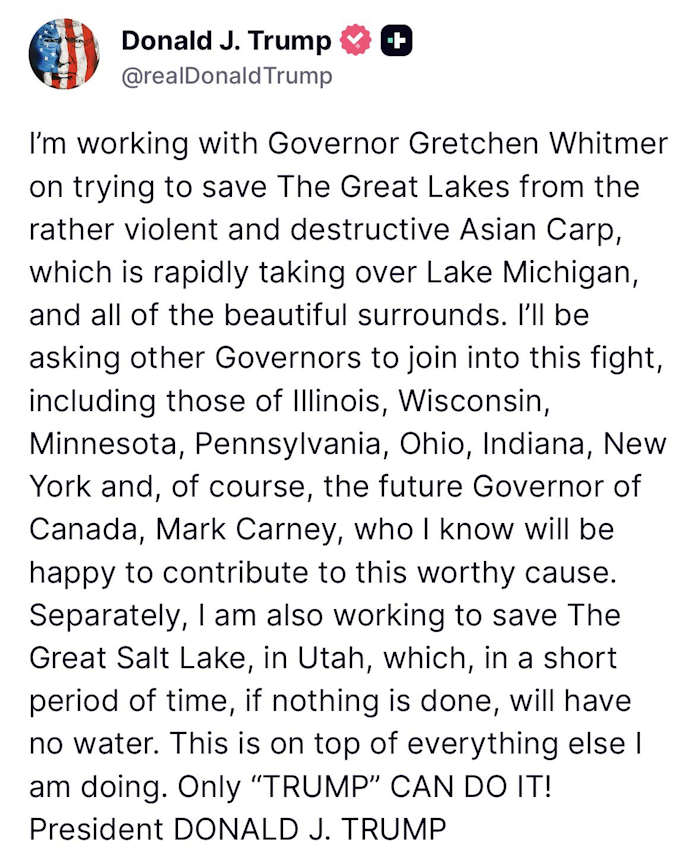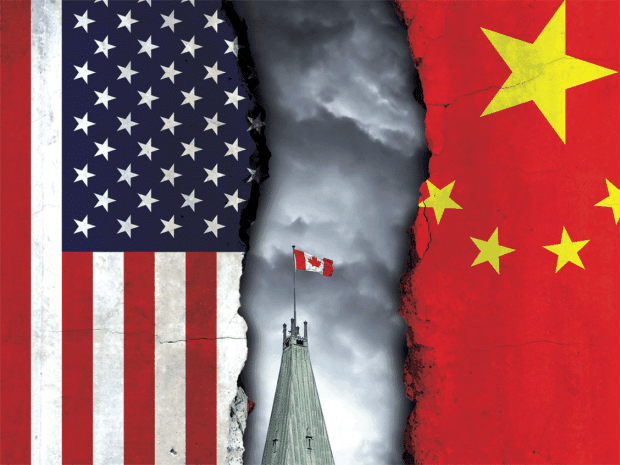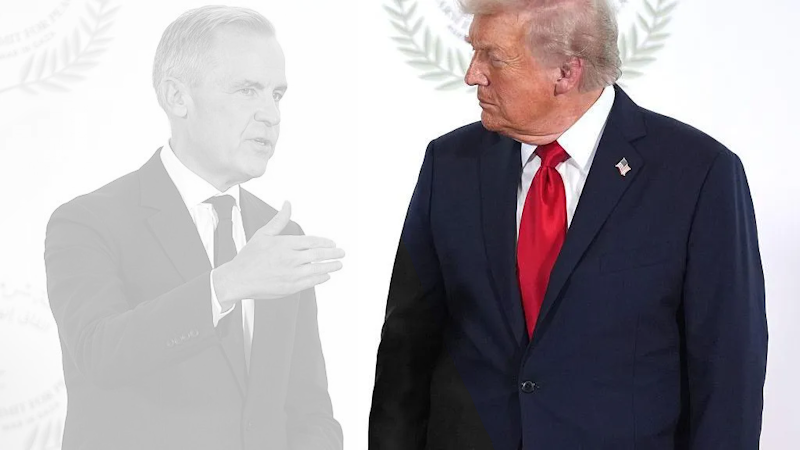
Here are Canada’s biggest points of leverage in tariff and trade talks with the U.S.

Carney Fades Away

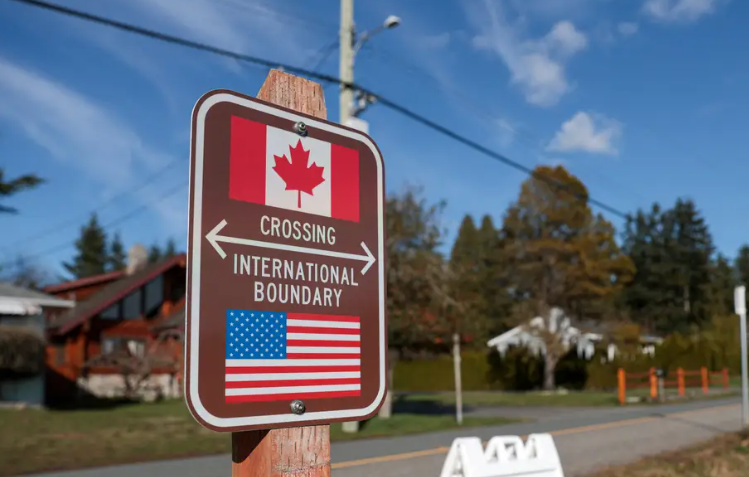
While Canada’s economy is far more reliant on exports to the U.S. than vice versa, Canadian negotiators have crucial ammunition in their efforts to land a trade deal that reduces or eliminates tariffs imposed by U.S. President Donald Trump.

Before Trump launched his tariff war, roughly 76 per cent of Canada’s exported goods went to the U.S., while just 17 per cent of U.S. exported goods were destined to Canada.

The U.S. hunger for Canadian exports exposes the falsehood in Trump’s repeated claims that his country doesn’t need anything from Canada. Meanwhile, U.S. industries have told the administration that cross-border trade is essential to their success.

Share

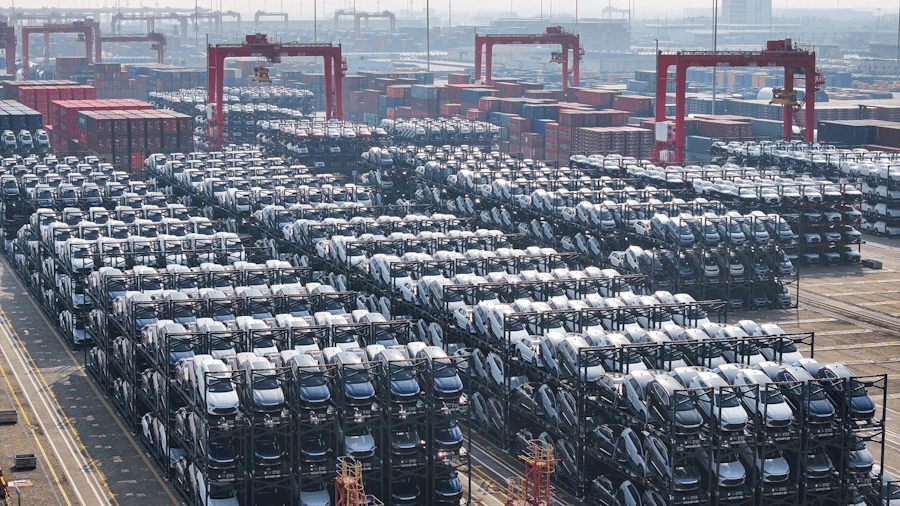
How Canada’s embrace of Chinese EVs could scramble the American market

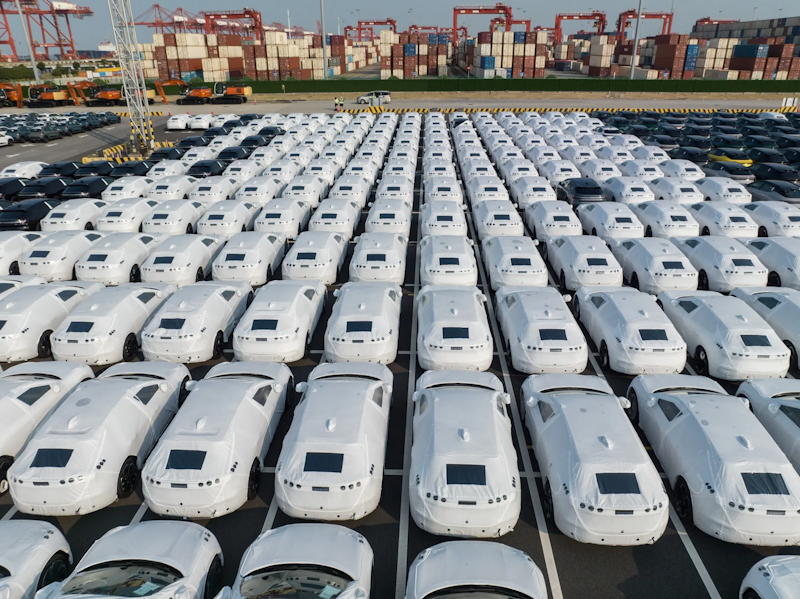
Americans will soon catch a glimpse of something North American politicians once tried to keep far away: cheap Chinese electric vehicles.

As Canada begins importing the EVs, U.S. residents in border cities like Detroit and Buffalo, New York, may see their northern neighbors at the wheel. Or American tourists visiting Canada may experience brands like Xiaomi, Leapmotor and BYD when taking a ride-share.

It’s a situation that the U.S. and Canada sought to avoid for years, worried that the introduction of China’s low-cost, high-tech EVs would undermine domestic automakers and lead to Chinese surveillance. But President Donald Trump’s 25 percent tariff on Canadian autos and auto parts has scrambled the North American auto market.

Share

‘The fix is in’: Trump’s latest tariff tactic shocks Washington trade watchers

The U.S. has begun forced labour probes into 60 economies that critics say are a ‘show trial’ that will allow Trump to slap new tariffs on trading partners such as Canada

WASHINGTON, D.C. — Trade watchers say they are shocked at the latest tactic being used by the U.S. Trump administration to shore up its tariff wall against Canada after a legal setback last month.

Last week, the United States Trade Representative (USTR) launched investigations into 60 economies under Section 301(b) of the U.S. Trade Act of 1974 to determine whether they have failed to impose or enforce bans on imports produced with forced labour. But critics in the Washington beltway say the 301 probes are basically a “show trial” and that the verdict is sure to go against trading partners such as Canada.


Ouch!

Share

Canada’s Conservatives Want Chinese EVs Barred and Their Software Banned

Canada’s Conservative opposition leader Pierre Poilievre on Sunday unveiled a plan to double the country’s vehicle production.

Polievre called for a tariff-free auto pact with the United States while pledging to scrap both the Liberal government’s Chinese EV import quota and its electric vehicle mandate.

Share

Poilievre’s call for better economic ties with U.S. is out of step with Canadians

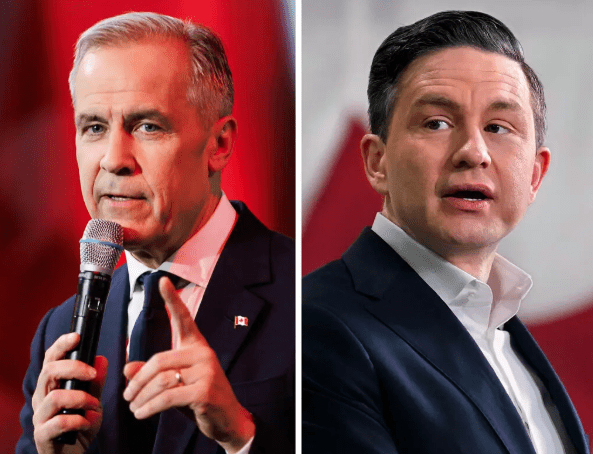
HALIFAX—Whatever you may think about Conservative Leader Pierre Poilievre’s chances of becoming prime minister—the proverbial snowball in hell comes to mind—he keeps trying to find a way to stay in the game against Mark Carney.

It is no easy task. Prime Minister Mark Carney’s lead over Poilievre in the polls keeps growing, recently hitting 13 points. If that spread were to hold in an election, it would be a debacle for the Conservatives.

Rumours persist that more Conservative MPs may be planning to join the handful of former colleagues who’ve already defected to the Liberals.


Some Canadians find it perfectly in step … and that number will only increase as more awaken to the rape of Canada by Carney and his Brookfield pals.

Share

Poilievre announces auto plan aiming for tariff-free access to U.S. market

WINDSOR – Conservative Leader Pierre Poilievre has unveiled a new auto plan aiming to secure tariff-free access to the U.S. market.

The plan would harmonize tailpipe emissions reductions with the U.S., and align Canada with the United States on Chinese tariffs in a move meant to give Canada leverage in trade talks.

Poilievre would also implement a rule where for each car produced in Canada, the same manufacturer would be able to sell a U.S. or Mexico-made car in Canada duty-free.

Share

Poilievre says his plan is ‘the only hope’ for Canada’s auto industry

OTTAWA – Conservative Leader Pierre Poilievre says he’s planning to pitch a “realistic proposal” to end U.S. tariffs on the Canadian auto industry this weekend.

He says his proposed auto pact would align regulations between Canada and the U.S. and remove the GST from Canadian-made vehicles.

He told reporters his plan, which he intends to roll out on Sunday, is “literally the only hope of keeping our auto sector in Canada.”

Share

Trump administration expands trade investigations to more countries, including Canada

WASHINGTON — The Trump administration has expanded its trade investigations to 60 countries, including Canada, in an effort to shore up the president’s tariff policies.

“We are trying to move very quickly,” United States Trade Representative Jamieson Greer told CNBC Friday. “We are trying to move in a matter of months.”

Greer’s office announced Wednesday that it was launching investigations of the European Union and a handful of other countries under Section 301 of the Trade Act of 1974.

Share

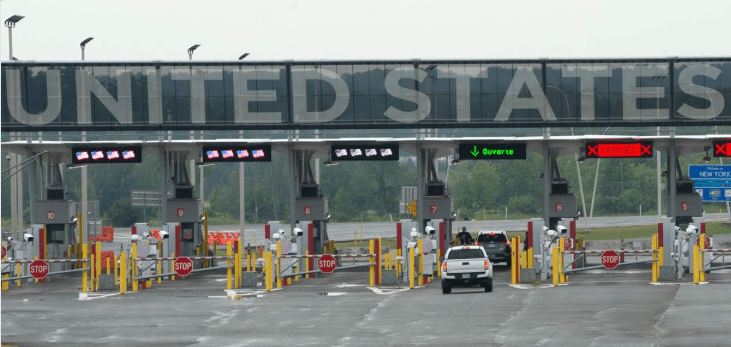
Nanos survey says border crossing no longer ‘on the radar’ for many Canadians

A new survey from Nanos Research for CTV News found 43 per cent of Canadians are less likely to travel to the United States in 2026, compared to the previous year.

Thirty-eight per cent said they don’t vacation in the United States in general, while just four per cent said they are likely to spend more leisure time south of the border.

For many Canadians, “the U.S. is not on the radar in terms of a travel destination,” said Nik Nanos.

Share

Just over half of Americans say they don’t want tariffs on Canada: poll

As U.S. President Donald Trump’s trade war against Canada stretches into its second year, more than half of Americans said in an Angus Reid survey that they don’t want any tariffs on Canada, with the majority viewing their northern neighbour positively.

With the Canada-U.S.-Mexico (CUSMA) free trade agreement up for renegotiation this year, 51 per cent of U.S. respondents told the survey that if they had their way, there would be no tariffs on Canada at all.

Share

Up to 16 Liberals considering support for NDP’s arms-control legislation

When the NDP’s arms-control bill that seeks to end largely permit-free Canadian military exports to the U.S. is put to a vote on Wednesday, it could garner the support of more than a dozen Liberal MPs.

That would be the first time some in the Liberal caucus split from the government’s position on legislation under Prime Minister Mark Carney.

“By my count, so far, I think there may be somewhere between … nine to 16 Liberal members who may support the bill,” said the NDP’s Jenny Kwan, the bill’s main sponsor, at a news conference on Tuesday.

Share

Economy One year after Trump’s sovereignty threats, Canadians keep ‘elbows up’

For Lisa Mcbean, buying American-made snacks and traveling to the U.S. was second nature. That changed for the Ontario resident starting in early 2025.

Since then, the 54-year-old has checked if products are made in Canada before buying at the grocery store. Mcbean canceled multiple trips to the U.S. she had planned for concerts. Once-common jaunts across the border to shop are out of the picture.

Share

MCGREGOR: Canada is gambling with its US alliance — it won’t end well

There is a comforting idea making the rounds in Canada: stay neutral, keep everyone calm, and we will be fine. We can distance ourselves from the United States (US) without losing the benefits of the alliance and let markets and multilateral forums do the heavy lifting.

It sounds smart. It is also risky.

Share