
California drought: On patrol with the celebrity ‘water police’

In a blistering third year of drought, Californians have been asked to limit their indoor water usage to 55 gallons (208 litres) per person per day. It takes about 30 gallons to fill a bathtub, so forget about a deep Jacuzzi experience.

Yet in the gated communities of Calabasas and Hidden Hills – exclusive enclaves in the Santa Monica Mountains above Malibu – lush lawns and filled swimming pools and koi ponds make it clear that some are ignoring the rules.

So officials have created a device to take power showers away from rich and famous water hogs. A small metal disc with a pinhole drilled through the middle, it has seriously reduced the flow of water into some multimillion dollar homes.

People here call Derek Krauss the ‘water police’.

Share

California goes lights-out thanks to green energy

Instead of taking a second look at nuclear power, the Golden State doubles down

California has gone full pagan — it lives and dies by the weather. Over the last few days, the state’s power grid has groaned under the strain of a massive heatwave. Combine that with a hydropower-sapping drought and you’ve got a recipe for blackouts.

While major weather events pose challenges for any electricity system, California’s has become uniquely vulnerable to blackouts thanks to an over-investment in weather-dependent wind and solar. Every night during the heatwave, solar experiences its scheduled defeat at the hands of sunset and Californians are left praying for the wind to blow and and the imports to flow.

Share

California has weaponized transportation against its own population

In 2008, California voters approved what was supposed to be a $33 billion high-speed rail project to connect Los Angeles, Sacramento, and San Francisco. What they are actually getting is a project that may still never connect those cities but will cost at least $113 billion and won’t be completed until at least 2030.

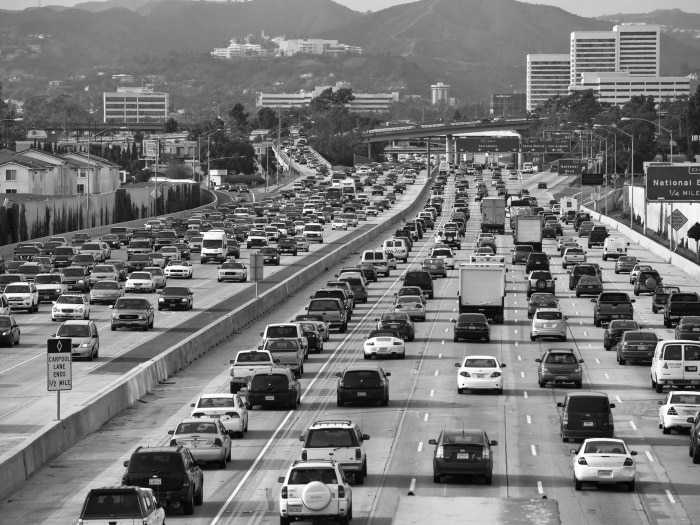
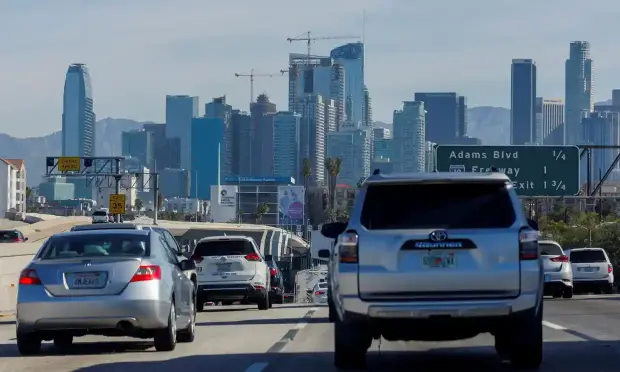
In the meantime, California’s legislature is as determined as ever to make affordable transportation illegal, going so far as to ban gasoline-powered automobiles.

The high-speed rail project is a predictable rat’s nest of rent-seeking by politically connected contractors. Assuming it is actually ever finished, it will require constant operating subsidies and maintenance costs. This California crazy train was back in the news last week because it received one of many environmental green lights required for its completion, which will come no sooner than 2033. However, be prepared for disappointment — this project has consistently blown through every cost estimate and time projection that has been applied to it so far.

As goes California goes Justin

Share

Californifying the U.S. Labor Market

The Biden administration moves a step closer to imposing the Golden State’s chaotic independent contractor rules on the nation.

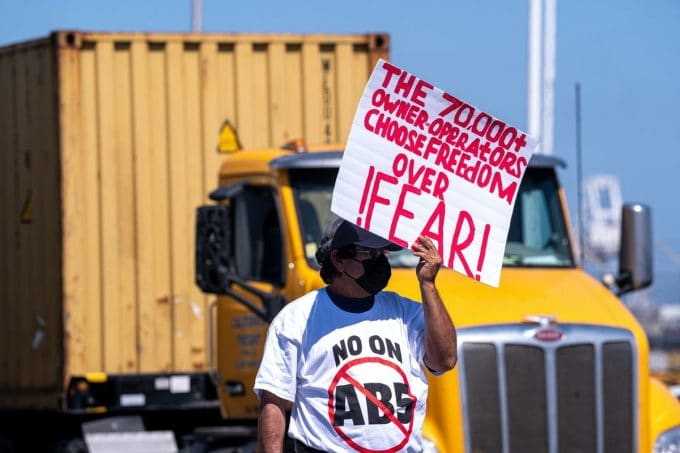
The Biden administration came into office with a sweeping union agenda embodied in the PRO Act, which would have rewritten key elements of decades-old American labor law. Stymied in Congress, however, the administration now seems likely to impose at least one component of that legislation on the workplace through a Department of Labor rule that would narrow the definition of an independent contractor in ways similar to California’s controversial AB5 law. Doing so would likely upset employment policies and practices at a vast array of businesses nationwide, just as has happened in the Golden State, where freelancers lost work because companies couldn’t afford to employ them full-time and truckers recently shut down a port to protest efforts to end their independent status. In the post-Covid world, workers are seeking more flexibility in income-earning. The Biden administration’s effort, which views the independent contractor almost exclusively as an exploited worker denied the benefits of full employment, is a step backward for individual workers—but a gift to unions.

Share

‘Time for us to stand up’: a California county’s fight to secede from the state

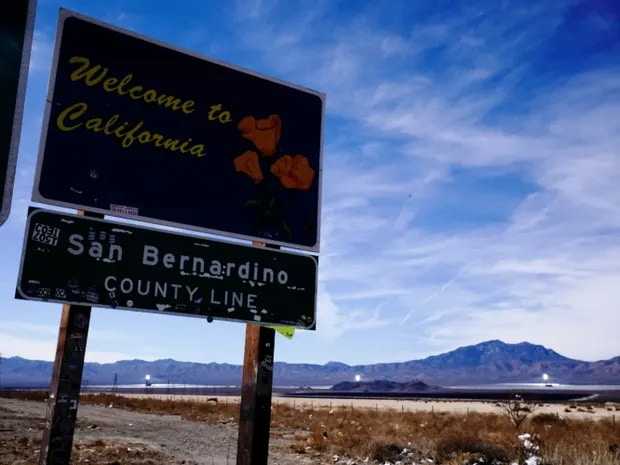
Come November, San Bernardino county residents will vote to elect school board members, water officials and state representatives – and whether they want the county to look at breaking away from California.

The expansive county east of Los Angeles, home to 2 million people and some of the state’s beloved Joshua trees, isn’t getting the resources it needs to support its residents, county officials argue. This week the board of supervisors moved to add a measure on the November ballot asking residents if they want the county “to study all options to obtain its fair share of state and federal resources, up to and including secession”.

Share

‘Nowhere is safe’: California highway shootings double in two years, data reveals

It was a few minutes after 11pm on 27 October 2021 when Ramon Price Sr received a call from a number he recognized as the county coroner’s office.

Price’s oldest son, Ramon Price Jr, had been shot while driving his white Chevrolet Malibu on a stretch of Oakland freeway, the office said. The 27-year-old had died at the scene.

They had spoken just hours before. Price Jr had called from the mechanic shop working on his car, annoyed by a delay. Hearing the frustration in his son’s voice, Price had offered to handle the issue the next day. Father and son said they loved each other and hung up the phone. The elder Price settled in for an evening of television with his wife, and his son began his drive home.

Share

California school district spends $20K on ‘Woke Kindergarten’ to ‘disrupt whiteness’, promote anti-police, anti-prison ideology

The Washington Examiner reports that Hayward Unified School District recently contacted Woke Kindergarten for a month-long training session for staffers at Glassbrook Elementary School, where they will be taught to “disrupt whiteness, white dominant/settler colonial narratives and anti-Blackness in the Glassbrook community.” Woke Kindergarten touts itself as a “global, abolitionist early childhood ecosystem & visionary creative portal.” It was founded by Akiea “Ki” Gross, who uses they/them pronouns.

Gross is described as an “abolitionist early educator, cultural organizer and creator currently innovating ways to resist, heal, liberate and create with their pedagogy, Woke Kindergarten,” in in the “who we are” section of Woke Kindergarten’s web site.

Share

California to fund heroin injection sites in Los Angeles, Oakland, and San Francisco

The bill would authorize cities and counties to establish “safe consumption sites” where addicts could use illegal narcotics under supervision. Those accessing the “hygienic space supervised by trained staff” could consume pre-obtained drugs. Program staff would be trained to administer an “opioid antagonist” in the event of an overdose.

Share

How the Path to Homeownership Runs Through Mexico

San Diego residents are moving to Tijuana to get more for their money. Some hope to save for down payments on houses that are way out of reach north of the border.

TIJUANA — Gustavo Galvez has dreams of owning a home in San Diego, Calif. His path toward homeownership, however, includes a detour: While he saves for a down payment, he plans to spend the next several years renting in Tijuana, Mexico.

Mr. Galvez, 37, was born in Mexico, but moved to San Diego when he was 6. Now married with a wife and 7-year-old son, he chose to move to Tijuana with his family last July. It’s a return, he said, that is both temporary and strategic.

“We want to pay down our debt and increase our savings, so we can come back to the United States and become homeowners,” he said.

And they claim Newsom is the future.

Share

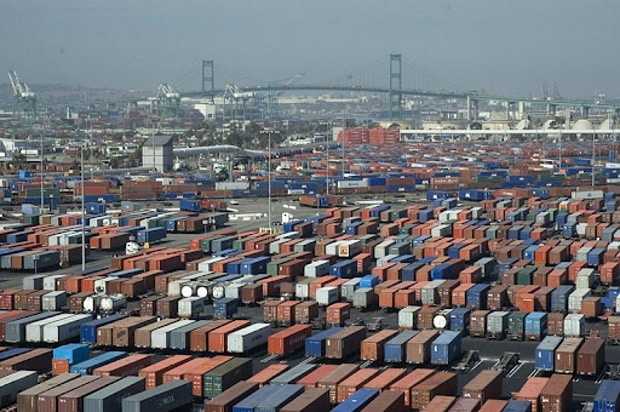
Truckers Say California Law Likely to Make U.S. Supply Chain Crisis Even Worse

Since last fall, PJ Media has been chronicling the U.S. supply chain crisis at our nation’s ports, railroads, highways, airports, and supermarket shelves. Over the intervening months, no amount of presidential or gubernatorial bloviating, phot-op visits, or misguided fines has truly fixed the congested conditions to get the supply chain back on track. And this month, a 2019 Democratic law is set to go into effect which will add even more stress to the already broken system.

Share

California: Saved by Fossil Fuels

SACRAMENTO, Calif. — California policymakers love to lecture the rest of the world about climate change and the need to shift power generation from fossil fuels to renewables such as wind, solar, and hydropower. So it was ironic that Gov. Gavin Newsom announced a new plan last month — he calls it the “strategic reliability reserve” — that relies heavily on fossil-fueled power imported from other states.

Share

State Attorney General Suggests Considering Applicants’ Ideological Viewpoints in Denying Carry Licenses

Friday, the day after the New York State Rifle & Pistol Ass’n v. Bruen Supreme Court decision, the California Attorney General wrote a letter to California law enforcement and government lawyers, expressing “the Attorney General’s view that the Court’s decision renders California’s ‘good cause’ standard to secure a permit to carry a concealed weapon in most public places unconstitutional.” California thus seems ready to promptly shift to a fundamentally shall-issue regime, in which pretty much all law-abiding adults can get licenses to carry concealed weapons. Nor will this require legislative action, I think; California already has a may-issue regime in place for licensing, so—as the AG’s office notes—licensing authorities (“sheriffs and chiefs of police”) can just use that regime but essentially without applying a good-cause requirement.

But the AG’s office concludes that the existing statutory requirement “that a public-carry license applicant provide proof of ‘good moral character’ remains constitutional,” and that this requirement isn’t limited to disqualifying felons, certain violent misdemeanants, and the like. And in particular the AG’s office suggests that people who hold certain ideological viewpoints should be disqualified.

Share

Los Angeles may ban new gas stations to help combat climate emergency

Los Angeles could become the largest city to prohibit the construction of new gas stations, joining a movement that seeks to limit fossil fuels at the local level as part of efforts to combat the climate crisis.

Officials in America’s second largest city, along with Bethlehem, New York, and Comox valley regional district, British Columbia, said on Wednesday morning that they were working on policies to stop the development of new fossil fuel infrastructure.

Share