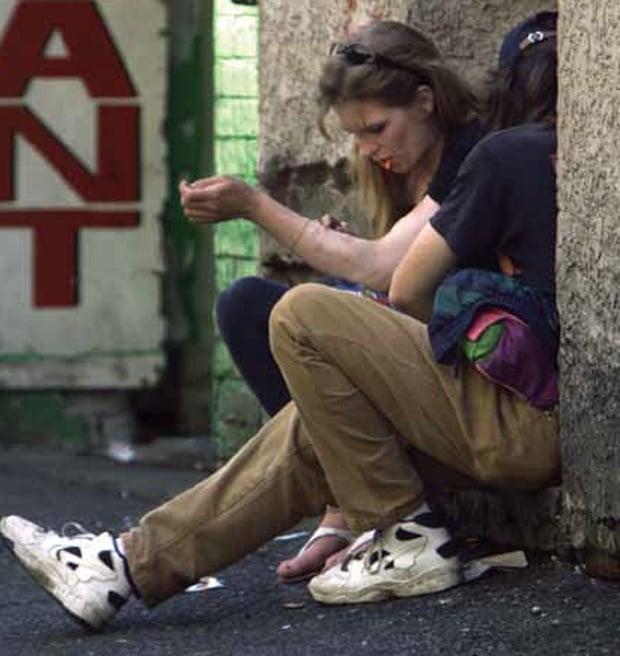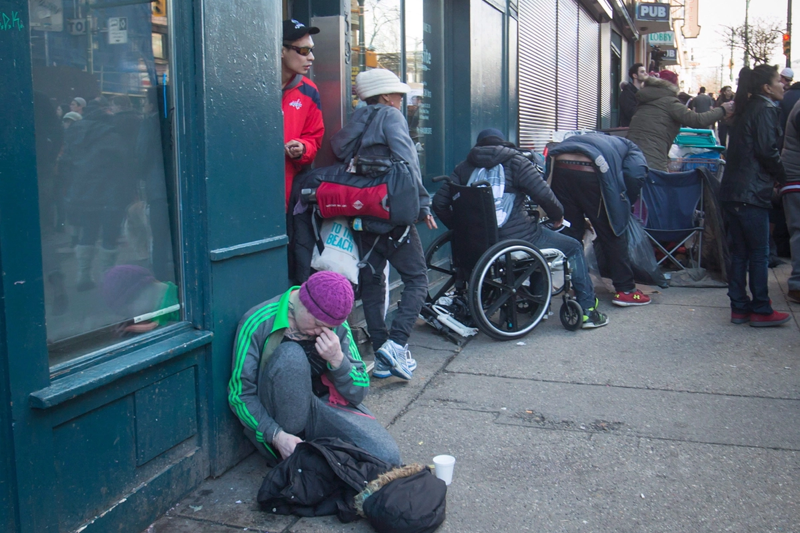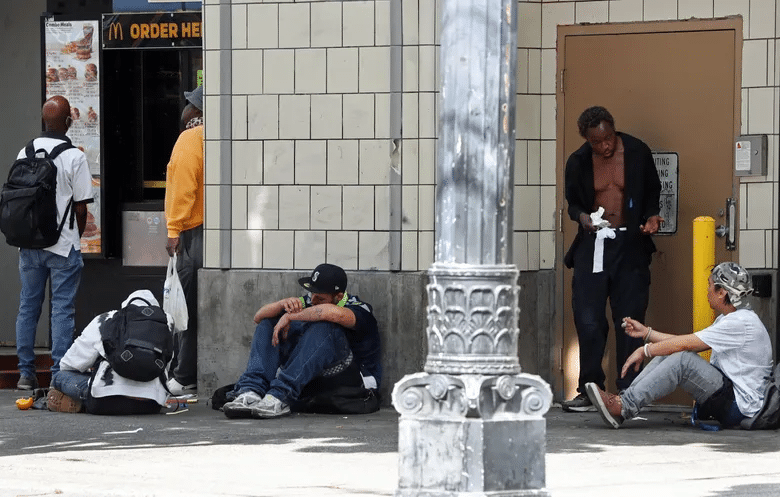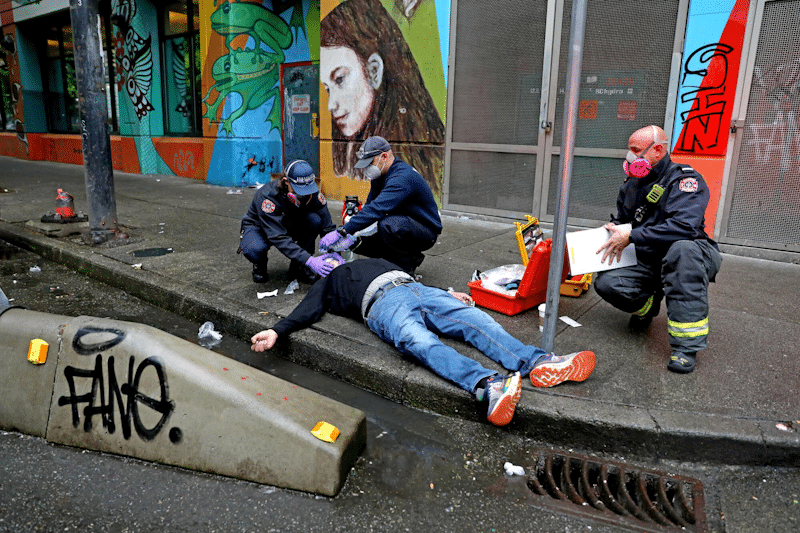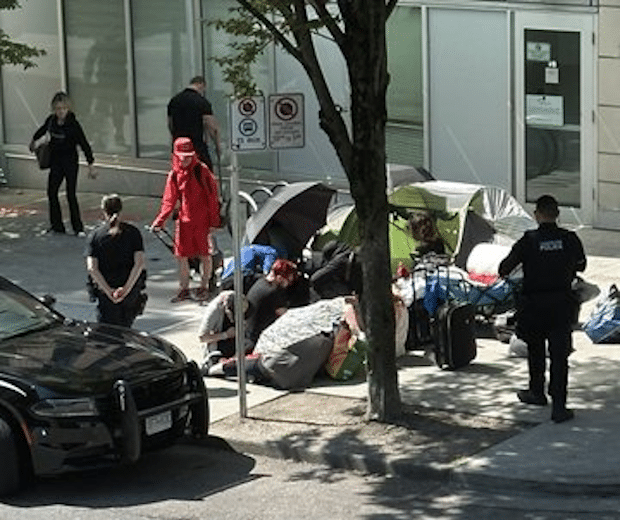

Late last year, I walked roughly a mile from downtown Seattle to the working-class neighborhood of Little Saigon and came upon a montage of human despair. An open-air drug market stretched along the intersection of 12th and Jackson: about 250 people, many smoking fentanyl or bent over in the thrall of the drug, tilting as if mid-fall. Three women lay passed out on the sidewalk, their chests slowly rising and falling, while fellow addicts stepped over them and dealers made sales. Young boys, schoolbags on their backs, stood on a far corner and watched.
Drugs
Derek Finkle: Involuntary care a better solution to the opioid crisis
A Canadian woman was arrested in Bensalem, Pennsylvania, last month in connection with the theft of a package containing thousands of dollars worth of gold and silver.
The 25-year-old, from Ontario, was charged with forgery, theft by unlawful taking and theft by deception for taking a package containing US$43,549 in gold and silver, according to Bensalem Township Police, before flying to Arizona and eventually making her way to the Canadian border in New York.
Adam Zivo: B.C. NDP forcing unwanted, ruinous injection site on Vancouver
The B.C. NDP wants to reopen an infamously mismanaged Vancouver-based supervised consumption site despite opposition from the local mayor and city council. Not only is the province acting undemocratically, such sites have been shown to fuel crime and do not actually save lives.
This controversy began earlier this month, when Vancouver Coastal Health (VCH), a provincial health authority, announced that it had acquired a new permanent downtown location for its Thomas Donaghy Overdose Prevention Site (TDOPS), which is expected to resume operations within the coming weeks.
Cory Morgan: It’s Time to Admit That the Social Experiment of Addiction Enablement Has Failed
One of the most destructive misconceptions of our time was that addiction is a condition that can be maintained with proper management. We were told that fatal overdoses were caused by impure drug supplies rather than the drug itself. It was asserted that homelessness caused addiction rather than the other way around.
These counterintuitive fallacies were embraced by government authorities, and policies were created based upon them. The results of these policies were catastrophic, and we saw them most acutely in B.C.
Internal RCMP report warns nitazenes could surpass fentanyl as ‘defining issue in Canada’s opioid crisis’

An internal RCMP report says that nitazenes — synthetic opioids police describe as “20 to 40 times more powerful than fentanyl” — could become a defining feature of the opioid crisis in Canada in the coming years.
Those drugs, which have been linked to hundreds of deaths in Canada, “are emerging as a growing threat,” the report says.
Inside the Trans-Atlantic Trade in Iranian Weapons for Colombian Coke

In February last year, Antoine Kassis checked into the Windsor Golf Hotel & Country Club, a Victorian-style resort an hour north of Nairobi. Wearing an ill-fitting hooded sweatshirt, with gray stubbles and baggy eyes, he didn’t look like a typical upscale tourist.
The disheveled 58-year-old, who went by Tony, was a cousin of the recently deposed Syrian President Bashar al-Assad. He had traveled to Kenya planning to meet a supposed arms inspector from a Colombian rebel group and complete a $14 million deal to import 500 kilos of cocaine to Syria in return for military-grade weapons supplied by Iran and Russia.
Kassis didn’t know the U.S. Drug Enforcement Agency had been watching him for two years. As he waited in a cafe, U.S. agents accompanied by Kenyan police approached him. Two months later he was extradited to the U.S., ending a lengthy sting operation.
Supervised Drug-Consumption Sites Don’t Save Lives
A Canadian study casts further doubt on a key plank of the harm-reduction agenda.
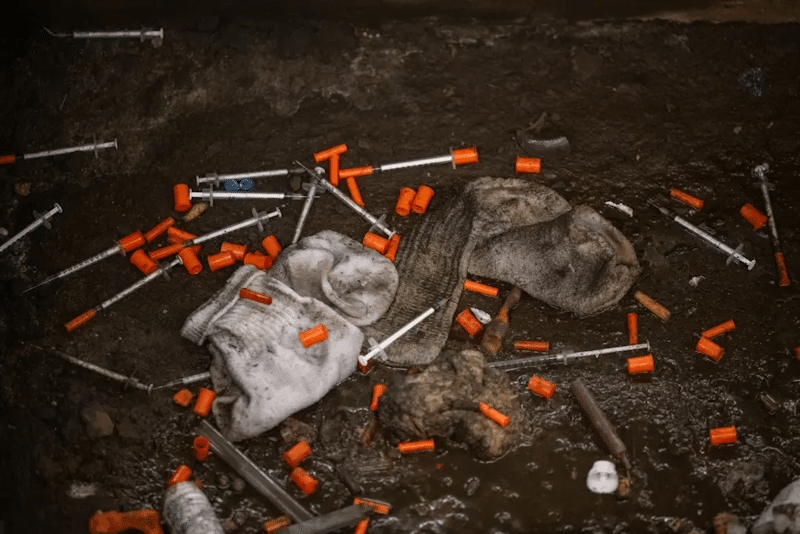
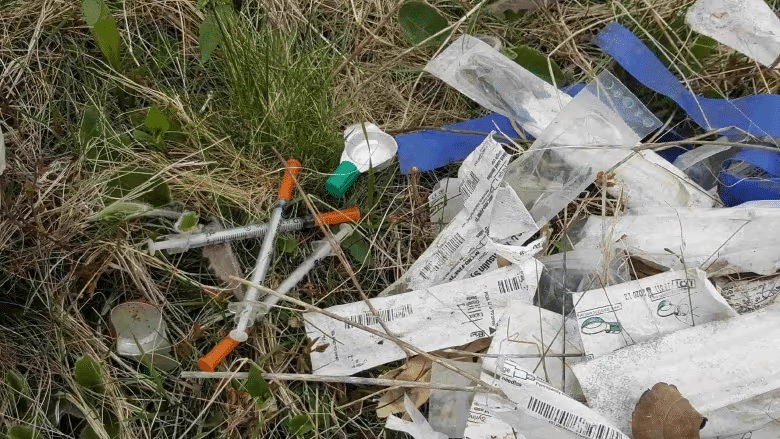
Supervised consumption sites (SCSs), which offer drug users a place to get high under the observation of staff, have become a popular proposed solution to the North American overdose epidemic. But a recently released Canadian study shows that, contrary to the claims of harm reduction activists, these sites do not save lives. American policymakers should take heed and avoid replicating their northern neighbors’ failed experiments.
Ontario to end funding for 7 supervised drug consumption sites, province confirms

The Ontario government has confirmed it is cutting provincial funding for seven supervised drug consumption sites, days after harm reduction advocates said they were notified of the decision.
The province says it will initiate a 90-day wind-down period to give those using the sites time to transition to the government’s abstinence-based model — homelessness and addiction recovery treatment, or HART, hubs.
Derek Finkle: This injection site was shut down. What followed proved activists wrong

Last week, CTV News published an article with a headline harm reduction activists across the country pounced on: “Drug overdoses in Toronto up nearly 50 per cent since last January, city data shows.”
The party to blame in their view, of course, is the Ontario government because it closed injection sites within 250 metres of schools and daycares a year ago. But if you look at the data the story was based on, the activists’ I-told-you-so’s are wildly off the mark.
Targeting America: The Montreal Network Exporting Carfentanil — 100 Times Stronger Than Fentanyl — Into the United States

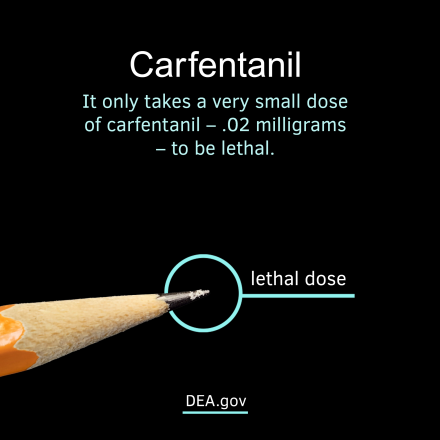
QUEBEC — An elite Montreal-based narco network allegedly exported carfentanil and next-generation synthetic opioids 100 times deadlier than fentanyl to American consumers via the dark web, leading to the arrest of four yesterday, after 13 months of joint surveillance by U.S. federal agencies and Quebec police, and a seizure of more than 600,000 tablets of synthetic drugs in December.
Adam Zivo: Harm-reduction advocates gaslighting Canadians about ‘safe supply’

If gaslighting were an Olympic sport, harm-reduction activists would be buried in gold medals.
For many years, they claimed that there are no real downsides to “safer supply” — an experimental initiative that gives addicts free recreational drugs to dissuade use of riskier street substances. When media reports emerged that these drugs were regularly being diverted to the black market, harm reductionists stridently dismissed them as right-wing disinformation.
B.C. ends drug decriminalization, but needs to start charging for possession again: MLA

What’s the point of police arresting people in possession of illegal drugs, asks MLA Elenore Sturko, if the Crown isn’t going to proceed with charges?
‘It Wasn’t Working’: Canada Province Ends Drug Decriminalization

Over 35 years as a drug user, Vancouver resident Garth Mullins said he’s had “hundreds and hundreds” of interactions with police, and long believed drug decriminalization was smart policy.
“I was first arrested for drug possession when I was 19, and it changes your life,” said Mullins, who is now in his 50s and was an early backer of Canadian province British Columbia’s decriminalization program that ended on Saturday.
“That time served inside can add up for a lot of people. They do a lifetime jolt in a series of three‑month bits,” he told AFP.
British Columbia Ends Program That Aimed to Curb Arrests of Drug Users

A program in British Columbia to decriminalize drug use and allow users access to public health services rather than be charged by the police with narcotics possession is ending after three years of intense political backlash.
The experimental pilot began in January 2023, after British Columbia, the center of Canada’s opioid crisis, received a legal exemption from the federal authorities that enabled drug users to carry minuscule amounts of cocaine, opioids, methamphetamines and MDMA, also known as Ecstasy.
‘Hot girls on SSRIs’: Antidepressants are trending on TikTok. Not everyone is happy about that

In a TikTok video shared with her followers last year, Tiffany Kay described how the antidepressant Lexapro was, “poof,” like magic, making life much better, “which I did not think was possible.”
That cinder block of anxiety no longer weighs on her chest, Kay, 29, recently told National Post. She’s able to sleep at night, less emotional and not overthinking things the way she used to, or getting caught up in the “what-ifs.”