After Ukraine, Could Central Asia Be Next?

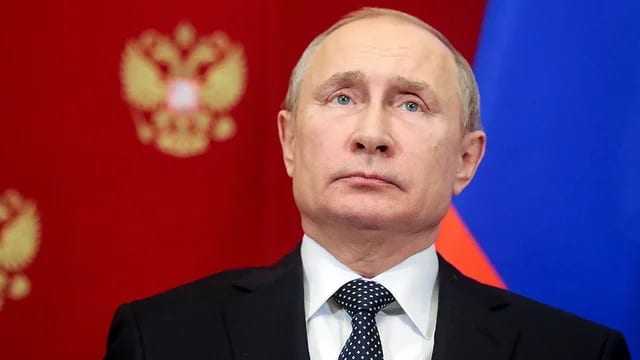
When Ukraine appeared to be on the verge of exiting Russia’s orbit in late 2013, it took an almighty effort from the Kremlin to drag the then Ukrainian president Viktor Yanukovych back from the precipice. Yanukovych was gone within three months, fleeing into exile in Russia as the Euromaidan demonstrations consumed Ukrainian political life. These events sowed a seed in Russian president Vladimir Putin’s mind about the need to act, which found fertile soil in thinking we can trace back to his fear of the color revolutions and his 2007 speech at the Munich Security Conference. The tragic events we are witnessing now, as division after division of Russian troops pile into Eastern Europe, are the direct result of that seed. 

Share

Russia makes claims of US-backed biological weapon plot at UN

Russia has accused Ukraine and the US at the UN security council of a plot to use migratory birds and bats to spread pathogens, raising alarm among other council members that the accusations could be intended to provide cover for future Russian use of biological weapons.

The Russian permanent representative to the UN, Vasily Nebenzya, delivered a lengthy account of the alleged biological weapons plot, and said the birds, bats and insects supposedly intended to spread disease would cross Ukraine’s western border.

Share

Cowards and Leaders

Russia’s invasion revealed big differences in how politicians deal with threats.

The president of Ukraine, when offered evacuation, said, “I need ammunition, not a ride.” He’s a leader.

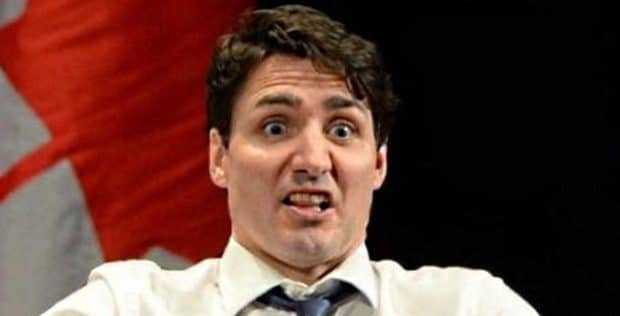
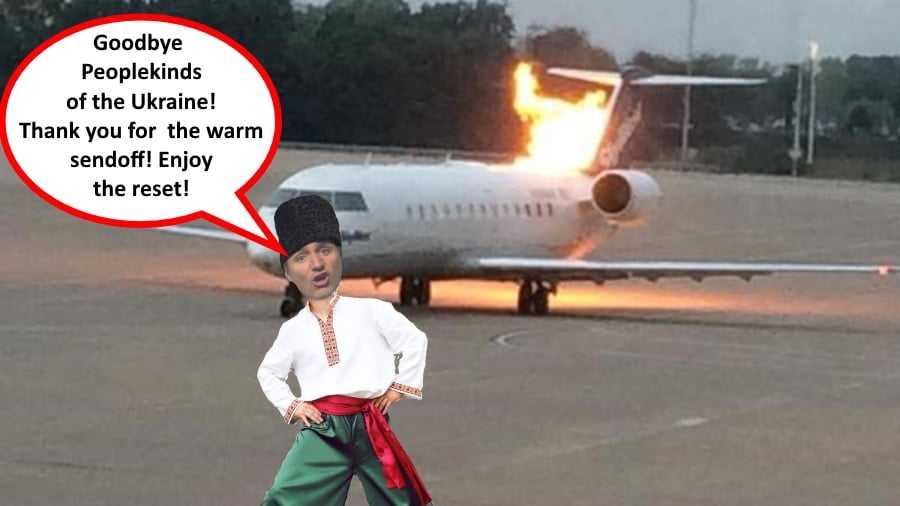
By contrast, in Canada a few weeks before, when truckers staged a protest against COVID-19 rules, the cowardly Prime Minister Justin Trudeau felt so threatened by the peaceful protesters that he went to “a secret location.” Then he invoked Canada’s Emergencies Act.

Share

The end of the Age of Fragility: The war in Ukraine has exposed the moral infirmities of the West.

It is not the most pressing question to emerge from Russia’s onslaught on Ukraine, but I have nonetheless found myself wondering – what will happen with the word ‘erasure’ following this war? Ukraine’s heroic president Volodymyr Zelensky used the e-word last week. Russia, he said, is out to ‘erase our history’. The Putin regime and its marauding forces want to ‘erase our country, erase us all’, Zelensky cried, aptly, given the vigour and bigotry with which Putin has mocked and violently undermined Ukrainian sovereignty. Putin clearly sees Ukraine as a joke nation that can casually be erased from the map.

Share

Putin’s Islamic Mercenaries

Well, if this isn’t the most hypocritical thing:

Vladimir Putin has given the green light for up to 16,000 volunteers from the Middle East to be deployed alongside Russian-backed rebels fighting in Ukraine, doubling down on an invasion that the west says has been losing momentum.

The move, just over two weeks after Putin ordered the invasion, allows Russia to deploy battle-hardened mercenaries from conflicts such as Syria without risking additional Russian military casualties.

Share

Misinformation colors how Russians are seeing the Ukrainian war

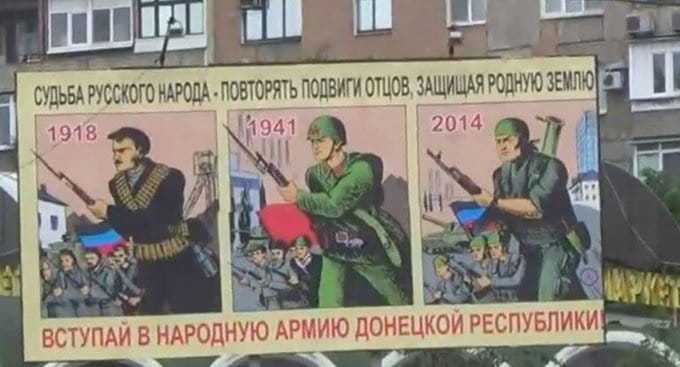
Donetsk Propaganda circa 2014

Russian citizens have been at the center of their government’s propaganda campaign to twist the events of Moscow’s invasion of Ukraine in a way that makes Russia look like the hero and Ukraine look like the aggressor.

Even before the war began, the government and state-run media in Russia were showing a distorted view of reality by painting a false narrative of the Ukrainian government.

Share

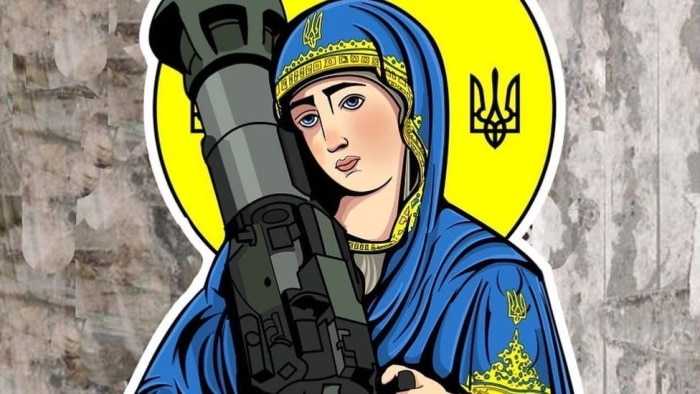
How ‘Saint Javelin’ raised over $1m for Ukraine

A Canadian marketer who had planned to raise a humble few hundred dollars for a charity helping relief efforts in Ukraine has found himself the creator of a viral marketing campaign that has so far earned well over C$1m ($783,000; £600,000) using the unlikeliest of images – a rocket-armed saint.

Christian Borys helped develop the image – known as “Saint Javelin” – which depicts the Virgin Mary cradling a US-made FGM-148 anti-tank weapon. These missiles are among the arms being sent by Western allies to Ukrainian forces to aid in their fight.

Share

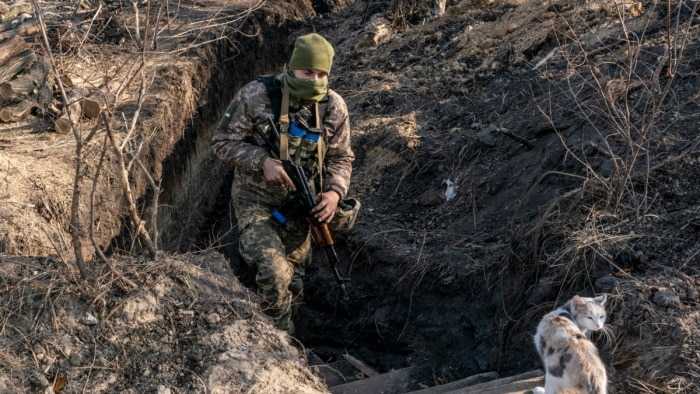
‘My plan is there is no plan’: the foreign fighters flocking to Ukraine

Igor Gavrylko was at his home in west London when the Russian bombs began to fall on Ukraine. A British citizen originally from Ukraine, he had lived in the UK since 1996, working most recently for Nissan as a forecourt salesperson. He rang his boss. “I knew a Russian invasion was going to happen,” he said. “My Ukrainian grandfather fought against the Red Army and the Nazis in world war two. Now it’s my turn to help.”

Share

‘Inept’ Russian tactics baffle military experts

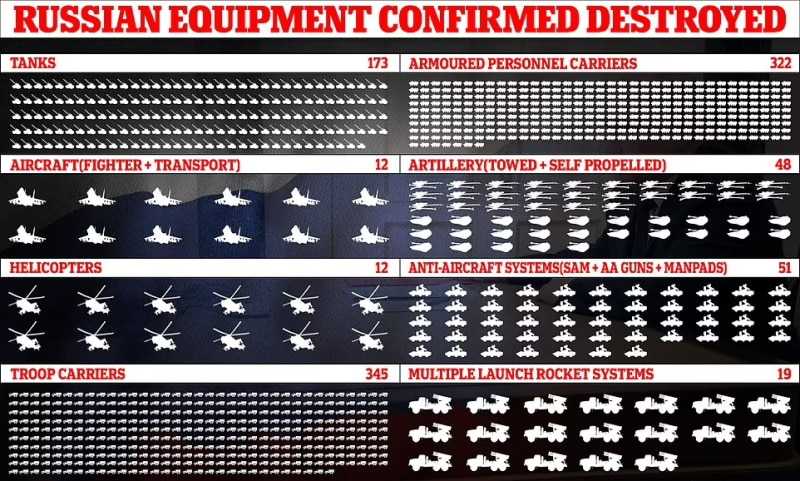
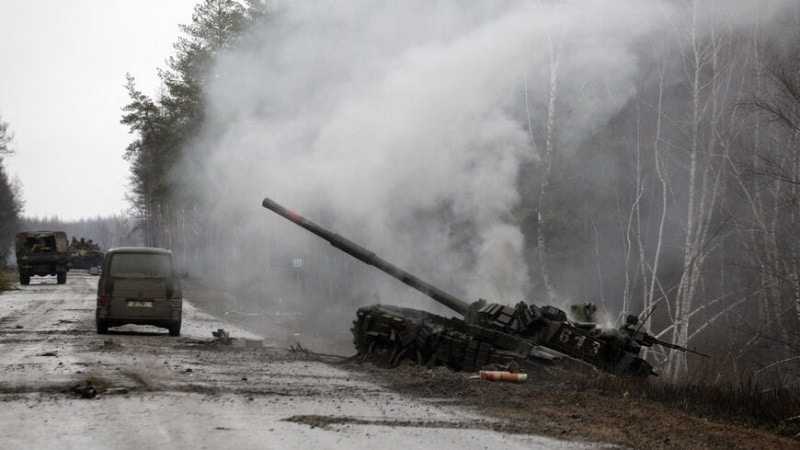
Experts have said they are baffled by the ineptitude of the tactics displayed by Russia’s armies after drone footage yesterday showed a column of tanks getting picked off one-by-one in an ambush carried out by Ukraine’s forces.

Analysts have said Russian tank commanders allowed the Ukrainians to ambush their unit by driving down the middle of a main road leading into Kyiv – and straight into a death trap. By multiple counts, President Vladimir Putin’s forces have lost more tanks than are operational in entire German army.

The devastating artillery strikes came as Putin’s troops inched closer to Kyiv, and saw a number of Russian T-72 tanks and other vehicles destroyed or routed in the surprise attack from the front and back of the convoy.

Share

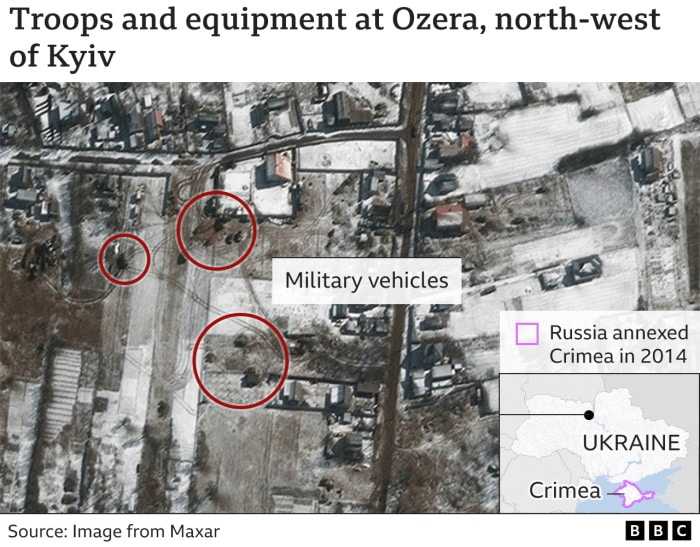
Ukraine war: Large Russian convoy redeploys near Kyiv – satellite images

Satellite images taken by a US firm of a large Russian military convoy near Ukraine’s capital, Kyiv, show it has “largely dispersed and redeployed”.

The convoy was last seen near Antonov Airport, north-west of Kyiv, and its movement could signal a renewed push towards the city.

The firm that took the photos, Maxar Technologies, said parts of the convoy were in positions in surrounding towns.

Other parts are further north, with artillery now in firing positions.

Share

WTF? ‘The war in Ukraine threatens to distract us from the climate crisis’ says CBC LPC propagandist

Russia’s invasion of Ukraine does not change the fact of climate change – a reality brought home again by another stark report from the UN’s climate change panel two weeks ago.

But the ramifications of this war are being used to raise new questions about Canadian climate and energy policy.

With gas prices surging a week after Vladimir Putin’s forces invaded Ukraine, Brampton Mayor Patrick Brown wrote to Finance Minister Chrystia Freeland to suggest that she delay the annual increase in the federal carbon tax, slated to take effect on April 1. “Now is the wrong time for any new burden,” he said.

Share

Canadians support actions against Russia over Ukraine, but have economic concerns: poll

… The Ipsos poll conducted exclusively for Global News found strong support for Canada’s sanctions on Russian leaders, including President Vladimir Putin, and sections of the Russian economy including the oil sector. Eight in 10 Canadians surveyed said they would support even more sanctions.

And although less than half of Canadians who answered the poll said they are prepared to pay more for gas because of those sanctions, 73 per cent said doing nothing will encourage Russia to take further military action elsewhere.

Share

Trudeau returns from Europe having run out of people who will give him the time of day, sanctions oligarch Abramovich

WARSAW — Prime Minister Justin Trudeau capped a weeklong European trip Friday by slapping new sanctions on the Russian oligarch Roman Abramovich, who has become an international poster boy for the largesse that enabled President Vladimir Putin’s war on Ukraine.

Abramovich is a major shareholder in Evraz, a British multinational manufacturing company that operates a steel mill in Regina. Britain also sanctioned Abramovich on Thursday, as pressure continued to grow on the Boris Johnson government to bring down the hammer on the owner of its famed Chelsea Football Club. Abramovich has aimed his super yacht into the Mediterranean Sea to avoid having his assets seized.

Share

What Putin Needs to Negotiate a Deal on Ukraine

One of the biggest questions about the war in Ukraine at this point is what Russian president Vladimir Putin’s exit ramp would look like. He has too much of his standing and prestige invested in this expedition for the United States and its allies to expect him to execute a U-turn and a tail-between-the-legs withdrawal, even if Ukrainian resistance were to continue being as stubborn and effective as it has been so far. For any outcome to be acceptable, Putin has to be able to portray himself, with the aid of his propaganda apparatus, as a winner.

Share