How the Kremlin’s media crackdown could backfire

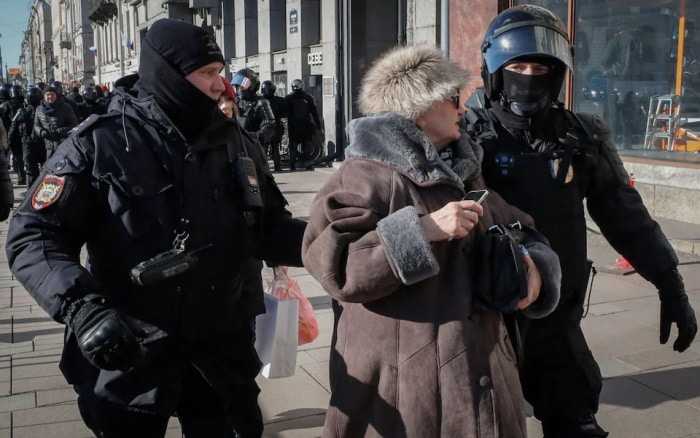
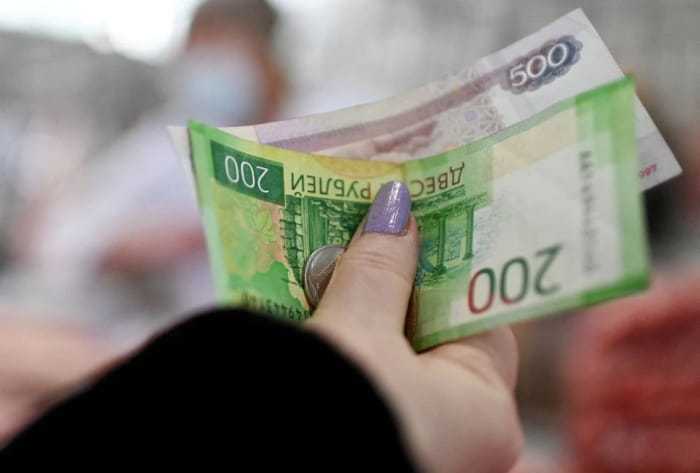
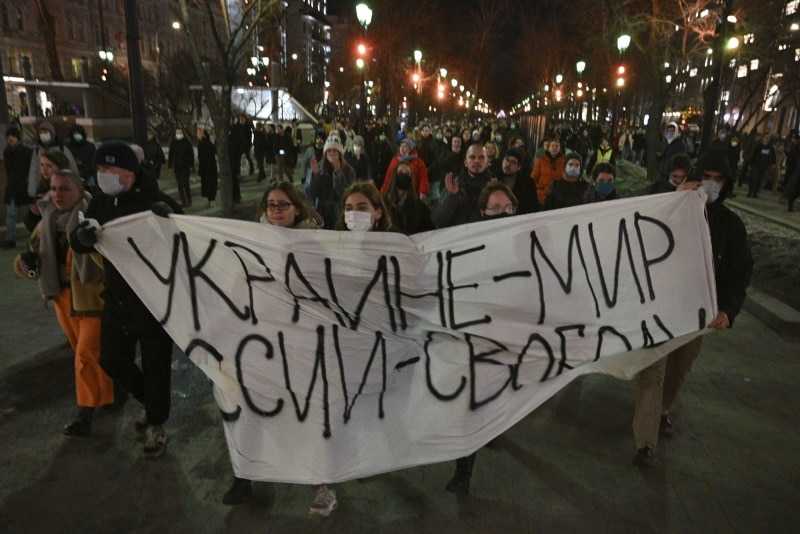
Two quite contradictory messages are emerging about the success, or otherwise, of the Kremlin’s efforts to control what Russians learn about the war in Ukraine. On the one hand, there is still, it appears, widespread ignorance about Russia’s actions, and disbelief about reports coming out of Ukraine. In other words, the official narrative prevails. But on the other hand, the imposition of an increasing number of media curbs, including on two independent domestic broadcasters and a slew of international news websites, suggests the authorities are running scared.

Share

NATO Intervention In Ukraine Could Spark Nuclear War. Here’s How It Could Happen

“How did we just kill a billion people?”

Over just three days, as I have done countless times over the last several years, a group of past and present senior U.S. government officials from both sides of the aisle gathered to wage a NATO-Russia war in a simulation at the end of 2019. In the course of what we called the NATO-Russia War of 2019, we estimated one billion people died. And if we aren’t careful, what happened in a simulation could happen if a NATO-Russia war erupts over Ukraine.

In fact, in the simulation I mentioned above from 2019, in which Russia invades Ukraine in a similar way as it did over the last week or so, not only does NATO get sucked in unintentionally, but Russia eventually releases nuclear weapons in its desperation. The result is an eventual escalation of bigger and more dangerous nuclear weapons whereby over one billion lives are lost.

Share

Russian lawmakers approve prison for ‘fake’ war reports

DUSSELDORF, Germany (AP) — Russians could face prison sentences of up to 15 years for spreading information that goes against the Russian government’s position on the war in Ukraine, a move that comes as authorities block access to foreign media outlets.

The Russian parliament voted unanimously Friday to approve a draft law criminalizing the intentional spreading of what Russia deems to be “fake” reports.

Russian authorities have repeatedly decried reports of Russian military setbacks or civilian deaths in Ukraine as “fake” reports. State media outlets refer to Russia’s invasion of Ukraine as a “special military operation” rather than a “war” or “invasion.”

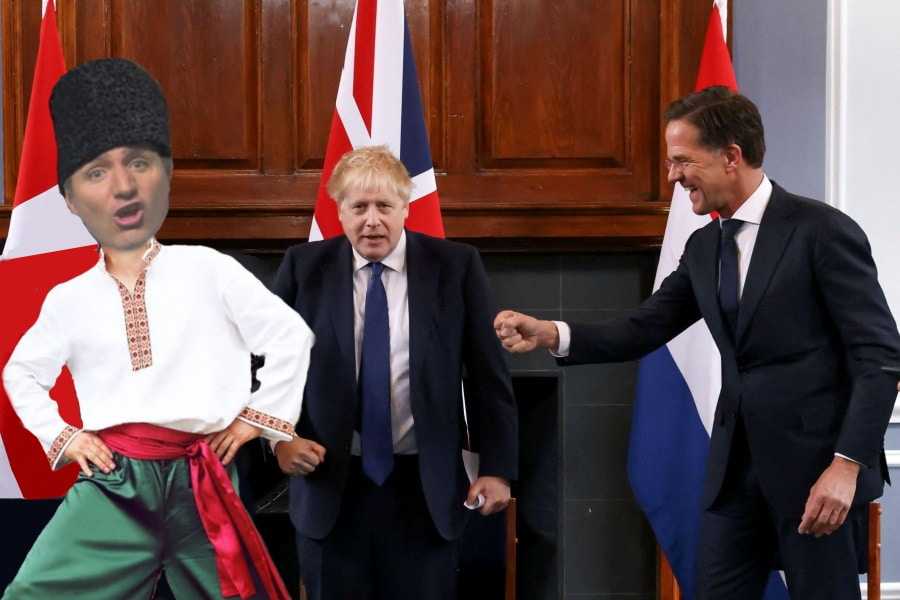
I bet Justin is green with envy.

Share

Ukraine Must Join the EU to Punish Russia

If any good is to come from Russian President Vladimir Putin’s invasion of Ukraine, it is that the Western powers exploit the Kremlin’s unprovoked act of aggression to further strengthen the cause of democratic freedom in Europe.

In many respects, Russia’s brutal assault on Ukraine has acted as a salutary wake up call for Europe’s liberal elites, who appeared more inclined to appease Moscow than stand up for Kyiv’s democratic rights.

Share

Demoralised Russian soldiers tell of anger at being ‘duped’ into war

Five Russian soldiers sit in a brick building. They are blindfolded: the latest prisoners to be captured inside Ukraine. A Ukrainian voice interrogates them. “Speak,” he says to the group’s Russian officer. What message would he like to send to his soldiers and to Russians back at home?

“Frankly speaking, they tricked us,” the officer replies, referring to his military superiors sitting in Moscow. “Everything we were told was a fake. I would tell my guys to leave Ukrainian territory. We’ve got families and children. I think 90% of us would agree to go home.”

Share

Live updates: Russia blocks access to Twitter, Facebook

The latest developments on the Russia-Ukraine war:

After blocking Facebook, Russia’s state communications watchdog has quickly followed up by declaring a block on Twitter amid the tensions over the war in Ukraine.

The agency, Roskomnadzor, said Friday it cut access to Twitter in line with the Russian Prosecutor General’s office decision. The watchdog has previously accused Twitter of failing to delete the content banned by the Russian authorities and slowed down access to it.

Share

Russian Troop Deaths Expose a Potential Weakness of Putin’s Strategy

Videos and photos show the bodies of soldiers left behind on the battlefield, officials say, and the charred remains of tanks and armored vehicles.

WASHINGTON — When Russia seized Crimea in 2014, President Vladimir V. Putin was so worried about Russian casualty figures coming to light that authorities accosted journalists who tried to cover funerals of some of the 400 troops killed during that one-month campaign.

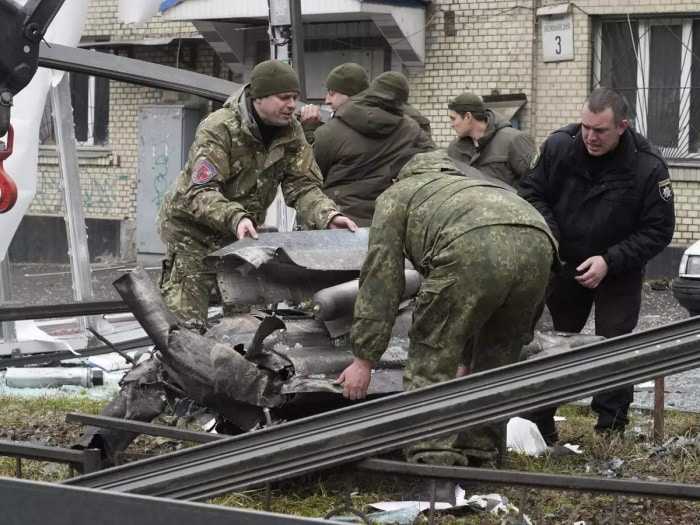
But Moscow may be losing that many soldiers daily in Mr. Putin’s latest invasion of Ukraine, American and European officials said. The mounting toll for Russian troops exposes a potential weakness for the Russian president at a time when he is still claiming, publicly, that he is engaged only in a limited military operation in Ukraine’s separatist east.

Share

International Cat Federation bans Russian felines over Ukraine crisis


The International Cat Federation has banned Russian cats from its competitions following the country’s move to invade Ukraine last week.

The federation, which is also known as FIFe after its French name, Fédération Internationale Féline, said in a statement that it was “shocked and horrified” that Russian forces had attacked Ukraine and “started a war.”

Share

Under a foreign flag: Canadian veterans explain why they’re fighting for Ukraine

In Afghanistan, he was nicknamed Wali.

And the name stuck for the former sniper with the Royal 22e Regiment, who — earlier this week, in the dead of night — crossed the border into Ukraine from Poland, answering a call from Ukraine’s president for a foreign legion to help repel the Russian invasion.

The border was a surreal experience, even for a former Canadian soldier used to the unpredictability of war in the sun-scorched grape fields of Kandahar. Wali said he and the three other former Canadian soldiers who made the journey with him were greeted with hugs, handshakes, flags and photos by Ukrainians after they crossed the border.

Share

Ukraine’s Zaporizhzhia nuclear plant seized by Russians after shelling, say authorities

Ukraine’s Zaporizhzhia nuclear plant has been seized by Russian military forces, according to regional authorities, after a fire sparked by overnight shelling burned for several hours at the largest facility of its kind in Europe.

The Ukrainian state inspectorate for nuclear regulation said in a statement on its Facebook page the plant had been “captured by the military forces of the Russian Federation”, but added that employees were continuing to work on the premises.

Ukraine: Why has Russia’s 64km convoy near Kyiv stopped moving?

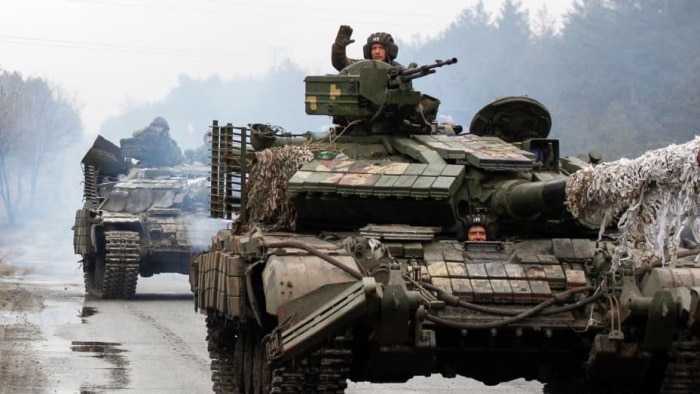
Russia’s huge military convoy, said to be 40 miles (64km) long, near Ukraine’s capital Kyiv has hardly moved in three days, the UK defence ministry says.

But US defence officials say Russia still intends to surround and seize the city where some three million people live – by siege tactics if necessary.

Recent satellite images showing the size of the convoy sparked fears that an attack would be imminent.

Share

Understanding the military realities regarding Ukraine

When it comes to a surprise attack against another country, there are two schools of thought. First, you can attack with 100% of your military strength to subdue the country instantly. Call it the “ripping off the Band-Aid” or the “shock and awe” approach to conquest. Second, you can go in with some delicacy to see how much pushback you’re going to get from the country before you commit your best troops, especially if you’d like to keep civilian casualties to a minimum.

Share

China Asked Russia to Delay Ukraine Invasion until after Beijing Olympics: Report

Chinese authorities reportedly requested in early February that Russia wait to launch its invasion of Ukraine until after the Beijing Olympics, according to a Western intelligence report described to the New York Times by senior Biden administration officials and a European official.

Western intelligence officials familiar with the report told the Times that it details conversations between senior Russians and Chinese officials in the run up to Russian president Vladimir Putin’s invasion of Ukraine. CNN subsequently confirmed the report’s authenticity, though different intelligence agencies reportedly had different interpretations of the exchanges between the Kremlin and Beijing.

Share

Could Russian mercenaries conquer the world?

The Wagner Group’s tentacles stretch beyond Ukraine

Four days before the invasion of Ukraine, an eerily prescient documentary aired on France 5. Le monde en face:Wagner, l’armée de l’ombre de Poutine assiduously tracks the activities of the Russian President’s “shadow army”: the Wagner Group, which arranges military “solutions” for the Kremlin. Since the film was broadcast, members of the 6,000-strong mercenary organisation have been deployed to Ukraine. Their orders: to kill President Zelenskyy and dismember his government.

Share