McTEAGUE: Don’t let the Liberals fool you on electric cars

The Liberals’ carbon tax ploy is utterly shameless. For years they’ve been telling us that the Carbon Tax was a hallmark of Canadian patriotism, that it was the best way to save the planet, that it was really a “price on pollution,” which would ultimately benefit the little guy, in the form of a rebate in which Canadians would get back all the money they paid in, and more!

Meanwhile big, faceless Captain Planet villain corporations — who are out there wrecking the planet for the sheer fun of it! — will shoulder the whole burden.

Share

Jack Mintz: The death of the carbon tax

Is the carbon tax dead in Canada? Yet-to-be-elected Prime Minister Mark Carney has not actually eliminated the fuel charge paid by consumers and low-emitting businesses, which only Parliament can do. But he has lowered its rate to zero. On the other hand, he intends to raise carbon taxes on big emitters. This week, Conservative leader Pierre Poilievre upped his “axe the tax” ante to the federal tax on big emitters but would leave the provinces and territories in charge of their own schemes.

Share

Terry Newman: Mark Carney’s climate obsessions will put Trudeau to shame

This week, Prime Minister Mark Carney promised a crowd in Edmonton that he would speed up pipeline-project approvals, reducing the waiting period from five to two years. But Carney has also told us he wants to keep an emissions cap on the oil and gas industry and industrial carbon tax, both of which are likely to deter potential investors in Canada’s energy projects. He’s also conceded that various competing interests would have to be consulted before any natural resource projects will be able to get off the ground, while failing to communicate any assurances he could get the job done to reassure investors.

Share

Canada needs a real leader on energy. So why is Mark Carney acting like a non-player character?

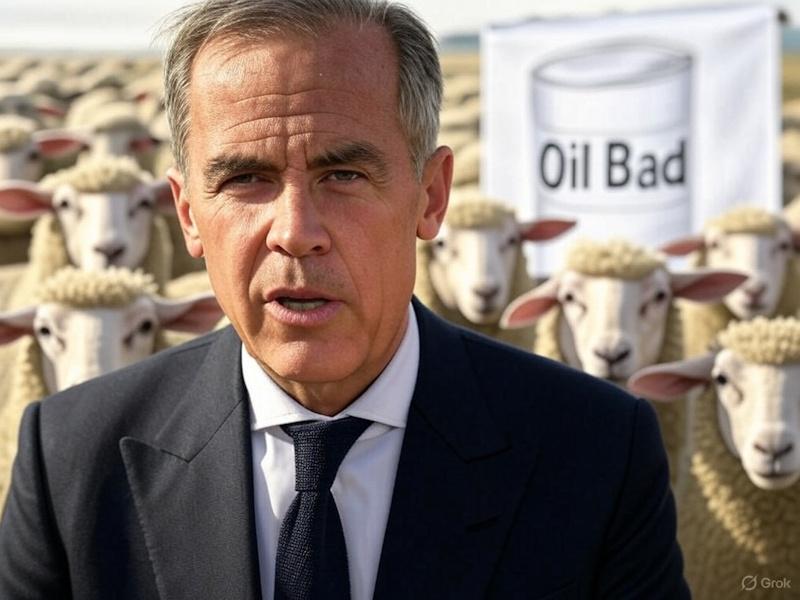
The polls are clear: Canadians are looking for someone to lead us through this difficult patch. There was even a moment during Mark Carney’s Liberal leadership acceptance speech when it seemed as though he understood the assignment. He hinted that common sense would finally prevail, that he would dispense with a decade of Liberal orthodoxy that had demonized Canada’s oil and gas sector.

By promising to make Canada a “superpower in both clean and conventional energy,” our new prime minister seemed to be prioritizing Canadian jobs over his stated fear that climate change is a “tragedy on the horizon” that will lead to the loss of countless lives.

Share

We’ll Never Have an Energy Transition

In his March 4 address to Congress, President Trump proclaimed that he had “terminated the ridiculous Green New Scam,” referring to assorted Biden-era Green New Deal policies directed at an “energy transition.” The weekend before, the Wall Street Journal featured a lengthy essay with a title seemingly calibrated to pre-bunk Trump’s expected remarks: “The Clean Energy Revolution Is Unstoppable.” The authors, two Oxford professors, asserted that the “clean energy revolution is being driven by fundamental technological and economic forces that are too strong to stop,” and that “large segments of fossil fuel demand will permanently disappear . . . in the next two decades.” Two weeks later, the Wall Street Journal featured another op-ed, this one coauthored by former vice president Al Gore, proclaiming the “energy transition is inevitable.”

So, which is it? Inevitable or a “scam?”

Share

Smith says changes to Alberta infrastructure defence law will prevent any ‘interference from Ottawa’

OTTAWA — Alberta Premier Danielle Smith fired a shot across the bow of new Prime Minister Mark Carney on Wednesday, vowing to beef up a provincial law shielding oil and gas production from federal meddling.

Smith said at a press conference that new amendments to Alberta’s Critical Infrastructure Defence Act would put a firewall around Alberta’s energy sector by declaring oil and gas production sites and facilities housing emissions data and records as essential infrastructure.

Share

Matthew Lau: Carney is as climate crazy as Guilbeault

Having left his gig as UN Special Envoy for Climate and Finance to lead the federal Liberal government, Mark Carney is now in a position to focus his and Greta Thunberg’s global climate crusade squarely on Canada. The crusade, Carney boasted back in 2021 while in his previous role, is worth many trillions of dollars. As he told CBC News at that year’s UN climate conference, “We have banks, asset managers, pension funds, insurance companies from around the world — more than 45 countries — and their total resources, totalling US$130 trillion” dedicated to transitioning the world’s economy away from fossil fuels. That dollar figure is higher than global GDP.

Share

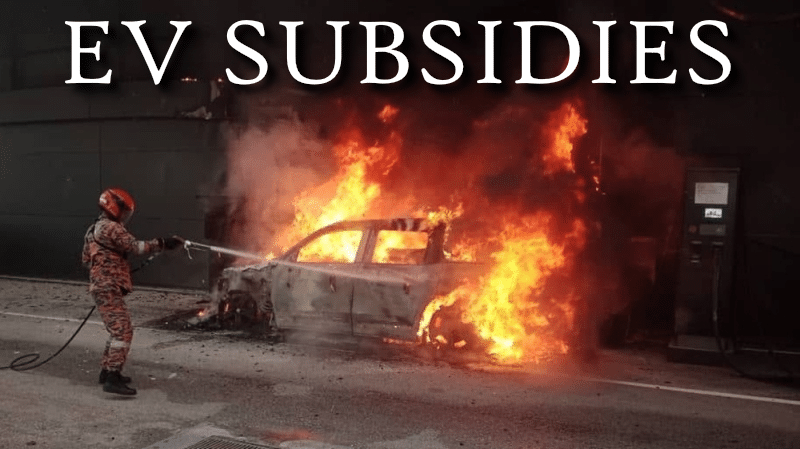
CHARLEBOIS: Farmers pay the price for Ottawa’s electric vehicle obsession

Canada started a trade war with China, yet few in Ottawa seem willing to acknowledge the consequences.

Unlike the United States, which often imposes tariffs as a bargaining chip only to later negotiate, China takes a far more calculated and punitive approach. When Beijing retaliates, it targets industries with economic and symbolic significance, ensuring maximum pressure on its adversary.

Share

Gwyn Morgan: Canadians need to vote against policy self-harm

Donald Trump’s bombastic style is hard to stomach, but the need to undo years of waste and corruption is undeniable. Trump’s reforms will speed up an economy that already far outperforms ours. According to the latest IMF World Economic Outlook data, U.S. GDP per capita this year is $89,678 (in “purchasing-power-parity” dollars), while ours is $64,566, just 72 per cent of that. In 2015, when the Trudeau government was elected, our per capita output was 81 per cent of the Americans’. According to the IMF’s forecasts, we’ll be below 70 per cent and still trending downward by 2029.

Share

The Liberals’ $200 billion climate boondoggle

Since coming to power in 2015 the federal Liberals have earmarked more than $200 billion for 150 programs presided over by 13 government departments, ostensibly to address climate change.

The total comes to 202 if you include joint agreements with Canada’s provinces and territories.

The results have been a massive failure.


I sure as hell do not want to be governed by Carney and his wife.

h/t XC

Share

Poilievre says he’ll scrap carbon levy on industrial emitters and consumers if elected defeating Carney’s lie

Conservative Leader Pierre Poilievre says he will scrap the carbon levy on industrial emitters as well as the consumer carbon levy.

In video statement released Monday, Mr. Poilievre says if elected to govern in the upcoming election, his government would repeal the entire carbon price law, including the tax on Canadian businesses and industries.

This means there would not be a levy on Canadian steel, aluminum, food production, concrete and other industries, he said.

Share

GREEN: This is lunacy! Canadian energy plan builds in power-price advantage to US

On Monday at an energy conference in Houston, U.S. Energy Secretary Chris Wright said the Trump administration will end the Biden administration’s “irrational, quasi-religious policies on climate change that imposed endless sacrifices on our citizens.”

He added that, “Natural gas is responsible for 43 per cent of U.S. electricity production,” and beyond the obvious scale and cost problems, there’s “simply no physical way that wind, solar and batteries could replace the myriad uses of natural gas.”

In other words, as a federal election looms, once again the United States is diverging from Canada when it comes to energy policy.

Share

There’s No Such Thing as ‘Green’ Industry

News this week emerged about the collapse of Swedish battery startup Northvolt. “Like many companies in the battery sector,” the failed company’s website explained, “Northvolt has experienced a series of compounding challenges in recent months that eroded its financial position.” European Governments, including those of Britain and the EU, have long claimed that as pioneers of green policy and the ‘transition to a low carbon economy’, their policies will cause domestic industries and the green economy to boom. But instead of the green dream turning into reality, across the continent there is only a bleak economic outlook and deindustrialisation. Given that so much of this was predicted, yet those predictions met with policymakers’ intransigence, isn’t it time to ask if this nightmare is a feature of green policy, not merely a bug?

Share