
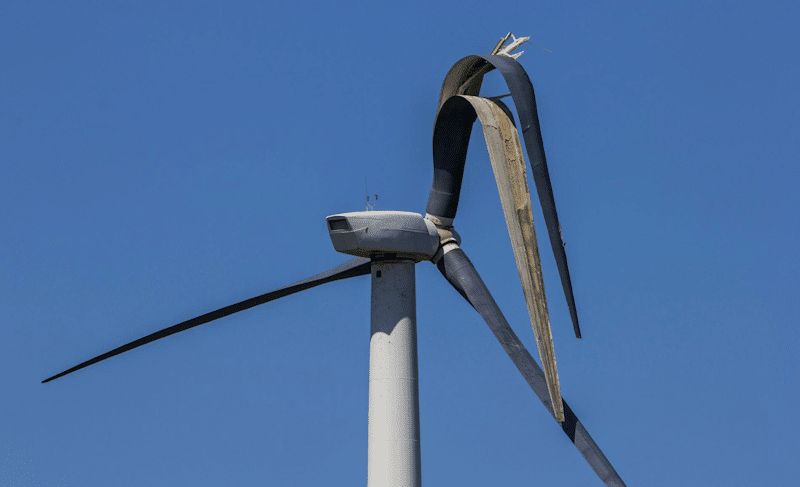
 Sunning himself in some Spanish spring sunshine, the British Prime Minister is no doubt relieved that the Supreme Court back home has given him some much needed guidance on the biology of a woman. But we must hope his holiday good humour is being disturbed by news that the breezes that will power his new socialist economic miracle went on strike during significant parts of the first quarter. In a colder-than-usual winter, windmill output fell by 11%, pushing up demand for gas and imports and causing a number of unstable and highly expensive price spikes. What dick is in charge at the Department of Energy, he might be asking himself.
“Net-Zero Tyranny”

GOLDSTEIN: Canada’s air quality among best in the world, report finds
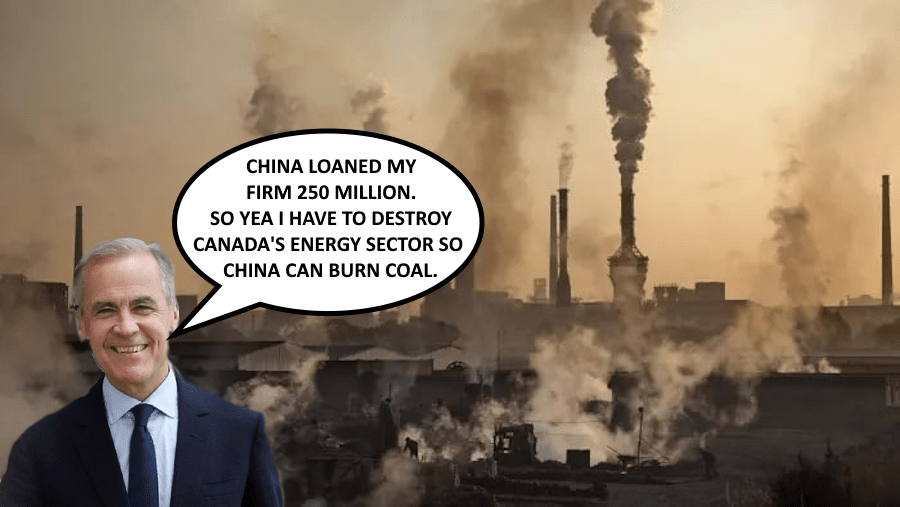
While often portrayed both domestically and internationally as an environmental laggard, Canada has some of the cleanest air in the world — better than any other member of the G7 nations — according to a new study by the Fraser Institute.
Mark Carney and Brookfield recently took a $250 million loan from the People’s Bank of China.
Sam Cooper lays out the timeline of Mark Carney’s disclosed dealings with the CCP. It seems like this might be a conflict of interest.
Full episode premieres everywhere tomorrow, April… pic.twitter.com/VWuJixXMrO
— Jason James (@jasonjamesbnn) April 15, 2025
GOLDSTEIN: Liberal spending on climate change has been a $200-billion disaster
Given that the federal Liberal government has earmarked more than $200 billion of taxpayers’ money to fight climate change, how effective has all that spending been?
The answer is that it has been a financial disaster for Canadians when one considers the primary purpose of the spending, which is to lower Canada’s annual output of industrial greenhouse gas emissions.
SNELL: Jet-set Carney would make flying more expensive for Canada’s growing peasant class
Could Liberal leader Mark Carney be more abhorrent?
The answer is yes, even considering Chinese election interference on behalf of the Liberals, his company receiving a $250-million Chinese loan, and new allegations of offshore tax avoidance in the billions.
Carney branded himself a political outsider from the start of his campaign. Is he also an outsider to decency — positioning himself as a special-class citizen above Canada’s growing peasant class?
Bjorn Lomborg: Global warming policies hurt the poor
We are often told by climate campaigners that climate change is especially pernicious because over coming decades it will disproportionately harm the poorest people, both in Canada and the world. But they miss that climate policies are directly hurting the poor right now.
More energy leads to better, healthier, longer lives. Less energy means fewer opportunities. Climate policies demand we pay more for less reliable energy. The impact is greater if you’re poorer: the wealthy might grumble about higher costs but can generally absorb them; the poor are forced to cut back
Conrad Black: A Mark Carney win would be a disaster for Canada
Canada is perilously close to the greatest electoral disaster in its history. A Liberal victory would commit the country to the deliberate pursuit of comparative poverty to reduce Canada’s minimal contribution to the fear of a rise in the world’s temperature due to carbon use. This is insane and must not happen.
Carney’s energy pipeline stance ‘inconsistent’ and ‘purposefully vague’: Industry leaders
Ahead of the federal election, top executives in Canada’s oil and gas industry say they are pleased to hear support for building new export pipelines from the two leading parties. However, Liberal Leader Mark Carney’s stance on this issue has been branded “inconsistent” and “purposefully vague” by CEOs and leading industry figures.
Canada’s federal election is set for April 28. A Leger poll earlier this week found 52 per cent see Carney’s Liberals winning, compared to 27 per cent favouring Pierre Poilievre’s Conservatives.
Liberals promised the carbon tax would reduce emissions, but emissions went up
The Trudeau government pushed the carbon tax as the best way to help the environment and reduce emissions.
But it’s clear a carbon tax in Canada wouldn’t be effective at lowering global emissions. That’s because Canada only makes up 1.4 per cent of global emissions, a fact former prime minister Justin Trudeau acknowledged.
“Even if Canada stopped everything tomorrow, and the other countries didn’t have any solutions, it wouldn’t make a big difference,” Trudeau said in 2018.
Carney will be worse.
John Ivison: Carney’s rosy energy promises meet the Liberals’ dismal record
I’m reading my six-year-old son Lewis Carroll’s classic Through the Looking-Glass and What Alice Found There, with all its delightful nonsense talk about shoes and ships and sealing wax, of cabbages and kings.
But, in the words of the Red Queen, life through the looking glass is “as sensible as a dictionary” when ranked against what is happening in the real world.
Wait, We Outsourced the ‘Crown Jewel’ of Global Warming Research to Crackpot Climate Consultants?

We touched upon this briefly in March: liberals were going haywire that Russell Vought, director of the Office of Management and Budget, would take a hatchet to the “crown jewel” of the climate change cult. The National Climate Assessment is a U.S. Global Change Research Program project. It’s a multi-billion-dollar operation sanctioned by Congress, but it only has two employees. They don’t do the study, so what’s the deal?
Is Europe Still Fighting Lost Energy Wars?
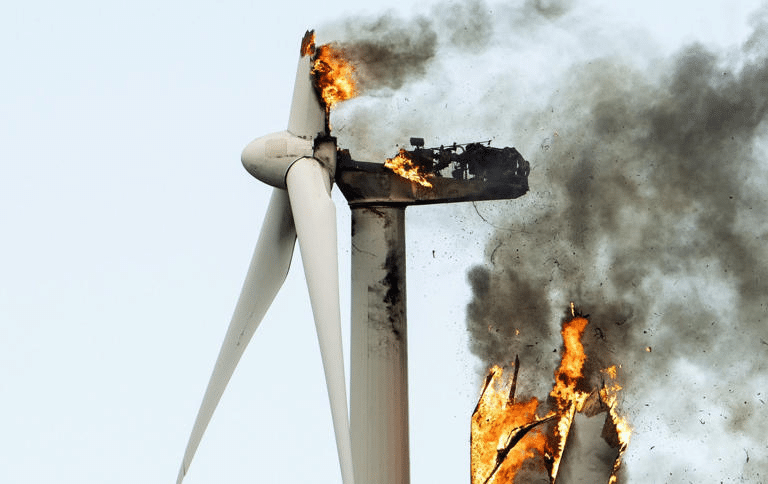
The news came down like a thunderbolt. In a spectacular decision, the Morton County courthouse in Mandan, North Dakota, ordered the environmentalist organizations that comprise Greenpeace to pay $665 million in damages to Energy Transfer, the company behind the Dakota Access Pipeline. The figure appears a monumental slap in the face to Greenpeace, which was sued by Energy Transfer for “defamation, trespass, nuisance, civil conspiracy and other acts,” following demonstrations against the pipeline project in 2016 and 2017.
Why are sports cars being exempted from net zero rules?

You can carry on burning petrol and diesel in your car so long as it is a pricey, niche sports car. If you are a pleb who can only afford a family hatchback, on the other hand, you will have to convert to electric – and the government will pretend that it is saving you money. That just about sum up the government’s new policy on electric vehicles. The Zero Emission Vehicle mandate will be relaxed, but mostly for car manufacturers who produce fewer than 2,500 cars a year, who will be given a free pass. Given that these manufacturers – like Aston Martin – tend to be at the upper, more polluting end of the market, it is rather as if the government had just come up with a tax on airline travel which exempted private jets.
How much greener did Canada’s homes get? Report takes a closer look at federal rebate program

The federal government provided $2.6 billion for heat pumps, solar panels, insulation and other green upgrades to Canadians’ homes through the Canada Greener Homes Grant. But what difference did that actually make?
A new report released this week by the non-profit Green Communities Canada suggests the program didn’t do enough to meet Canada’s targets to reduce greenhouse gas emissions.
That’s because “the savings aren’t deep enough and because we’re not doing enough retrofits,” said Kai Millyard, the group’s energy manager and co-author of the report.
PINDER: Carney, a climate-warrior first and always
By any measure, Mark Carney’s resume is impressive. Mostly from Wikipedia, he was born in 1965, the son of a high school principal. The family moved from the Northwest Territories to Edmonton where his father was a Liberal candidate in the 1980 Canadian federal election. His mother returned to university to pursue a career in education when Carney was 10. He has an older brother and sister and a younger brother.
John Ivison: Carney’s trick is not talking about his climate policies. So far, it’s working
Pierre Poilievre put forward a solid pitch to voters during his visit to St. John’s on Tuesday, focusing on the “lost Liberal decade” and the policies that contributed to the “poorest growth in the G7.”
He used a letter sent to political leaders by the CEOs of Canada’s 14 largest energy companies as a frame for his case, contrasting Conservative positions with those of Mark Carney’s Liberals on five key demands: the need to simplify regulations by overhauling C-69, the Impact Assessment Act; the need to ensure major projects are approved within six months; the removal of the cap on oil sands emissions the CEOs argue will shrink production; the requirement to kill the carbon tax on large emitters; and the desirability of creating ownership opportunities for Indigenous Canadians by extending federal loan guarantees.