Germany has officially surrendered – to Islam

Germany is no longer a nation, it is a condominium and the rest of Europe is following its lead. We haven’t seen anything yet.

Shortly after playing time for the German football championship match between Augsburg and Mainz, the referee, Matthias Jollenbeck, stopped the match to allow Muslim footballer Moussa Niakhaté to break his fast for Ramadan and quench his thirst at sunset. For the first time, a Bundesliga match was stopped for this reason. But the initiative was welcomed by the German Football Association and will not be the last.

Europe is changing so rapidly that we haven’t even noticed it. From concession to concession, we have capitulated on everything.

Let’s stay with Germany, which for me is no longer even a nation, but a condominium.

Share

Germany is letting Europe down

Berlin is already moving to dilute EU sanctions

It’s beginning to dawn on the mainstream media that Angela Merkel didn’t just leave a “mixed” legacy behind her, but a disastrous one.

There’s an excellent feature in The Times yesterday, in which Oliver Moody provides a blow-by-blow account of how the Germans surrendered Europe’s security to the Kremlin. Moody reports that ‘President Zelensky of Ukraine [has] invited Merkel to visit the scenes of Russian atrocities in Bucha and witness for herself what ‘the policy of concessions to Russia has led to in the past 14 years’.’

Share

Move out of the way, Europe, Islam is taking over

Germany as a prototype:Christian symbols disappear as Europeans discard them, but there is no vacuum. Islam takes their place.

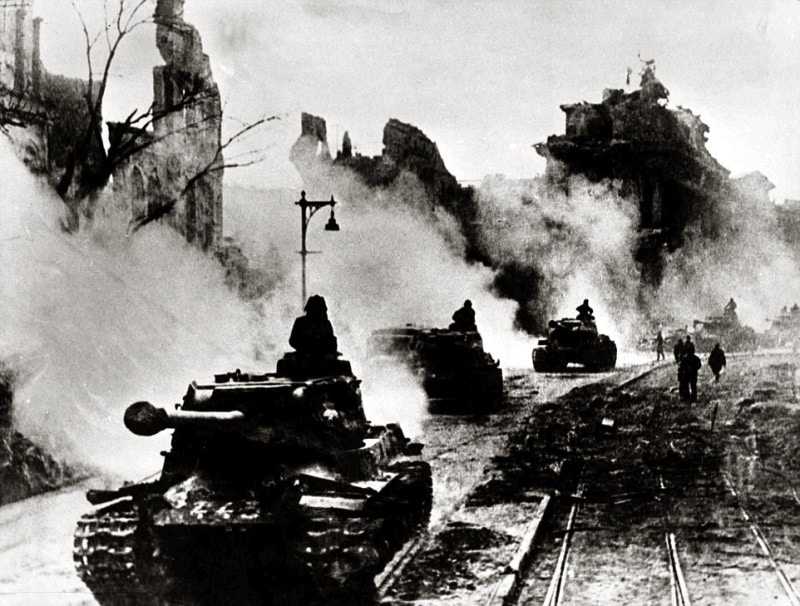
Cologne Cathedral, known as the “German Rome”, is the landmark of the city and has been declared a World Heritage Site since 1996. It is one of the most visited places in Germany and one of the most important in Christianity (it was visited by Popes John Paul II and Benedict XVI). The first stone of the cathedral was laid in 1248. On old black and white photos you can see how the towers of the cathedral protrude from the rubble of the historic center completely destroyed during the Second World War.

Now the city of Cologne is deleting the iconic cathedral from its new logo. “My 92-year-old mother is stunned, my 11-year-old son is crying and my friend in London doesn’t understand it,” writes sculptor and painter Cornel Wachter.

Share

Verboten: In Germany it is increasingly dangerous to criticize Islam

There are no taboos in modern Germany, except for critcizing Islam – which gets you fired, cancelled or worse.

What has emerged in recent days from the Goethe University of Frankfurt shows us that Europe is no longer a real democracy, but an ideological oligarchy. The newspaper Frankfurter Allgemeine Zeitung tells us that Professor Susanne Schröter, director of the Frankfurt Research Center and professor at the Institute of Ethnology, reported that a young researcher’s political stance on Islam now plays an important role in his future career. If he speaks well of Islam, he will make a career, otherwise he will not.

Schröter denounced the “cancel culture” which seeks to ban politically or morally unpleasant positions from universities. She referred to graduate students whose dissertations were not accepted because they dealt with “wrong” topics. For example, “honor killings” in Islam. “If an anthropologist deals with Islam, his career is over,” said Schröter.

Share

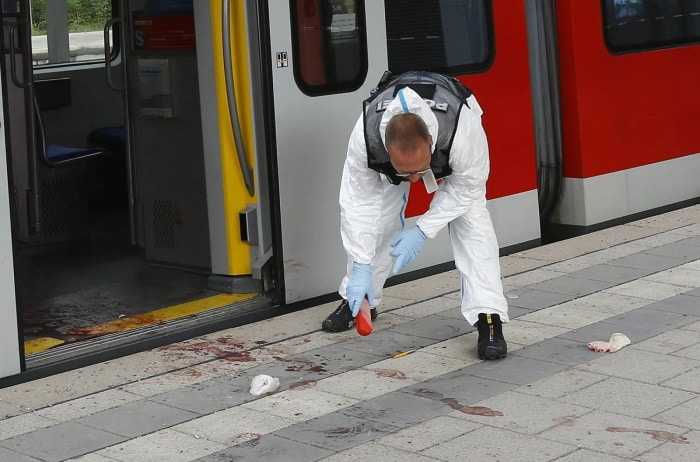
German prosecutors: Syrian asylum seeker who knifed 4 on train had Islamic motive

BERLIN (AP) — German prosecutors said Monday they now believe that the suspect in a knife attack on a train in November that left four people wounded had an Islamic extremist motive.

The attack took place on an ICE high-speed train traveling from Passau, on the Austrian border, to Hamburg on Nov. 6. Authorities said that the man attacked his victims apparently at random and showed signs of mental illness, but initially said there was no immediate indication of a terror motive.

Munich prosecutors said a few weeks later that they were no longer ruling out an Islamic extremist motive.

Share

Germany to disarm far-right extremists, restricts gun access

In der Mitte oben das Plakat “Internationaler Frauentag”

BERLIN (AP) — Germany’s top security officials announced a 10-point plan Tuesday to combat far-right extremism in the country that includes disarming about 1,500 suspected extremists and tightening background checks for those wanting to acquire guns.

Interior Minister Nancy Faeser said the far right poses the biggest extremist threat to democracy in Germany and said authorities would seek to tackle the issue through prevention and tough measures.

“We want to destroy far-right extremist networks,” Faeser told reporters in Berlin, saying this included targeting financial flows that benefit such groups, including merchandising businesses, music festivals and martial arts events.

Share

German court authorizes surveillance of “far-right” AfD party

Rejecting legal challenge, ruling finds that anti-Islam, anti-immigrant Alternative for Germany can be classified as a suspected threat to democracy

FRANKFURT, Germany — A German court ruled Tuesday that the far-right Alternative for Germany (AfD) can be classified as a suspected threat to democracy, paving the way for the domestic intelligence agency to spy on the opposition party.

The court said it had dismissed a legal challenge brought by the AfD last March that delayed plans by Germany’s Federal Office for the Protection of the Constitution (BfV) to put the party under surveillance.

Share

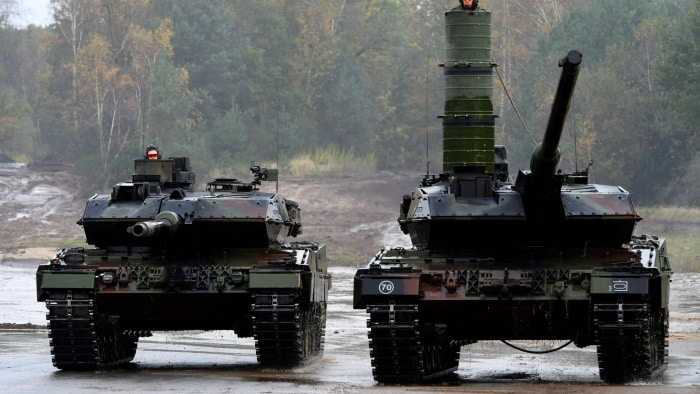
Germany’s army: Will €100 billion make it strong?

At first, only two black dots are visible in the bright blue sky above the Eifel region in the far west of Germany. Then, the dots turn into the shapes of two F-35 fighter jets, the roar of their engines quickly growing louder. The jets are coming from the east, where they have been flying patrols over Poland near the Ukrainian border and are now heading back toward the US Air Force Base Spangdahlem.

That’s where US troops have deployed 12 of the aircraft to monitor NATO airspace over Eastern Europe in the face of Russian aggression.

Share

Germany, in Historic Reversal, Abandons Pro-Putin Russia Policy

German Chancellor Olaf Scholz has announced a paradigm shift in German defense and energy policies in response to Russia’s invasion of Ukraine. He said that Germany will substantially increase defense spending and take immediate measures to reduce its energy dependence on Russia.

Scholz has also announced several other important policy reversals: Berlin has halted the controversial Nord Stream 2 pipeline, which would double shipments of Russian natural gas to Germany by transporting the gas under the Baltic Sea; it has agreed to authorize the transfer of weapons to Ukraine; and it has decided to ban Russian banks from the SWIFT international payment system.

Share

Stand Up, Germany

Berlin needs to let Vladimir Putin know that it can resist his gas supplies and that it is willing to pay more for NATO’s military defense.

“Suppose they gave a war, and nobody came?” went a 1960s antiwar slogan. Stell Dir vor, es ist Krieg, und Keiner geht hin is the German version. It’s still popular in Germany, a country of peaceniks. Germans’ defeat in World War II and subsequent reeducation by the Allies stripped them of any enthusiasm for war or military things.

Share

Germany home to 1,950 potentially violent Islamist extremists

The German government has revealed there are about 1,950 potentially violent Islamist extremists in the country.

These people were assessed by the Interior Ministry as both extreme in their beliefs and either known to be violent or showing a willingness to commit violent acts.

They were the most dangerous of the roughly 29,000 people believed to have Islamist extremist tendencies in Germany, who in turn are a minority of the approximately 5.5 million Muslims in the country.

Share

Why Germany isn’t sending weapons to Ukraine

Germany’s refusal to send weapons to Ukraine has puzzled and angered some allies. But the reasons why Europe’s most powerful country is standing back are historical and complex.

There’s a great grassy plain to the east of Berlin where the soil tells terrible stories.

As farmers plough, their blades disturb human bones, weapons; the fragments of one of the most brutal battles of World War II.

It was spring 1945. Hitler was hiding in a bunker in Berlin, his troops in retreat. Soviet forces advanced from the east across the plain but, above them on a hill called the Seelow Heights, the Nazis had taken up a defensive position.

Share

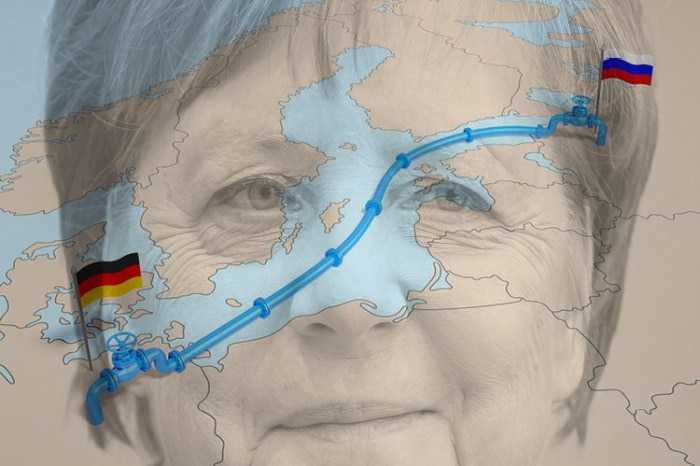
How Russia’s pipeline politics could split the alliance around Ukraine

Germany’s upcoming decision on whether to certify the controversial Russian-owned Nord Stream 2 pipeline is rapidly emerging as a key element in high-stakes diplomatic efforts to dissuade Moscow from invading Ukraine.

Delaying or cancelling the $11 billion project would have a significant impact on the Russian economy, depriving it of $3 billion US in annual revenue.

It also could serve to divide Ukraine’s allies as Russia continues to increase the pressure on the former Soviet bloc state.

Share

The Worst Ally

Germany, the laggard of NATO with a deep conflict of interest regarding Russia, is the weak link.

President Joe Biden’s press conference last week was atrocious, but one of his worst missteps amounted to telling the truth about Germany, if not by name.

Biden said there’d be divisions within NATO over a “minor incursion” by Russia into Ukraine. This is true enough, and the chief cause would be a Germany that is staking a strong claim to being our worst European ally.


Well well well. NATO member will withdraw troops in event of war with Russia – president

Croatian President Zoran Milanovic blamed the US for escalating the crisis and said his country would stay out of a conflict

Putin is winning by not invading. What a guy.

Share

German Catholic priests come out as queer, demand reform

The Roman Catholic Church in Germany on Sunday faced renewed calls for better protection of LGBTQ rights and an end to institutional discrimination against queer people.

Around 125 people, including former and current priests, teachers, church administrators and volunteers, identified themselves as gay and queer, asking the church to take into account their demands and do away with “outdated statements of church doctrine” when it comes to sexuality and gender.

Share