Refugees in Four-Star Hotels as Germany’s Bill Hits €193 Million

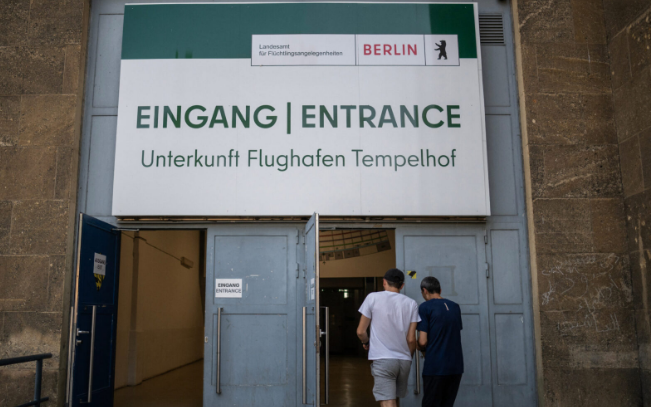
Germany’s largest cities are shelling out hundreds of millions of euros on housing thousands of refugees in hotels, as local authorities struggle to cope with a lack of social housing and emergency shelters. Despite a decline in the overall number of asylum applications, the inflow of Ukrainian refugees entitled to initial accommodation has left city administrations with little choice but to turn to the private sector.

According to Bild, Germany’s ten largest cities—plus Essen, Dresden, Potsdam, Hanover, Chemnitz, and Rostock—reported that 11,809 refugees were living in hotels and guesthouses at the end of June. The cost in the first half of 2025 alone amounted to more than €193 million.

Share

Germany state elections: AfD makes gains, Greens fall behind

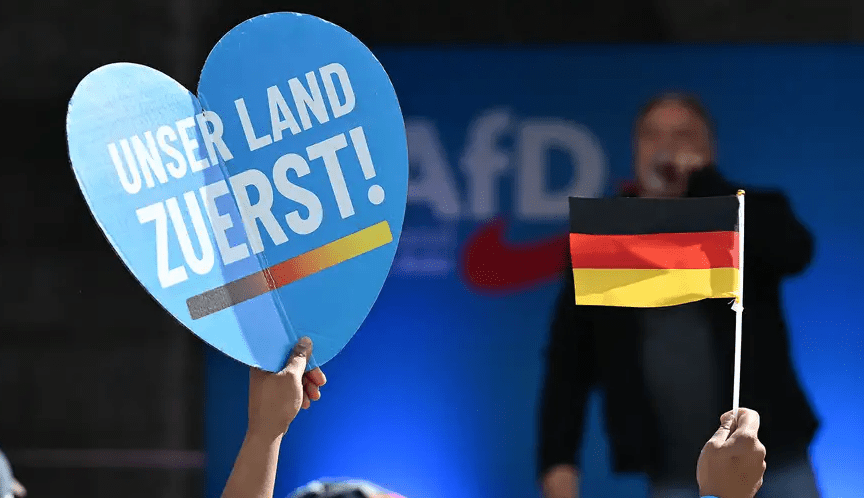
On Sunday, around 13.7 million people went to the polls in Germany’s most populous state, North Rhine-Westphalia. The results were losses for the center-left Social Democrats (SPD) and a bitter blow for the environmentalist Greens.

The conservative Christian Democratic Union (CDU) saw a respectable showing, but it was the partly right-wing extremist Alternative for Germany (AfD) that made the strongest gains.

At stake in the local elections were around 20,000 parliamentary seats in almost 400 towns and municipalities, as well as mayorships in larger cities.

Share

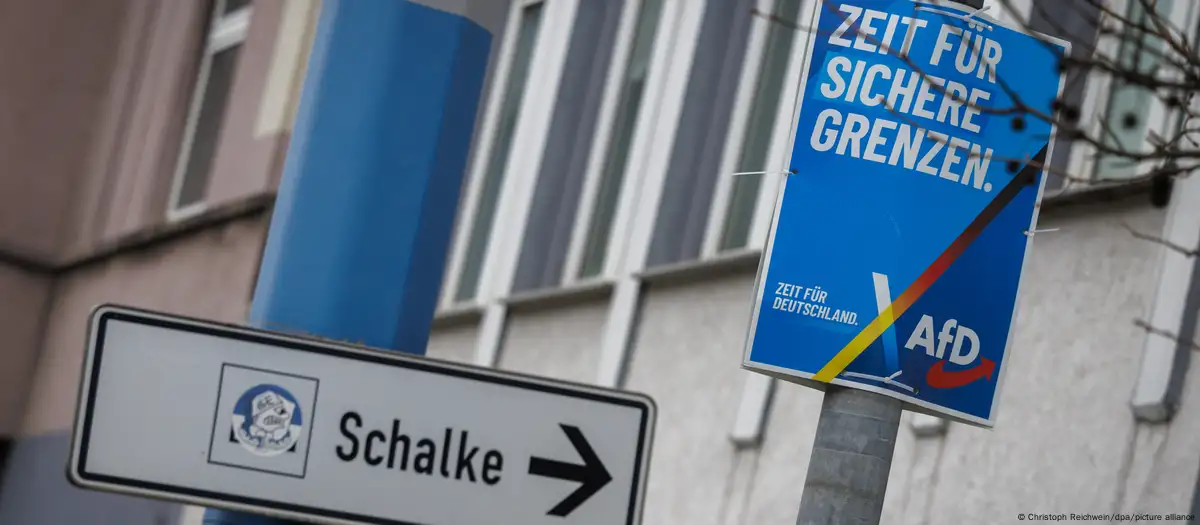
Western Germany: AfD set for success in local elections

Translation: Time for secure borders

With a roaring noise, the yellow excavator razes the last remains of another derelict property in the Bismarck district of Gelsenkirchen to the ground. An entire street with seven houses is being flattened to make way for new houses and a kindergarten.

The dilapidated properties and piles of rubbish in the street were not only a huge nuisance for local residents, but also a big campaign issue for the far-right populist Alternative for Germany (AfD)which linked it to labor migration from Southeast Europe.

Share

Asylum Ruling Appeals Hit New Record in Germany as Syrians Refuse to Go Home

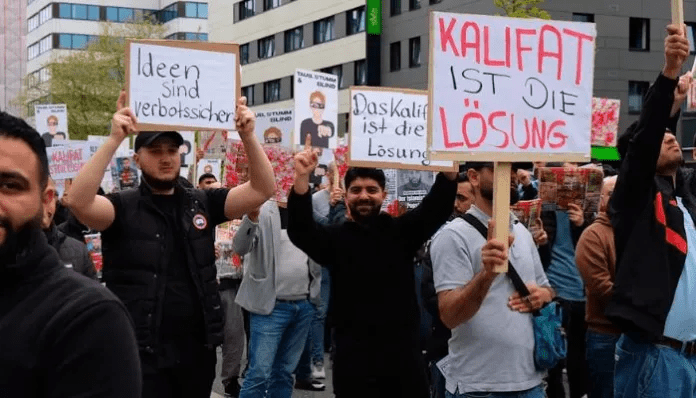
Germany: Well integrated Muslims demand Caliphate

Germany is experiencing a new migration conundrum. While judges are overwhelmed by tens of thousands of new appeals against asylum decisions, only a handful of Syrians—fewer than 2,000 out of nearly one million living in the country—have requested official assistance to return to their homeland, despite the fall of Bashar al-Assad having been celebrated as the condition that would make their return possible.

The first half of 2025 brought a record number, 76,646 lawsuits by migrants initiated before administrative courts, more than in all of 2023 (71,885) and three-quarters of the 2024 level. Densely populated states such as North Rhine-Westphalia (13,304), Bavaria (11,412), and Lower Saxony (over 11,000) account for much of this surge.

Share

Essen Stabbing Highlights Knife Problem in Germany

Police in the western German city of Essen took a suspect into custody on Friday, September 5th, after a teacher was stabbed at a vocational college. Authorities confirmed they no longer considered the situation to be dangerous.

The attack took place at the school earlier in the day. The victim, a female educator, was rushed to hospital and underwent emergency surgery. No further details about her condition have been released.

Share

The German parties’ pact to silence criticism of immigration

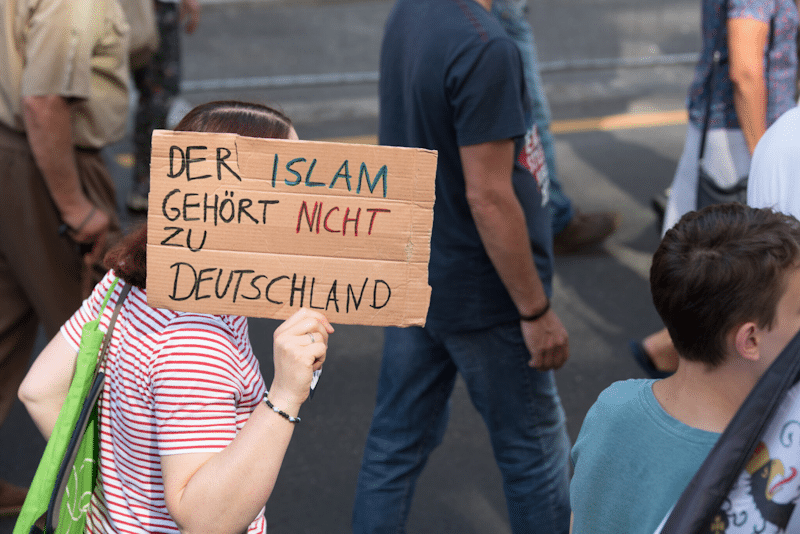
Islam does not belong in Germany

Every mainstream party running in Cologne’s local elections this month has agreed not to criticise immigration. Those bound by the so-called fairness agreement say they will not depict asylum seekers or migrants in a ‘negative’ light. Candidates are also warned not to ‘exploit’ migration as an electoral issue.

Share

The Crumbling of Cologne’s Multicultural Consensus

Last week, news of a round-table agreement banning criticism of immigration in Cologne made headlines—not least because it caught the attention of Elon Musk. Seven parties, from the center-right Christian Democrats (CDU) to the SPD, Greens, and Left Party, had signed the so-called Fairness Agreement, pledging not to criticize asylum seekers or migrants during election campaigns. The agreement has existed since 2017, but now, ahead of the municipal elections on September 14th, it has finally cracked.

Share

Germany’s draft revival prompts surge in conscientious objectors

When the recruiting sergeants came to mobilise Odysseus for the siege of Troy, the guileful king of Ithaca feigned madness, driving his plough back and forth across a beach and seeding it with grains of salt.

In decades gone by, Germany’s draft dodgers and conscientious objectors resorted to an array of similarly inventive ruses, from faking chronic illness to devising long autobiographical texts on the roots of their pacifism.

Now, as the government prepares to bring back a small-scale form of national service, the old boxes of tricks are being dusted off.

Share

‘Western democracy at risk without asylum reform’

The “existence of western democracies” is in peril without fundamental reforms to the European asylum system, one of Germany’s most eminent legal figures has warned.

Hans-Jürgen Papier was previously the most senior judge in the country, which became a European standard bearer for liberal immigration policy. Papier said the current rules had opened the floodgates to “uncontrolled and unconditional immigration” and needed to be radically revised before the public lost faith in conventional politics.


Unfortunately people like Hans are more afraid of losing access to the trough than they are of mass immigration from incompatible cultures.

The only thing that scares them more is the AfD.

Share

AfD: Appointed for Death?

Six candidates of hated party die just before local elections In German state. Coincidence?

What is the likelihood that four candidates and two reserve candidates of the same political party, in the same region, would drop dead suddenly, within 13 days of each other—and just before local elections? It happened in North Rhine-Westphalia to Alternative for Germany (AfD) candidates on the September 14 ballot.

The four candidates were Ralph Lange, 66; Wolfgang Klinger, 71; Stefan Berendes, 59; and Wolfgang Seitz, also 59. All were running for local offices in the northwest German state, where voters will go to the polls in less than two weeks. German election officials have invalidated previous mail ballots due to the deaths.

Share

Wir Schaffen Das, Or Not?

Ten years ago yesterday, then German chancellor Angela Merkel said what would become her defining catchphrase: “Wir schaffen das.” In English, “we can do it.” She was, of course, referring to the open-borders policy she was about to foist upon Germany and its people.

The invitation was only supposed to be for Syrians, who were fleeing from their country’s civil war. Shortly before Merkel’s famous speech, an internal communication, Instruction 93605/Syria/2015, had directed German authorities to allow entry to anyone claiming to be from Syria, even without documentation. The official Twitter account for the Federal Office for Migration made a post, intended primarily to inform journalists, that “regulations for Syrian citizens are not currently, for the most part, being implemented by us.” The message quickly went far beyond the intended audience, and spread like wildfire among the refugee camps of Turkey, Lebanon, and Jordan. It was spread on Facebook groups and passed around in group chats, encouraging migrants of all nationalities—certainly not just Syrians—to make the journey to Germany. 

Share

Cologne immigration pact opens door for AfD

In Cologne, a bizarre conspiracy of silence has settled. Only it’s not happening behind closed doors. All of the political parties involved in upcoming local elections, except the anti-immigration AfD, have openly agreed to avoid negative commentary on immigration during their campaigns.

Everyone, from the centre-right Christian Democratic Union (CDU) to the far-Left Die Linke, has signed a “Fairness Agreement”, pledging not to talk about migrants in connection with “negative social developments such as unemployment or threats to domestic security”. This is likely to backfire spectacularly.

Share

Mohammed Tops List of Welfare Recipients’ Names in Germany

Germany’s welfare statistics have reignited the debate over migration and integration after new figures revealed that ‘Mohammed’ and its many spelling variants have become the most common first name among recipients of Bürgergeld, the country’s basic income support.

The revelation emerged after a follow-up parliamentary enquiry by AfD MP René Springer, who demanded clarification of earlier figures published by the federal government.

Share

Migrants in Germany Plan to Stay For Good, Study Reveals

Almost all asylum seekers who came to Germany during the peak years 2013–2019 want to remain permanently and acquire citizenship, according to new research by the German Institute for Economic Research (DIW Berlin).

The findings confirm what liberals in Europe have been denying for a decade: that for many migrants, asylum has functioned less as temporary protection and more as a pathway to long-term settlement.

Share

German Chancellor Admits That Welfare State Is Running Out of Other People’s Money

The biggest, boldest lie of every welfare state is that the goods and services it is providing to its citizens are “free.” Those of us with brain cells and an aversion to lying know that this is not only untrue, but also impossible. Politicians are fond of throwing taxpayer dollars around like drunk Kennedy cousins on summer break in Monte Carlo in order to make voters love them.

h/t DS

Share