What’s the future of electric vehicles when even Elon Musk wants out?

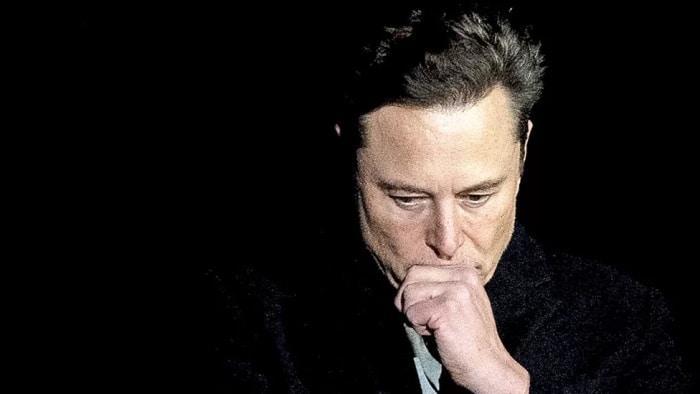
Elon Musk’s pivot away from the electric vehicles that made him rich and famous raises a thorny question: Whither the EV market when its Atlas shrugs?

On Tesla Inc.’s quarterly earnings call last week, Mr. Musk said the company would stop production of its model S and X cars. Instead of retooling affected plants to build new models, the factory space will be converted to build humanoid robots.

Share

Government expected to announce it’s scrapping EV mandate in favour of new fuel efficiency system: source

The federal government is expected to announce its national automotive strategy on Thursday that includes scrapping Canada’s electric vehicle mandate and replacing it with a new system of fuel efficiency standards and credits, CBC News has learned.

Two sources say Ottawa is also expected to bring back popular electric vehicle incentives for consumers purchasing electric vehicles.

Money will also be announced to build more charging stations for EVs across Canada to help consumers, a source said.

Share

Ottawa considers reviving EV incentives just in time for ChiCom Spycars arrival!

The federal government is considering bringing back consumer incentives for electric vehicles and plug-in hybrids as it finalizes its national automotive strategy, CBC News has learned.

Sources with knowledge of the plans, whom CBC News has agreed not to name because they weren’t authorized to speak publicly, say that a decision on the incentives — and whether they would be similar to a suspended rebate program — has not yet been made.

Canada’s incentive program for zero-emissions vehicles, known as iZEV, was suspended more than a year ago after it ran out of money due to high demand.

Share

How Chinese EVs Have Impacted Global Markets—and What It Means for Canada as It Opens Its Market

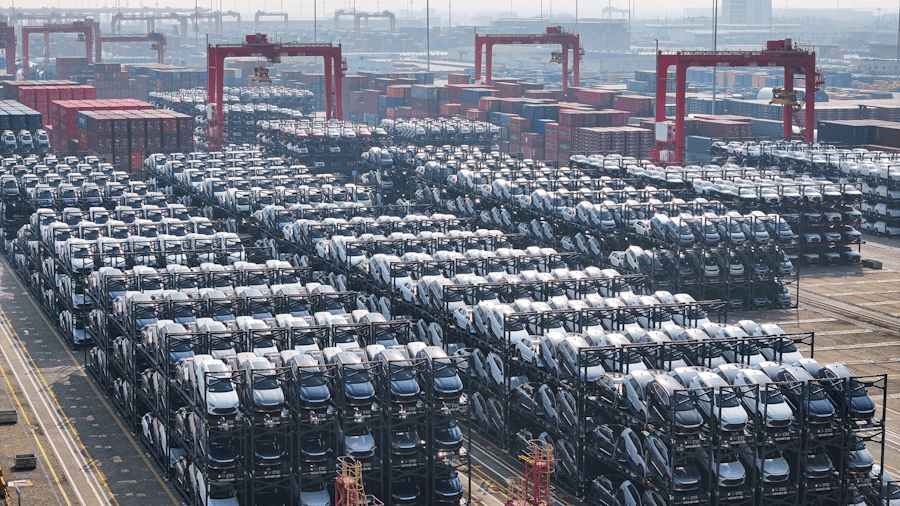
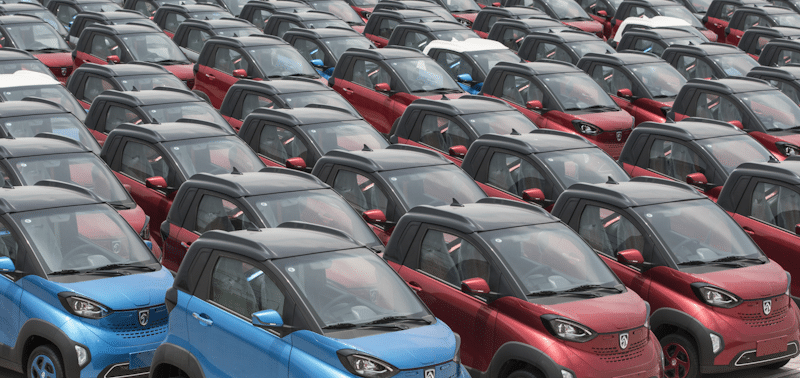
Canada is set to open its automotive market to Chinese electric vehicles, as researchers and policymakers warn that a flood of Chinese products in markets such as Europe has come at the expense of domestic producers.

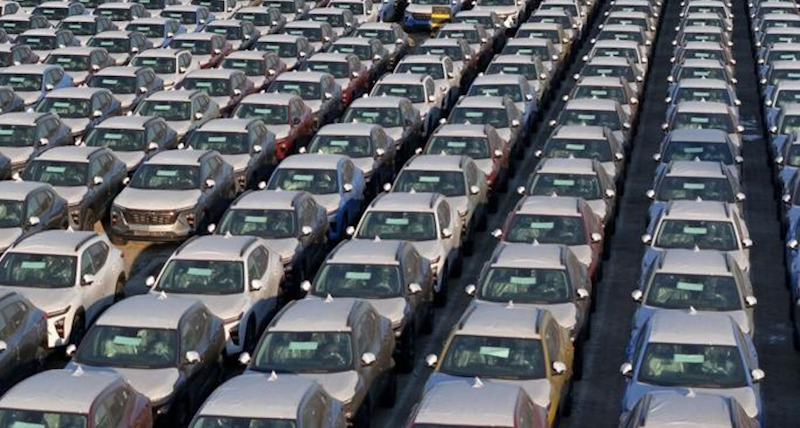
Earlier this month, Prime Minister Mark Carney struck a deal with China to allow 49,000 Chinese electric vehicles into Canada annually at a 6.1 percent tariff, replacing the 100 percent tariff imposed in 2024 amid concerns over Beijing’s non-market practices.

Share

Canada, California, and Chinese Electric Cars

Driving down an uncertain road.

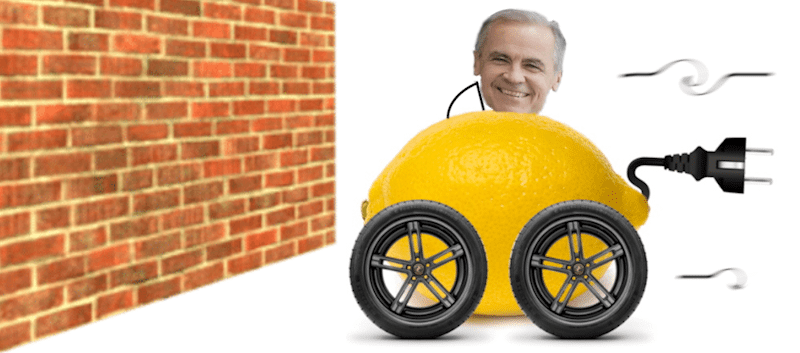
On his recent trip to Beijing, Canadian Prime Minister Mark Carney praised the leadership of Xi Jinping and announced plans to bring 49,000 Chinese electric cars into Canada. In several ways that escaped notice, Carney was following in the footsteps of Prime Minister Pierre Trudeau.

As David Frum notes, Trudeau “traveled to Josef Stalin’s Soviet Union to participate in regime-sponsored propaganda activities,” a reference to the Moscow Economic Conference in April, 1952. Stalin’s USSR came billed as a workers’ state based on the “scientific” principles of Marxism-Leninism, as opposed to the “bourgeois” nations with their market economies. The regime’s admirers assumed that the Communist regime’s products would be superior, but it didn’t turn out that way.

Share

While Canada Cozies Up to China, Mexico Imposes Harsh Tariffs Due to Chinese Auto Dumping

In an attempt to figuratively poke Donald Trump and the United States in the eye, Canadian Prime Minister Mark Carney just announced that Canada is cozying up to China by slashing tariffs on imported Chinese EVs. The new tariff rate will be just 6.1 percent, opening up his country to 49,000 Chinese vehicles initially, and increasing to 70,000 in the coming years. China “reciprocated” by dropping the tariff on Canadian canola oil to 15 percent. Carney’s determination to strike a deal with China clearly put the Chinese in a very favorable negotiating position. It would behoove Mr. Carney to have a talk with Mexican President Claudia Sheinbaum about the perils of economic surrender to China, especially as it relates to Chinese auto imports.

Share

Canada’s auto sector is in serious trouble. Are Chinese EVs the solution?

When Trevor Melanson arrived in Reykjavik, Iceland, last July to pick up his rental car, he was “pleasantly surprised” to be handed the keys to an electric vehicle that most North Americans could only dream of driving — a Chinese BYD.

Melanson, from Vancouver, B.C., was curious to try out a car he had heard so much about — in this case a silver hatchback — but had never seen. When he got behind the wheel of this “efficient car that checks all the boxes,” he realized it was a vehicle that many Canadians would like.


Carney’s propaganda rag the Toronto Star published this article on the same day Trump threatened 100% tariffs over Ottawa’s merger with China’s godless communists and a week after running a piece saying China was unlikely to invest in Canadian EV manufacturing plants.

Share

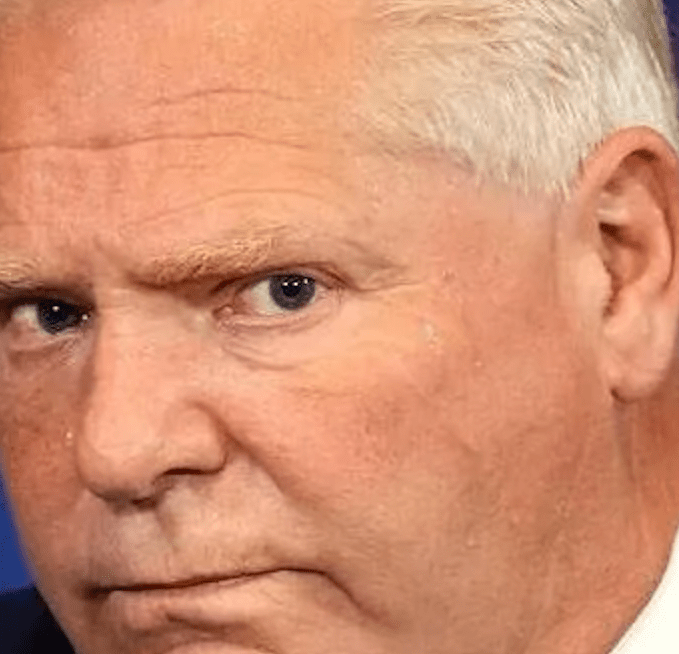
Doug Ford calls for Chinese EV boycott in Canada after Carney deal

Ontario Premier Doug Ford is calling on Canadians to boycott Chinese-made electric vehicles when they are allowed back into the country under a deal recently struck by Prime Minister Mark Carney.

Ford has been critical of the deal — and the fact Carney did not speak to him about it in advance — saying it will harm Ontario’s auto sector.

Carney and Chinese President Xi Jinping agreed while the prime minister was in China that Canada will all but drop its 100 per cent tariffs on Chinese EVs and allow an annual import quota of up to 49,000 of the vehicles in exchange for China reducing its canola tariffs.

Share

‘Undeniable’: The Many Security Risks of Chinese EVs as Canada Opens Its Markets

China crappy electric cars, EV

As Canada moves to slash tariffs on Chinese electric vehicles, a growing number of reports and researchers are warning about security risks and the potential for espionage by the Chinese Communist Party through these vehicles.

When asked for evidence to support his concerns about the security risks posed by Chinese electric vehicles (EVs), Ontario Premier Doug Ford pointed to the fact that everyone who accompanied Prime Minister Mark Carney to China, including Canadian reporters, was instructed to use burner phones for security reasons.

Share

Europe is folding in the face of China’s EV dominance

The EU is considering widening its tariffs on Chinese electric vehicles to include hybrid vehicles, in an attempt to finally get an upper hand in the EV market. The move would extend the bloc’s existing anti-subsidy measures beyond battery-only models, broadening the range of cars which receive tariffs. Yet, the underlying truth is that tariffs have not worked so far: Chinese-made cars have even gained ground in Europe, with a record high — 12.8% — of the continent’s EV market share.


All Europe folds but Carney will bend the CCP’s will to his own designs!

Share

Canada wants to be 1st in North America to build EV with Chinese knowledge: senior official

Canada wants to look at joint ventures and investments with Chinese companies within the next three years to build a Canadian electric vehicle with Chinese knowledge, according to a senior Canadian official.

The official, who spoke on the condition they not be named, said the goal is for Canada to become the first country in North America to build this type of EV.

It’s a fundamental error, the official said, to think that U.S. President Donald Trump will not allow Chinese electric vehicles into the United States.


Will that include OEM surveillance tech?

Share

Carney Broadcasting Corporation Salivates Over ChiCom EV’s


Chinese EVs are coming to Canada. How soon will they be here? How much will they cost?

Buckle up! The electric vehicle market in this country is about to take a sharp turn.

Prime Minister Mark Carney is reopening Canada to Chinese-made EVs, lowering a 100 per cent tariff on imports, imposed in 2024, back to six per cent.

There’s demand for more affordable and climate-conscious EVs and, for an average customer, having Chinese EVs in the market means “more choice” and “greater tech,” said Max Morris, sales manager at Shift Electric Vehicles in Burlington, Ont.


How much does slave labour contribute to the manufacture of China’s EV’s?

The manufacture of electric vehicles (EVs) in China involves complex global supply chains, and multiple investigations have documented links to forced labor, particularly involving Uyghur and other ethnic minorities in the Xinjiang Uyghur Autonomous Region (XUAR). While quantifying the exact “contribution” of forced labor is challenging due to opaque supply chains and lack of comprehensive data, reports from organizations like Human Rights Watch, Sheffield Hallam University, and others provide estimates based on production volumes, company exposures, and labor transfer programs. These indicate that forced labor risks permeate significant portions of key materials and components, especially aluminum, batteries, and related metals.

Oh Oh!

Share

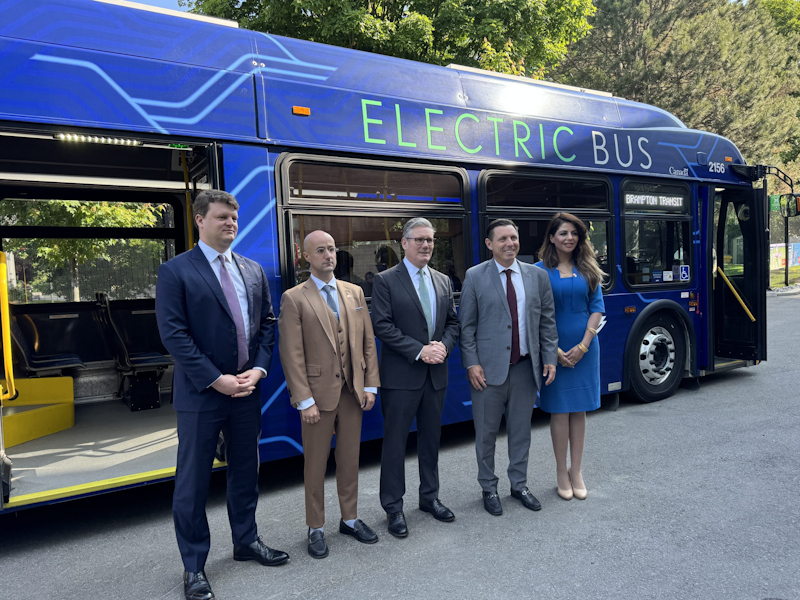
REDACTED: City of Brampton’s $4-billion electric bus deal leaves taxpayers completely in the dark

$245 for 1,799 pages: 1,622 completely redacted—words covered by large blocks of black to hide them from the public.

The Pointer is trying to uncover the details behind a $4-billion deal, the largest of its kind in the municipality’s history, between the City of Brampton and a foreign company that not many in Ontario have ever heard of.

On June 15, Brampton Mayor Patrick Brown stood alongside U.K. Prime Minister Keir Starmer in Ottawa, announcing a monumental partnership with U.K.-based electric-fleet management and battery storage company, Zenobe, to support 1,000 new vehicles on a newly designed electrified platform, for more than 40 million annual passenger trips.


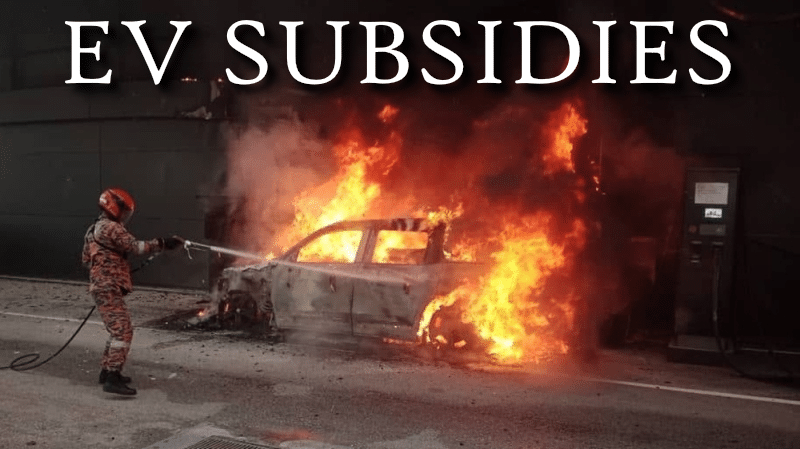
Can’t wait for these babies to start spontaneously combusting.

Share

What comes after EVs?

Why are EV mandates and incentives falling by the wayside?

Lost amid all the recent news of governments backing away from once-sacrosanct demands that all cars be battery-electric is precisely why they are backing away. After all, the (still-reigning) Liberals are the very architects of Canada’s EV mandate and Quebec has long been the strongest proponent of a total ban of internal combustion in our federation, so why have both cancelled, paused and/or reduced their mandates and subsidies? More importantly, because both their decisions are so politically charged, what did they see amongst their constituents — that should be read “voters” — that told them it was time to ditch EV mandates and subsidies?

Share

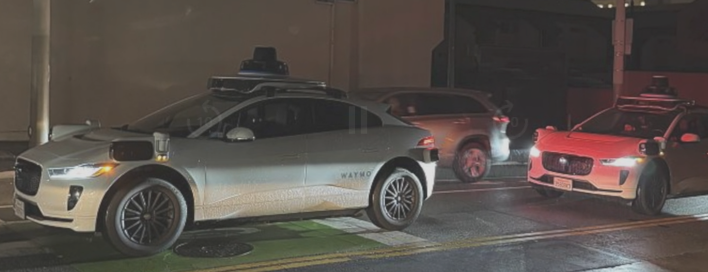
Waymo robotaxis stop in the streets during San Francisco power outage

A massive power outage in San Francisco over the weekend led Waymo self-driving taxis to stop working around the city.

“Significant and extensive” damage from a fire in a substation caused the Saturday afternoon outage that left more than 100,000 customers without power, utility provider PG&E said in a statement.

Videos posted to social media showed Waymo robotaxis halted in the middle of city streets and intersections with their hazard lights flashing, as traffic jams grew and drivers zigzagged around the stopped cars.

Share