Why the $13.2-billion VW subsidy is a $13.2-billion mistake

“A Canadian mining project takes between 12 to 15 years from exploration to production. Even Natural Resources Minister Jonathan Wilkinson realizes this timeline needs to be shortened by reducing regulatory burden.A study by the Canada West Foundation found that, of 24 projects undergoing the federal government’s impact assessment process since 2019, not one has been completed. None has even moved past phase twoof the four–phase process.”

Share

The electric vehicle dream has turned into a nightmare

From rocketing electricity prices to absent chargers by way of bridge-rattling weight, the problems are mounting

The rollout of electric cars isn’t quite going to plan, is it? By the end of the decade it will be illegal to buy a new petrol car, but that doesn’t mean we’ve thought through the consequences.

There were always obvious problems with the technology: the electricity has to come from somewhere, and Britain isn’t installing enough chargers to meet government targets. And that’s before you take the rocketing price of electricity into account, which means that thousands of the handy roadside chargers where motorists could charge up for nothing have been pulled. There are nearly 40 per cent fewer than a year ago.

Share

I’m glad you’ve bought an electric vehicle. But your conscience isn’t clean

First, you’ve got to drive a long way before you overcome your EV’s embedded carbon debt. And then there’s the trouble with the minerals in its battery

So you’ve finally taken the plunge and bought an electric vehicle (EV)? Me too. You’re basking in the warm glow that comes from doing one’s bit to save the planet, right? And now you know that smug feeling when you are stuck in a motorway tailback behind a hideous diesel SUV that’s pumping out particulates and noxious gases, but you’re sitting there in peace and quiet and emitting none of the above. And when the traffic finally starts to move again you notice that the fast lane is clear and you want to get ahead of that dratted SUV. So you put your foot down and – whoosh! – you get that pressure in the small of your back that only owners of Porsche 911s used to get. Life’s good, n’est-ce pas?


I’m glad to see Ecosnot publications like the Guardian and CBC finally begining to reveal the truth about the Toxic-EV Scam.

But that won’t derail them from their goal of society’s total subjugation to their totalitarian ideology.

In the end they won’t allow you to drive anything.

Share

Auto Worker’s Union Withholds Support for Biden’s Reelection Campaign Over His EV Policies

United Auto Workers (UAW) is delaying its endorsement of President Joe Biden’s reelection campaign, according to a May 2 union memo.

The Detroit-based union is holding back out of concern for recent Biden administration policies that encourage the transition to electric vehicles (EVs).

The UAW is in for a rude awakening I suspect.

Share

Canada has nothing to fear from U.S. protectionist rhetoric, envoy to Ottawa insists

… And he cited the specific example of Li-Cycle, a Toronto-based lithium battery recycling operation that’s building a new plant in Rochester, N.Y., with more than US$370 million worth of help from the U.S. Department of Energy, thanks to the IRA.

“They don’t feel like they’re being hurt by Buy American,” said Cohen, who said he met Li-Cycle executives at a recent conference in D.C.

“Buy American didn’t stop them from getting a $370-million grant from the United States government. And they’re not discouraged at all in applying for additional funding to support their lithium recycling business.”

But the fact they are building the plant in the U.S. and not in Canada speaks volumes, said Scotty Greenwood, CEO of the Canadian American Business Council.

“Competition makes us each better and our ultimate competitors and adversaries are in other places in the world — that’s true,” Greenwood said.

“But to say that there’s zero protectionism, and then to give an example of U.S. government money going to a Canadian firm to open a facility in the U.S., it’s precisely the point — the incentives work.”

Share

A heavy dose of reality for electric-truck mandates

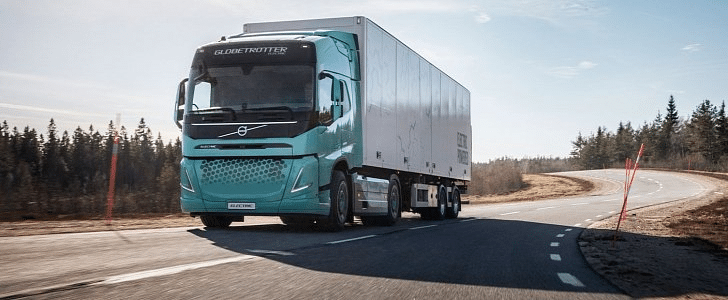
… After one trucking company tried to electrify just 30 trucks at a terminal in Joliet, Illinois, local officials shut those plans down, saying they would draw more electricity than is needed to power the entire city.

A California company tried to electrify 12 forklifts. Not trucks, but forklifts. Local power utilities told them that’s not possible.

And it gets worse…

Via Lorrie Goldstein

Share

Electric cars losing their value twice as fast as petrol alternatives

Electric cars are losing their value at twice the rate of petrol vehicles, in the case of some models, meaning drivers have lost thousands of pounds to depreciating prices.

Electric vehicles (EVs) lost roughly half their value between 2020 and 2023, while petrol car prices fell by 37pc in the same period, according to used car finance specialists Choose My Car.

Its study found electric cars lost £15,000 of their value on average over the three-year period, compared with £9,000 for petrol vehicles. In some cases the gap was far wider.

Share

Trudeau’s massive spending on Volkswagens and other things won’t spur economic growth

The Trudeau government recently announced it will spend an estimated $13 billion on subsidies for Volkswagen’s Ontario battery plant and offer $700 million to help with construction, in addition to another $500 million from the Ontario government. Federal Industry Minister François-Philippe Champagne argues that the economic value from this corporate welfare — funded by taxpayer money — will be worth it. But Trudeau’s spending spree hasn’t spurred economic growth yet, so why should we expect it to now?

Share

Will the EV transition cost more auto jobs than it creates?

As the North American auto industry’s transition toward electric vehicles shifts into higher gear, amid a subsidy war whose long-term consequences remain unknown, there are big questions about whether the move to EVs will eliminate more jobs than it creates.

There are also questions about whether legacy automakers that have relied on boosting sales of gasoline-powered SUVs and pick-ups to generate record profits in recent years can successfully navigate the biggest disruption they have faced yet.


EV’s like wind and solar are not a practical solution, ICE vehicles should remain dominant assuming the lunatics currently at the wheel in Ottawa are ousted.

The choice of either heating your home or driving your EV is likely to be on your future personal agenda.

Assuming you can afford a home or a car and that’s doubtful given the grandiose highschool theatrics of the con artists guiding our nation.

These Toronto folks aren’t lining up to purchase one of Justin’s “Magical EV’s”

Share

Ontario couple says new electric vehicle’s charge capacity ‘nowhere near’ what was advertised … Woodland elves blamed for discrepancy by manufacturer

An Ontario couple says they’ve been hit with unexpected costs after their new electric vehicle’s ability to sustain a charge is ‘nowhere near’ what was advertised.

“My wife took a job up in Barrie, Ont., and she has to commute 100 kilometers each way and we were paying over $1,000 in gas,” Jack Fleming, of Etobicoke, Ont., told CTV News Toronto Monday.

Fleming said before buying an all-electric Volvo C40 Recharge, he checked the vehicle’s range, which was advertised as 364 km on a full charge.


This is a very common introduction to EV’s for unfortunate buyers. Volvo replies with the standard set of excuses blaming a host of factors but never the technology for clients being shortchanged on advertised performance, the weather, driver habits, woodland elves etc.

Share

EVs Fall Short of EPA Estimates by a Much Larger Margin Than Gas Cars in Our Real-World Highway Testing

My bet says Justin’s roll of the EV dice turns up snake eyes.

A new paper published by SAE International uses Car and Driver‘s real-world highway test data to show that electric vehicles underperform on real-world efficiency and range relative to the EPA figures by a much greater margin than internal-combustion vehicles. While the latter typically meet or exceed the EPA-estimated highway fuel economy numbers, EVs tend to fall considerably short of the range number on the window sticker. The paper, written by Car and Driver’s testing director, Dave VanderWerp, and Gregory Pannone, was presented this week at SAE International’s annual WCX conference. It points to a need for revised testing and labeling standards for EVs moving forward.

h/t Mauser

Share