Have we reached ‘peak meat’? Asks The Guardian.

Meat, guns and liquor

Ingrid de Sain is one of thousands of dairy farmers in the Netherlands who says she sometimes lies awake at night. Since a court ruling in 2019 which found the Dutch were breaking European environmental law, her farm of 100 cows in north Holland has been illegal.

Like the other 2,500-plus farmers whose environmental permission was suddenly invalid, she wants a future where she can earn a living and farm legally again.

The Netherlands is first to face questions scientists believe will soon come to all intensively farmed areas: how can we balance the needs of the environment with the way we farm and grow? Have we reached “peak meat”, like peak oil: so much livestock, so much local pollution, that the only sustainable future is in reduction? They’re questions the US, the world’s largest producer of beef, will also soon have to answer.


Share

Sounds like the most awful neighborhood in Toronto …

Agents of change

A small neighbourhood in Toronto has built a program to help residents reduce their household emissions. Could their grassroots approach become a template for the rest of the country?

On a snow-flecked Sunday afternoon in mid-December, Paul Dowsett gathered a group of neighbours in his backyard for a toast.

Although the event featured mulled wine and a crackling bonfire, this was no holiday party. Rather, it was an event to celebrate homeowners in the Pocket — an east Toronto neighbourhood — who have committed to an energy retrofit to reduce their carbon footprint.

A Pocket resident since 1997, Dowsett is an architect by trade and a local sage on matters of sustainability. Dressed in a striking green lumber jacket, the 61-year-old extolled his neighbours’ climate consciousness, and after a breezy explainer on the environmental harms of natural gas, related some breaking news.

Share

Climate Activism Isn’t About the Planet. It’s About the Boredom of the Bourgeoisie

The downfall of capitalism will not come from the uprising of an impoverished working class but from the sabotage of a bored upper class. This was the view of the Austrian economist Joseph Schumpeter in 1942. Schumpeter believed that at some point in the future, an educated elite would have nothing left to struggle for and will instead start to struggle against the very system that they themselves live in.

Nothing makes me think Schumpeter was right like the contemporary climate movement and its acolytes. The Green movement is not a reflection of planetary crisis as so many in media and culture like to depict it, but rather, a crisis of meaning for the affluent.

Share

What climate alarmism about polar bears gets wrong

Canadian government scientists created headline news worldwide just before Christmas when they told the media Western Hudson Bay polar bear numbers appear to have declined by 27 per cent between 2017 and 2021, according to a survey report that still has not been made public. This is called “science by press release,” a practice that is actually anti-scientific, since real science proceeds by publication, criticism, debate and either replication or refutation.

Share

Lützerath: Protesters, police clash near German coal mine

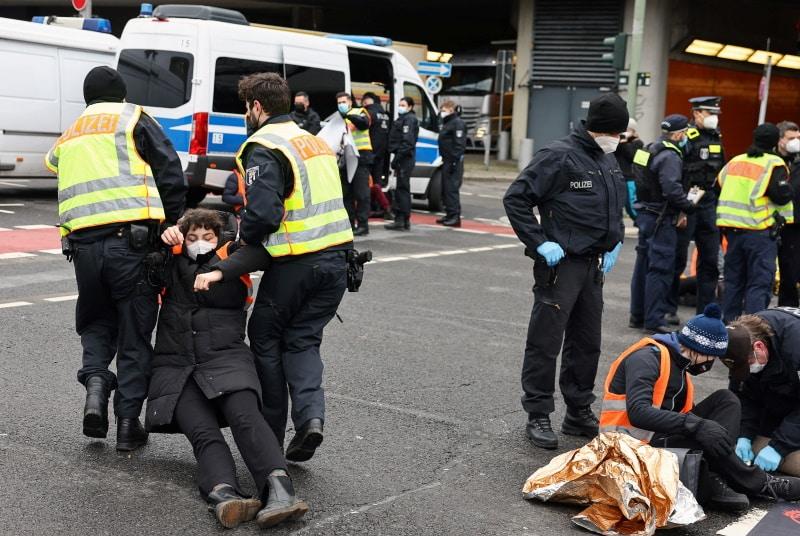
German police clashed with climate activists at the village of Lützerath on Saturday, as the standoff between authorities and activists dragged on for a fourth day.

Police had been working to clear activists from the site to make way for the demolition of the village.

Lisa Neubauer of the Fridays for Future organization told the German Press Agency that police had used pepper spray on activists in isolated occasions.

German police also sent a water cannon to disperse protesters at the site.

Share

Environmentalism will be the ruin of Germany

The green elites are sabotaging Europe’s most powerful economy.

Good news at last? Europe has managed to replenish its gas reserves. In the first week of the new year, all over Europe, daily gas-storage rates were higher than they were at the same time in 2022. In Austria, for example, the gas-storage rate was over 80 per cent, compared with 33 per cent in 2022. In Germany, it was even higher: 91 per cent compared with 54 per cent last year. This comes as a relief. Especially given that just a few months ago, there was a very real possibility of crippling gas shortages.


Also … The road to eco-serfdom

Share

Lützerath eviction: German police drag climate protesters from coal village

Police in riot gear have started to drag climate activists away from an abandoned village in western Germany they have occupied for months.

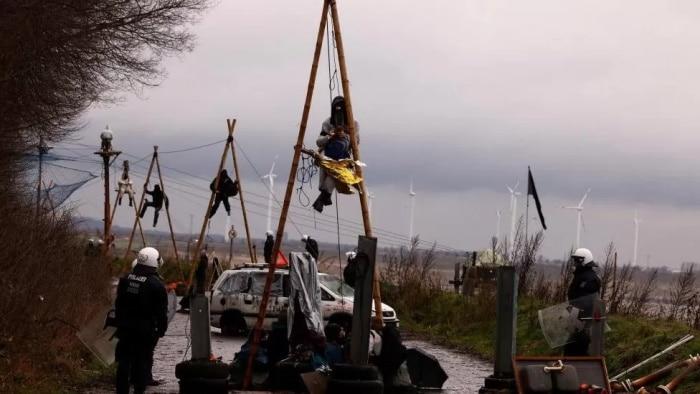
Protesters barricaded themselves in to prevent Lützerath from being swallowed up by the nearby Garzweiler open coal mine.

Some activists threw stones and pyrotechnics at police officers as they began to clear the camp.

Protesters climbed into treehouses to make the eviction more difficult.

Translation … The “peaceful activists” & the “evil police”. If it weren’t for the stones.

Share

Feds Proposing to Ban Natural Gas Stoves for Cooking

The timing here is genuinely ridiculous. It’s as if the federal government, specifically the U.S. Consumer Product Safety Commission, led by… Richard Trumka Jr (yes, that guy’s son)… doesn’t think or care that we can see the real issue is to change energy uses.

Now that Russia has been isolated from natural gas sales, the European Union needs the supply of all other natural gas markets in order to keep itself from freezing to death. Simultaneously, natural gas as an energy resource is now bad, terrible like oil and coal, amid the climate change cult.

Share

Germany: Hateful idiots who want the elderly and children to freeze in the dark make plans to prevent coal mine

Germany: Activists make plans to save village from miners

Activists seeking to stop the expansion of a coal mine in west Germany were making plans on Sunday on how best to save the village of Lützerath. The village is scheduled for demolition to allow lignite to be extracted from beneath it.

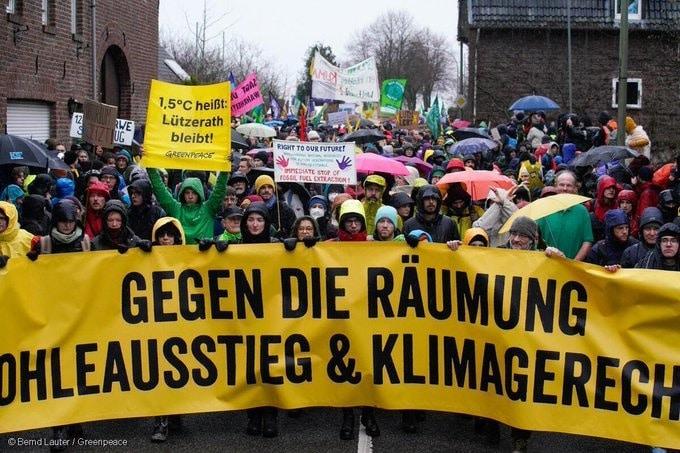
The village, 40 kilometers (25 miles) west of Cologne, has become a center for climate protest in Germany, with activists saying the planned clearance of the village for mining goes against the country’s pledges under the Paris Agreement.

Police from the western city of Aachen estimated that up to 1,500 activists are currently in the village.

Share

Lützerath: How Germany’s energy crisis reignited coal

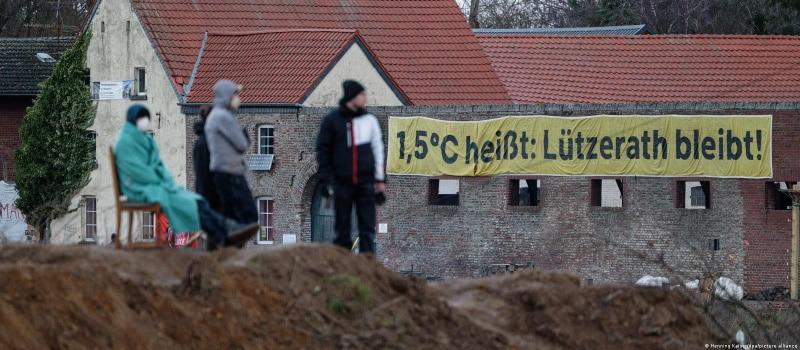
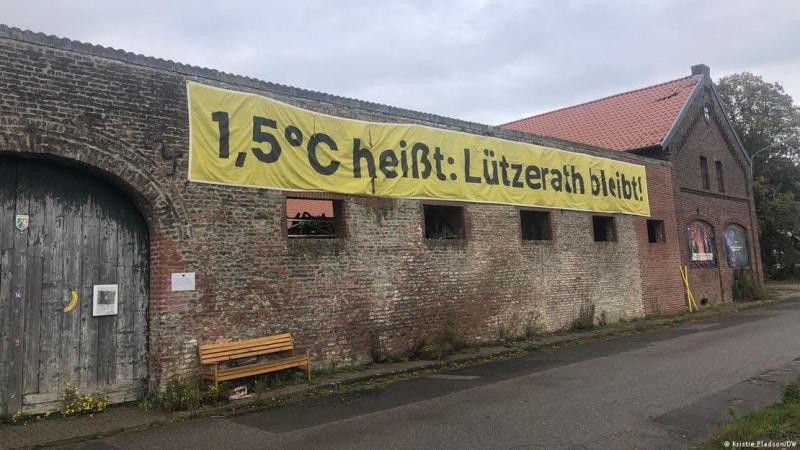
1.5 degrees means Lützerath stays

Germany had been winding down its brown coal production. Then an energy crisis hit. Now, thousands of people have promised to resist January plans to demolish a village and dig up the coal beneath it.

“If this village goes, then Germany’s 1.5-degrees commitment to the Paris Agreement goes, as well.”

It’s an October afternoon in a rural corner of western Germany, the village of Lützerath in the state of North Rhine-Westphalia (NRW). The morning rain clouds have moved out, and the sun is glistening off the damp grass and leaves in the small meadow where we’re walking.

Share

Canada’s first new nuclear power reactor in 30 years has embarked on a crucial review. Can it pass quickly?

On the shores of Lake Ontario, about 70 kilometres east of Toronto, something is happening that hasn’t happened in Canada in well over a generation: Workers are breaking ground for a new nuclear reactor.

Ontario Power Generation plans to construct a GE-Hitachi BWRX-300 at its Darlington Nuclear Generating Station in Clarington. To do that it needs permission from the Canadian Nuclear Safety Commission (CNSC).

Does it matter? Getting beyond the bureaucracy is one thing, the article does not mention the to be expected reaction from the Eco-Luddites.

Share

The New Blasphemies

For there to be blasphemy there needs to be religion and, in this case, I am referring to the religions of identity politics and climate-change activism. These are not merely religions, however; they are the religions of fanatics.

“But we don’t have blasphemy laws,” I hear people say when someone protests about some perceived slur on their God or Prophet. Indeed, we do not. Essentially moribund, they were abolished in England in 2008 and in Scotland in 2021. If we did, our prisons would be overflowing with the people who blaspheme against Christianity. Appropriately, British blasphemy laws only ever protected Christianity and, even then, only the Christianity of the established churches. However, the lack of such laws did not protect the right of the public to watch a film of which some Muslims disapproved or a teacher from having to go into hiding with his family for showing a cartoon they did not like. In France, the consequences for upsetting the Islamist mob can be more serious, and even fatal. Islamic extremists require no laws to discourage blasphemy; they simply take the law into their own bloody hands.

Share

Rex Murphy: Energy crisis the inconvenient consequence of demonizing the oil and gas industry

Joe Biden, the Wise, as history must record him, has recently brought his fabled wit’s lacerating whip to “big oil.” Thank you, Joseph.

Naturally the sage of 1600 Pennsylvania Ave. is enraged beyond simple anger that the price of oil and gas has risen staggeringly, that half of Europe is in a dictator’s energy hammerlock, and that his so-called Middle East allies are rebuking his teary-eyed pleas to increase oil production. He is, as the paradoxical idiom has it, “beside himself.”

Share

She Was Right to Laugh

Mummy’s little eco-activist gets laughed at:

Share

Eco-minded descendants of billionaire oil barons are PAYING hundreds of Eco-thugs $25,000-a-year to protest around the world

Three American oil scions have been bankrolling mobs of eco-zealots who have terrorized the world by slashing tires, blocking traffic and attacking firms.

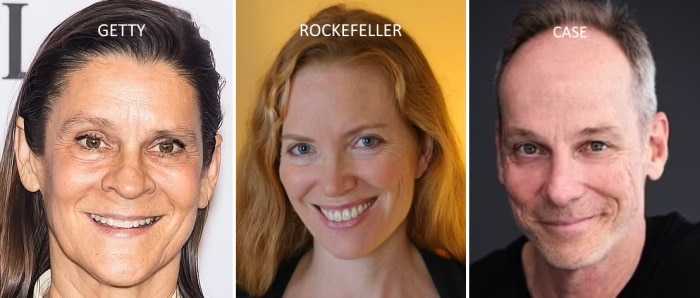
Aileen Getty, Rebecca Rockefeller Lambert and Peter Gill Case, who are heirs to their families’ huge fortunes, are paying the salaries for thugs through their non-profits in an apparent bid to offset their relatives’ legacies.

Getty, whose grandfather created Getty Oil, has so far splashed out $1million through her California-based Climate Emergency Fund.

Share