
OTTAWA — On July 23, someone reached into the controls of the drinking-water plant in Saint-Noël, a village of fewer than four hundred people in Quebec’s Bas-Saint-Laurent, and began raising the chlorine. The alarms that should have sounded had been switched off. The plant went into a protective shutdown on its own, and the water stayed clean.
Cyber War
Iranian hackers carry out unprecedented attack on UK’s power network
A UK power generator was forced to shut down for four days after an Iranian cyberattack, it has been reported.
The incident, which is reported to have taken place last month, is believed to be the first time Iranian-affiliated hackers have successfully shut down a UK facility of this kind.
Water systems are ripe for cyberattacks, experts warn after suspected Iranian hacks
In late 2022, Microsoft detected the hack of a water system in Guam that U.S. intelligence agencies in the following months determined was orchestrated by China. The idea wasn’t new. The spy agencies had long watched as Iran targeted Israeli water systems.
“That another nation state was doing it to us — that was unsettling,” recalled one former U.S. official, who, like several others interviewed for this story, spoke on the condition of anonymity because of the matter’s sensitivity.
Stockpile food in case of Russian cyber attack, No 10 to tell public
The public will be told to stock up on food and water in case of a Russian cyber attack under new plans to prepare the country for conflict.
Later this year, ministers will launch a public information campaign to advise households on how to prepare for emergencies, including creating a stockpile of food, medicines and basic survival tools.
It comes amid rising concerns of a Russian attack on a Nato country and near-constant cyber attacks on the UK’s critical national infrastructure.
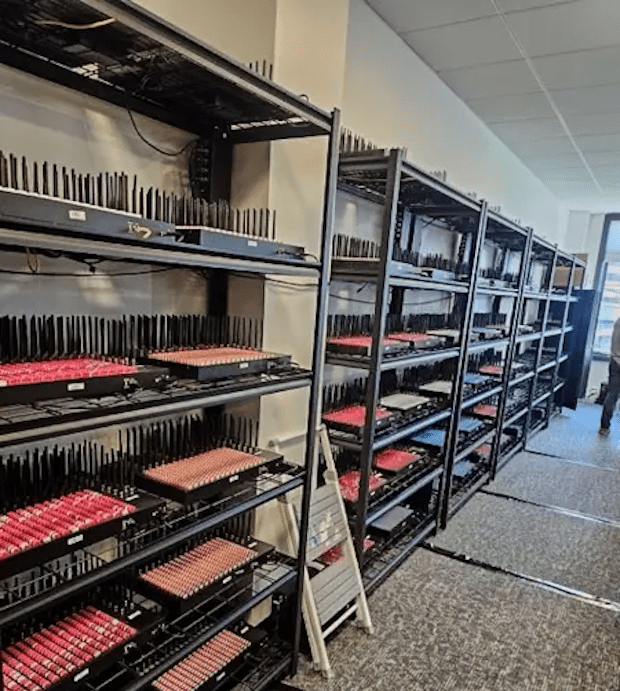
Cache of Devices Capable of Crashing Cell Network Is Found Near U.N.

The Secret Service discovered more than 100,000 SIM cards and 300 servers, which could disable cellular towers or be used to conduct surveillance.
The Secret Service found and seized an illicit network of sophisticated equipment in the New York region that was capable of shutting down the cellular network as foreign leaders prepared to gather nearby for the annual U.N. General Assembly, the agency announced on Tuesday.
Officials said the anonymous communications network, which included more than 100,000 SIM cards and 300 servers, could interfere with emergency response services and could be used to conduct encrypted communication. One official said the network was capable of sending 30 million text messages per minute, anonymously. The official said the agency had never before seen such an extensive operation.
The Secret Service dismantled a network of more than 300 SIM servers and 100,000 SIM cards in the New York-area that were capable of crippling telecom systems and carrying out anonymous telephonic attacks, disrupting the threat before world leaders arrived for the UN General… pic.twitter.com/sZKUeGqvGY
— U.S. Secret Service (@SecretService) September 23, 2025
This is being taken very seriously in U.S. intel circles. pic.twitter.com/ZR7zPoEZdh
— Lara Logan (@laralogan) September 23, 2025
More … Secret Service foils massive plot to cripple NYC cell network and threaten UN General Assembly
h/t Neocon
‘Unrestrained’ Chinese Cyberattackers May Have Stolen Data From Almost Every American

Information collected during the yearslong Salt Typhoon attack could allow Beijing’s intelligence services to track targets from the United States and dozens of other countries.
China has hacked into American power grids and companies for decades, stealing sensitive files and intellectual property such as chip designs as it seeks to gain an edge over the United States.
But a sweeping cyberattack by a group known as Salt Typhoon is China’s most ambitious yet, experts and officials have concluded after a year of investigating it. It targeted more than 80 countries and may have stolen information from nearly every American, officials said. They see it as evidence that China’s capabilities rival those of the United States and its allies.
Chinese Spies Hit More Than 80 Countries in ‘Salt Typhoon’ Breach, FBI Reveals

A Beijing-linked yearslong espionage campaign that hit U.S. telecom companies and swept up Donald Trump’s phone calls actually targeted more than 80 countries, reaching across the globe to a far greater extent than investigators initially understood.
The scope of the intrusion allowed Chinese intelligence officers to potentially surveil U.S. citizens’ private communications and track their movements around the globe, Brett Leatherman, the FBI’s top cyber official, said in an interview. The agency estimates that the intruders likely obtained more than one million call records and targeted the telephone calls and text messages of more than 100 Americans.
“This is one of the more consequential cyber espionage breaches we have seen here in the United States,” he said.
Russian hackers seized control of Norwegian dam, spy chief says

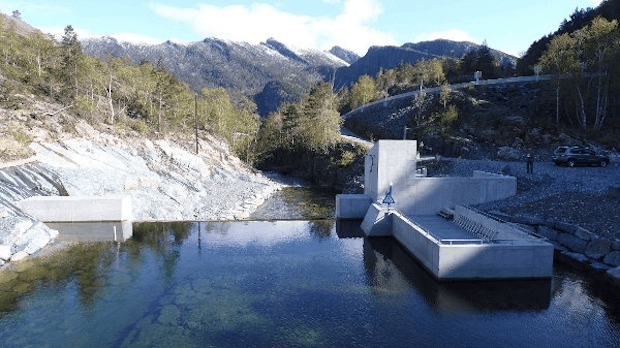
Russian hackers took control of a Norwegian dam this year, opening a floodgate and allowing water to flow unnoticed for four hours, Norway’s intelligence service has said.
The admission, by the Norwegian Police Security Service (PST), marks the first time that Oslo has formally attributed the cyber-attack in April on Bremanger, western Norway, to Moscow.
The attack on the hydropower dam, which produces electricity, released 500 litres (132 gallons) of water a second for four hours until the incident was detected and stopped.
Digital Landmines: Beijing’s Quiet Invasion

The Chinese model is disturbingly efficient.
Welcome to 2025, where China’s cyber strategy is no longer espionage. It’s pre-positioning — the digital equivalent of landmines buried deep in our networks, designed not to explode on contact, but to wait in silence until detonation serves strategic purpose.
In June 2025, the Department of Homeland Security confirmed that Chinese state-sponsored hackers, operating under the codename Salt Typhoon, had spent nine months infiltrating a U.S. state’s Army National Guard network. Not loitering. Not poking. Nesting. They extracted more than 1,400 configuration files, admin credentials, and communication archives tied to secure inter-state systems — a sweep confirmed in the Daily Beast.
We’re In for a Rude Awakening on Cybersecurity

America remains ill-prepared for Chinese hackers targeting critical infrastructure.
It’s a crisis that almost no one is talking about. The Chinese Communist Party is now the world’s preeminent practitioner of cyber warfare. Once notoriously loud and clumsy, the CCP’s hackers have become stealthy and sophisticated. They’re intercepting the calls and texts of our leaders and infiltrating servers at our ports, power plants, and water-treatment facilities. Yet hardly anyone seems to care. When Congress held hearings on cybersecurity late last year, only a handful of journalists bothered to cover them.
China-backed hacker hijacked 9,200 Canadian devices to operate illegal hacking network: FBI and CSIS

OTTAWA – China-backed cyber criminals hijacked nearly 10,000 devices in Canada and used them to hack government, university and critical infrastructure networks and steal confidential data, according to the FBI.
Last week, the U.S. government revealed that it had “destroyed” a network run by a hacker group that infected hundreds of thousands of devices around the world and then used them to steal sensitive data.
Chinese government hackers penetrate U.S. internet providers to spy

Chinese government-backed hackers have penetrated deep into U.S. internet service providers in recent months to spy on their users, according to people familiar with the ongoing American response and private security researchers.
The unusually aggressive and sophisticated attacks include access to at least two major providers with millions of customers as well as to several smaller providers, people familiar with the separate campaigns said.
“It is business as usual now for China, but that is dramatically stepped up from where it used to be. It is an order of magnitude worse,” said Brandon Wales, who until earlier this month was executive director of the Cybersecurity and Infrastructure Security Agency, CISA.
Who Is Attacking American Infrastructure?

Last January, a hacker group associated with the Russian government hacked into the water system of a small town in Texas. Two other small Texas towns reported attempts to penetrate their water systems.
How a secret Chinese supercomputer could render Western cyber defences useless

A cyber security official at the US State Department had noticed something unusual. An internal IT security system, nicknamed “Big Yellow Taxi”, had flagged unusual activity on its corporate Microsoft account.
The tech team quickly raised its concerns to Microsoft, hopeful that the alert was just a false positive.
What rapidly emerged, however, was that a Chinese government hacking group – codenamed Storm-0558 – had compromised the emails of hundreds of US government officials.
Cyberattacks are targeting US water systems, warns EPA and White House

The Biden administration is asking states to bolster security for water and wastewater systems, warning that utilities across the country are being targeted by “disabling cyberattacks.”
In a letter sent to all US governors on Tuesday, the White House and the Environmental Protection Agency (EPA) cited ongoing threats from hackers linked with Iranian and Chinese governments, warning that similar attacks could disrupt access to clean drinking water and “impose significant costs on affected communities.”
h/t DS