Energy secretary says adversaries have capability of shutting down US power grid

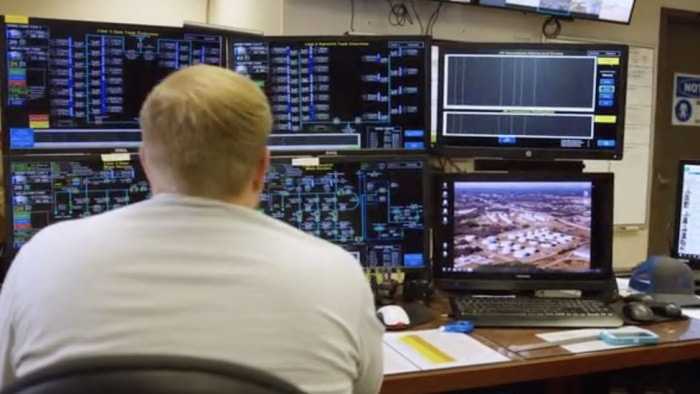
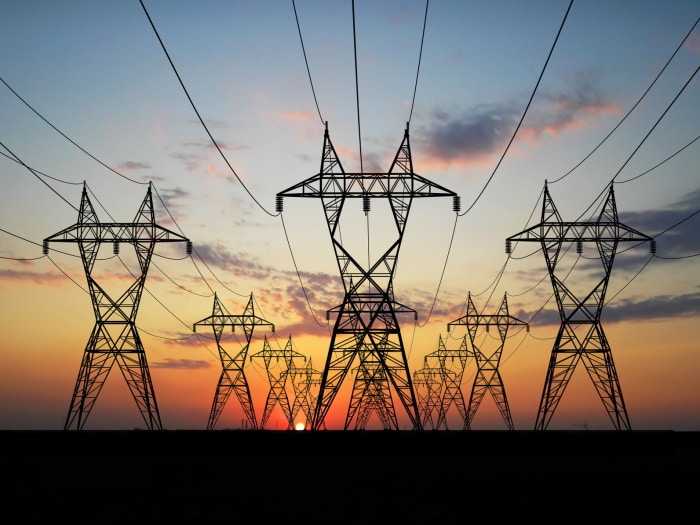
Energy Secretary Jennifer Granholm on Sunday warned in stark terms that the US power grid is vulnerable to attacks.

Asked By CNN’s Jake Tapper on “State of the Union” whether the nation’s adversaries have the capability of shutting it down, Granholm said: “Yeah, they do.”

“There are thousands of attacks on all aspects of the energy sector and the private sector generally,” she said, adding, “It’s happening all the time. This is why the private sector and the public sector have to work together.”

This is a security concern that’s always fascinated me especially since it is given so little attention. It’s only a matter of time before the grid gets hit.

Share

The Next Big Gasoline Shortage Is Coming

If the pandemic has taught us anything, it’s that we cannot ignore the warning signs for future catastrophes.

In North Carolina, where I live, only about one-third of gas stations are currently reporting that they have any gas, and that’s after some improvement in availability. A ransomware attack shut down a key pipeline supplying these stations, an event that could, but likely won’t, serve as a wake-up call, before we experience a true catastrophe.

Prior to the pandemic, I wrote a lot about digital security, or the lack thereof. I once compared our security status quo to “building skyscraper favelas in code—in earthquake zones.” Not much has changed since then, but we are starting to hear more rumbles.

Share

UK spy chief says West faces ‘moment of reckoning’ on tech

LONDON (AP) — Western countries risk losing control of technologies that are key to internet security and economic prosperity to nations like China and Russia if they don’t act to deal with the threat, one of the U.K.’s top spy chiefs warned Friday.

“Significant technology leadership is moving east” and causing a conflict of interests and values, Jeremy Fleming, director of government electronic surveillance agency GCHQ, said in a speech.

Singling out China as a particular threat, he said the country’s “size and technological weight means that it has the potential to control the global operating system.”

Share

Chinese Spyware Code Was Copied From America’s NSA: Researchers

WASHINGTON—Chinese spies used code first developed by the U.S. National Security Agency to support their hacking operations, Israeli researchers said on Monday, another indication of how malicious software developed by governments can boomerang against their creators.

Tel Aviv-based Check Point Software Technologies issued a report noting that some features in a piece of China-linked malware it dubs “Jian” were so similar they could only have been stolen from some of the National Security Agency break-in tools leaked to the internet in 2017.

Share

China Used Secret Microchip to Spy on US Computers

In 2010, the U.S. Department of Defense found thousands of its computer servers sending military network data to China — the result of code hidden in chips that handled the machines’ startup process.

In 2014, Intel Corp. discovered that an elite Chinese hacking group breached its network through a single server that downloaded malware from a supplier’s update site.

And in 2015, the Federal Bureau of Investigation warned multiple companies that Chinese operatives had concealed an extra chip loaded with backdoor code in one manufacturer’s servers.

Share

Iran ‘hides spyware in wallpaper, restaurant and games apps’

Iran is running two surveillance operations in cyber-space, targeting more than 1,000 dissidents, according to a leading cyber-security company.

The efforts were directed against individuals in Iran and 12 other countries, including the UK and US, Check Point said.

It said the two groups involved were using new techniques to install spyware on targets’ PCs and mobile devices.

And this was then being used to steal call recordings and media files.

Share

Don’t Pardon the Intrusion – Edward Snowden’s actions immeasurably weakened the United States and strengthened our adversaries.

The most surprising thing about the failure of U.S. intelligence to discover for nearly nine months the SolarWinds penetration of U.S. government agencies, reportedly including the State, Energy, and Homeland Security Departments as well as private contractors, is that anyone is surprised. After all, the National Security Agency, responsible for protecting the communications of the U.S. government, had such a massive hole punched in its capabilities by a breach in 2013 that Michael McConnell, the former director of first the NSA and then the Office of National Intelligence, assessed “This [breach] will have an impact on our ability to do our mission for the next 20 to 30 years.”

Share

Orion Cyber Attack: Threats in Space

Recent Russian and Chinese aggressions bode ill for the future of American military security.

Last Tuesday, Russia successfully tested a direct-ascent anti-satellite missile. The test wasn’t their first. It was a progression of the Russians’ development of kinetic satellite killers, including hunter-killer satellites. The Chinese have been developing and testing such weapons since at least 2007. (The Chinese are also developing ground-based laser anti-satellite weapons.)

Share

Dozens of Al Jazeera journalists allegedly hacked using Israeli firm’s spyware

Spyware sold by an Israeli private intelligence firm was allegedly used to hack the phones of dozens of Al Jazeera journalists in an unprecedented cyber-attack that is likely to have been ordered by Saudi Arabia and the United Arab Emirates, according to leading researchers.

In a stunning new report, researchers at Citizen Lab at the University of Toronto said they discovered what appears to be a major espionage campaign against one of the world’s leading media organisations, which is based in Qatar and has long been a thorn in the side of many of the region’s autocratic regimes.

The report, written by some of the world’s top digital surveillance researchers, also raises troubling new questions about the apparent vulnerability of the Apple iPhone, which has sought to promote a reputation for security and commitment to privacy.

Share

Mike Pompeo: ‘We can say pretty clearly’ Russia was behind hack of US agencies

Mike Pompeo has become the first member of the Trump administration to blame Russia for wide-ranging hacks of US government agencies and private companies.

“This was a very significant effort,” the secretary of state told rightwing talk radio host Mark Levin on Friday night. “I think it’s the case that now we can say pretty clearly that it was the Russians that engaged in this activity.”

On Saturday, Pompeo announced the closure of two US consulates in Russia at which activity had already been curtailed, due to Covid-19.

Share

Hackers Breach U.S. Government Agency That Maintains Nuclear Weapons Stockpile

Hackers Breach U.S. Government Agency That Maintains Nuclear Weapons Stockpile

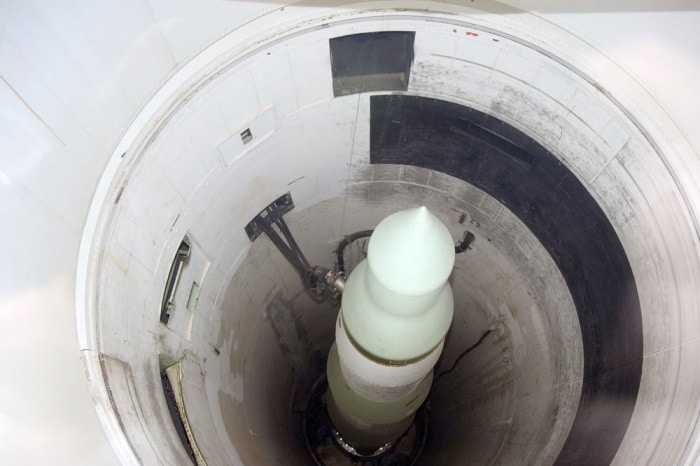
Hackers have reportedly breached the U.S. government agency responsible for maintaining the nation’s stockpile of nuclear weapons, according to news reports and government officials.

“They found suspicious activity in networks belonging to the Federal Energy Regulatory Commission (FERC), Sandia and Los Alamos national laboratories in New Mexico and Washington, the Office of Secure Transportation at NNSA, and the Richland Field Office of the DOE,” Politico reported. “The hackers have been able to do more damage at FERC than the other agencies, and officials there have evidence of highly malicious activity, the officials said, but did not elaborate.”

Share

Hack of Federal Government Larger Than Previously Thought, Warns CISA

Hack of Federal Government Larger Than Previously Thought, Warns CISA

The federal Cybersecurity and Infrastructure Security Agency (CISA) said Thursday that the hacking campaign that targeted the federal government is larger than what was previously known.

The alleged foreign actors gained backdoor access in more ways than through the SolarWinds software, which was publicly disclosed by the FBI and Department of Homeland Security (DHS) earlier this week.

Share

Orion hack exposed vast number of targets – impact may not be known for a while

If there is one silver lining to the months-long global cyber-espionage campaign discovered when a prominent cybersecurity firm learned it had been breached, it might be that the sheer numbers of potentially compromised entities offers them some protection.

By compromising one piece of security software – a security tool called Orion developed by the Texan company SolarWinds – the attackers gained access to an extraordinary array of potential targets in the US alone: more than 425 of the Fortune 500 list of top companies; all of the top 10 telecommunications companies; all five branches of the military; and all of the top five accounting firms.

But they are just a fraction of SolarWinds’ 300,000 global customers, which also include UK government agencies and private sector companies.

Share

Kremlin-backed hackers breach US Treasury and Commerce: Report

A “sophisticated hacking group” backed by the Russian government reportedly infiltrated the Department of Treasury’s systems and stole information related to internet and telecommunications policymaking as part of a broader campaign that also hacked the Commerce Department and other government agencies.

The FBI is investigating the attacks and is looking into the Russian hacking group APT29, also known as Cozy Bear, as a potential culprit, according to the Washington Post. The foreign-backed hack was first reported by Reuters.

As a result of the hack, the National Security Council held a meeting at the White House on Sunday.

Share