What to Expect from the Biden-Xi Meeting – And It’s Not Good

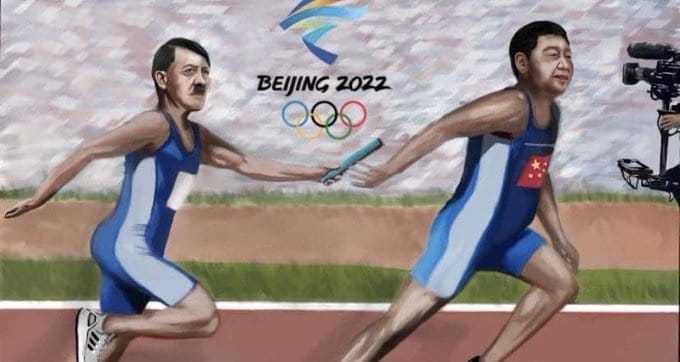
Here is what we likely can expect from the upcoming meeting between U.S. President Joe Biden and Communist China’s President Xi Jinping. Climate change, yes. Human rights, not so much. Throw in a little trade but take out all references to the Wuhan-origin of the coronavirus pandemic. This will be a summit that majors in minors. It will have significance, but only because of what it fails to do rather than what it does.

Share

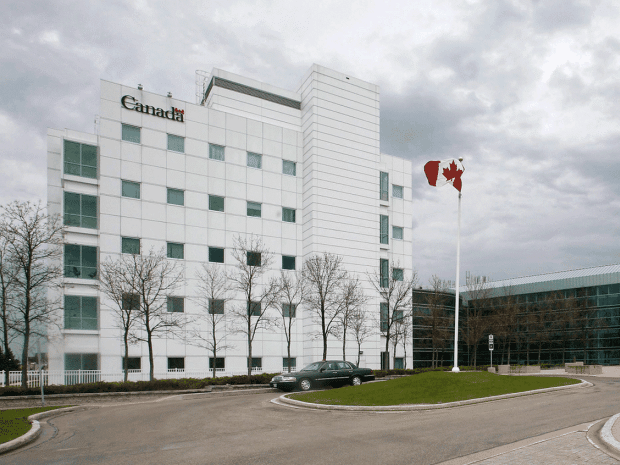
Canada has no choice but to bar Huawei from 5G mobile networks, security experts say

OTTAWA — As the Liberal government prepares to unfurl its policy on next-generation mobile networks, global security experts say all signs point to the exclusion of Chinese vendor Huawei Technologies from the long-awaited blueprint.

The development of 5G, or fifth-generation, networks will give people speedier online connections and provide vast data capacity to meet ravenous demand as more and more things link to the internet and innovations such as virtual reality, immersive gaming and autonomous vehicles emerge.

The opposition Conservatives have long pressed the Liberals to deny Huawei a role in building the country’s 5G infrastructure, saying it would allow Beijing to spy on Canadians more easily.

Share

Second U.S. Aircraft Carrier Missile Target Spotted in Chinese Desert

The site consists of a single aircraft carrier target, miles from the nearest town in the Xinjiang region, according to photos provided to USNI News by satellite imagery company Maxar. The carrier target is about 300 miles away from a larger suspected missile range in the Taklamakan Desert, first reported by USNI News on Sunday. The two sites share similar characteristics and are aligned on a map with the carriers facing the same direction – as if in a convoy. Like the first, this new target shares the same dimensions as a U.S. Navy aircraft carrier.

Share

Xi Jinping goes full 1984

The CCP’s inner sanctum is in Beijing this week to hold its annual closed-door meeting. But this time it’s done something rare by announcing one item on the agenda: an official resolution to revise China’s historical narrative under its reign, to reflect Xi’s take on the “correct” interpretation of party history — and by extension China’s.

What the party comes up with won’t just be an anodyne internal document only CCP nerds will obsess over. Xi’s historical revision will influence everything in China — from foreign policy, to what’s taught in schools or shown on TV and in films, to what constitutes the ultimate crime of disloyalty to the party — for an entire generation, if not longer.

Share

Pentagon: China’s navy is now world’s largest with 460 warships by 2030

China‘s navy is now the world’s largest maritime military force and will deploy 460 warships by the end of the decade, according to the Pentagon‘s latest annual report on Chinese military power.

The current warship arsenal for the People’s Liberation Army Navy (PLAN) includes 355 naval platforms, including major surface ships, submarines, aircraft carriers, amphibious warships and mine warfare craft.

Share

German engine technology found in Chinese warships — report

Engines developed in Germany can evade export control bans due to their status as a so-called dual-use technology, a German media investigation has revealed.

Several types of Chinese navy warships are powered by engines that were either developed or built by German manufacturers, an investigation by public broadcaster ARD and the Welt am Sonntag newspaper revealed Saturday.

The two companies involved are MTU in Friedrichshafen and the French branch of the Volkswagen subsidiary MAN, according to the report.

Both companies told the media they have always complied with export control regulations and have put into the public record that they have been involved with China’s military.

Share

The Battle for Taiwan

Seventy-two years ago, the Communist Party seized control of China after a bloody struggle. The defeated Nationalist government fled to Taiwan, frustrating Beijing’s desire to capture the island. Since then, China has arisen as a superpower rivaling America; Taiwan has blossomed into a self-governing democracy and high-tech powerhouse with Washington’s backing. Now, after decades of tenuous stalemate, there is a renewed risk of conflict. While it is impossible to know how this long rivalry will play out, in some respects the battle for Taiwan is already underway.

As Reuters reported in December, the Chinese military – the People’s Liberation Army – is waging so-called gray-zone warfare against Taiwan. This consists of an almost daily campaign of intimidating military exercises, patrols and surveillance that falls just short of armed conflict. Since that report, the campaign has intensified, with Beijing stepping up the number of warplanes it is sending into the airspace around Taiwan. China has also used sand dredgers to swarm Taiwan’s outlying islands.

Share

Chinese Spy Convicted of Conspiracy to Steal Cutting-Edge US Aviation Technology

A jury in Cincinnati has convicted a Chinese intelligence agent over his role in a scheme to recruit spies and steal sensitive American aviation technology for Beijing.

Xu Yanjun, a deputy division director at the Chinese Ministry of State Security, Beijing’s top intelligence agency, was found guilty on all counts, including conspiring to and attempting to commit economic espionage and stealing trade secrets, according to the Justice Department.

Share

China’s Weaponization of Space

China – a pioneer of eating dogs and cats in space.

“China has moved aggressively to weaponize space…” These were the words of U.S. Secretary of the Air Force Frank Kendall at the 36th Space Symposium on August 24.

“Both conventional deterrence and conventional operations depend on access to communications, intelligence, and other services provided by space-based systems. As a result, our strategic competitors have pursued and fielded a number of weapons systems in space designed to defeat or destroy America’s space-based military weapons systems and our ability to project power.”

Space has become crucial: so much of what happens there now affects life on earth.

Share

Canadian brands sold clothing from Communist Chinese factory suspected of secretly using North Korean forced labour

Retail giant Reitmans brought more than 100 shipments of clothing into Canada from a Chinese factory suspected of secretly using North Korean forced labour, a months-long CBC Marketplace investigation has found.

And they’re not alone.

YM Inc., which owns well-known brands such as Sirens, Stitches, Bluenotes and UrbanKids, also did business with the same factory, Dandong Huayang Textiles and Garment Co. Ltd., up until 2019. Although a smaller volume, the company imported clothing at least 21 times, according to U.S. shipping records.

Share

China Has No Interest in Climate Change

Nothing better summarises Chinese President Xi Jinping’s attitude to the West’s obsession with tackling climate change than the old Chinese saying, “Hide a knife behind a smile.”

As world leaders gathered for the COP26 summit in Glasgow, Western leaders were desperately trying to reach a deal on cutting carbon emissions, which United Nations climate experts claim is a major cause of climate change.

There was no shortage of dire predictions in the run-up to the summit, with John Kerry, President Biden’s climate envoy, warning that this is the world’s “last best chance” to stop a climate catastrophe and British Prime Minister Boris Johnson talking in apocalyptic terms about the world’s failure to tackle the issue placing modern civilisation at risk.

Share

The Evidence Mounts: A new NIH letter reinforces the lab-leak hypothesis for the origins of Covid-19.

You got any handi-wipes?

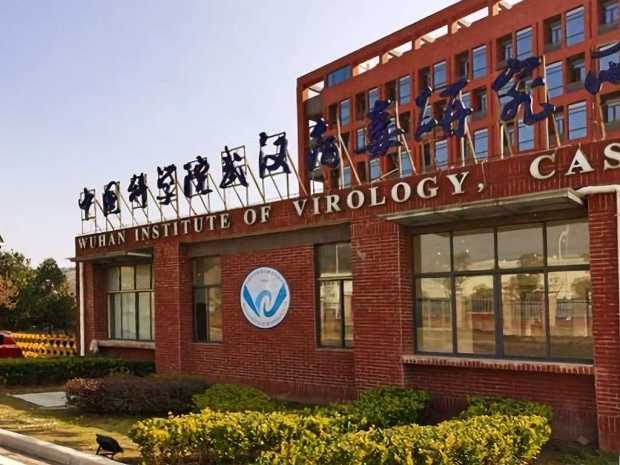
The origin of the SARS-CoV-2 virus that causes Covid-19 remains unclear, but recent revelations reinforce the likelihood that the true source was a lab leak from the Wuhan Institute of Virology (WIV).

letter from Lawrence Tabak, the National Institutes of Health’s principal deputy director, to Kentucky congressman James Comer confirms that the NIH funded research at the WIV during 2018–2019 that manipulated a bat coronavirus called WIV1. Researchers at the institute grafted spike proteins from other coronaviruses onto WIV1 to see if the modified virus was capable of binding in a mouse that possessed the ACE2 receptors found in humans—the same receptor to which SARS-CoV-2 binds. The modified virus reproduced more rapidly and made infected humanized mice sicker than the unmodified virus.

Share