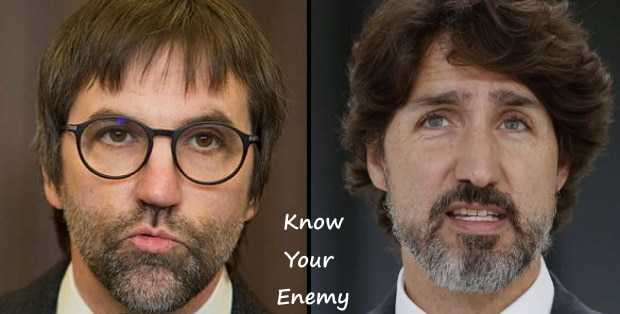

MALCOLM: A complete lack of restraint is the essence of Liberal budgeting

7

When I asked my editor this week if it was too late to submit a column on the topic of the federal budget, which was finally released last week after nearly two years without a firm reporting on our country’s finances, he said he would welcome the column.

“The fact that our nation’s finances are crumbling shouldn’t just be a 24 hour news story,” he quipped.

Share

GUNTER: Here’s why Bill C-10 is such a big problem

Understand one thing: If the Liberals are able to pass Bill C-10 – an update of the Broadcasting Act – Canada will have the most-regulated Internet in the free world.


“The plan is not for us to regulate all of the Internet,” Toronto Liberal MP Julie Dabrusin, told the Commons Heritage committee this week. Dabrusin is parliamentary secretary to the Minister of Heritage, Montreal Liberal MP Steven Guilbeault.

Share

Activists, experts and policy makers speak out on Chinese state influence in Canada

TORONTO — Activists, experts and policy makers are speaking out on what they describe as an ever-growing “influence” of the Chinese Communist Party (CCP) in Canadian business, academic and political circles.

There has been mounting scrutiny on the CCP’s increased flexing of its intelligence muscles since the ascension of President Xi Jinping in 2013.

Canada’s intelligence agencies have taken the rare step of naming China as a significant threat to the country’s sovereignty, with CSIS director David Vigneault publicly saying in a February 2021 speech that Canadians are being “aggressively” targeted by foreign interests – and Beijing was engaged in “activities that are a direct threat to our national security and sovereignty.”

Share

Trudeau’s plan for the Internet: More patriotic propaganda, less choice for users

Several years ago, Prime Minister Justin Trudeau quipped that he sees Canada as the world’s “first postnational state.” It’s become an iconic catchphrase of his tenure — admired by liberals as a mantra of inclusivity; mocked by conservatives as an admission of the vacuousness of progressivism.

It’s a fine debate to have but, in the context of Trudeau, it’s also fairly pointless, given the prime minister has never shown much interest in actually governing in a postnational way. His is, in fact, a quite explicitly nationalist government that has repeatedly shown itself happy to use the power of the state to push a particular notion of correct patriotic behavior.

Share

Diane Francis: With more seats than it deserves Atlantic Canada is awash in federal handouts

Diane Francis: With more seats than it deserves Atlantic Canada is awash in federal handouts

In the last election, Prime Minister Justin Trudeau’s Liberals got 6,018,728 votes, or a puny 33.12 per cent of the total, and the Tories got 6,239,227. Even so, Trudeau ended up with 157 seats and the Tories only 121. I analyzed the numbers in a piece I wrote last year in The Post which revealed the need for electoral reform.

This electoral injustice was due to gerrymandering which has given the poorest part of the country — everything east of the Quebec-Ontario border — 14 more seats than it deserves, based on representation by population.

Share

Why the Government’s Secret Forthcoming Bill C-10 Amendment Confirms Its Plans to Regulate User Generated Content

Canadian Heritage Minister Steven Guilbeault and the Liberal government’s response to mounting concern over its decision to remove a legal safeguard designed to ensure the CRTC would not regulate user generated content has been denial. The department’s own officials told MPs that all programming on sites like Youtube would be subject to regulation, yet Guilbeault insisted to the House of Commons that user generated content would be excluded from regulation as part of Bill C-10, his Broadcasting Act reform bill.

Share

Your free speech is at risk with Ottawa’s push to regulate online content, experts warn. Here’s why.

Liberal government says controversial changes to broadcasting bill will only apply to professional content (ED. Bullshit)

The federal government is facing an uproar over controversial changes to a bill that would bring videos and other content posted to social media sites like YouTube under the purview of the country’s broadcasting regulator.

The changes to Bill C-10 — made at the behest of Liberal MPs on the heritage committee — would allow the Canadian Radio-television and Telecommunications Commission (CRTC) to regulate user-generated content uploaded to social media platforms, much as it regulates radio and TV content now.

The government says the changes apply only to professional content and are necessary to make wildly successful online streaming services and apps contribute to Canadian culture.

Share

Impending Online Hate Speech Legislation Worries Free Speech Advocates

Impending Online Hate Speech Legislation Worries Free Speech Advocates

A federal bill to combat harmful content and hate speech online is expected to be tabled soon, but free speech advocates are concerned that it may be too restrictive. Critics are also sounding the alarm on amendments to the existing Bill C-10 that seeks to regulate video content on platforms such as YouTube and Facebook.

The hate speech bill soon to be tabled will create a new regulator with the power to levy fines and require transparency from social media outlets, including about their algorithms. The legislation will also set out a legal framework for prohibiting hate speech, terrorist content, content that incites violence, non-consensual sharing of intimate content, and child sexual exploitative content.

You are everything they hate. You are the Hate Crime.

Share

‘Full-blown assault’ on free expression: Inside the comprehensive Liberal bill to regulate the internet

After more than 25 years of Canadian governments pursuing a hands-off approach to the online world, the government of Justin Trudeau is now pushing Bill C-10, a law that would see Canadians subjected to the most regulated internet in the free world.

Share

Ottawa says it only learned Chinese police ran visa centre this year

Ottawa says it only learned Chinese police ran visa centre this year

Ottawa says it only learned in February that Canada’s visa-application centre in Beijing is managed by Chinese police, the same month The Globe and Mail reported the arrangement.

The federal government has trusted its visa centre in Beijing to a police-owned company since 2008, and has been required to conduct due-diligence screenings during renewals of the contract in subsequent years including 2018.

The government acknowledged its lack of awareness in documents tabled in the House of Commons this week in response to written questions from NDP immigration critic Jenny Kwan.

Share

Our China Class At Work: Trudeau minister dodges questions on whether Canada has curbed potential forced-labour imports from China

Our China Class At Work: Trudeau minister dodges questions on whether Canada has curbed potential forced-labour imports from China

OTTAWA — Canada’s international trade minister on Monday would not provide details about whether the federal government has barred the flow of imported goods from China suspected of using forced labour, months after Ottawa introduced measures purportedly to stop the practice.

In a committee testimony, Minister Mary Ng declined to answer questions from a Conservative MP about how much, if any, imports from the Chinese region of Xinjiang Canadian authorities have intercepted since the Liberal government said it would be cracking down on the issue in January.

Share

GOLDSTEIN: Ontarians poorer than U.S. neighbours by $16,600 — report

GOLDSTEIN: Ontarians poorer than U.S. neighbours by $16,600 — report

Ontarians are becoming poorer and their economy is growing weaker compared to their American neighbours living in the eight Great Lakes states on their southern border, according to a study by the Fraser Institute.

“When we compare the average income of Ontarians relative to Americans in neighbouring states, the situation is getting worse,” said study co-author Ben Eisen in Measuring Ontario’s Regional Prosperity Gap.

Share

Ottawa’s move to regulate video posts on YouTube and social media called ‘assault’ on free speech

The Liberal-dominated House of Commons Heritage committee has cleared the way for the federal government to regulate video content on internet social media, such as YouTube, the same way it regulates national broadcasting, under a new amendment made to a bill updating the Broadcasting Act.

Share

Freedom of Expression Under Attack: The Liberal Government Moves to Have the CRTC Regulate All User Generated Content

Freedom of Expression Under Attack: The Liberal Government Moves to Have the CRTC Regulate All User Generated Content

… Read that again: “all the programming that is on those services would be subject to the Act.” Despite the warning, Parliamentary Secretary Julie Dabrusin put forward a motion to remove the exclusion, which gained the support of the committee.

This is a remarkable and dangerous step in an already bad piece of legislation. The government believes that it should regulate all user generated content, leaving it to regulator to determine on what terms and conditions will be attached the videos of millions of Canadians on sites like Youtube, Instagram, TikTok, and hundreds of other services. The Department of Justice’s own Charter analysis of the bill specifically cites the exclusion to argue that it does not unduly encroach on freedom of expression rights. Without the exclusion, Bill C-10 adopts the position that a regulator sets the rules for free speech online. As Emily Laidlaw tweeted, human rights apply online and offline.

Share

Canadian gov’t. to introduce first-ever internet control bill

Canadian gov’t. to introduce first-ever internet control bill

OTTAWA, Ontario, April 23, 2021 (LifeSiteNews) — In a legislative first, the Canadian government under Prime Minister Justin Trudeau is introducing a bill that will censor the internet for its own citizens. The bill proposes to ban “hate speech,” including “hurtful” language against politicians.

Canada’s Heritage Minister Steven Guilbeault said Monday that the bill will be considered in Parliament within the next fortnight during a videoconference with the Centre for Israel and Jewish Affairs.

Weimarization.

Share