JIVANI: Jagmeet Singh’s legacy as Trudeau’s hype man

Singh knows his role isn’t to rock the boat, even if some of his voters want him to.

I never wanted Jagmeet Singh to lead our country. But I did want him to be a competent leader for the NDP.

Unfortunately, after choosing to support Trudeau’s internet censorship agenda, Singh’s legacy will be that of a total failure.

Share

How much influence should politicians have over police?

Controversy erupted this week when allegations came to light that the Liberal government may have tried to interfere in the Royal Canadian Mounted Police (RCMP) investigation into the 2020 Nova Scotia mass shooting where 17 people were killed.

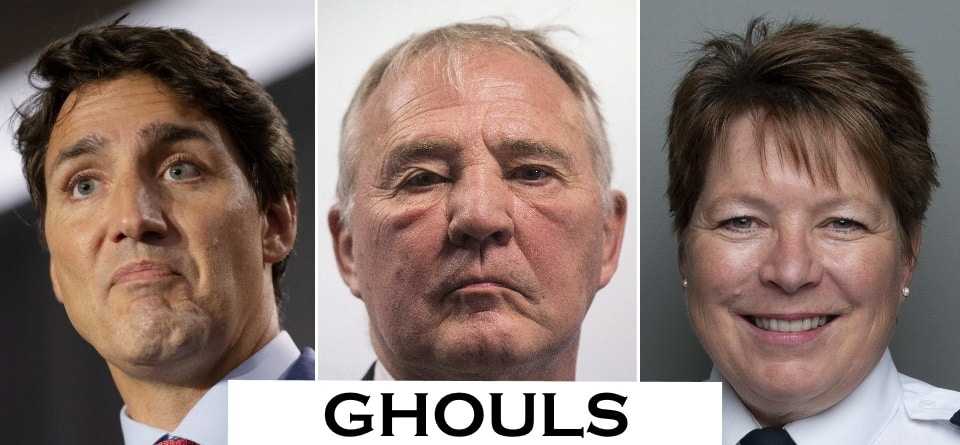
According to RCMP Supt. Darren Campbell’s notes, RCMP Commissioner Brenda Lucki said in a phone call that she had promised the Prime Minister’s Office and then-Minister of Public Safety Bill Blair that the RCMP would publicly release information about the weapons the gunman used. Lucki was reportedly angry when the RCMP did not do so.

The Liberal government is alleged to have wanted the information made public to further their gun control agenda. Critics and opposition politicians have accused the government of attempting to use the tragedy for political gain. Lucki, Blair and Prime Minister Justin Trudeau have denied that there was interference in the investigation.

Just the CBC running cover. Everyone knows Trudeau lied, it’s what he does.

Share

After All The Lies, Who Could Possibly Believe Trudeau’s Claims Amid Brenda Lucki Scandal?

A key problem in Canada today is that the political elites believe they are automatically owed the trust of Canadians.

In our own lives, we all know that trust is earned, and that those who lie constantly are no longer believed.

Somehow, politicians like Trudeau think that doesn’t apply to them.

Thus, in response to the escalating Brenda Lucki-RCMP-Trudeau government scandal, he is trotting out the same tactics he uses every scandal:

Lie & Deny.

Share

Almost half of Canadians are doing worse financially than the previous year: survey

As inflation rates soar to the highest they’ve been in Canada in forty years, nearly half of Canadians say that right now, they’re doing worse financially than they were at this time last year.

A further third say they expect things to get even worse in the coming year, the largest number of people to answer this way in more than a decade.

Share

RCMP held back senior Mountie’s controversial notes about Trudeau-Lucki interference for months, inquiry says

Four crucial pages of a senior Mountie’s notes were missing the first time the federal Department of Justice sent them to the public inquiry looking into the Nova Scotia mass shooting.

The key section included allegations the head of the RCMP promised politicians the force would release information about guns used during the April 2020 rampage.

The Mass Casualty Commission said the federal government sent 132 pages of Supt. Darren Campbell’s handwritten notes in mid-February 2022, but that the file had no references to a meeting with Commissioner Brenda Lucki on April 28, 2020.

Share

Our fraying constitutional order

In a recent podcast interview, my American host asked me to comment on whether Canada constituted a nation, in the substantive sense. Beyond platitudes such as a shared commitment to multiculturalism, general good government, and a thin conception of liberty, there is not much there there, I reflected. No, there isn’t really a singular Canadian nation, I answered.

But I was oversimplifying: the fact is that Canada is a nation that contains many nations. The compromises of federalism as set out in the Constitution were specifically designed to accommodate the vast regional and cultural differences across our equally vast land and, for the most part, have held up well.

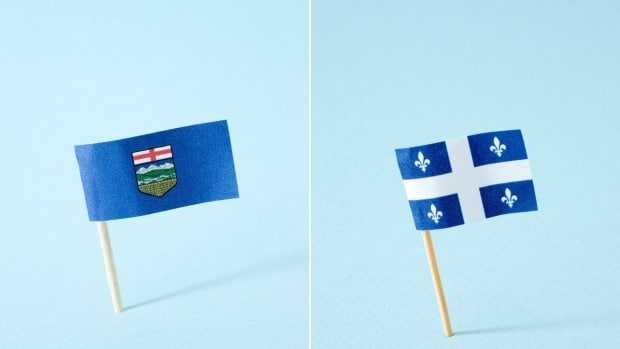
However, proposals in Alberta and Quebec are starting to nip at the fabric of our constitutional order. Both provinces are, as one academic recently put it, apparently treating the Constitution as a “buffet that one can pick and choose from”, rather than a blueprint for how power flows in a state.

Share

Trudeau doubles down on tin-pot tyranny – defends vax mandates, Emergencies Act decision, in interview


Justin Trudeau says people who chose not to be vaccinated against COVID-19 must accept the consequences of those decisions, including lost employment and restricted access to transportation and other services.

“It was their choice and nobody ever was going to force anyone into doing something they don’t want to do,” the prime minister said in an interview with CBC Radio’s The House airing on Saturday.

“But there are consequences when you don’t. You cannot choose to put at risk your co-workers. You cannot choose to put at risk the people sitting beside you on an airplane,” Trudeau said before leaving for international summits in Africa and Europe.

Share

Looks like travel restrictions were political all along

The federal government announced on Tuesday June 14 that COVID-related travel restrictions in place since Oct. 30, 2021 will be ending. Specifically, the government is ending the requirement to show proof of vaccination for domestic travel on planes and trains, for outbound international travel, and ending the vaccine mandate for transport workers and federal government employees.

Share

CRTC Chair Ian Scott Confirms Bill C-11 Can Be Used To Pressure Internet Platforms to Manipulate Algorithms

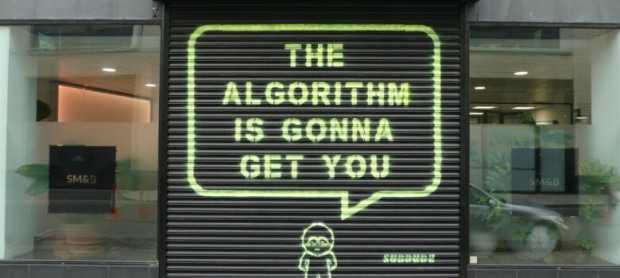
The Senate Standing Committee on Transport and Communications held an exceptionally important hearing as part of its Bill C-11 pre-study (which is about to change into a Bill C-11 study) last night featuring Canadian Heritage officials and CRTC Chair Ian Scott. I will have a second post on the officials, who struggled to provide clear answers to basic questions on everything from how to identify what counts as Cancon for user content (Youtube’s Content ID was suggested) to the absence of thresholds for what is covered by the bill (there are no thresholds and the government wants the ability to also target small streamers). But the key moment of the day came in questioning Scott about the discoverability and the potential for algorithmic manipulation.

Share

LIAR: Trudeau says Ottawa ‘had a lot of questions’ after N.S. mass shooting but didn’t interfere in investigation

Prime Minister Justin Trudeau says the federal government had questions about the 2020 mass shooting in Nova Scotia but remained adamant his government did not interfere in the investigation.

His comments come as a Nova Scotia Mountie and the former director of communications claim there was political pressure coming from Ottawa over what to say in the aftermath of the deadliest mass shooting in Canadian history.

Share

Liberal interference on the shooting probe is part of a familiar pattern

The Liberal government and RCMP commissioner Brenda Lucki are denying they interfered in the criminal investigation of the 2020 mass shooting in Nova Scotia to advance the government’s agenda.

I don’t buy that denial for a minute.

The national police force has a decades-old record of politicizing criminal investigations, from burning a barn while snooping on the Parti Québécois in the 1970s to announcing it was investigating then-finance minister Ralph Goodale in the middle of the 2006 federal election.

Share