GOP lawmaker complains Canada’s defense spending still falls short in the long run

HALIFAX — Republican lawmaker Sen. Thom Tillis of North Carolina says it’s all good and well that Canada is finally meeting its NATO defense spending commitments, but Canada should make up for two decades of back dues — to the tune of $300 billion.

“Can we do a makeup payment for the 20 years of shortfalls as well?” Tillis told a Saturday panel at the Halifax International Security Forum, a international gathering of defense officials and security professionals.


The only money spent will be used to fortify Festung Ottawa against anticipated popular uprisings.


Share

BORG: All Rhodes lead to Oxford- Freeland is abandoning her constituents

Chrystia Freeland may still hold a seat in the House of Commons, but politically and geographically, she appears already gone. With her new appointment as CEO of the Rhodes Trust in Oxford beginning in July 2026, Freeland is positioning herself for a future far outside Canadian public life while continuing to occupy a taxpayer-funded parliamentary seat she no longer intends to defend or actively represent.

It is a move that feels less like public service and more like a carefully timed exit from accountability.

Share

KLEIN: Senate tribunal shows our institutions are failing Canadians

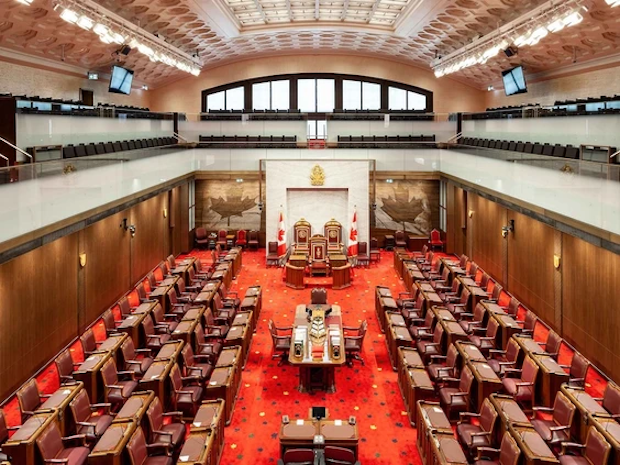
“… The Senate of Canada allowed its space to be used for what was described as a tribunal on “Canadian responsibility.” In practice, it became a platform for speakers who have promoted antisemitic claims, defended terrorist violence, and spread bizarre, evidence-free accusations such as “rape by animals.” These are not fringe comments from an obscure website. They were spoken inside one of the most respected democratic institutions in our country. The room was booked by a senator appointed by the Prime Minister. Other senators were invited to join.”

Share

Plug-in polluter? Why Canada may need to rethink ‘transition’ EV

Pitched as a great compromise for the environmentally conscious yet road-tripping driver, plug-in hybrids — or PHEVs — have a few problems.

For one, people aren’t plugging them in.

Study after study show these vehicles — which boast an electric motor for emission-free rides and a gas engine for longer range — are actually being used more in gas mode. This means they’re polluting a lot more than a customer might think.


The CBC continues to push the LPC’s EV lie.

Share

Geoff Russ: Liberal nationalism is a cringey failure. The new right can step up

Canada’s young people, especially the large numbers of younger conservatives, feel more and more homeless in their own country.

They are not only priced out of housing, but told by their teachers, media broadcasters, and elected officials that Canada is imaginary, and that Canadians are guilty of being genocidal “settlers” by demerit of their birth and heritage. There is real and justified anger among them.

Share

GOLDSTEIN: Yes, unsustainable immigration lowered our standard of living

While it will enrage the usual suspects, U.S. Vice President J.D. Vance’s assertion Canada’s “immigration insanity,” rather than his boss’ trade war against us, is the reason Canada’s “living standards have stagnated,” contains an element of truth.

Vance made the claims on X on Friday, in responding to a chart posted by another user that showed Canada’s real (inflation-adjusted) GDP per person – a widely accepted metric for determining a nation’s standard of living – has plummeted in recent years.

Share

‘Under Assault’: New Book Details Beijing’s Decades-Long ‘Secret War’ Against Canada

In his new book, a former national security analyst and federal policy advisor outlines the Chinese regime’s decades-long effort to infiltrate and influence Canada, including tactics ranging from cultivating aspiring political leaders to espionage, theft, and harassment.

Released on Nov. 18, “Under Assault: Interference and Espionage in China’s Secret War Against Canada” details how the People’s Republic of China (PRC), under the rule of the Chinese Communist Party (CCP), has for decades targeted Canada for influence and interference with the ultimate goal of spying on and pressuring its rival, the United States.

Share

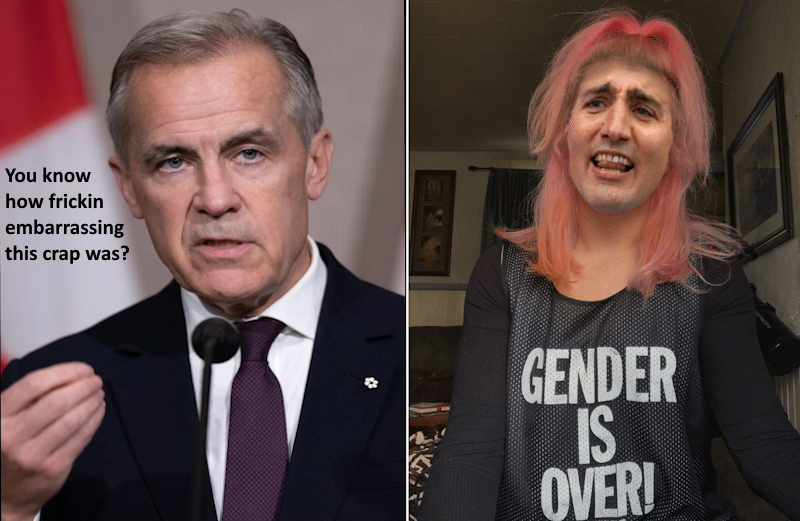
Cringe No More: Carney Calls Halt To Trudeau’s Feminist Foreign Policy

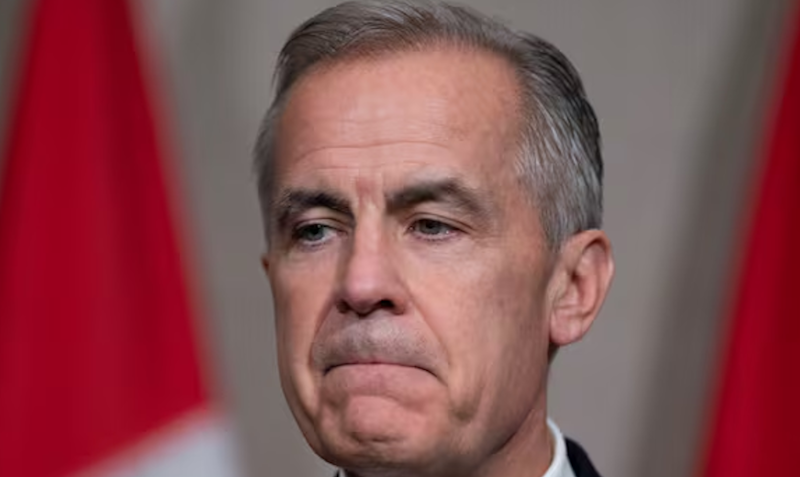
Prime Minister Mark Carney, backing away from a key international priority of his Liberal predecessors, says his government does not have a feminist foreign policy.

Cabinet ministers under former prime minister Justin Trudeau announced in 2017 that their government had a feminist foreign policy, and they continued to refer to the policy for years after.

Their support deepened further in 2020 when the government promised to draft a full document to define the policy.

But despite years of backroom discussions by federal officials, no document was ever published. And now Mr. Carney is distancing himself from the concept.

Share

Mark Carney has a decision to make that will cost billions. Worse, he has no good options, and time is running out

Canada‘s existing fleet of fighter jets is overdue for replacement. The CF-18s have been operating continuously since the early 1980s, longer than most of their pilots have been alive. The basic existing design of the fighter is even older than that.

They should have been replaced long ago. This was supposedly a priority for the Harper government. In theory, it was a priority for the Trudeau government, too. Now it’s a problem for the Carney government.

Share

Bank of Canada will regulate a Canadian ‘stablecoin.’ But just how stable will it be?

Canada is moving with what could be called urgent caution as stablecoin goes mainstream.

Stablecoin is a type of cryptocurrency, or digital dollar, which has stability as perhaps its greatest asset. Bitcoin, Ethereum and other cryptocurrencies are notoriously volatile.

Stablecoin, by contrast, is backed by real assets — cash or high-quality liquid assets — and is pegged one-to-one to a currency or commodity, often the U.S. dollar, the world’s reserve currency.


It will be just stable enough for the Laurentian elites to profit handsomely before it crashes and the tax payers are left holding the bag.

Share

‘Lost Canadians’ legislation is now law, aims to fix citizenship rule

The “Lost Canadians” legislation, which aims to fix Canada’s unconstitutional citizenship, received royal assent Thursday after being approved by the Senate on Wednesday.

The term “Lost Canadians” refers to people who were born outside of the country to Canadian parents who were also born in another country.

In 2009, the Conservative federal government changed the law so that Canadians born abroad could only pass down their citizenship if their child was born in Canada.

H/T Patti Jo

Share

Canada joins Europe rejecting Trump’s Ukraine plan, Anand says sovereignty is key

JOHANNESBURG – The world’s most influential nations gathered in South Africa to work around Washington’s disruptive foreign policy Saturday, reaching consensus on issues like climate change and gender equality while pushing back on a Ukraine deal that western allies deemed insufficient.

For Canada, disruptive geopolitics led to a technology pact with India, a recent foe, along with a cut to Ottawa’s funding for global health and talks with countries grappling with American and Chinese trade coercion.

“It is a great day for multilateralism,” Foreign Affairs Minister Anita Anand told reporters in Johannesburg.


Canada is that kid who is tolerated because he gives money as a Tag Along Tax.

Share

Lorne Gunter: Feds’ treatment of Alberta versus Quebec clearly uneven

Presently, Quebec’s legislature, the National Assembly, is debating a new provincial constitution that would declare Quebec a “free national State,” known as the State of Quebec, “fully sovereign” from the rest of Canada. The new constitution would assert that the province may appoint its own superior court judges (a power now reserved to Ottawa), conduct foreign policy separate from (or even at odds with) Canada’s foreign policy, ignore federal laws and participate in national institutions only when Quebec wishes to.

It’s effectively a declaration of independence without having to give up billions annually in transfer and equalization payments.

Share