Canada did not stumble into its current economic position.
It, if one can imagine such, chose it.
Canada is not in a mild economic slowdown.
It is in a self-inflicted investment crisis — and the numbers are no longer debatable.
Canada did not stumble into its current economic position.
It, if one can imagine such, chose it.
Canada is not in a mild economic slowdown.
It is in a self-inflicted investment crisis — and the numbers are no longer debatable.
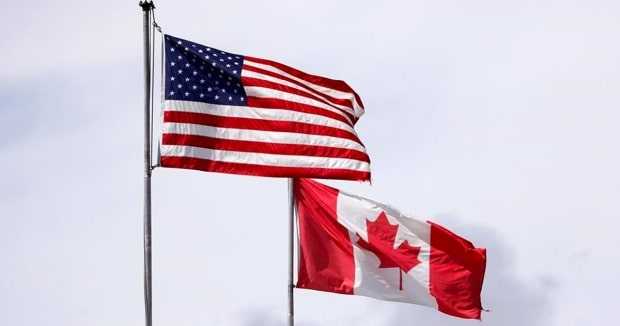
The United States and Canada are both racing to rebuild their defense industrial bases, recognizing that future conflicts will be determined not only by military capability, but by the ability to produce at scale. But they cannot succeed alone — and importantly, they do not need to start from scratch.
After decades of reliance on globalized supply chains for everything from consumer products to critical defense technologies, the United States is reasserting a more active industrial policy, using tools ranging from the Defense Production Act to incentivizing private capital investments and even selective government equity stakes. Canada is undergoing a parallel shift, with increased defense spending commitments, the recent release of its first Defence Industrial Strategy, and the newly launched Defence Investment Agency.
I doubt the USA will risk Canadian exposure given Carney is busy selling us out to the ChiComs and whoever else he thinks he can squeeze a buck from.
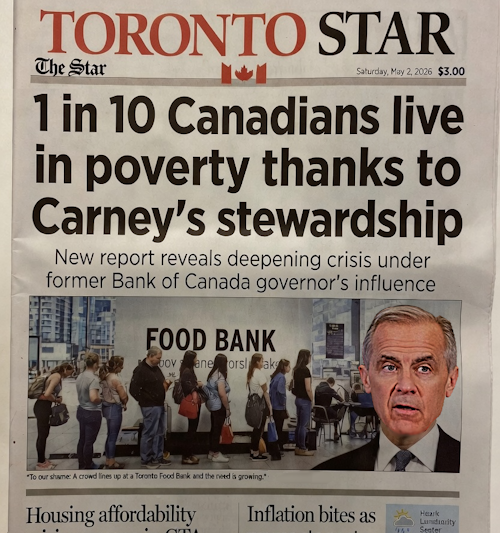
The country’s poverty rate barely budged in 2024, remaining well above 2020 levels with more than one in 10 Canadians qualifying as impoverished, according to Statistics Canada.
In a newly released survey, the agency found 11 per cent of Canadians — about 4.5 million people — lived in poverty in 2024 versus 11.1 per cent in 2023 and seven per cent in 2020.

When Italy advanced to the 2006 World Cup semifinals, Rocco Mastrangelo Jr. mobilized his family’s Italian restaurant in Toronto to host a full house of soccer fans for the nail-biter match.
He printed thousands of fliers, bought radio ads and had a billboard installed near a major subway stop to advertise the semifinal screening at Cafe Diplomatico, his restaurant and bar.
Just hours before kickoff, representatives from FIFA, the tournament organizer, threatened legal action against Mr. Mastrangelo Jr. for violating its copyright — unless he took everything down.
What a racket.
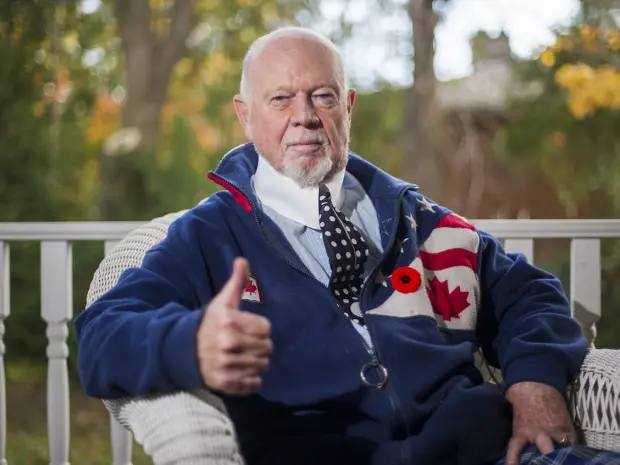
A new Leger poll has uncovered a three-way split among Canadians on the question of whether hockey commentator Don Cherry deserves the Order of Canada: Those who think he does, those who think he doesn’t, and those who have never heard of him.
The latest poll is titled Federal Government Satisfaction: Survey of Canadians, and asks about voting intentions, government performance and use of the notwithstanding clause, among other topics. But tucked away in its pages is this query: “There is currently a petition to have Don Cherry named to the Order of Canada. Do you feel Don Cherry should receive the Order of Canada?”
He is not a controversial choice.
A Regina man has been sentenced and fined $75,000 for falsifying federal immigration documents.
Abdulkader Ali pleaded guilty to submitting false immigration sponsorships to Immigration, Refugee and Citizenship Canada (IRCC) and counselling a refugee to provide false information on their IRCC application and counselling someone to sign as a sponsor without their knowledge.
Ali had been working as a refugee field worker with a local sponsorship organization at the time.
This should be treated as an act of demographic warfare by Islamists.
As the youngest of five children, Joe Boucher learned a lot from his older brothers and sister – how to ride a bike, how to navigate the miles of forest behind their house and how to skate and play hockey. But one thing he didn’t really pick up from them is how to speak French.
Although both of Boucher’s parents were of French-Canadian descent and spoke French with each other, it was once illegal to teach French in school in the US state of Maine, where the Bouchers lived. And so his siblings, amongst themselves, defaulted to English.
“Shame was heaped upon French speakers as being second-class citizens,” he recalls.
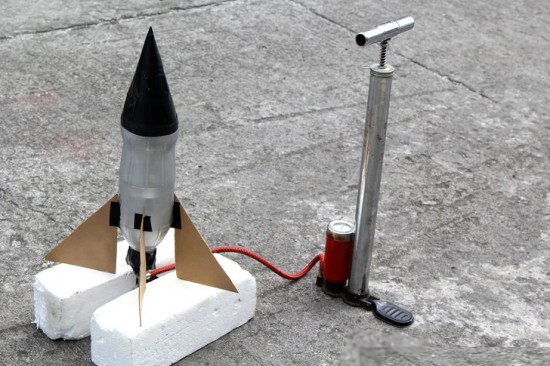
Canada has always liked to tell itself a flattering story about space. We built the Canadarm. We have serious engineers. We have respected astronauts. We punch above our weight. All true.
But there has always been one glaring omission in the national mythology: Canada still cannot launch its own payloads into orbit from Canadian soil. Even now, despite all the lofty rhetoric, we have had to rely on other countries actually to get the job done.
Despite the Department of Defence touting its new “fast-tracked” procurement strategy, a new Canadian-made assault rifle is already equipping Danish soldiers months before a Canadian will ever see one.
The C8 Modular Rail Rifle, first unveiled at an Ottawa military trade show in 2024, is lighter, more accurate and stealthier than the C7 assault rifle currently in Canadian Armed Forces service.
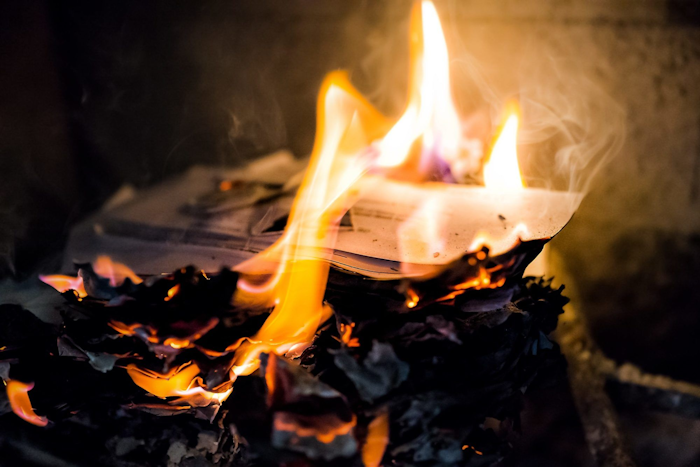
There were bonfires behind the Saskatchewan Legislature on the night of June 15, 1944. Earlier that day, the upstart Co-operative Commonwealth Federation Party had stormed to victory in the provincial election, and the defeated Liberal government responded by destroying papers and files in burning barrels. Not a single government document – except for two pages missed in the commotion – survived the culling.
The extent of the document purge was not fully appreciated until the new CCF administration found empty filing cabinets in government offices. New premier Tommy Douglas was furious. The first few weeks after the election were chaotic, Mr. Douglas recalled, but what made it worse was not having access to government records “in order to pick up where somebody has left off.”

In the United States, mass protests against authoritarianism are gathering under the banner “No Kings.” These rebukes allege that Donald Trump is something “un-American”: a king.
Supposedly, America is the land that does not have kings. America is said to represent freedom, opposing the authoritarian oppression that monarchs can signify. The protesters’ thinking goes like this: Get rid of Mr. Trump, America’s King, and the United States would again become “the land of the free,” because America is freedom and kings are tyrants.
Judging from the brief but very woke biographies provided the authors are male Karens high on dope. Nothing else explains TDS as severe.
The federal government is allocating up to $145 million for security during the upcoming World Cup.
Canada is co-hosting with the United States and Mexico, with thirteen matches scheduled to take place in Toronto and Vancouver this June and July.
The government said in a new release the funding is in response to “specific operational needs identified by the host provinces and cities.”
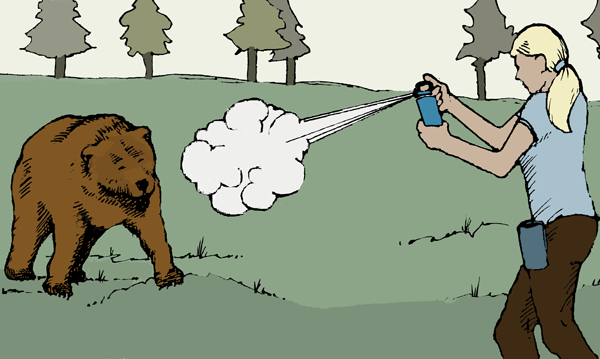
Ontario’s recent call to legalize pepper spray highlights a contradiction. Canadian self-defence law allows people to use force to defend themselves. But other laws make it a crime, or legally precarious, to possess the tools that would let them do so effectively.
The Bank of Canada kept its key interest rate at 2.25 per cent as expected on Wednesday and said any changes in the rate could be small if its projections for the economy held true.
Governor Tiff Macklem said the key rate is probably at about the right level if the economy follows the central bank’s projections, though he didn’t rule out future adjustments depending on how the risks play out.
“If the economy evolves broadly in line with the base case, changes in the policy rate can be expected to be small,” he said.
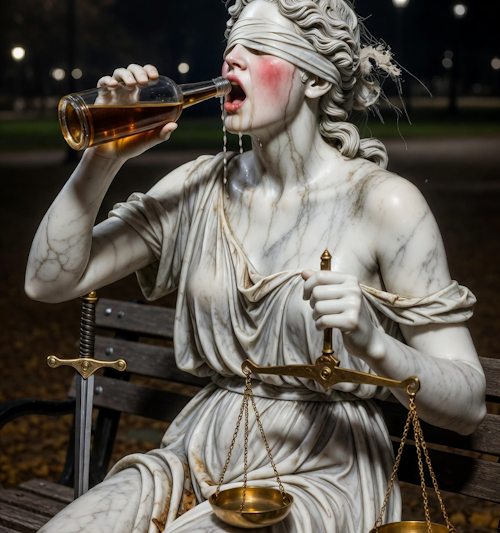
A Yellowknife judge has insisted a man who claimed to be Caucasian get a report meant for Indigenous offenders before he sentences him for breaking into a hotel.
Jeremy Kuneyuna — who already has 90 convictions — appeared in the Territorial Court of the Northwest Territories recently to be sentenced for breaking into a hotel.
