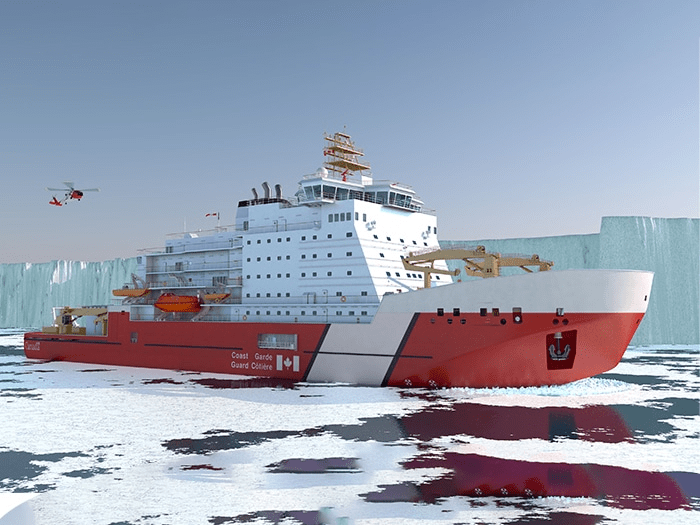
A former top naval commander and several defence experts have been left scratching their heads following the governing Liberals and Opposition Conservatives’ recent embrace of the notion of giving the Royal Canadian Navy heavy, armed icebreakers to defend the Arctic.
They question the military sensibility of building — possibly at a cost of billions of dollars — one, two or even three 10,000-tonne or more polar-class icebreakers with guns and missiles, vessels with possibly limited usefulness that would be vulnerable to both air and submarine attack.
Theatrics mixed with another LPC crony capitalist slush fund.
Canada is no longer a serious country — at least not when it comes to foreign policy and moral fortitude.
Over the last several years, Ottawa has failed to articulate any meaningful strategy in response to major global events, while at the same time jeopardizing some of Canada’s most important diplomatic relations. This should set alarm bells off in Washington. If Canadian and U.S. foreign policy remain this misaligned, the consequences for America could be serious.
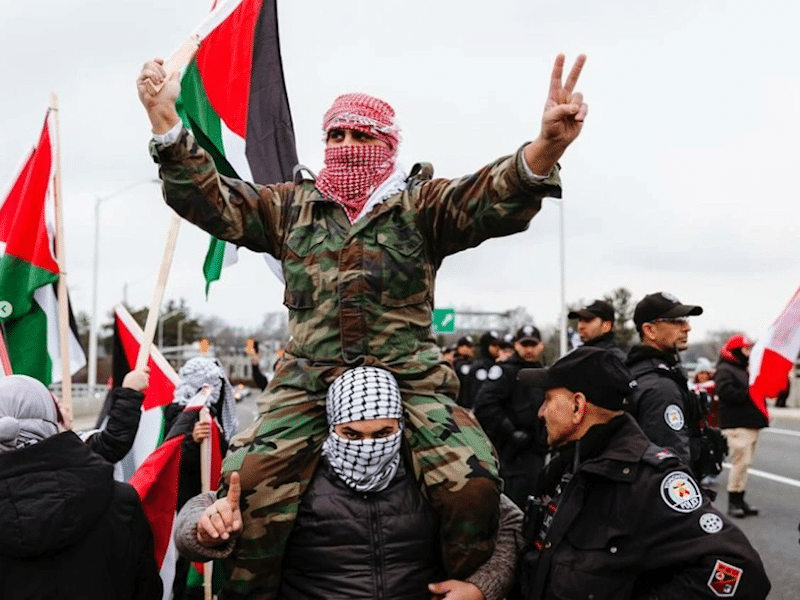
The days of exclusionary signs at golf clubs have been replaced by open calls for jihad in Jewish neighborhoods. This will not end well.
Late last year I sat down to breakfast in Ottawa, Ontario, with Dr. Einat Wilf, one of the world’s foremost experts on the Israeli-Palestinian conflict. She had come to Canada’s capital to speak about the war in Israel, what Palestinians really want, and the future of a possible two-state solution. Near the end of our chat, I asked if she had seen any of the “pro-Palestinian” rallies that had become a weekly occurrence in the city. “One of them went by my hotel last night,” Wilf said. “There’s a very dark energy to them. Serious pre-pogrom vibes.”
The word pogrom is the Yiddish word for “devastation” or “destruction.” What it refers to, historically, are the mob attacks that were a regular feature of life for Jews in the 19th and early 20th centuries—attacks that most often were passively or openly supported by the state.
The Canadian state has chosen to side with the Islamists for good reason.
It was the state that enabled Muslim immigration and now it has blown up in their faces.
The bureaucrats and politicians responsible for this fiasco fear having to face accountability for their heinous act of social engineering.
So they chose to double down and support these latter day Storm Troopers because they fear them more than they fear the Jews and anyone else for that matter.
In a just world they would be in shackles and they know it.
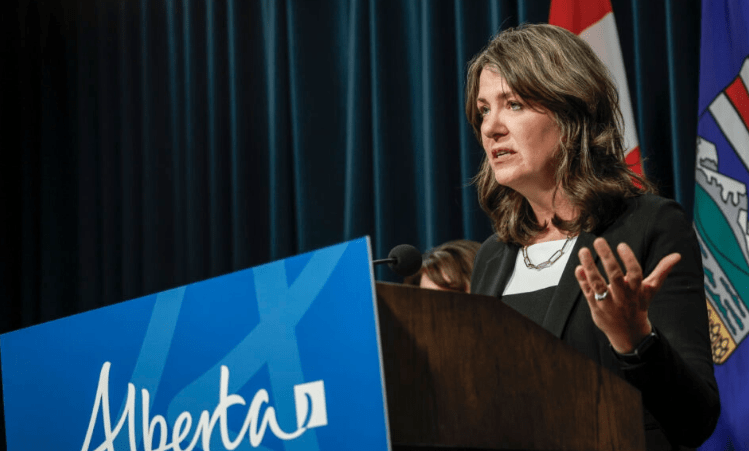
The stakes for Western alienation were raised this week when Alberta Premier Danielle Smith said she would allow a question on separation to go to a referendum if it meets the requirements. While Smith made it clear she doesn’t support separation herself, she said Albertans holding such views should not be called “traitors.”
Saskatchewan Premier Scott Moe also hasn’t ruled out allowing a vote on separation if residents triggered legislation for a plebiscite, though he said he still hopes Saskatchewan can continue to be part of Canada.
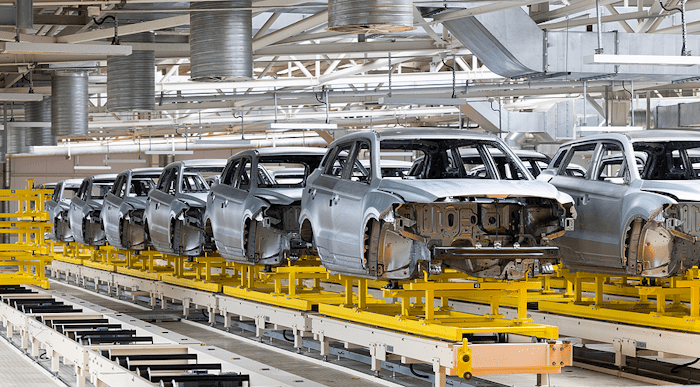
Despite campaign promises by Prime Minister Mark Carney that Canada can dodge U.S. tariffs with an “all in Canada” auto sector, a new C.D. Howe Institute report claims that the only realistic future for Canadian auto manufacturing is to make nice with the Americans.
“To maintain our manufacturing base, Canada must either exponentially expand its share of the domestic market or achieve healthy sales across the larger North American market,” reads the new report written by Stephen Beatty, the recently retired corporate secretary of Toyota Canada.
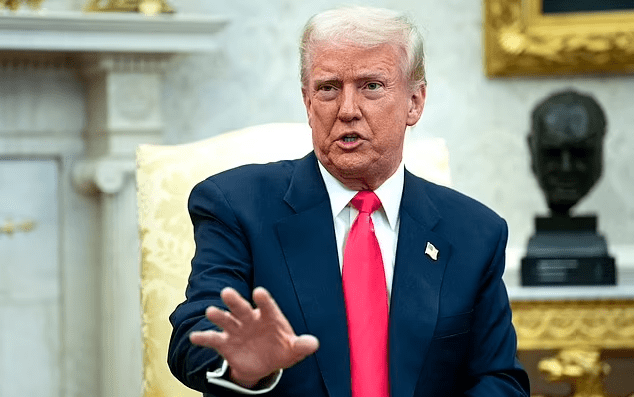
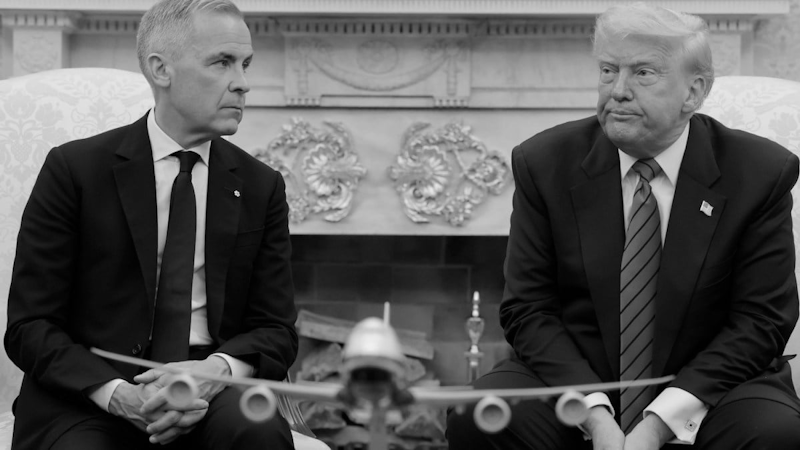
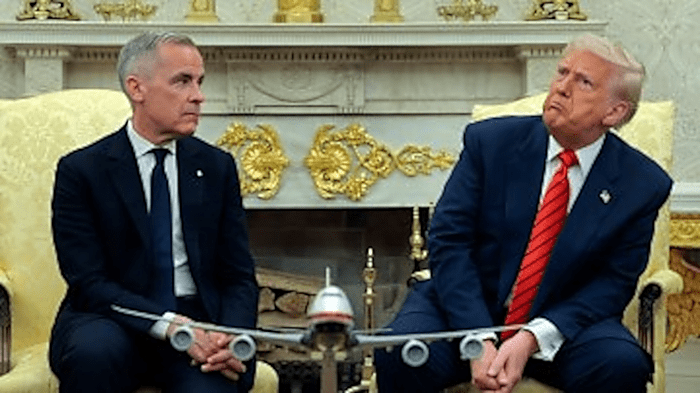
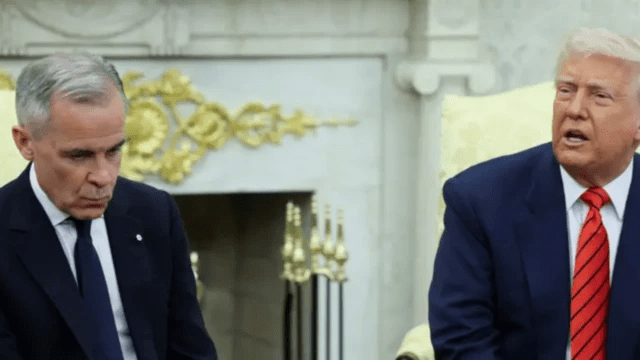
When Canada’s prime minister, Mark Carney, met with Donald Trump at the White House this week, the notoriously over-prepared former central banker was no doubt expecting to discuss tariffs, trade and defence policy.
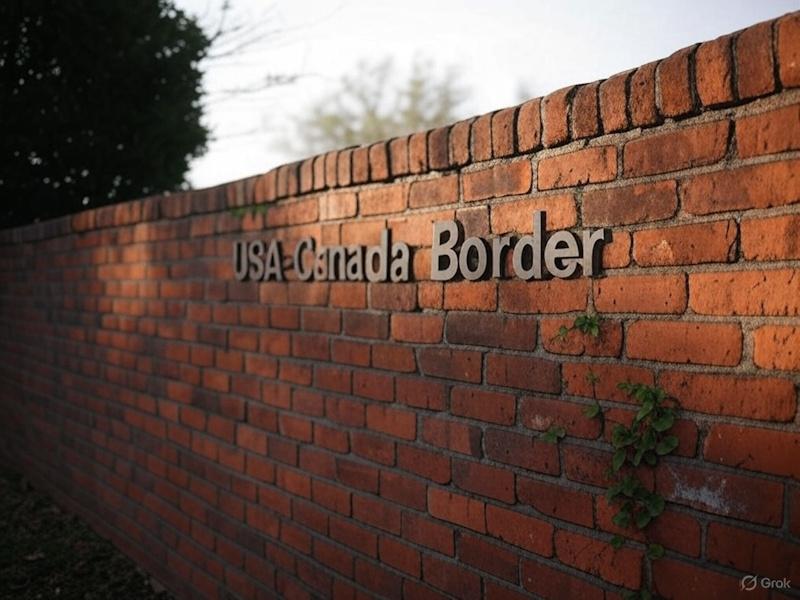
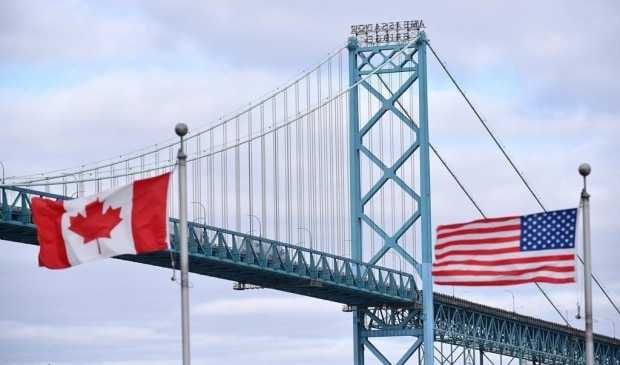
But as he sat beside the president, he was instead treated to a discourse on one of Trump’s more recondite fixations: the centuries-old border between Canada and the United States.
“Somebody drew that line many years ago with, like, a ruler – just a straight line right across the top of the country,” he told Carney and the mass of assembled reporters.
Washington—It was supposed to be Mark Carney’s big moment. His first trip to Washington as Prime Minister, the Davos man turned national leader standing toe-to-toe with Donald Trump in the Oval Office. He arrived with a polished script, prepped talking points, and just enough smugness to pass for leadership. But by the time he walked out, it was clear who held the cards—and it wasn’t the man from Ottawa.
h/t PA Cat
(Please share: IMPORTANT)
The Carney/Trump Meeting Indicates the Possible Demise of Canada – If you understood it.
For those capable of reading the economic and political signals, the 06 May 2025 White House meeting between Carney/Trump was a clear signal of the extreme… pic.twitter.com/XqovQ5G2bA
Asylum claims doubled at a Quebec border crossing in April as the Trump administration seeks to strip legal protections from hundreds of thousands of migrants in the United States.
There were 2,733 asylum claims last month at the Saint-Bernard-de-Lacolle port of entry, south of Montreal. That’s up from 1,356 claims in March and 755 in February, according to data from the Canada Border Services Agency.
Become the 51st State. Start the deportations. Problem solved.
After his first visit to the White House for a meeting with United States President Donald Trump, Prime Minister Mark Carney’s path towards the start of Canada-U.S. negotiations to end the mounting trade war is murky with uncertainty.
Carney (Nepean, Ont.) and a small team of his cabinet ministers—International Trade Minister Dominic LeBlanc (Beauséjour, N.B.), Foreign Affairs Minister Mélanie Joly (Ahuntsic-Cartierville, Que.), and Public Safety Minister David McGuinty (Ottawa South, Ont.)—travelled to Washington, D.C., on May 5 where they held a much-anticipated meeting with Trump at the Oval Office on May 6.
White House official Stephen Miller says U.S. President Donald Trump has helped to secure a new trade and defence relationship with Canada, following the first meeting between Trump and Prime Minister Mark Carney.
“President Trump has opened up a completely new relationship with Canada because of his strength and because of his diplomacy,” Miller said during an interview with Fox News on May 7.
Hong Kong Police Detain Relatives of Canadian Candidate Targeted by Beijing Election Interference
HONG KONG / OTTAWA — In a striking escalation of Beijing’s interference in Canada’s Parliament and its global campaign to silence dissent, Hong Kong police have reportedly detained and questioned relatives of former Conservative election candidate Joe Tay—who was targeted by aggressive Chinese cyber and ground operations during the recent federal campaign, according to The Bureau’s intelligence sources.
Canada’s new Prime Minister Mark Carney is not your average political leader. He didn’t rise through the ranks of parliament or build his political clout through years of constituency work. He is an unelected central banker turned international power broker with deep ties to the World Economic Forum, the Great Reset movement and the ESG (Environmental, social and governance) agenda.
Some might say that his lack of political experience is a problem for Carney, but I disagree. While many of his country’s leaders were playing politics, Carney was working to transform the world through influential organizations and financial institutions. He was one of the Great Reset’s masterminds, and now, he’s more powerful than ever.
Donald Trump’s meeting with Canadian prime minister Mark Carney on Tuesday got off to a positive enough start. They greeted each other in a pleasant manner. Their handshake was cordial. They got down to business.
Before Carney arrived in Washington DC a few hysterical voices in the media had suggested that it was destined to turn into a confrontational shouting match. That was never likely. Yes, many Canadians are furious at Trump due to the ongoing tariff war. Yes, Carney played up this rhetoric during the election campaign. During his victory speech, he said Trump wanted to “break us, so that America can own us” and “that will never, ever happen”.


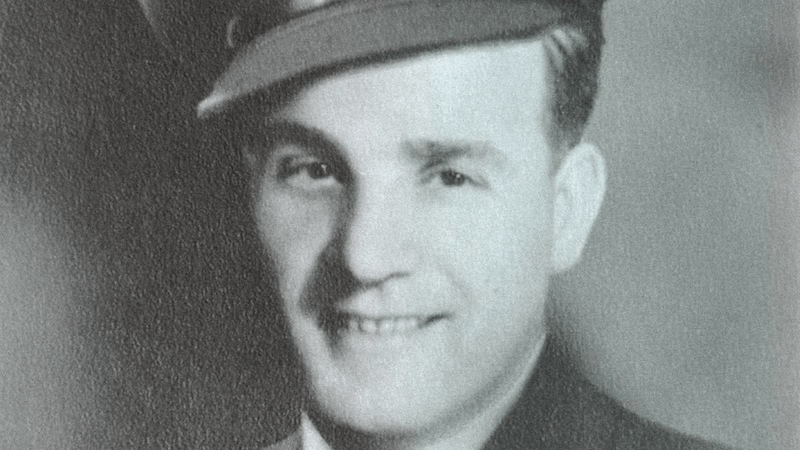 There is a street named after him in a British town.