I assume many of you woke up this morning to news that Zohran Mamdani has won the Democratic primary, and will be running in the November New York City mayoral election.
You have my sympathies.
And though that election is still several months off, and Mamdani will be running against, among others, the incumbent Mayor Adams (running as an independent after leaving the Democratic party in April), the polls suggest that Mamdani has a solid chance of becoming New York’s 111th mayor.
Muslim Brotherhood and Qatar have established extensive network across Canada: report
The Muslim Brotherhood, an Islamist organization that has declared “jihad against the Jews,” has established a vast network of charities and fundraising across Canada, a new think-tank report finds.
“For decades, organizations affiliated with the Muslim Brotherhood, of which Hamas is also an adherent, have managed to embed themselves at all levels of Canadian society,” the Institute for the Study of Global Antisemitism and Policy (ISGAP) argues.
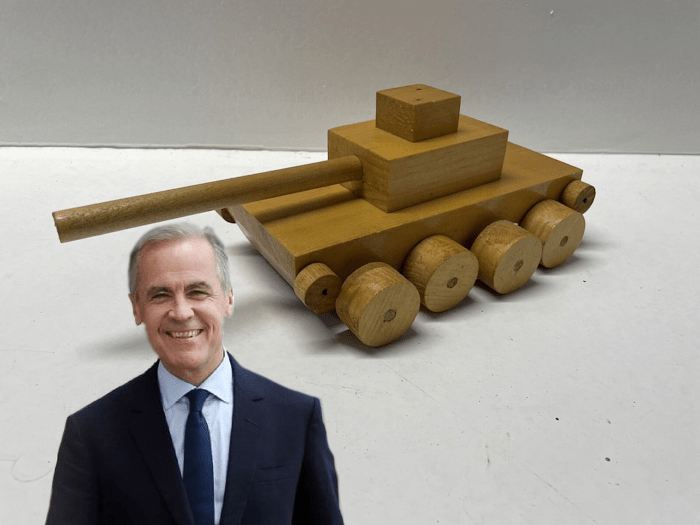
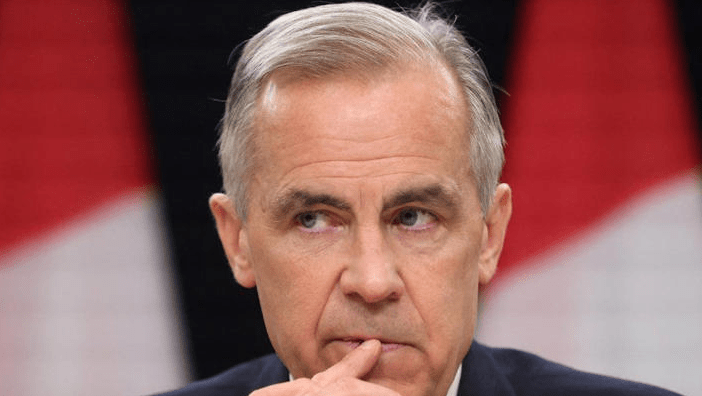
On Monday June 9, Prime Minister Mark Carney did the unthinkable. He promised to immediately boost defence spending to meet the NATO spending objective of 2 per cent of Gross Domestic Product (GDP) within the current 2025 – 2026 fiscal year.
The original defence budget tabled for this same timeframe was $40 billion or roughly 1.3 per cent of Canada’s GDP. With Carney’s new directive, spending on defence and security is to balloon to $62.7 billion prior to April 1 2026.
While the broad 25 percent tariffs once floated by President Donald Trump never fully materialized, Canada’s retaliatory measures—covering over 1,800 U.S. product lines, representing more than $90 billion in Canadian imports from the U.S. last year—remain largely in place. Though some exemptions and supports have softened the impact (and created confusion), the economic consequences of these tariffs are starting to take shape.
Canada Issues Deportation Orders, Cancels Visas for Iranian Regime Members
The federal border agency says three people have been found ineligible to remain in Canada in recent years for being senior officials of the Iranian regime.
The Canada Border Services Agency says deportation orders were issued for all three and one has been removed from Canada.
“… But two questions from participants brought into sharp relief how immigration raids and the rolling back of trans rights is scaring some Canadians away from U.S. visits.
“A lot of members of the queer community — a lot of Canadians feel unsafe, Canadians who are 2SLGBTQI+ absolutely feel unsafe going there,” said Vivian Myers-Jones, a member of the Saint John Pride board.”
Without Fake News CBC I would not know that hordes of Canadian transvestites routinely descended upon Maine in the halcyon days before Trump.
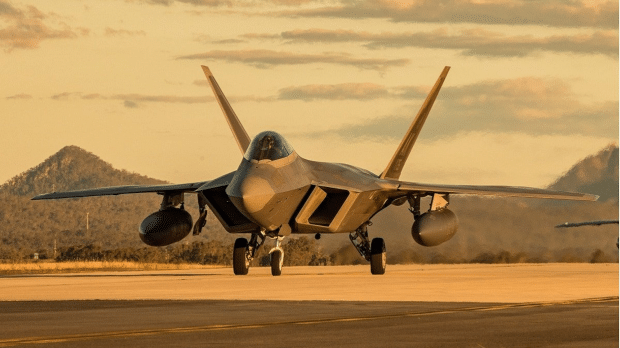
Prime Minister Mark Carney said he met with European defense suppliers about jets and submarines, and expects to conclude a review of a major contract for Lockheed Martin Corp. F-35 jets as soon as this summer.
The remarks came minutes after he signed the North Atlantic Treaty Organization pledge to increase core defense spending as a share of gross domestic product to 3.5% from 2% over a decade. Carney has said Canada should stop sending the vast majority of its defense dollars to the US, after President Donald Trump imposed punishing tariffs and repeatedly said Canada should be an American state.
Canada’s elections commissioner says she has no evidence the result of the federal election in April was affected by foreign interference, disinformation or voter intimidation.
In a preliminary report Wednesday, Commissioner Caroline Simard says her office received more than 16,000 complaints about the spring campaign which ended on April 28.
Canadian border authorities say they are investigating or taking enforcement action in 66 cases involving suspected senior Iranian officials who may have been allowed into Canada, despite a law that bars them from entering the country or remaining in it.
Of the 66, the Canada Border Services Agency has so far identified 20 people as inadmissible because they are believed to be senior Iranian officials, according to figures the agency provided to The Globe and Mail.
Prime Minister Mark Carney has pledged to meet Canada’s NATO obligation to invest two per cent of GDP in defence by the end of the year. But at a time of growing political instability, it’s important to remember that soldiers are not the only ones protecting Canada.
Working in the shadows, Canada has a civilian army of more than 6,400 intelligence practitioners in the Canadian Security Intelligence Service (CSIS) and the Canadian Security Establishment (CSE) — both with headquarters in Ottawa, where most of their staff are — working around the clock to keep us safe. Unfortunately, according to a Public Safety Canada survey in 2021, 54 per cent of Canadians don’t know what they do. Also, despite the vital role they play in Canada’s defence, their budgets are not included in NATO’s calculation of Canada’s defence spending.
It is widely agreed that if Canadians don’t start focusing more on productivity and prosperity, we’re going to be in a heap of trouble strategically as well as economically. But headlines like “prepare for a decade of thrift and lower living standards” underline the familiar problem of trying to fight an enemy with outposts inside your own head. We’re so certain ever-bigger government makes us healthy, wealthy, and wise that when it makes us ill, poor, and baffled, we think yeah, we can’t afford to spend but we also can’t afford to cut. So the usual political incentives keep us spending, wildly.
You see this problem in the lax fiscal performance of governments of nearly every stripe nearly everywhere. But even more in the way their tongues praise fiscal prudence while their hands mock it.
As tensions returned to a simmer between Israel and Iran amidst a ceasefire agreement, a new poll conducted before the shaky armistice found that far more Canadians are distrustful of Iran than those who have faith in the Islamic Republic.
But data from a Leger Marketing poll for the Association for Canadian Studies poll showed that younger generations are more apt to trust Iran and think it wouldn’t be good for the regime of Supreme Leader Ayatollah Ali Khamenei to collapse and be replaced by new leadership.
Prime Minister Mark Carney, along with several provincial premiers, have made the claim that conditions of “urgency,” “necessity” and “unprecedented crisis” justify initiating legislative grants of sweeping discretionary powers to the government to act in times of emergency.
U.S. threats to Canadian sovereignty and chaotic tariffs have been layered onto existing crises of economic insecurity, the housing crisis and the climate emergency — all of which have been harnessed by political leaders to rationalize exceptional treatment for priority infrastructure projects.
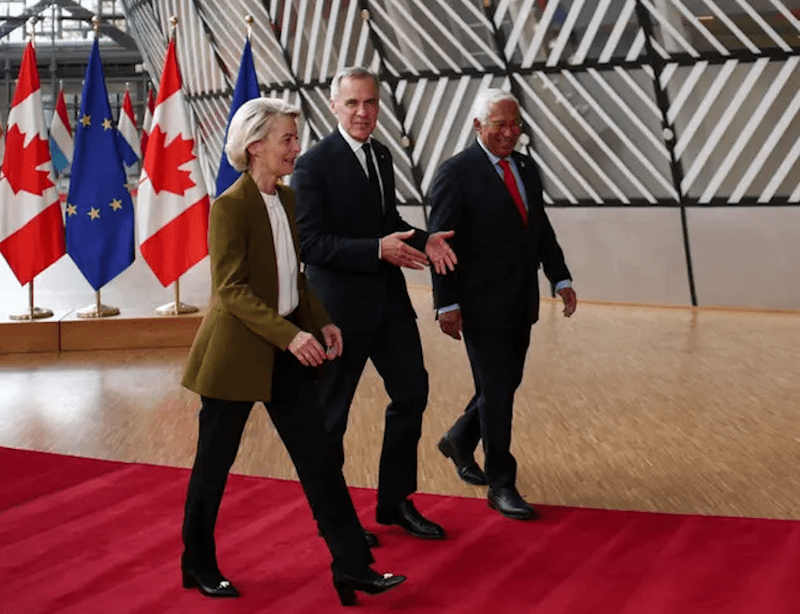
Canada signed a defense partnership with the European Union on Monday, the latest indication that two of America’s closest allies are deepening their military cooperation as President Trump pulls away and promises to reduce the United States’ role in international security.
Mr. Trump has been pushing for other countries in NATO — which includes Canada and most European Union nations — to invest far more in their militaries, accusing them of relying too much on the United States.
He has called into question America’s commitment to defending some NATO members and has launched a trade war against some of the closest traditional allies of the United States.
Trump is smart to ditch these parasites.
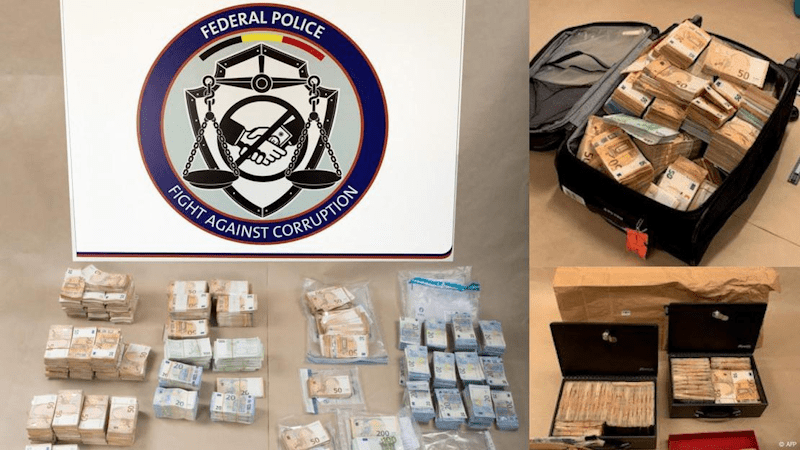
The EU consists of corrupt, preening authoritarians bleating about democratic ideals while lining their pockets.
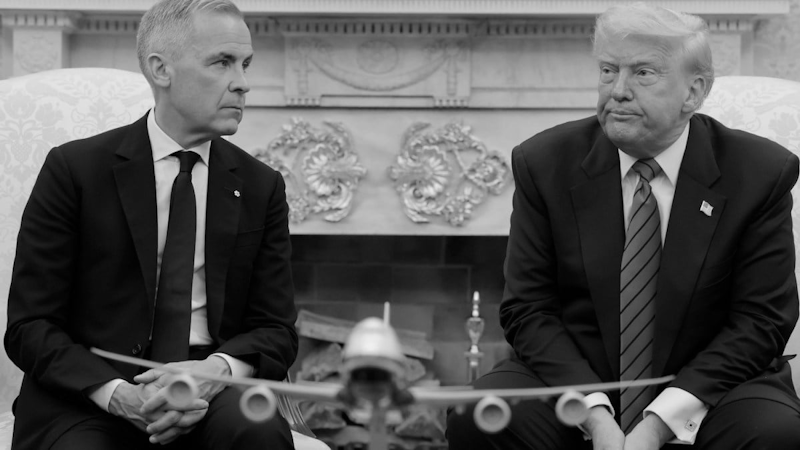
OTTAWA — Prime Minister Mark Carney lowered expectations on Monday about reaching an agreement with the United States for an economic and security pact by July 21.
Speaking in Brussels, where he signed a defence partnership with the European Union (EU), Carney was asked which options Canada would be considering, besides higher tariffs on U.S. steel and aluminum, if he does not strike a deal with U.S. President Donald Trump within the next 30 days — as agreed to during the G7 summit last week in Kananaskis.