US Expects USMCA to Remain in Force, With ‘Separate Protocols’ for Canada and Mexico

US Expects USMCA to Remain in Force, With ‘Separate Protocols’ for Canada and Mexico

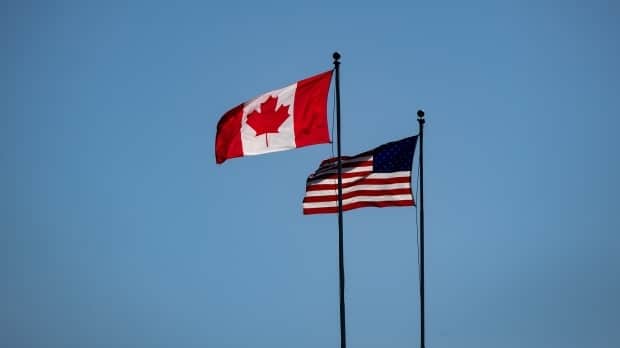
Negotiations to renew ‌North America’s free-trade deal are likely to extend beyond July 1 and lead to separate agreements with Canada and Mexico, the top U.S. negotiator says.

U.S. Trade Representative Jamieson Greer told attendees at an April 7 event at the Hudson Institute in Washington that the White House may need to take steps to reframe the way the United States-Mexico-Canada Agreement (USMCA) functions to successfully negotiate with each country.


Share

One year after the U.S. imposed tariffs on Canada’s auto sector, here’s how industry leaders say it’s going

One year after the U.S. imposed tariffs on Canada’s auto sector, here’s how industry leaders say it’s going

One year after U.S. President Donald Trump levied tariffs on the Canadian auto industry, leaders in the industry say they are eager to see an arrangement that restores predictability to the Canada-U.S. trade relationship.

The president and CEO of the Canadian Vehicle Manufacturers Association (CVMA) said he was initially optimistic that the tariffs would be temporary and that Canada would arrive at a new trade agreement with the U.S. that would see them removed.

Now, he said, he’s concerned by the fact that there doesn’t seem to be a resolution in sight.

Share

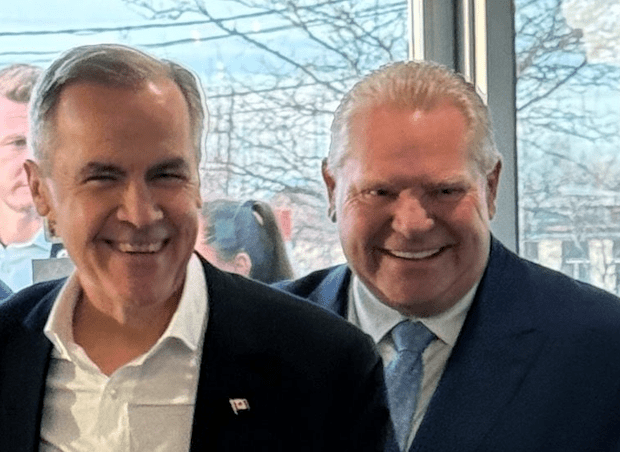
Doug Ford and Mark Carney have bought Ontario some time. But the hard choices lie ahead

Mark Carney and Doug Ford’s deal to cut development charges by up to 50 per cent for three years won’t, by itself, solve the province’s housing crisis. But it will provide much-needed temporary relief to homebuyers and renters.

Housing news has not been all bad in recent years, as the drop in rents and resale home prices has been welcome news for Ontario renters and buyers. However, even as prices fell, housing starts declined, and pre-construction sales dried up in the GTA because construction costs have not kept pace with prices. This has created a paradox: homes remain too expensive for most middle-class buyers, yet not expensive enough to build profitably.

Share

The top 10 trade irritants in U.S. report on foreign trade barriers

The United States has released its 2026 report on foreign trade barriers, highlighting a series of concerns about Canadian policies as both countries prepare for critical United States-Mexico-Canada Agreement (USMCA) renewal talks this summer. Here are the top 10 trade irritants, as compiled by CTV News, from the United States Trade Representative’s report for 2026.

Share

American booze bans, ‘Buy Canadian’ policy flagged by U.S. as trade irritants: report

Provincial rules around alcohol and the federal government’s “Buy Canadian” policy have been flagged in a new report citing several trade irritants between Canada and the U.S.

The annual document prepared by the Office of the United States Trade Representative said market access barriers imposed by provincial liquor control boards “greatly hamper” exports of U.S. wine, beer and spirits to Canada.

Share

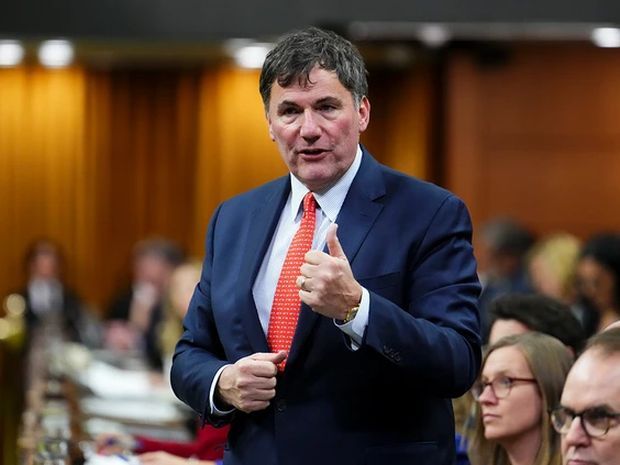
Canada’s Iran War Stance Not Impacting US Relations, Formal Trade Talks to Start in ‘Due Course’: Minister Leblanc

Canada-U.S. Trade Minister Dominic LeBlanc says relations between Ottawa and Washington have not been impacted by their differing stances on the Iran war.

U.S. President Donald Trump in recent days has publicly criticized some allied countries for not facilitating U.S. military operations or for not playing a role in helping restore freedom of navigation in the Strait of Hormuz.

LeBlanc told reporters in Ottawa on March 30 he would not comment on that specific matter, while adding that Canada’s stance has “not been an impediment at all” during talks with U.S. officials.


I bet.

Share

STEWART: Canada’s anti-American pivot is economic suicide

Canada did not choose its geography. However, it is our competitive advantage, and it cannot be overlooked, understated, taken for granted, or copied. We, as Canadians, face a fundamental question amidst rising global uncertainty and economic nationalism: how should we position ourselves relative to our most important economic partner, the United States (US)?

(Incognito)

Share

Chinese Cars Can’t Cross From Canada to US, Trump’s Envoy Says

The US won’t allow Chinese electric cars from Canada to enter its market, President Donald Trump’s ambassador in Ottawa said, after a January deal in which Prime Minister Mark Carney lowered tariffs on those vehicles.

“Those cars can come in from China, come into Canada, but they’re not going to cross the border into the US,” Pete Hoekstra said in an interview with Canada’s Rebel News. “That ain’t gonna happen.”

Share

China denies forced labour allegations amid fallout from Michael Ma’s comments

Camp Uyghur

China is again denying claims of forced labour in the country as calls grow for Prime Minister Mark Carney to clarify Canada’s stance on the issue amid fallout from comments made by Liberal MP Michael Ma that appeared to cast doubt on reported human rights abuses.

The Chinese Embassy in Canada pushed back on the allegation that forced labour is used in the production of Chinese electric vehicle components in a social media post Friday night, calling it a “blatant lie” that some are using to undermine the Canada-China EV deal.

Share

Ixnay on the No Kingsay

U.S. lawmakers demand answers after Canadian man says border officers made him give DNA sample

American lawmakers are demanding answers from the Trump administration after a Canadian man says U.S. customs officers held him for three hours at the border and forced him to provide a DNA sample before sending him home.

… On the morning of Oct. 18, 2025, he tried to enter the U.S. at the Blue Water Bridge near Sarnia, Ont. He says he wanted to join Americans at the “No Kings” rally across the river in Port Huron, Mich., for “reasons of interest to Canada, but also to let them know that we care about them.”

Share

Polls show Americans dislike Canada more than ever, and that’s bad news for the trade war

WASHINGTON, D.C. — Canadians’ affection for the United States tends to rise and fall with whoever’s in the White House. It dropped for president George W. Bush, rose for Barack Obama, and then plunged during Donald Trump’s first term, only to rise again with Joe Biden. In the first year of Trump’s second presidency, however, Canada’s fondness for its southern neighbour has plumbed new lows.

Share

HEINRICHS: ‘Drill baby drill’ vs. net zero — is Canada becoming America’s poor cousin?

According to the US government, climate change from man-made greenhouse gases is fake news. Lee Zeldin, director of the Environmental Protection Agency, brands it as nothing but “climate change religion,” while President Trump calls it a hoax and “perhaps the biggest scam in history.” The climate-change debate is dead and over — at least under one roof.

On this track, the US government is now shredding a tall stack of greenhouse-gas regulations. It’s being called the “single largest regulatory action in US history.”

(Incognito)

Share

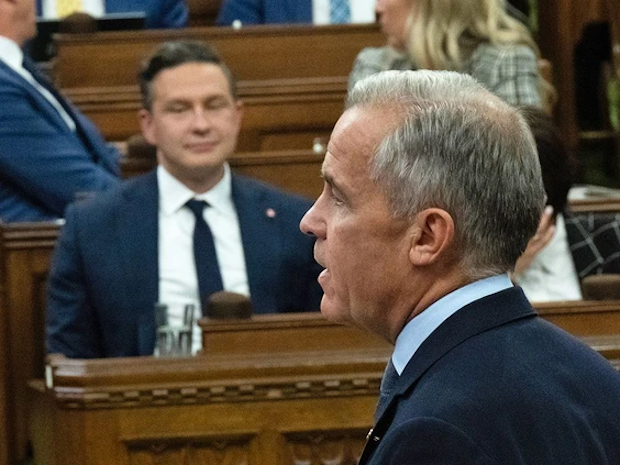
Carney and Poilievre find rare common ground on the global stage

They may be bitter rivals in the House of Commons, but outside the chamber, recent events may have led to Conservative Leader Pierre Poilievre and Prime Minister Mark Carney forging a bond.

In recent interviews, Poilievre has said he is communicating regularly with Carney to present a united front while travelling abroad.

“Even on my visit [to the United States], I’m sending him text messages to tell him what’s going on, to try and support his work … we both want what’s best for Canada,” Poilievre told American podcaster Joe Rogan this week.

That’s no fun.

Share