As Arctic Threats Rise, Canada May Need to Lean on the United States

For the past seven decades, Canada has been the junior partner in a military agreement with the United States to protect the Canadian Arctic.

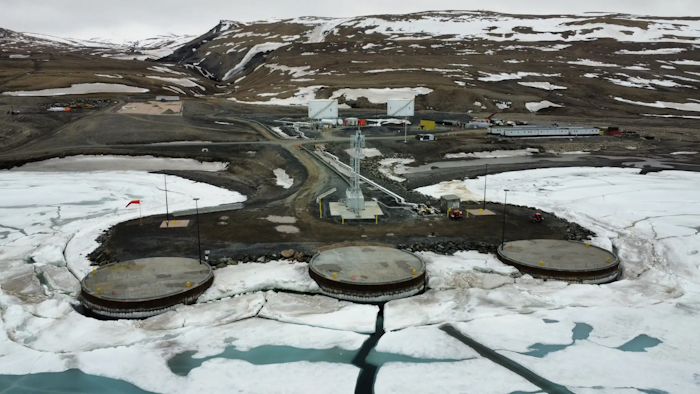
The Canadian and American flags could be seen billowing at a distance in the all-white Arctic landscape — the Maple Leaf visibly lower than the Stars and Stripes.

The asymmetry had a simple explanation. Flags across Canada, including this one in the hamlet of Cambridge Bay in the Canadian High Arctic, were flying at half-staff to mourn the recent mass killing at a school in Tumbler Ridge, British Columbia.

But its symbolism, however unintended, was a reminder of Canada’s increasingly uncomfortable situation in its Arctic region: Unable to defend it by itself, Canada remains dependent on the United States, whose president has repeatedly threatened to annex it, and who has also set his eyes on Canada’s Arctic neighbor, Greenland.

Share

Canada wants to build up its long-neglected Arctic. The hard question is how

Ottawa wants to modernize a region in the north that’s about six times the size of Texas, ‘just like in the 1800s’

Picture an Arctic territory, marginalized by its own country, almost entirely lacking roads, ports and power sources, but rich in mining potential and suddenly feeling vulnerable to outside threats.

It’s not Greenland; it’s the Canadian Arctic.

After decades of underinvestment, Ottawa is now turning its attention to the country’s north amid an outbreak of nationalism and new spending, in reaction to provocations by the Trump administration.

Share

Mixed reviews for Prime Minister Mark Carney’s northern defence plan

OTTAWA — Canada’s $35-billion plan to strengthen defence along its northern frontier is getting mixed reviews.

While Canada has a history of making lofty plans — especially when it comes to its underfunded and under-equipped military — the devil always ends up showing itself in the details.

Share

The Northwest Passage Will Be Decided by Capability, Not Law

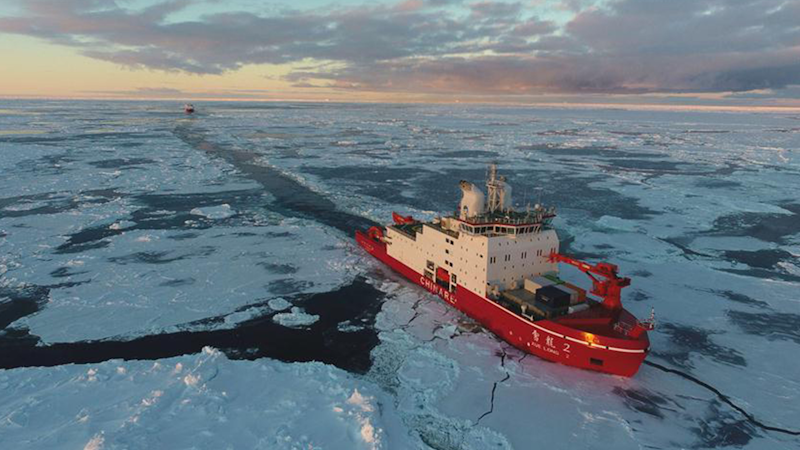
Recent attention has focused on Greenland as a focal point of Arctic strategy, a reminder that geography once treated as peripheral now sits squarely within the logic of continental defense. A similar shift is unfolding elsewhere in the Arctic, though with far less public notice. The Northwest Passage—the network of sea routes threading Canada’s Arctic Archipelago between the Atlantic and Pacific Oceans—has moved from a seasonal curiosity to a corridor of growing strategic consequence. As activity increases, questions long treated as theoretical, including the legal status of those waters, are being pushed toward practical resolution.

Share