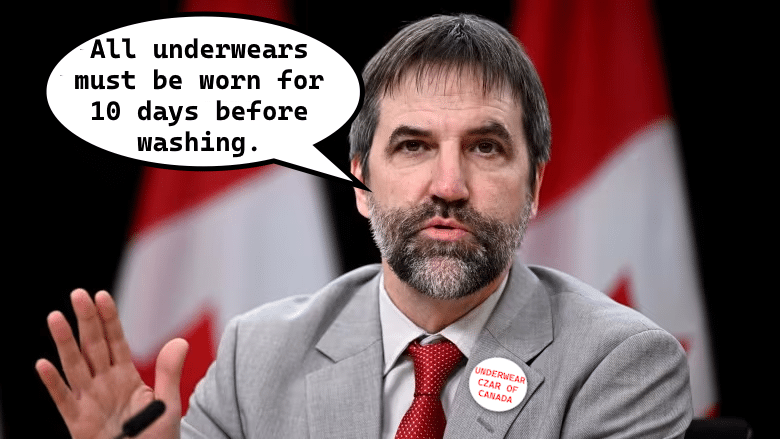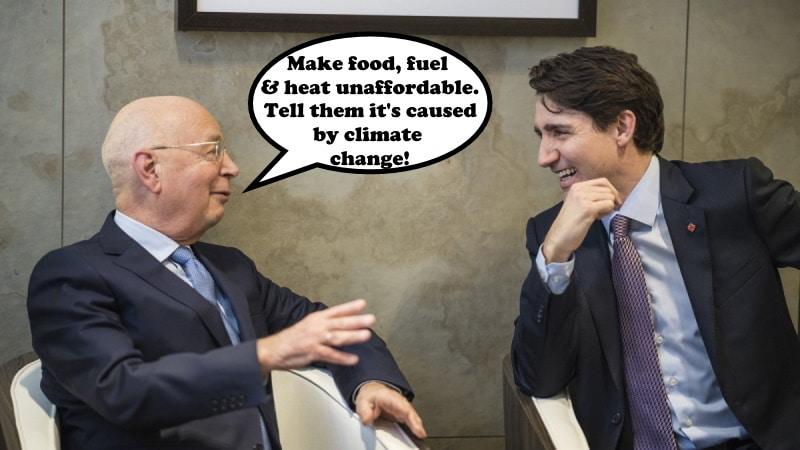

Guilbeault, CTV publish fake news about 2024 ‘hottest year ever’ as LA burns

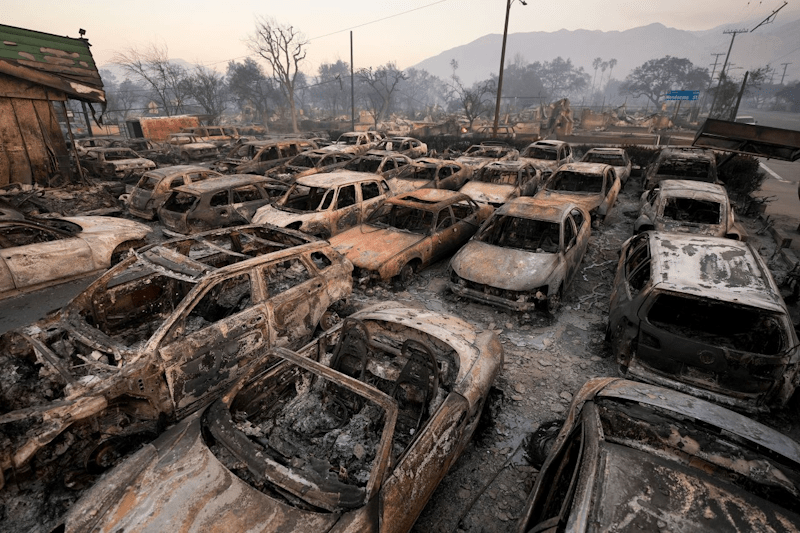
As LA burns, politicians and media are ramping-up global warming hysteria.

According to Greenpeace co-founder Patrick Moore, supported by multiple data sets, the overall trend in Earth’s temperature is actually decreasing — debunking a claim by CTV, posted to social media by federal Environment Minister Steven Guilbeault — that 2024 was the “hottest year ever.”

Share

GOLDSTEIN: Fixing Trudeau’s flawed climate change policies requires more than killing his carbon tax

While Conservative Leader Pierre Poilievre is calling for an “axe the tax” election this year, the Liberals’ carbon tax is merely the tip of the iceberg when it comes to the added costs imposed on Canadians by current federal climate change policies – many of which are inefficient, counterproductive and illogical.

Share

The Global EV Calamity

The years just keep getting warmer. I mean this facetiously. At first, the U.S. National Oceanic and Atmospheric Administration told us 2016 was 0.94 degree warmer than the 20th-century average. Then the agency raised its estimate by several steps to 1 degree in 2020 before dropping it back to 0.99 perhaps under Trump influence. With Democrats back in charge under President Biden, 2016 started getting warmer again, reaching 1.03 degrees in 2023. The latest NOAA chart shows it 1.04 degrees warmer than the baseline.

Share

In latest setback for Mark Carney’s Net Zero Nuttery JPMorgan walks out of climate banking group

Ignatieff but without the charm.

An exodus of US lenders from a leading international climate coalition has intensified after JPMorgan Chase became the latest Wall Street player to leave the Net Zero Banking Alliance.

The move by America’s biggest bank comes after five other leading lenders, including Goldman Sachs, Morgan Stanley, and Citigroup, withdrew from the climate group in recent weeks.

The spate of exits deals a blow to efforts by Mark Carney, the former Bank of England governor who is now weighing a bid to become Canada’s next prime minister, to push the financial industry to do more to cut greenhouse gas emissions. This is because the coalition is part of the Glasgow Financial Alliance for Net Zero (Gfanz), a broader initiative unveiled by Carney in 2021 in the run-up to the Cop26 climate conference.


Gee what a coincidence! American firm employing Mark Carney’s wife receives huge contracts from Government of Canada

Share

Some Liberal MPs want to reconsider ‘divisive and difficult’ carbon tax in leadership race

OTTAWA — The upcoming race to replace Prime Minister Justin Trudeau is a chance for Liberals to return the party to the political centre, some of its members of Parliament say, with others hoping his exit means Liberals can turn the page on what has become one of its most controversial legacies: the consumer carbon tax.

Share

CHARLEBOIS: Canada needs ‘axe the tax’ election but not for reasons you think

For several years, the Conservative slogan “Axe The Tax” has resonated with Canadians, driven by the belief that the carbon tax has exacerbated the cost of living.

When it comes to food, however, the reality is far more nuanced. Canada has been sleepwalking through this policy issue for years, leaving the public narrative to carbon-tax-supporting academics and politicians who reassure Canadians that everything will improve as the economy decarbonizes.

Share

Solar and wind power make electricity more expensive

As a new year dawns and winter takes hold, it’s worth considering the cost of energy. After a meeting in Italy last spring, the G7 countries (including Canada) pledged to triple renewable energy sources (e.g. wind, solar) globally to ensure an “affordable” energy future. But while direct costs for wind and solar are dropping, they remain expensive due in part to the backup energy sources required when renewables are not available.

Share

How Europe crashed its car industry

Short-sighted policy gave China the upper hand

The Mirafiori car plant is the last surviving automobile factory in Turin, the historical engine of the Italian car industry. At Mirafiori’s post-war peak, Fiat manufactured one million vehicles a year, employing 60 000 people. For much of this past year, so few cars have been produced for Stellantis at the plant that one worker recently remarked that “Mirafiori has already been closed. It’s just that it reopens sometimes”.

It has been a terrible few months for most of the world’s once-leading automobile companies. In September, Volkswagen gave notice of plans to shut at least three of its 10 German factories and cut wages by 10%, breaching a 1994 agreement to protect jobs in its home country until at least 2029, prompting rolling two- and four-hour strikes. As production ground to a halt again at Mirafiori in November, Stellantis made public that the Vauxhall plant at Luton would close in April 2025, cancelling the company’s prior plan to produce Vivaro electric vans there. In the same month, Ford indicated it would cut 3,800 jobs in Europe by 2027, while Nissan announced 9,000 job losses and a 20% cut in worldwide production. A senior official at Nissan is reported to have said that the Japanese company has “12 or 14 months to survive”.

Share

Ford faces £100m bill for failing to sell enough electric cars

Ford, for five decades the bestselling car brand in the UK, could be the one of the biggest losers from Britain’s attempt to make manufacturers sell more electric cars.

This week the government began a review of the zero emission vehicle (ZEV) mandate brought in by the previous Tory administration.

Unless there is a substantial revision of the targets, however, Ford could be facing an uphill battle to avoid tens of millions of pounds in penalties in future years for failing to deliver enough electric cars.

Share

Frankie Champers signals collapse of Canada’s EV strategy, as era of chasing big new battery plants comes to an end

Industry Minister signals shift in Canada’s EV strategy, as era of chasing big new battery plants comes to an end

The era of Canada putting down big bets on massive new electric-vehicle battery plants is coming to end.

As Industry Minister, François-Philippe Champagne has led the strategy that’s seen Stellantis N.V., Volkswagen Group and Honda Motor Co. commit to new factories in Ontario that represent some of the biggest investments in the history of Canada’s auto sector.

A few months ago, Mr. Champagne was still talking up the possibility of landing one or two more such commitments from global automakers.

Share

Europe: The Fall of the Holy Renewable Empire

Solar and wind power production falls drastically during unfavorable weather conditions. It happens, in fact, every year. This condition, however, now has far-reaching economic and environmental repercussions, revealing the flaws in an energy policy based on intermittent renewable energies. Why does Germany, while having one of the highest carbon footprints, now consume the most expensive electricity in Europe? How did the country lose its energy autonomy?

Share