Gary Mauser: Do Canadians Have the Right to Carry Arms?


Melanie Ward remembers the moment she learned her son was dead with haunting clarity.
“I just dropped to my knees and screamed,” she said.
Her son, Alexander Circiumaru, was on his way to an appointment in downtown Hamilton earlier this year but never made it.
The 19-year-old was shot multiple times in broad daylight on March 6 in what Hamilton police believe was a targeted attack. Circiumaru was rushed to hospital, where he was pronounced dead.
In 2005, the Supreme Court’s Heller decision, which for the first time in American history acknowledged the Second Amendment recognizes the unalienable, individual right to keep and bear arms, was three years into the future. Anti-Liberty/gun cracktivists were pushing their latest strategy: suing gun makers for the third-party acts of people about who they had no knowledge and over who they had no control for misuse of their lawful products.

One of the most ridiculous refrains I hear from gun control advocates is how we supposedly know that gun control works.
Every study they cite has massive problems, but they still cite them. However, three men in California were arrested for basically making gun control look bad.

Once upon a time, Canadian gun laws weren’t all that bad. Sure, they restricted some stuff more than the United States did, but who doesn’t?
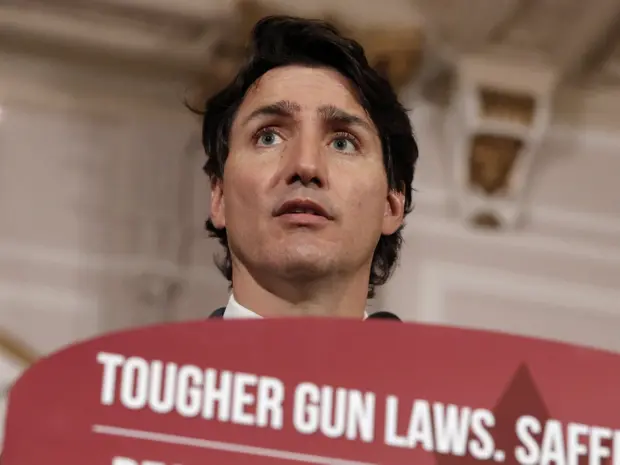
Since the Nova Scotia massacre, and Prime Minister Justin Trudeau’s “brown face” scandal, the Canadian government has been on a tear. They’ve restricted handguns heavily and banned so-called assault weapons. All in what they claim is an attempt to prevent violent crime.

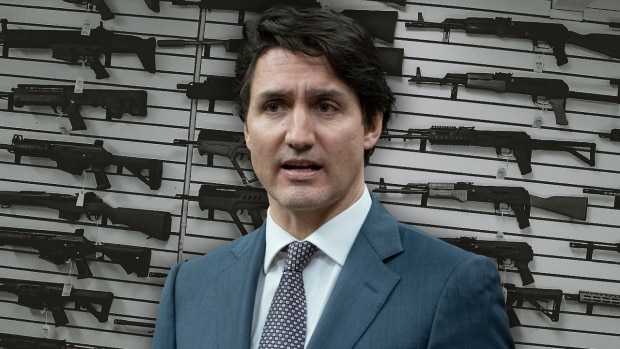
Prime Minister Justin Trudeau’s gun ban and buyback policy is running out of steam.
And it hasn’t even left the station.
The buyback is broken. Law-abiding firearms owners don’t want to lose their guns. It doesn’t go far enough for gun control advocates. And taxpayers don’t want to pick up the massive bill.

There is nothing in the Constitution that allows the executive branch to unilaterally redefine a longstanding provision within federal law.
One must wonder if, at this late stage in Joe Biden’s imperial presidency, the assorted courts of the United States have asked their I.T. mavens to install a keyboard shortcut on their computers that, if pressed in anger, outputs a reminder that Article I vests all legislative power in Congress rather than in the presidency. In theory, such a tactic could save a great deal of time. In the controversy would come, and, as might a worker on a production line, the judge could simply press Ctrl + Fn + 1 to issue forth yet another admonition that, however passionate he might be about a given topic, the American president is still not a king.
Joe ain’t there. They must have an automated rubber stamp issuing his decrees.

The US supreme court said on Friday it will decide whether to block a $10bn lawsuit Mexico filed against US gun manufacturers and distributors that argues that their negligent and illegal commercial practices have unleashed bloodshed in the country.
The lawsuit, filed in Boston in August, names Smith & Wesson, Barrett Firearms, Beretta, Colt and Glock, as well as Boston-area wholesaler Interstate Arms.
The Mexican government says it wants to “put an end to the massive damage that the Defendants cause by actively facilitating the unlawful trafficking of their guns to drug cartels and other criminals in Mexico”.

The federal firearm buyback program has cost taxpayers nearly $67.2 million since it was announced in 2020, but it still hasn’t collected a single gun.
The program is designed to compensate owners of assault-style firearms that were banned by the Liberal government in 2020. Although many details of the program still haven’t been revealed after four years, businesses and gun owners only have until the end of October 2025 to turn in, deactivate or dispose of outlawed weapons. The government estimates there are 150,000 prohibited assault-style firearms in the country.

Four years ago, the federal government prohibited “1,500 types” of “assault-style” firearms. Has public safety improved as promised?

The Canadian government sought to follow New Zealand’s lead in 2020 when it launched a program to force gun owners to surrender military-style firearms. But while New Zealand acted quickly in 2019, Ottawa is still struggling to implement its own plan.
The government of then-Prime Minister Jacinda Ardern announced its firearms buyback program shortly after a white supremacist killed 51 people at two mosques in Christchurch in March 2019.

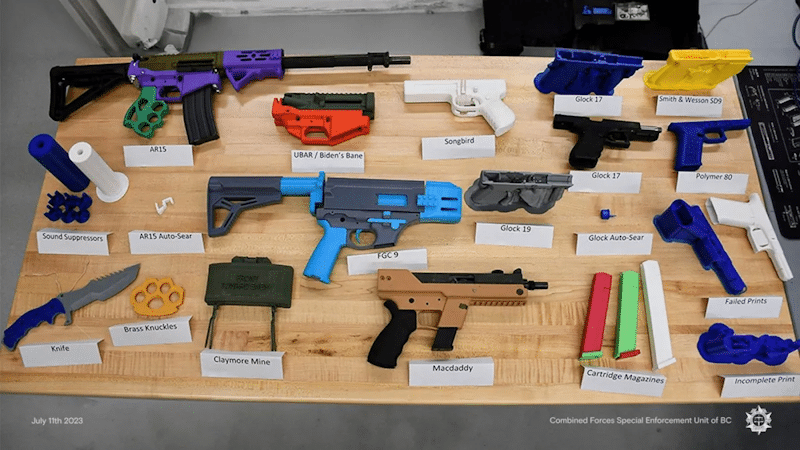
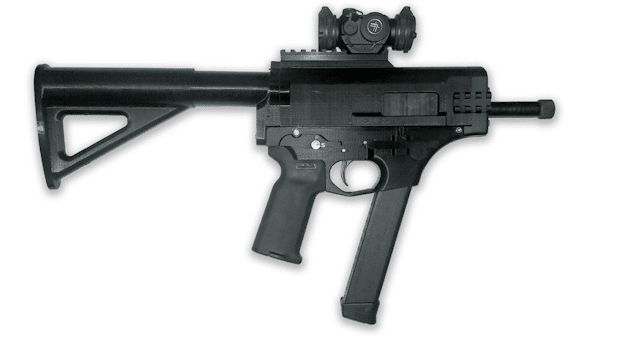
After an attempted gang murder in the French city of Marseille last year, the police found what appeared to be a toy assault rifle, seemingly crafted from plastic and Lego parts.
“But the weapon was lethal,” Col. Hervé Pétry of the national gendarmerie recalled.
In the past three years, this model of homemade semiautomatic firearm, known as an FGC-9, has appeared in the hands of paramilitaries in Northern Ireland, rebels in Myanmar and neo-Nazis in Spain. In October, a British teenager will be sentenced for building an FGC-9 in one of the latest terrorism cases to involve the weapon.

Fact-checking is an odd industry. We’ve seen plenty of examples of “fact-checks” that seemingly dispute the actual facts, ignoring the plethora of evidence supporting an initial claim, all because the fact-checker really wanted the claim to be false.

The Trudeau government is losing a key ally in its efforts to take hundreds of thousands of military-style firearms out of circulation, jeopardizing one of the top items in its public security agenda.
Launched in 2020, the federal government’s plan to buy back and destroy firearms it has banned — such as AR-15s — has long been vilified by firearms industry groups and the Conservative Party of Canada.

On Sunday, SpaceX, X, and Tesla CEO Elon Musk countered Kamala Harris’s ongoing gun control push with an X post that framed “the right to bear arms” as the means of protecting all other rights.