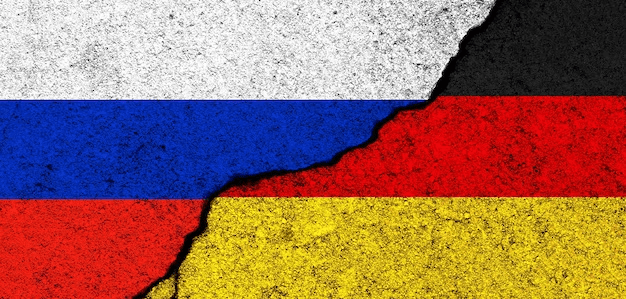
Is Germany heading for a Russia reset?

Well, that didn’t take long. Peace negotiations over an end to the war in Ukraine are barely underway, and senior German politicians are already calling for their country to resume its ties to Russia.

The next German government is set to contain fewer people who have a problem with that, and the lure of a return to cheap energy is great. Is Germany on the brink of reverting to its pre-war relationship with Moscow?

I think the jig is up since the Ukraine conflict was revealed as having morphed into a Deep State forever war against Russia without the approval of congress.

Share

German Governments Ban Police From Joining AfD

Nice job you have there. It would be a shame if you were to lose it for being disloyal to the ruling clique.

Of course, the powers that be in Germany don’t call their threats to fire supporters of AfD an assurance that the people they hand guns to are committed to enforcing the speech codes of the German elites’ choosing; they couch their order in the much nicer sounding assurance that everybody has the same loyalty to the Constitution as the ruling clique.

Share

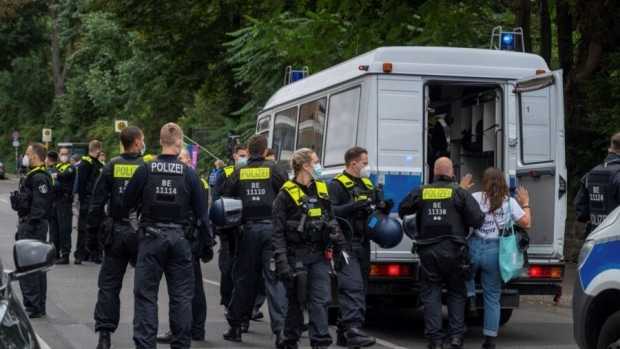
Foreigners Drastically Overrepresented in Berlin Crime Statistics

More than 50% of the perpetrators of violent crimes committed in Berlin by men are foreigners, German media outlet Junge Freiheit reported.

According to police statistics, of the 12,284 male suspects arrested last year, 6,407 did not have a German passport.

This means that foreigners are overrepresented when it comes to violent crime: foreigners make up 24.9% of Berlin’s population, yet an astounding 52.2% of male criminals do not possess a German passport—the rate for this was 50.5% in 2023.

Share

German Ruling Parties Want to Ban AfD “As Soon As Possible”

The economy is in crisis and the constant influx of migrants is threatening to destabilise society—yet the German mainstream parties’ main concern is their right-wing opposition Alternative für Deutschland (AfD).

According to media reports, the left-wing Greens are intent on pushing through a motion in parliament to ban the AfD “as soon as possible”, and it seems that they have the support of all the other parties.

Share

Germany: Toward a New Domination of Europe?

In the opera Das Rheingold by Richard Wagner, the Rhine Gold is a magical treasure guarded by the Rhine Maidens (Rheinmädchen). This gold can be forged into a ring that gives its holder unlimited power. By arrogating to himself the power to put Germany into debt in a way that no chancellor has done since 1945, Friedrich Merz, the likely next chancellor, will be taking on an unrivalled power: that of dominating Europe.

Share

Germany is heading towards an immigration catastrophe

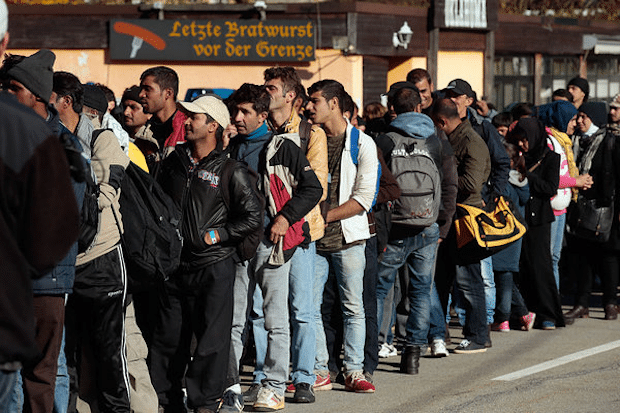
The German Social Democratic party (SPD) has published its working paper on immigration. It calls for half a million more migrants every year, no deportation of illegal immigrants unless they are extremely violent, voting rights for foreigners, automatic citizenship after 25 years, and a new ministry for immigration and integration.

You would think the left-wing party was in no position to make demands. After all, the SPD led the coalition government which lost the last election, when it failed to be one of the top two parties for the first time since the 19th century. But the centre-right Christian Democratic Union, which won the most votes in the election, has ruled out dealing with Alternative for Germany (AfD), which came second. That has left them with only one potential coalition partner to form a government: the SPD.

Share

“Disastrous”: Report Gives Damning Verdict On German Army

It is “premature” for Germany to consider sending its soldiers to Ukraine, warns the Armed Forces Commissioner.

A new report released this week gives a damning assessment of the capabilities of the German army, highlighting its “disastrous” infrastructure, and calling it “premature” for its soldiers to be sent on a peacekeeping mission to Ukraine.

Presenting the report on Tuesday, March 11th, Eva Högl, the Armed Forces Commissioner of the Bundestag, said the Bundeswehr (armed forces) “still has too little of everything” despite a €100-billion special fund, established in the wake of Russia’s invasion of Ukraine, which was supposed to improve recruitment, develop infrastructure, and speed up new weapons procurement.

Share

Germany’s soft spot for Russia

Business deals inform the nation’s politics

Mounted atop a former warehouse in Hamburg’s industrial-era docklands, the billowing form of the Elbphilharmonie concert hall rises above Germany’s second-largest city like an ocean wave. The glass-panelled building crowns a new, forward-looking section of the city, a modern and elegant counterpoint to the seedy Reeperbahn nearby. Built with the help of taxes raised from round-the-clock trade from the sprawling port it overlooks, it’s a testament to the country’s remarkable success as a trading nation, as globalisation opened new markets for “Made in Germany” goods.

The building’s scope and ambition echo the Victorian grandeur that can be found in Liverpool and London, and the epic public buildings of Paris, Antwerp and Amsterdam. It’s a building that marks a golden age. Its foundation stone was laid in 2007, when Germany was still Exportweltmeister (world’s top exporter) and before the convulsions of Brexit, Donald Trump’s trade wars, and Vladimir Putin’s efforts to carve up and control Ukraine. The opulent venue was finally finished in 2017, the same year Angela Merkel secured her final term as chancellor and the far-Right AfD showed signs of its political potential. Less than a decade later, it looks like a totem to a bygone era.

Share

How the return of the German army could help save Europe

It has been described as “one of the most historic paradigm shifts in Germany’s post-war history”.

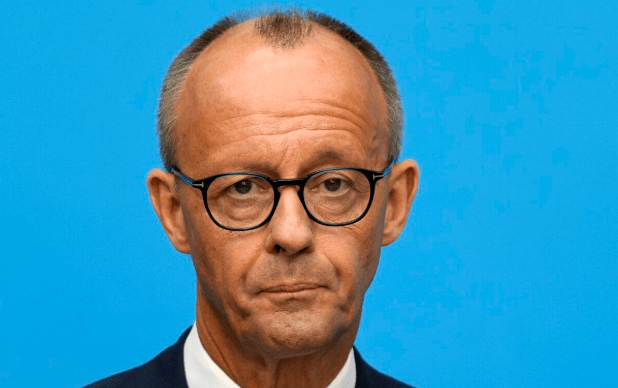
Friedrich Merz, the incoming German chancellor, announced on Tuesday evening a €500 billion (£414 billion) special fund for German infrastructure and an end to strict borrowing limits on defence spending.

Mr Merz said: “I want to make it very clear: in view of the threats to our freedom and peace on our continent, the following must now also apply to our defense: ‘whatever it takes’.”

The significance of these reforms cannot be overstated.

Share

Germany’s Five Shaky Pillars

“Make Germany Great Again!” It was with this slogan that Friedrich Merz emerged as the main victor in last Sunday’s general election in Germany.

Sounds familiar?

To be exact, the man who is set to become Germany’s next chancellor borrowed the phrase made popular by President Donald Trump in the United States. The slogan Merz used was “Restore Germany’s greatness and respect!”, which expresses the same sentiment.

Share

Germany’s misinformation plan targets thoughtcrime

“Orwellian” is an overused adjective in our post-Covid, technologically advanced modern world. Yet it is the perfect description of Germany’s new advice centre for people who have friends or family prone to “conspiracy thinking”. The country’s Ministry of the Interior is offering help and material to combat the “wrongthink” of those affected, supposedly to stop the spread of fake news and misinformation.

Share

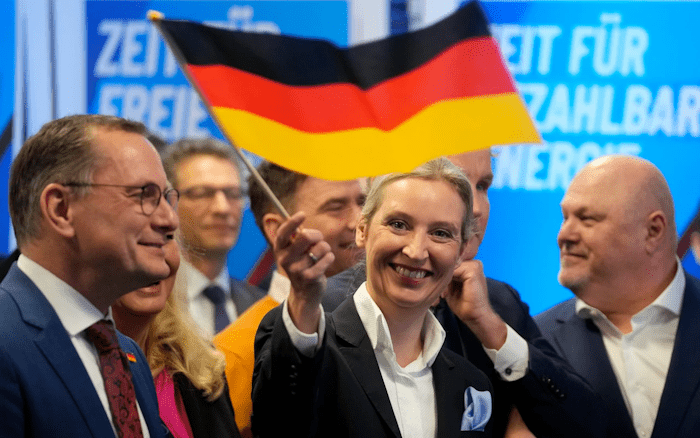
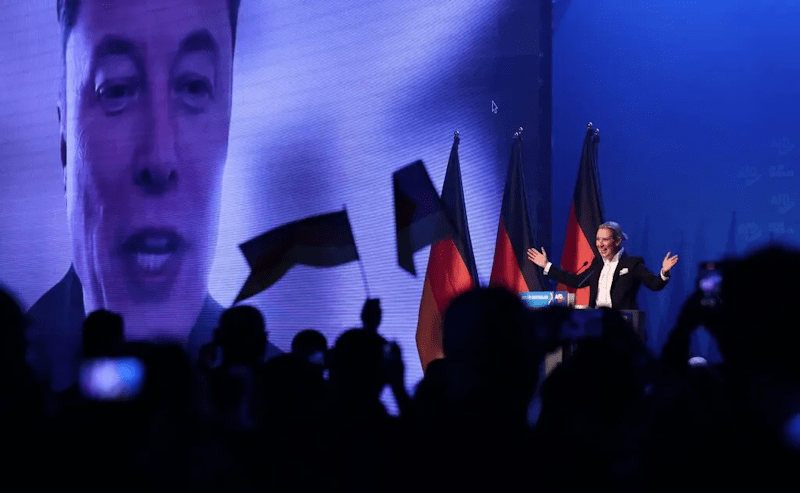
Musk Calls to Congratulate Leader of German “Hard-Right” Party

The hard-right Alternative for Germany might not have done as well in Sunday’s election as its leaders had hoped, but its groundbreaking performance was enough for a congratulatory phone call from Elon Musk.

Alice Weidel, the chancellor candidate for the party, known by its German initials, AfD, told journalists on Monday morning that she had slept through a call from Mr. Musk, the world’s richest man and a top adviser to President Trump. When she looked at her phone on the morning after her party won 20.8 percent of the vote, she said, she had a missed call from the United States, which turned out to be from Mr. Musk, who, she said, “congratulated me personally.”

THE HORROR!

Share

The AfD aren’t ‘far-Right’, and they aren’t going away

A downcast mood hung over Germany ahead of the snap elections. The week before 83 per cent of voters admitted in a survey to having a pessimistic outlook on the situation the country is in. But turnouts were remarkably high: 84 per cent of voters went out to cast their vote, up from 36.5 per cent in 2021. One thing all voters can agree on is the desperate need for change.

The CDU, the centre-Right party of Germany, has been given another chance at power. At 28.5 per cent, the party has won back some voters, compared to the 24.1 per cent they got in 2021 after 16 years under Chancellor Merkel. However, that is still underperforming when you consider how hated the prior left-wing coalition government was.


Related … Germany’s next chancellor warns Nato could soon be dead

Friedrich Merz, who is poised to become Germany’s next chancellor, has warned Nato could be finished and Europe must prepare to build an alliance “independent” from the US.

In stark comments, Mr Merz, 69, leader of the centre-Right Christian Democratic Union (CDU), suggested the continent may have to “quickly” establish an “independent European defence capability”.

After exit-polls predicted Mr Merz would win the election, Donald Trump hailed the result as a “great day for Germany and for the United States of America”.

Share

Conservatives projected to win German election – as AfD surge into second

The centre-Right Christian Democrat Union party has won the German election according to an exit poll released on Sunday evening.

Friedrich Merz, the CDU leader, is projected to win 29 per cent of the vote, after a campaign dominated by economic stagnation, migration pressures and growing uncertainty over how best to secure the future of Ukraine.

The far-Right Alternative for Germany party, which had high-profile backers including Elon Musk, has come second place with 19.5 per cent. It marks the strongest result for a far-Right party since the Second World War.

Share