
“Disastrous”: Report Gives Damning Verdict On German Army

It is “premature” for Germany to consider sending its soldiers to Ukraine, warns the Armed Forces Commissioner.

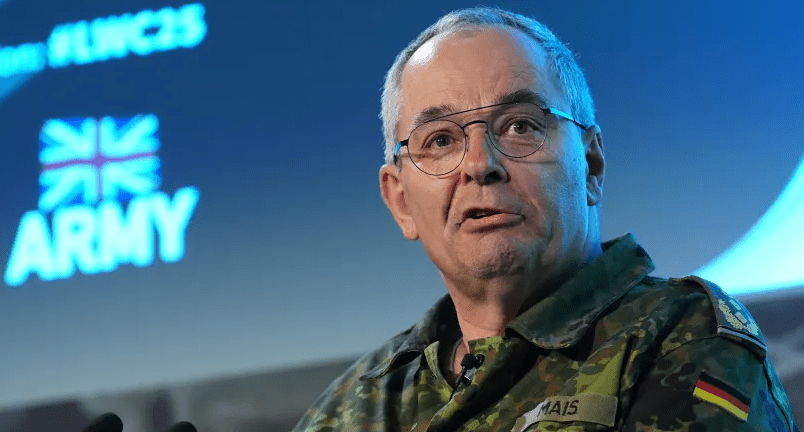
A new report released this week gives a damning assessment of the capabilities of the German army, highlighting its “disastrous” infrastructure, and calling it “premature” for its soldiers to be sent on a peacekeeping mission to Ukraine.

Presenting the report on Tuesday, March 11th, Eva Högl, the Armed Forces Commissioner of the Bundestag, said the Bundeswehr (armed forces) “still has too little of everything” despite a €100-billion special fund, established in the wake of Russia’s invasion of Ukraine, which was supposed to improve recruitment, develop infrastructure, and speed up new weapons procurement.

Share

Germany’s soft spot for Russia

Business deals inform the nation’s politics

Mounted atop a former warehouse in Hamburg’s industrial-era docklands, the billowing form of the Elbphilharmonie concert hall rises above Germany’s second-largest city like an ocean wave. The glass-panelled building crowns a new, forward-looking section of the city, a modern and elegant counterpoint to the seedy Reeperbahn nearby. Built with the help of taxes raised from round-the-clock trade from the sprawling port it overlooks, it’s a testament to the country’s remarkable success as a trading nation, as globalisation opened new markets for “Made in Germany” goods.

The building’s scope and ambition echo the Victorian grandeur that can be found in Liverpool and London, and the epic public buildings of Paris, Antwerp and Amsterdam. It’s a building that marks a golden age. Its foundation stone was laid in 2007, when Germany was still Exportweltmeister (world’s top exporter) and before the convulsions of Brexit, Donald Trump’s trade wars, and Vladimir Putin’s efforts to carve up and control Ukraine. The opulent venue was finally finished in 2017, the same year Angela Merkel secured her final term as chancellor and the far-Right AfD showed signs of its political potential. Less than a decade later, it looks like a totem to a bygone era.

Share

How the return of the German army could help save Europe

It has been described as “one of the most historic paradigm shifts in Germany’s post-war history”.

Friedrich Merz, the incoming German chancellor, announced on Tuesday evening a €500 billion (£414 billion) special fund for German infrastructure and an end to strict borrowing limits on defence spending.

Mr Merz said: “I want to make it very clear: in view of the threats to our freedom and peace on our continent, the following must now also apply to our defense: ‘whatever it takes’.”

The significance of these reforms cannot be overstated.

Share

Germany’s Five Shaky Pillars

“Make Germany Great Again!” It was with this slogan that Friedrich Merz emerged as the main victor in last Sunday’s general election in Germany.

Sounds familiar?

To be exact, the man who is set to become Germany’s next chancellor borrowed the phrase made popular by President Donald Trump in the United States. The slogan Merz used was “Restore Germany’s greatness and respect!”, which expresses the same sentiment.

Share

Germany’s misinformation plan targets thoughtcrime

“Orwellian” is an overused adjective in our post-Covid, technologically advanced modern world. Yet it is the perfect description of Germany’s new advice centre for people who have friends or family prone to “conspiracy thinking”. The country’s Ministry of the Interior is offering help and material to combat the “wrongthink” of those affected, supposedly to stop the spread of fake news and misinformation.

Share

Musk Calls to Congratulate Leader of German “Hard-Right” Party

The hard-right Alternative for Germany might not have done as well in Sunday’s election as its leaders had hoped, but its groundbreaking performance was enough for a congratulatory phone call from Elon Musk.

Alice Weidel, the chancellor candidate for the party, known by its German initials, AfD, told journalists on Monday morning that she had slept through a call from Mr. Musk, the world’s richest man and a top adviser to President Trump. When she looked at her phone on the morning after her party won 20.8 percent of the vote, she said, she had a missed call from the United States, which turned out to be from Mr. Musk, who, she said, “congratulated me personally.”

THE HORROR!

Share

The AfD aren’t ‘far-Right’, and they aren’t going away

A downcast mood hung over Germany ahead of the snap elections. The week before 83 per cent of voters admitted in a survey to having a pessimistic outlook on the situation the country is in. But turnouts were remarkably high: 84 per cent of voters went out to cast their vote, up from 36.5 per cent in 2021. One thing all voters can agree on is the desperate need for change.

The CDU, the centre-Right party of Germany, has been given another chance at power. At 28.5 per cent, the party has won back some voters, compared to the 24.1 per cent they got in 2021 after 16 years under Chancellor Merkel. However, that is still underperforming when you consider how hated the prior left-wing coalition government was.


Related … Germany’s next chancellor warns Nato could soon be dead

Friedrich Merz, who is poised to become Germany’s next chancellor, has warned Nato could be finished and Europe must prepare to build an alliance “independent” from the US.

In stark comments, Mr Merz, 69, leader of the centre-Right Christian Democratic Union (CDU), suggested the continent may have to “quickly” establish an “independent European defence capability”.

After exit-polls predicted Mr Merz would win the election, Donald Trump hailed the result as a “great day for Germany and for the United States of America”.

Share

Conservatives projected to win German election – as AfD surge into second

The centre-Right Christian Democrat Union party has won the German election according to an exit poll released on Sunday evening.

Friedrich Merz, the CDU leader, is projected to win 29 per cent of the vote, after a campaign dominated by economic stagnation, migration pressures and growing uncertainty over how best to secure the future of Ukraine.

The far-Right Alternative for Germany party, which had high-profile backers including Elon Musk, has come second place with 19.5 per cent. It marks the strongest result for a far-Right party since the Second World War.

Share

Germany at a Crossroads: Why Voters Are Looking for an Alternative

Germany is preparing for the general elections this Sunday, February 23, with the possible consolidation of Alternative for Germany (AfD) as the country’s second-largest force in a surge that challenges the traditional political balance. It deeply worries the socialist-conservative establishment within Germany—and at the European level.

Share

Why Germany is ripe for revolt – The German elites were wrong about everything.

As Germany’s federal elections approach this weekend, chancellor Olaf Scholz and his Social Democrats (SPD) are bracing for their worst results since 1887. The SPD is battling with its equally unpopular coalition partner, the Green Party, for a humiliating third place, behind the conservative Christian Democrats (CDU) and the right-populist Alternative for Germany (AfD).

Share

A train through Germany: is Europe’s powerhouse going off the rails?

In the run-up to Sunday’s crucial election, the Guardian took a long journey through Europe’s heartland to talk to voters

Creaking, overcrowded, neglected, Germany’s railways, once a source of national pride, have taken a battering to their image in recent years. Amid wider concerns about the health of Europe’s stagnating largest economy, the state of its trains has become something of a metaphor for a more general sense of malaise.

On Sunday Germans will go to the polls in one of the most important elections in recent times, with an emboldened far right hoping to more than double its share of votes. In the run-up, the Guardian travelled more than 850 miles on trains across Germany to hear what its citizens have to say about the state of their nation.

The Guardian is beside itself with anxiety over the Afd.

Share

Germany’s ban on nuclear is an act of self-harm

The Energiewende has led to sky-high energy costs and political instability – for no environmental benefit.

Almost every country on Earth today has pledged to achieve Net Zero carbon emissions. The vast majority of them have also set spurious target dates for doing so – usually by 2050. So far, only a handful of industrialised countries have succeeded in almost fully decarbonising their electricity grids. They have only achieved this with a heavy baseload of either nuclear power and / or hydropower.

Share

Is Germany heading for a second Weimar?

In the Thuringian city of Weimar, opposite the theatre where the National Assembly hashed out Germany’s constitution in 1918, stands the museum of the history of the Weimar Republic. ‘A spectre is rising in Europe – the spectre of populism,’ a plaque reads. ‘Forces long thought overcome seem to be returning to threaten the basis of democracy. The Weimar Republic and its neighbours knew the phenomenon only too well.’

Share

JD Vance meets AfD leader after attacking Germany for excluding party

JD Vance has met Alice Weidel, the co-leader of Alternative for Germany (AfD), outside the Munich Security Conference (MSC) after criticising the organisers for excluding the party.

In a landmark address to the conference, the US vice president denounced the pariah status placed upon the AfD.

“Democracy rests on the sacred principle that the voice of the people matters. There’s no room for firewalls,” he said, referencing a pledge by mainstream German parties not to work with or form governments with the party.

Share

Germany has lost count of migrant terror attacks – the AfD hasn’t

First Mannheim, then Solingen, then Magdeburg, and Aschaffenburg and now Munich.

Germany has seen so many terror attacks committed by foreign citizens over the past 10 months that it is difficult to keep track of them.

And inevitably, this latest attack will ensure that mass migration and border security remains at the very top of the campaign agenda, ahead of elections on Feb 23.

Share