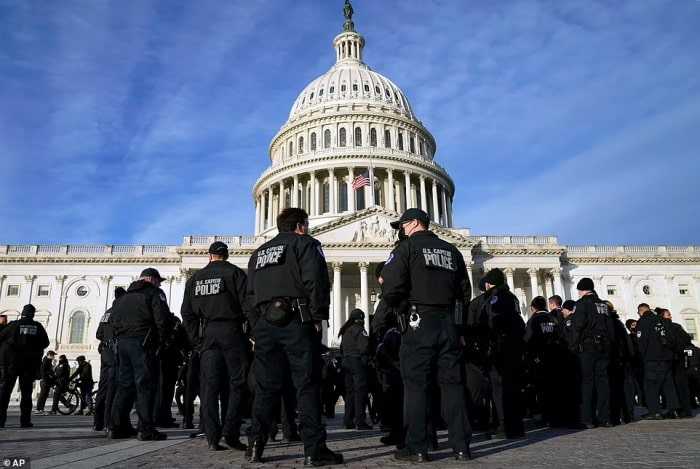
At least one Proud Boys member on trial over the Jan. 6 storming of the U.S. Capitol had a previously-concealed FBI informant set to appear as a witness in their case, a defense attorney said Wednesday.

At least one Proud Boys member on trial over the Jan. 6 storming of the U.S. Capitol had a previously-concealed FBI informant set to appear as a witness in their case, a defense attorney said Wednesday.

A gender discrimination trial in Washington, D.C., shined a harsh spotlight on one of the most important legal offices in the U.S. government, portraying it as a hotbed of dysfunction, turf wars, mismanagement and paranoia.
The lawsuit, which came to a head earlier this month in federal court in the nation’s capital, centered on claims of gender discrimination in the FBI’s general counsel’s office, where some of the most powerful attorneys in the country are charged with helping safeguard Americans from terrorism, cyber threats, organized crime and corruption.

The FBI coordinated secretly with hospitals and medical centers to strip U.S. citizens of their rights to own, buy, or even use firearms , according to a trove of internal documents obtained by the Washington Examiner.
Behind closed doors and without congressional approval, the FBI has worked hand in hand with the Secret Service and U.S. Immigration and Customs Enforcement to strip over two dozen people of their gun rights with internal forms, records show. On the heels of this revelation by the Washington Examiner in December 2022, newly obtained documents and emails shed light on how the bureau apparently received a helping hand from medical facilities to waive gun rights from at least five people.

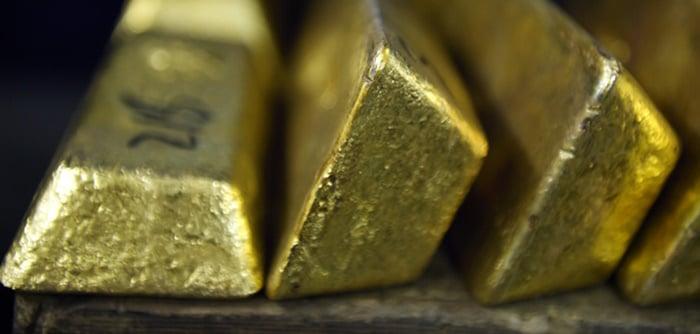
CLEARFIELD, Pa. (AP) — The court-ordered release of a trove of government photos, videos, maps and other documents involving the FBI’s secretive search for Civil War-era gold has a treasure hunter more convinced than ever of a coverup — and just as determined to prove it.
Dennis Parada waged a legal battle to force the FBI to turn over records of its excavation in Dents Run, Pennsylvania, where local lore says an 1863 shipment of Union gold disappeared on its way to the U.S. Mint in Philadelphia. The FBI, which went to Dents Run after sophisticated testing suggested tons of gold might be buried there, has long insisted the dig came up empty.

The bureau withdraws a document warning about ‘radical-traditionalist’ believers.
House Republicans are accusing the Federal Bureau of Investigation of political bias, and the bureau certainly isn’t helping its own defense. See its retraction of a field-office report lumping some “traditionalist” Catholics with “violent extremists” and calling for government investigation.
A whistleblower last week leaked a January report from the FBI’s Richmond office entitled: “Interest of Racially or Ethnically Motivated Violent Extremists in Radical-Traditionalist Catholic Ideology Almost Certainly Presents New Mitigation Opportunities.”
I believe the time has passed when calls to dismantle the FBI could be passed off as “fringe.”

Catholic League president Bill Donohue has denounced recent attacks by President Joe Biden’s FBI on what it calls “radical-traditionalist Catholics.”
Dr. Donohue cites a report by the FBI’s Richmond Field Office titled “Interest of Racially or Ethnically Motivated Violent Extremists in Radical Traditionalist Catholic Ideology Almost Certainly Presents New Mitigation Opportunities.”

Kyle Seraphin has a leaked FBI document that purports to show the extremism of “Radical-Traditionalist Catholics.” The document outlines opportunities for agents to recruit assets within the Catholic Church itself.
What’s astonishing about the document is the shoddiness of its analysis and sourcing. The belief that “Radical-Traditionalist Catholics” are a potential threat seems to come entirely from an old report from the Southern Poverty Law Center. This is buttressed in the appendices with a clickbait piece from the Atlantic — about populist and hyper-masculine depictions of rosary beads — and a few more from Salon.

This coming week a new House select subcommittee will hold its first hearing on the FBI and the possible “weaponization” of government agencies. A variety of such controversies have contributed to plunging public trust in government and the FBI in particular.
The role of the FBI in prior scandals will remain a point of heated debate in Congress. However, members of both parties should be able to agree on the need to investigate one of the most serious allegations: Censorship by surrogate.

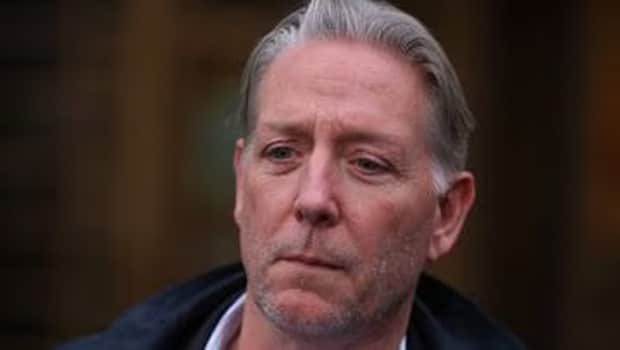
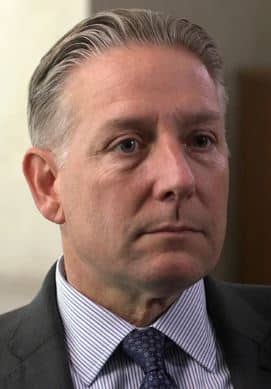
When Charles McGonigal, a former counterintelligence chief with the Federal Bureau of Investigation, was accused of using his position to benefit an associate’s business in Eastern Europe, it represented a startling turn for a high-ranking official who had been entrusted with access to some of the most sensitive secrets held by the American intelligence community.
But it also set off a scramble within the bureau to assess the potential damage and determine whether any counterintelligence or law enforcement operations were compromised, according to two people familiar with the review, with the F.B.I.’s director, Christopher A. Wray, treating the case as a top priority.

The Federal Bureau of Investigation tried to recruit Oleg V. Deripaska, a Russian billionaire, as an informant around 2014, hoping he might shed light on organized crime and, later, possible interference in the presidential election.
A decade later, Mr. Deripaska may have turned the tables on the F.B.I.: Prosecutors say the oligarch recruited one of the bureau’s top spy catchers, just as he entered retirement, to carry out work that they say violated U.S. sanctions.
A former FBI official involved in the investigation of the Trump campaign’s possible ties to Russia was charged Monday for violating sanctions on behalf of a Russian oligarch sanctioned by the U.S. government.

The FBI revealed how the bureau uses the CIA and National Security Agency to probe the private lives of Americans without a warrant in its updated rulebook, which is the first version made public since the Obama administration.
The handbook, rewritten in 2021, confirms a decade-old leak showcasing the bureau’s collaboration with the CIA and NSA for FBI probes that may involve surveillance without court orders against people not accused of any crimes. Such probes are known as “assessments” at the FBI.

Besides addressing the crisis at the southern border, there is no more urgent matter for the new Republican House majority to direct its attention to than the conversion of the federal government into a progressive cudgel against civil rights. And there is nothing less surprising than the media-Democrat complex’s determination to strangle the probe in its cradle.
In the left’s playbook, everything is either about race or Donald Trump — if not both. So as night follows day, with House Republicans poised to establish a much needed Select Subcommittee on the Weaponization of the Federal Government, Democrats and their press accomplices are framing the panel as an adjunct of the 2024 Trump presidential campaign.

With the Twitter files revelations, we learned that the FBI had a “master-canine” relationship with the tech barons of Twitter to censor conservative accounts. When the FBI said ‘fetch,’ Twitter came running.
Well, now we see something probably even more embarrassing from the New York Times and we don’t need secret Twitter files to know about it.

The FBI has repeatedly flagged Twitter accounts for the social media platform to review and censor over the last few years, raising questions as to whether the agency violated the First Amendment rights of Twitter users, legal experts told the Daily Caller News Foundation.
The Twitter Files, a series of revelations by several journalists based on internal Twitter communications, revealed that FBI agents colluded with Twitter executives to censor users and suppress information, while the agency paid Twitter $3.5 million to compensate them for their time processing the FBI’s requests. This partnership raises questions as to whether the FBI may have violated user’s constitutional rights, legal experts told the DCNF, with some arguing the agency’s involvement in Twitter censorship constitutes a First Amendment violation.