EV Owners Waking Up to the Nightmare of Massive Repair Bills

“Sticker shock” has taken on a whole new meaning when new electric vehicle owners get their first repair bill following a simple fender bender. The Wall Street Journal reports that a San Francisco resident got in a minor accident with his electric truck. He thought that repairs would be “a couple-thousand-dollar bill from the repair shop and to be without his truck for a couple of weeks.”

Instead, the first-time EV owner was shocked to get a $22,000 bill for repairs that took 2 1/2 months.


Off on a tangent … New Class A RV Breakdown costs

Share

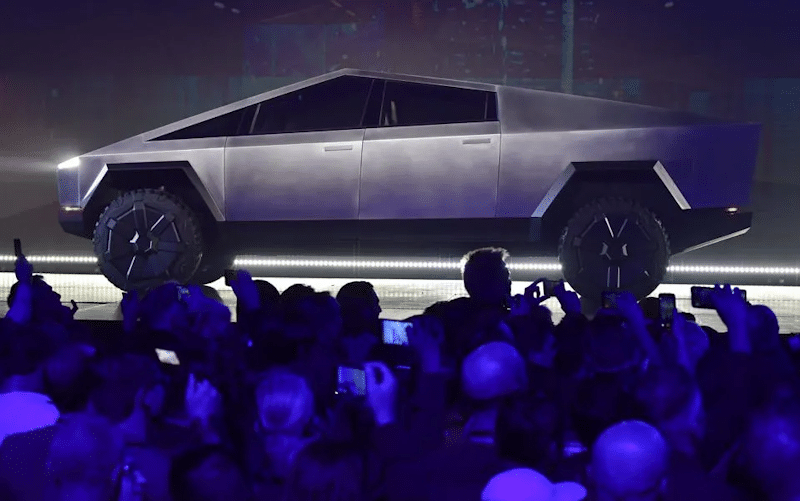
The Cybertruck is a dud

The Cybertruck is here. Finally. Maybe. Sort of.

Thursday was the “Cybertruck Delivery Event,” where they finally rolled off the production line and were handed over to waiting customers. Musk served as chaperone, host and speaker, and the event was a hype-fest for fanboys. As the presentation started, it was hard to tell whether some in the crowd were shouting “Elon” or “hallelujah” (I think the latter). He presented a polished marketing video, markedly sparse on specs, but promised that the Cybertruck was one of those rare products that change how we see the world; that it is “more truck than truck,” while also being “a better sports car than a sports car” and the best product Tesla had ever made.

It’s not.

Share

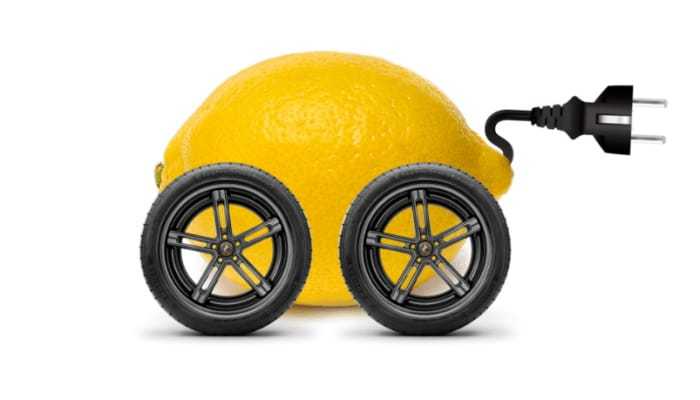
Joe, we can’t sell them

How is that electric vehicle promotion going?  Well, the car dealers can’t sell them.  They sent President Biden a letter calling for a change in strategy, as my old marketing professor used to say. This is the story:

Nearly 4,000 U.S. car dealers are asking President Biden to tap the brakes on proposed emissions regulations designed to ensure that two-thirds of new passenger cars are all-electric by 2032.

So what’s going on?  The simple answer is that they can’t sell electric vehicles no matter how much the Biden administration wants you to buy one or how many commercials they run during the football games. They can’t move them, as they say in the car business. They sit on the lot.  


More … Electric Vehicles Are Less Reliable Than Conventional Cars

Share

Hiring foreign workers at battery plant will cost Canadian contractors $300-million in lost wages, fees: union leader

The hiring of 900 temporary foreign workers to install equipment at the flagship EV factory in Windsor, Ont., will cost Canadian skilled construction workers around $300-million in lost wages and contractor fees, the leader of Canada’s Building Trades Unions says.

Share

Foreign workers at subsidized EV battery plant a ‘slap in the face’: union

NextStar Energy Inc. says it expects upwards of 900 foreign workers to help build its heavily subsidized electric vehicle battery plant in Windsor, Ont. The head of Canada’s Building Trades Unions calls the move “a slap in the face” and an “insult to Canadian taxpayers.”

The statement from the union comes as the use of the workers has become a political issue on Parliament Hill, raising questions and concerns over the course of the past week from federal leaders.

Share

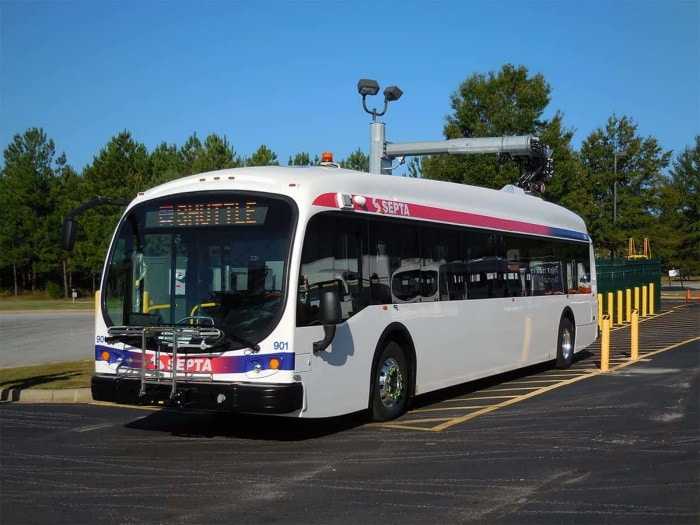
More than half of Edmonton’s $60-million electric bus fleet not roadworthy

Electric Bus Proterra Philadelphia

A more than $60-million “transformational” effort to move to electric buses in Edmonton is stalled at the curb.

Just six per cent of the Edmonton Transit System’s 1,000-bus fleet are electric buses, but those are very squeaky wheels.

Three-quarters of the city’s 60-bus electric fleet is in the garage with poor immediate prospects for parts to fix them.

h/t MW

Share

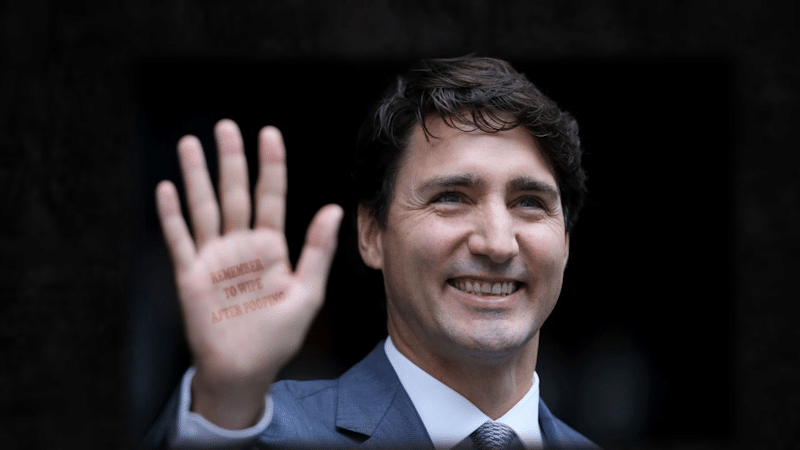
Justin Trudeau created 900 good green jobs for Koreans coming to Windsor to help build EV battery plant

Amid pushback over plans to use foreign workers, NextStar Energy has confirmed it wants to hire hundreds of technicians from South Korea to help set up the government-subsidized electric vehicle battery plant in Windsor, Ont.

The company said Thursday that, in total, about 1,600 equipment manufacturers from outside suppliers will be assembling, installing and testing the equipment needed to make the batteries, including a “temporary specialized global supplier staff” of around 900, largely from South Korea.

It’s the first time the company has commented on how many workers it wants in Canada to work on the project, in the wake of backlash over a social media post shared by Windsor police that suggested the city would be welcoming 1,600 people from South Korea in 2024.

Share

Ontario man told new EV battery would cost more than $50,000

Simrat Sooch of Stoney Creek, Ont., was a true believer in electric vehicles.

“The first one I had was very reliable,” said Sooch, so he didn’t hesitate to trade up.

He bought a 2017 Ioniq made by Hyundai. Sooch was its second owner. The vehicle had already been driven 69,000 kilometres but the warranty covering the electric charging system and battery was good for 160,000 kilometres.

Share

“Plan to bring in South Korean workers for NextStar battery plant sparks backlash.” No shit?

Workers from South Korea will be coming to work on Windsor’s NextStar EV battery factory, sparking backlash from politicians who say the jobs should go to Canadians because of the massive taxpayer subsidies the companies received.

The NextStar EV battery factory, a partnership between Stellantis and LG Energy Solution, received about $15 billion in subsidies from the federal and provincial governments.

How stupid do the Liberals think we are? Good green jobs for … Koreans!

Share

Whether You Buy an EV or Not, You’ll Still Pay for It, Study Says

The true cost of EVs is masked by a litany of subsidies, transfers, and other expenses that are passed on to Americans who don’t own EVs, the report states.

Despite predictions that electric vehicles (EVs) will soon be cheaper than gas-powered cars, a new study argues that the “socialized costs” of EVs, or the amount that is not paid by the buyer but by all Americans in the form of taxes, subsidies, and higher electricity costs, can sum to as much as $48,000 per vehicle over its expected 10-year life.

Share

Lithium mining in Africa reveals dark side of green energy

At a Chinese-run lithium mine in Namibia, local workers have complained for months about squalid living conditions and unsafe work practices.

An August fact-finding mission by the Mineworkers Union of Namibia into the Uis mine — which is operated by Chinese mining company Xinfeng Investments — found that the mine’s local employees live in tiny, hot shacks made of corrugated zinc and without proper ventilation.

The union also faulted a lack of privacy in the sanitation blocks, where toilets and showers are lined up without partitions between them. By contrast, the mine’s Chinese workers have comfortable air-conditioned rooms and decent bathrooms.

Share

Combined provincial, federal EV gamble to cost almost $6B more than government estimates: PBO

Provincial and federal financial support to develop electric vehicle batteries will cost $5.8 billion more than government projections, the Parliamentary Budget Office said Friday morning.

An analysis of government support for the EV battery deals with Northvolt, Volkswagen and Stellantis-LGES said that over the next 10 years, that support will amount to $43.6 billion, rather than the announced costs of $37.7 billion.

The deals with the three manufacturers amount to production subsidies of $32.8 billion, with an additional $4.9 billion in support to build the facilities.

Share

EVs Driven Far Less Than Gas-Powered Cars, Suggesting Overhyped Benefits of EV Push

A new study shows that electric vehicles (EV) are being driven much less than than their gas-powered counterparts, suggesting that the claimed emission-reducing benefits of the big push for an EV transition are overblown.

Americans behind the wheel of fully electric cars drove nearly 4,500 miles per year less than they did gasoline-powered vehicles, according to a recent study that sought to quantify EV mileage in the United States.

Share

‘Let it Burn’: Fire Departments Ill-Prepared for EV Boom

They designed a purpose built EV fire pool and it’s still burning.

So electric vehicles are going to save the planet, eh? Somebody forgot to tell Joe Biden something important when he authorized the spending of tens of billions of dollars for EV subsidies, more billions to build charging stations (still not enough), and still more billions to auto manufacturers to “incentivize” the design and building of more and more EV’s. That important bit of information is the fact that electric car fires are darn near impossible to put out.

Share