Justin’s ill-conceived first-come-first-served EV manufacturing policy

In possibly the worst decision since the Avro Arrow, the Prime Minister says Toyota won’t see the same electric-vehicle assembly incentives as VW and Stellantis

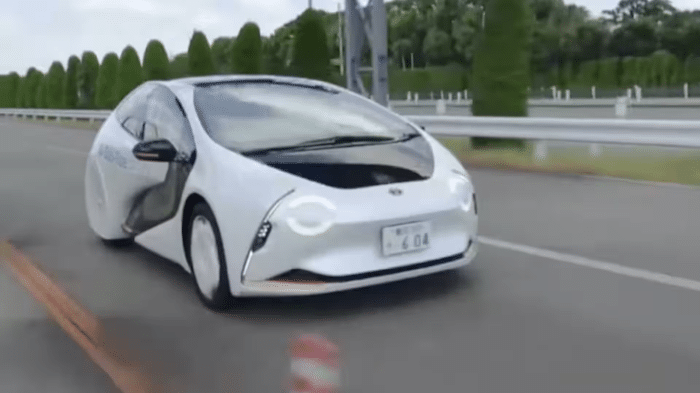
In a seemingly much-ignored story last week, the Toronto Star claimed that “Ontario’s hopes for a Toyota EV factory [are] in jeopardy after Justin Trudeau says no more massive subsidies.”

Now, I know what you’re thinking. There’s something dreadfully wrong with this picture. Surely, the Star has misquoted our fearless leader. The man who’s never seen a bar tab he wasn’t willing to pick up — at the taxpayer’s expense, of course — is suddenly developing a sense of budgetary discipline? Surely, Hell hath frozen over.

Canada would be better off if lead by a dim bulb High School student.

Share

Time to Pull the Plug on Forced Electric Vehicles

The recent headlines regarding the forced transition from gasoline- and diesel-powered vehicles to electrical vehicles (EVs) are screaming “Slow down!” even as federal and state governments are barreling along trying to regulate and mandate them.

The market and the current technology have shown plenty of warning signs they are not ready at this point, but the government seems bent on recklessly jeopardizing our national and economic security to push its environmental agenda. While EVs likely have a role in our future transportation, it is time to hit the pause button and develop a better strategy moving forward into a strategy that includes a competitive marketplace and technical considerations, and not just massive governmental intervention in our economy.

Share

America Will Save Internal Combustion

Here comes a forecast: the electric vehicle will not replace the vehicle with an internal combustion engine, ICE. The EV will become a supplement, a niche vehicle, but the bulk of our individual transportation will still take place in an ICE-powered vehicle.

You can thank America for this.

We Americans love our automobiles. We have more vehicles per household than most Europeans do, and we generally pay less for the same vehicle. This means, of course, that we can buy ‘more’ vehicle for the same money as Europeans can, but we can also buy much bigger and fancier vehicles than you commonly see on European roads.

Share

‘Historic Transition’ to EVs Hits a Roadblock: Buyers Don’t Seem to Want Them

As the Biden administration hails America’s “historic transition to electric vehicles” over the next decade, and carmakers pledge that they are revamping their production lines for an electric future, one group has been left out of the conversation thus far—consumers.

Now consumers are having their say.

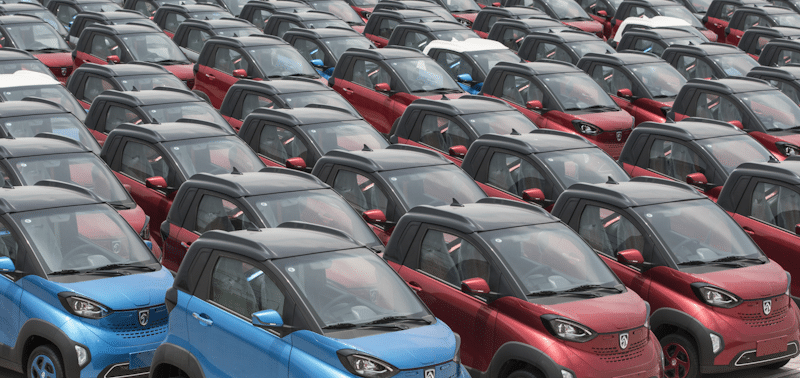
With battery electric vehicles (EVs) sitting unsold on dealer lots, carmakers are slashing prices in a desperate attempt to move them, and suffering billions in losses along the way.

Share

Mega-Jolt: The Costs and Logistics of Plugging in EVs Are About to Become Supercharged

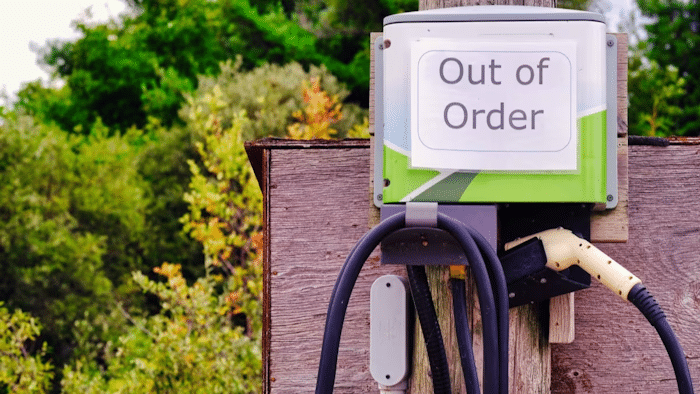
U.S. Energy Secretary Jennifer Granholm gave Americans an unintended glimpse of the future during her road trip this summer touting the wonders of electric vehicles. Far from spotlighting the promise of EVs, her public relations misadventure in Georgia involved one of her staff in a gasoline-powered vehicle blocking off a coveted charger in advance of her arrival, leading to frayed tempers and a local EV owner calling the cops. It was an illustration of the challenges drivers could face as governments push the public to embrace plug-in vehicles.

Share

Trudeau’s super-charged battery foolishness reaches new heights

Every week, it seems, we get another report revealing the deep thoughtlessness and fiscal recklessness of Ottawa’s electric car and electric-car battery fixation. For example, the Parliamentary Budget Officer recently asked how long it will take for the federal government to see a return on the $28.2 billion of production subsidies to EV battery-makers Stellantis and Volkswagen. The answer — about four times longer than the government originally claimed.

Share

In-Depth: What It Really Costs to Own an EV

While both Ottawa and Washington are aiming to eventually eliminate new gas-powered cars from being sold, consumer demand for electric vehicles (EVs) is currently languishing and the true cost to the consumer of an EV is a subject of debate.  

“EVs have consistently failed to compete with combustion vehicles on performance and cost, and failed to win broad consumer support despite oceans of government subsidies for manufacturers and buyers alike,” said an Oct. 11 Fraser Institute op-ed. 

Even with strikes plaguing the industry, “the bigger story in autos is the EV slowdown,” RBC Capital Markets global auto analyst Tom Narayan told CNBC on Oct. 30.

Share

GOLDSTEIN: Electric vehicles subsidies costly and ineffective, says study

Our federal and provincial governments know that subsidizing electric vehicle sales is a notoriously expensive and inefficient way of reducing industrial greenhouse gas emissions, so why do they keep doing them?

A new report by the fiscally-conservative Fraser Institute released Tuesday says the $5,000 federal government subsidy to consumers who buy eligible EV vehicles results in a cost to all Canadians of $355 to lower one tonne of emissions.

Share

Cost Of Driving Electric Vehicle Equal To Paying $17.33 Per Gallon Of Gasoline, Study Finds

A comprehensive new study of electric vehicles shows that the cost of running them is far more expensive than has been commonly thought.

Brent Bennett and Jason Isaac issued their report for the Texas Public Policy Foundation, pointing out that advocates for electric vehicles claim the vehicles require lower maintenance and lower fueling costs than traditional vehicles, and future reductions in battery prices will make EVs less expensive.

h/t Mauser

Share

The Tesla killer? Toyota’s EV breakthrough will allow cars to travel 745 miles on a single 10 minute charge

Toyota has said it is close to being able to mass manufacture potentially revolutionary solid-state batteries that could offer double the range of existing electric cars.

According to Toyota, cars powered by solid-state batteries could have a range of 745 miles, a charging time of 10 minutes and hit the market in 2027 or 2028.

They have been presented by experts as a revolutionary technology that could bring EVs into the mainstream.

We’ll see. But those are game changing numbers.

Share

Organization demanding forced transition to EVs also opposes mining practices needed to procure the minerals to build the cars

One need only take a very quick and superficial look at the “green” movement to rightly deduce the “greenies” are a bunch of morons—they’re either incapacitated with their hands glued to the road, protesting something by throwing soup all over a Vincent Van Gogh painting, or, demanding a forced transition to battery-powered vehicles, wind turbines, and solar farms… while also demanding no mining take place for the minerals needed to power such initiatives.

Share

EVs are getting easier to find – but with price tags out of reach for many Canadians

Canada’s electric vehicle market keeps getting bigger, but that’s not necessarily good news for consumers – or the environment.

Manufacturers are leaning heavily on electrified SUVs, trucks and large cars that mean high prices and profits for the auto makers.

The trend has helped push the average price for an EV to almost $73,000, according to Canadian Black Book, making it well out of reach for most households. That’s true even with signs of downward pressure from Tesla price drops.


EV’s are impractical for a number of reasons, pretending a price drop is all that’s needed to make them ubiquitous is a lie.

Share

Three reasons drivers aren’t rushing to trade in their gas guzzlers for EVs

As the automotive industry is transitioning toward greener energy, electric vehicles incentives and rebates have swept the nation. However, drivers are reporting concerns about trading in their gas-powered vehicles for a more sustainable alternative.

According to a recent poll from Ipsos and Yahoo Finance, 57% of respondents said they would not likely purchase an EV as their next car, citing high costs, limited driving range, and few charging stations as their top reasons.


Electric cars risk becoming uninsurable

Share

Ignoring Reality: The Zero-Emissions Crusade

EVs aren’t as popular or as effective as gas vehicles.

Marching under the banner of zero emissions, the Biden administration has embarked on a great crusade. At breakneck speed, it aims to bring about a massive transition: forcing the American people — and U.S. automakers — to abandon gas- and diesel-powered cars and trucks and to switch to all-electric vehicles (EVs).

EVs set a new record in the first quarter of this year. They accounted for a much-ballyhooed 7 percent of U.S. passenger car and pickup sales. Almost half of those vehicles went to consumers with an average annual income of more than $150,000, who said they were eager to jump on the environmental bandwagon. The average income of people who purchased vehicles with internal combustion engines was not even half as much. But they did account for 93 percent of the market.

Share