The great electric car scandal is only just beginning

It is all beginning to look a bit like the Volkswagen scandal: you remember, when regulators caught out the German car company for installing software which detected when diesel engines were in test mode and adjusted performance so that it flattered emissions figures.

A test by What Car magazine has revealed that the official figures for the range of electric cars over-estimates their real-life range by around a third. Vehicles were driven around a test track in Bedfordshire until they ran out of juice.

Share

Electric car ranges ‘fall by a third in real-world conditions’

Tests to find out the range of electric cars are flawed and give a misleading indication of battery life, motorists have been warned.

Steve Huntingford, the editor of What Car? magazine, said official laboratory tests have “inadequacies” and need overhauling so that drivers have “realistic information and won’t be left disappointed” after buying an electric vehicle (EV).

In real-world winter conditions, EV ranges have been found to fall by more than a third compared with official test results.

Share

Why Ottawa’s ‘Economic Plan’ to Excel in EV Industry May ‘Flop’: Economist

Economist Jack Mintz says it will be hard for Canada to become a leader in critical minerals and to make EV battery production profitable, despite Ottawa’s hopes.

“Our economic plan is turning Canada into a critical minerals superpower. From EV battery plants to net-zero mining, we are responsibly unlocking Canada’s natural resources to create more good jobs and prosperity today and for the next generation,” Finance Minister Chrystia Freeland said in a March 5 post on X.

Share

Germany: Far-left group claims act of sabotage on Tesla

The Tesla Gigafactory in Grünheide near Berlin was evacuated on Tuesday after a major power outage.

The left-wing extremist “Volcano Group” said it had carried out the assault on the power grid supplying the carmaker.

“We sabotaged Tesla today,” a letter from the Volcano Group said, specifying an “attack on the electricity supply.”

Share

Electric Cars Emit More Particulate Pollution

The Biden administration is reviewing California’s plan to ban the sale of new gasoline-powered cars by 2035. To get federal approval, California claims it “needs” this ban to prevent harm to public health from particulate matter—airborne particles like dust, dirt and soot. But banning gasoline cars would do little to reduce particulate emissions, and it could even increase them.

That’s because new gasoline cars are very clean. According to the Environmental Protection Agency, cars emit only about 1% of all direct fine particulate matter in California, and most of those emissions come from older models. The newer gasoline cars that California wants to ban will often have particulate filters that reduce emissions to below one 1/1,000th of a gram per mile driven.

Share

Alberta’s $200 electric vehicle registration tax is sparking debate among owners

Bassam Mahfoud bought a Tesla last December, following other Canadians who are flocking toward zero-emission vehicles.

And while electric vehicle sales in Canada are breaking records every year, Mahfoud said he isn’t surprised by the Alberta government’s recent decision to implement an annual electric vehicle tax.

Electric vehicle owners in the province will need to fork out an extra $200 to pay the new fee, starting as early as January 2025.

No CBC. No one is “flocking toward zero-emission vehicles”.

Share

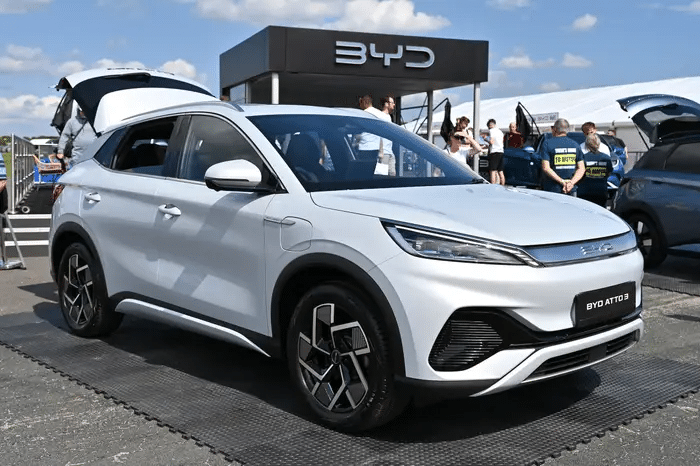
Is China the future of automaking? I rented a BYD to find out

On the A2 highway outside of Berlin, I found myself on a deserted stretch of road and slowed my vehicle to a comfortable cruising pace of 100 kilometres an hour.

Soon enough, a panel van whipped by me and let out a lengthy honk, despite the open roads. The message seemed clear: Speed up, you’re in Germany now.

Why had I slowed down? Because I had rented an electric vehicle. While it was my first time driving an EV, I knew that high speeds would drain its battery more quickly, something at odds with Germany’s autobahn highway system, most of which does not have a speed limit. (Around two-thirds of the network has an advisory limit of 130 km an hour – a mere suggestion for the BMW and Porsche drivers who barrelled past me at 200 km/h.)

Share

Silicon Valley electric cars are dead

After spending over $10 billion, screwing over corporate partners, hiring and firing talent and a decade of work trying to develop a flagship product for a new, massive market, Apple has killed what could have been its most ambitious product yet: an electric car.

Its death comes with no announcement, for Apple never officially acknowledged “Project Titan” existed, but Mark Gurman of Bloomberg reported Tuesday that its 2,000-person team had been shifted to other projects. But its demise is surprising because Apple rarely gives up on big projects, and because of just how much time and money had been spent on it.

Share

Apple is right to steer clear of the electric car market

Apple’s much-hyped electric car appears to have been killed off before it ever hit the road. For years, the tech firm’s plan to branch out into developing an electric, semi-autonomous car have been the subject of much excitement. Codenamed Project Titan, fans speculated that Apple would turn its magic to designing a car that would revolutionise driving. The template of a square box with four wheels underneath that has dominated auto design for more than a hundred years would become a thing of the past.

Share

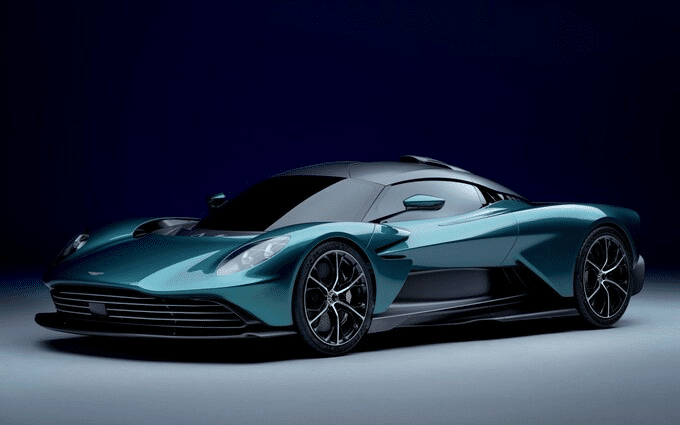
Aston Martin delays electric debut as drivers ‘still want petrol sports cars’

Aston Martin has delayed the launch of its first electric car as the luxury marque’s chairman admitted that drivers still want “the sports car smell, feel and noise” of a petrol engine.

The luxury car maker had originally aimed to launch an electric four-wheel drive grand tourer as soon as next year but will now hold off until 2026.

Lawrence Stroll, Aston’s executive chairman and biggest shareholder, blamed weak demand for higher-priced battery electric vehicles (BEVs) for the delay.

Share

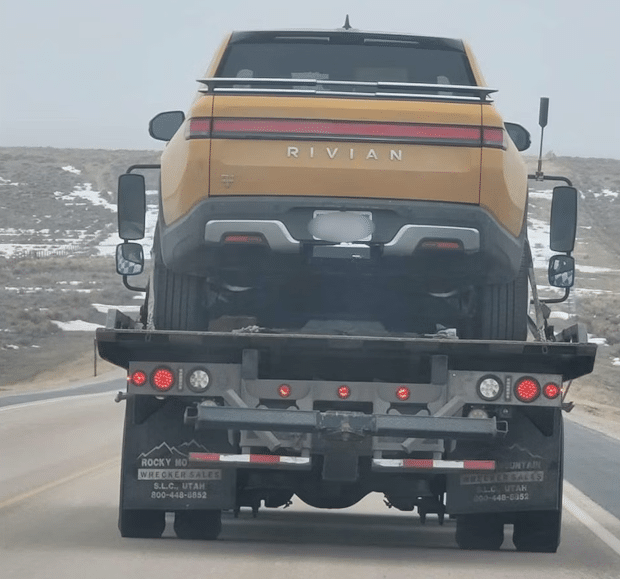
Another EV maker stalls! Amazon-backed Rivian lays off 10% of staff after delivering just 57k vehicles last year – company now worth just a sixth value when listed two years ago

Rivian said on Wednesday it would cut its workforce by 10 percent – and forecast it would fail to hit delivery targets again in 2024.

It has been hurt by downtime for factory upgrades and slowing demand for electric vehicles due to high interest rates.

Rivian said it expects to produce 57,000 vehicles in 2024, well below estimates of 81,700 units, according to eight analysts polled by Visible Alpha.

Share

America’s EV boom goes bust! Lithium and nickel producers begin mass layoffs and pause multi-billion-dollar projects as US says no to electric car push

Americans were sold the promise that electric vehicles would bring production companies and an influx of jobs to small towns nationwide as part of a modern day goldrush.

However, as interest in EVs has slipped, lithium and nickel facilities – metals used in lithium-ion batteries for electric vehicles – are taking cost-cutting measures including mass layoffs and suspending operations.

The demand for electric vehicles surged in 2022, rising by 76 percent in April of that year, but by the end of 2023, the number of vehicles sold dropped to 50 percent.

Share

U.S. to soften tailpipe emissions, slow EV transition through 2030

U.S. President Joe Biden’s administration is set to ease proposed yearly requirements through 2030 of its sweeping plan to aggressively cut tailpipe emissions and ramp up electric vehicle sales, two sources told Reuters on Sunday.

Automakers and the United Auto Workers had urged the Biden administration to slow the proposed ramp-up in EV sales. They say EV technology is still too costly for many mainstream U.S. consumers and that more time is needed to develop the charging infrastructure.

EV’s are not the imagined savior. Instead they are a means for corporations to feast on subsidy’s provided by tax payers.

Share

French warehouse storing lithium batteries erupts amid growing fears over electric cars

A warehouse storing 900 tons of lithium batteries waiting to be recycled went up in flames this afternoon, amid growing fears over their dangers.

The fire in France occurred at a storehouse in the town in Viviez in Aveyron, and residents were told to stay indoors by authorities.

Locals were ordered to keep their doors and window closed as the thick smoke engulfed the town. No injuries or deaths were reported.

Share