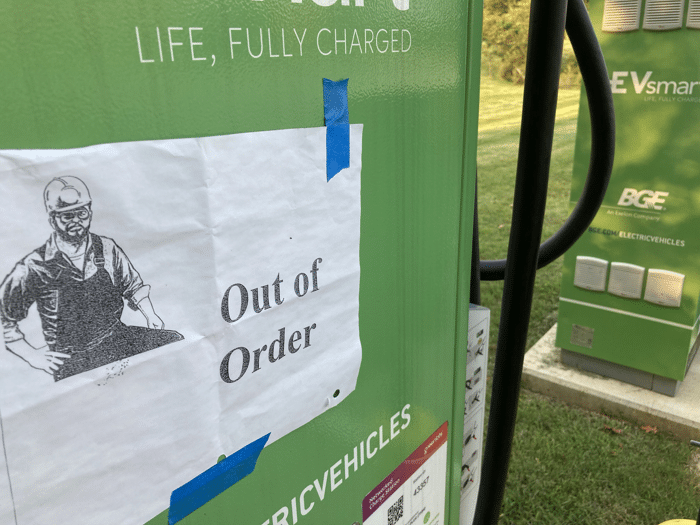
The Hertz Meltdown Reveals Scale Of The EV Debacle

The Biden administration’s Environmental Protection Agency (EPA) has revealed its ambition: to phase out gas-powered cars in favor of electric vehicles (EVs). Incredibly, this announcement comes as we are flooded with overwhelming evidence that EVs are a market loser.

Indeed, the artificial boom and then meltdown of the EV market is a modern industrial calamity. It was created by government, social media, wild disease frenzy, far-flung thinking, and the irrational chasing of utopia, followed by a rude awakening by facts and reality.

h/t Mauser

Share

Stellantis lays off about 400 salaried workers to handle uncertainty in EV transition

DETROIT — Jeep maker Stellantis is laying off about 400 white-collar workers in the U.S. as it deals with the transition from combustion engines to electric vehicles.

The company formed in the 2021 merger between PSA Peugeot and Fiat Chrysler said the workers are mainly in engineering, technology and software at the headquarters and technical center in Auburn Hills, Michigan, north of Detroit. Affected workers were being notified starting Friday morning.

Share

Scrap Biden’s Electric-Vehicle Rules

It is no business of the state to steer drivers from one automotive technology to another. But if the U.S. government should decide to do this, it should do so through Congress, not a regulatory agency. Where climate policy is involved, though, individual autonomy and popular consent have a way of being overridden. In April 2023, the EPA proposed a set of rules designed to ensure that, depending on which “compliance pathway” — a phrase redolent of a bureaucracy run amok — auto manufacturers took, electric vehicles (EVs) would account for as much as 67 percent of new light vehicle sales by 2032.

Share

Biden’s New Electric Vehicle Policy Will Drive US Auto Workers Out of Job

Progressive climate regulations could cost Biden votes in Rust Belt states come November.

Secretary of Energy Jennifer Granholm’s four-day publicity tour for electric vehicles was always intended to draw attention — and it did, just not the kind she’d hoped for. Granholm and her caravan acted as ambassadors for President Joe Biden’s support for green energy and clean cars. But it’s hard to spend four days on the road without showcasing the downsides of electric vehicles.

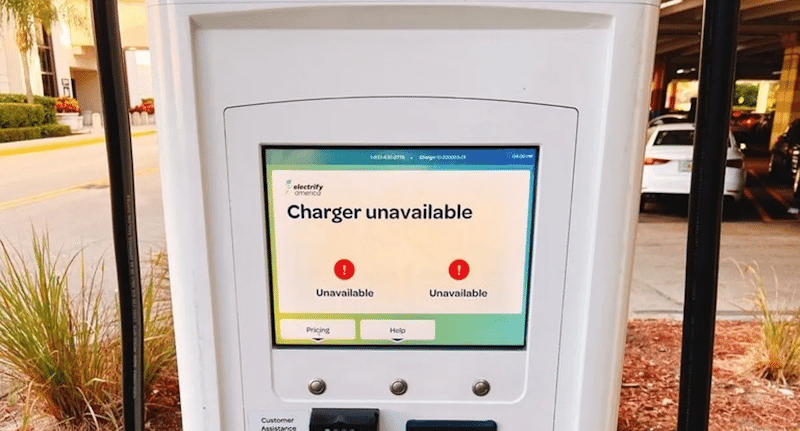
Outside of Augusta, Georgia, Granholm and her team bumped up against a common limitation: too few EV chargers. Ahead of her arrival, Granholm’s advance team realized that they would have to wait in line. One charger was broken, leaving only three that worked. 

Share

Crazy Old Crank Joe Biden unveils sweeping crackdown on petrol cars in push to go electric

Joe Biden has announced new rules that will see as many as half of all cars sold in America run on electricity by 2030.

The US President on Wednesday moved to adopt strict European-style tailpipe emission rules. The finalised regulations will require manufacturers to drastically cut the amount of carbon dioxide (CO2) emitted from cars and trucks from 2027 through to 2032.

The rules will trigger a seismic shift in the US, a country dominated by cars and one where the price of gas is used as a barometer for household finances.

Share

This is the end of the road for electric-vehicle subsidies

When the Alberta government announced its 2024 budget at the end of February, one item in particular raised eyebrows: a new registration fee of $200 on electric vehicles, beginning in January, 2025.

The justification was simple: EVs don’t pay fuel taxes when they are charged at home, which they often are. EVs are also, on average, heavier than their combustion engine counterparts, and thus, on average, more damaging to roads. Absent a clear usage metric by which to charge EV drivers for their share of road maintenance costs, an annual flat fee would be imposed.

Share

Trudeau’s electric vehicle mandate could cause Canada’s power grid to collapse, analysis shows

A noted fiscally conservative think tank warned that a proposed federal mandate from the government of Prime Minister Justin Trudeau to ban the sale of new gasoline/diesel-only powered cars after 2035 and allow electric-only sales is an unrealistic fantasy that would cause massive chaos by threatening to collapse the nation’s power grids.

“Requiring all new vehicle sales in Canada to be electric in just 11 years means the provinces need to substantially increase their power generation capabilities, and adding the equivalent of 10 new mega-dams or 13 new gas plants in such a short timeline isn’t realistic or feasible,” said G. Cornelis van Kooten, a Fraser Institute senior fellow and author of “Failure to Charge: A Critical Look at Canada’s EV Policy.”

Share

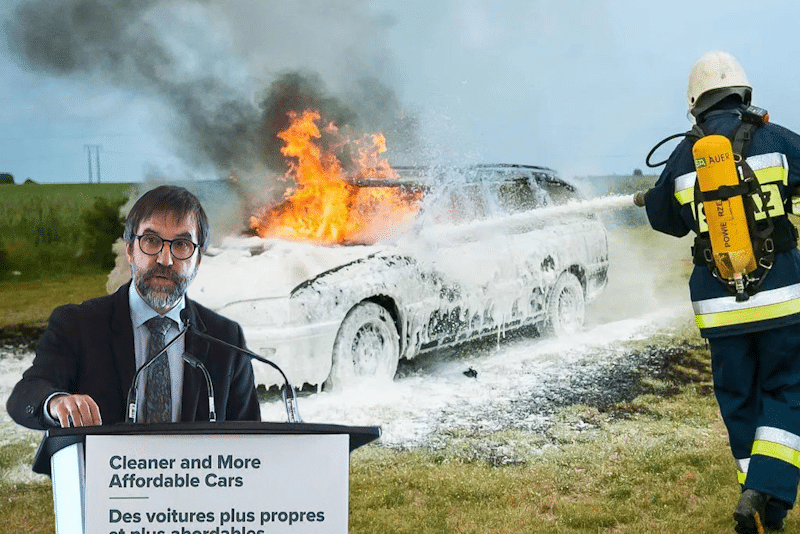
Adam Pankratz: Guilbeault’s EV fantasy crashes into reality

Late last year, when Environment Minister Steven Guilbeault announced the Liberals’ plan to eliminate the sale of cars with internal combustion engines by 2035, a number of people, myself included, rolled their eyes at the government’s interference in the free market. Little did we know how fast the free market would slap the electric vehicle mandate back to reality, while Canadian taxpayers continue to subsidize green fantasies.

Share

Hertz CEO Stephen Scherr resigns after EV push goes bust

Hertz, one of the four largest car rental companies in the world, is replacing its CEO after the company reversed its bet on electric vehicle (EV) rentals over increasing costs.

Stephen Scherr will step down as Hertz Global Holdings Inc.’s chief executive officer and member of the company’s Board of Directors effective March 31, the company announced Friday. Scherr led Hertz for just over two years after spending nearly three decades at Goldman Sachs.

Scherr’s resignation comes as the car rental company struggles with the higher repair costs and low demand for EV rentals.

h/t Mauser

Share

Is China using electric vehicles to spy on us?

There’s a famous story in American marketing circles about the pet food company that spent a fortune on a new dog food, but were horrified to find sales tanking. They’d done everything right! What could possibly have gone wrong? As the story goes, a high-priced consultant was brought in. His verdict? “The dogs don’t like it.”

Share

This is why an electric vehicle will cost you more in Ontario than other provinces

Drivers in Ontario looking to switch gears to an electric vehicle may consider hitting the brakes on the idea following the release of a new report on the cost of ownership.

The University of British Columbia study(opens in a new tab) found that it’s actually cheaper to own an EV than an internal combustion engine vehicle (ICEV) in some parts of the country, and Ontario is far from the top of the list.

EV’s are costly anywhere, the study is a weak attempt at propaganda.

Share

Accelerating the electric vehicle doom loop

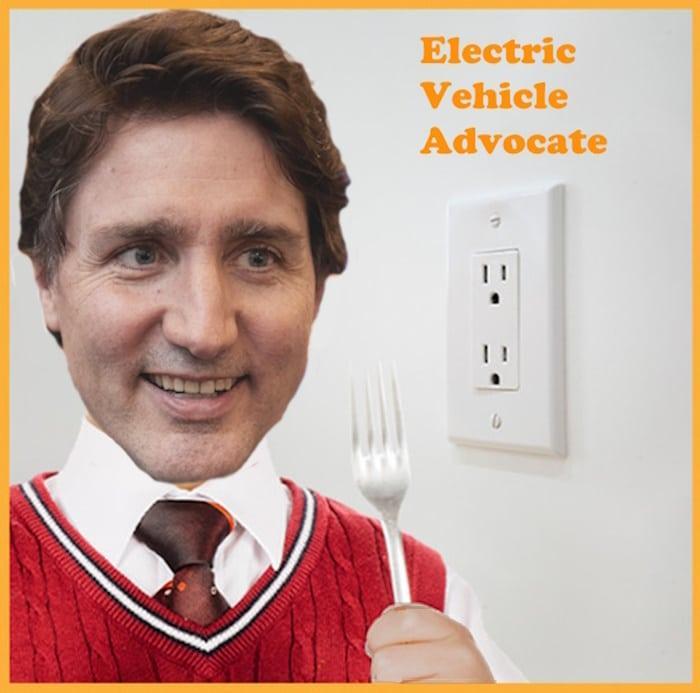
I’ve been writing about electric vehicles since 2011.  EV cheerleading never stops. They’re inevitable! We’ll have 500,000 chargers coast to coast any minute now (the federal government has built approximately two)! By 2030, 50% — or more — of all vehicles on the road will be EVs!  EVs will save the planet! Ve haf vays to make you buy EVs!  And eat bugs!  Don’t forget about the bugs!
Share

Still smug “Juno winner” makes stupid EV purchase

When a Leaf turns into a ‘brick’: Juno winner describes EV catastrophe

The owner of a Nissan Leaf electric car says his experience has been a cautionary tale for others who might make the leap to electric vehicles.

And though Brian Sanderson has paid 417 Nissan, the dealership that’s been servicing the car, almost $10,000, he said the bills aren’t even the most heartbreaking part of his experience.

“It’s cruel because I don’t want to be part of the ‘let’s slam electric vehicles’ crowd,” said Sanderson, a professional musician who, along with his instrumental chamber rock ensemble Esmerine, has won four Juno Awards.

I have no idea why the CBC thinks being a Juno winner has a bearing on this story.

Share

EV euphoria is dead. Automakers trumpet consumer choice

DETROIT — The buzz around electric vehicles is wearing off.

For years, the automotive industry has been in a state of EV euphoria. Automakers trotted out optimistic sales forecasts for electric models and announced ambitious targets for EV growth. Wall Street boosted valuations for legacy automakers and startup entrants alike, based in part on their visions for an EV future.

Now the hype is dwindling, and companies are again cheering consumer choice. Automakers from Ford Motor and General Motors to Mercedes-Benz, Volkswagen, Jaguar Land Rover and Aston Martin are scaling back or delaying their electric vehicle plans.

h/t DS

Share